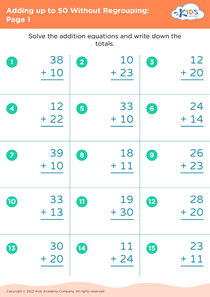
Improve reading comprehension Adding up to 50 with Regrouping Worksheets for Ages 4-8
3 filtered results
-
From - To
Boost your child's reading and math skills with our "Improve Reading Comprehension Adding Up to 50 with Regrouping Worksheets for Ages 4-8." These engaging worksheets blend fun stories and exercises designed to enhance understanding and reinforce addition concepts with regrouping. Perfect for young learners, our printable resources offer a dual focus, promoting both literacy and numeracy. As kids read and solve problems, they develop critical thinking, problem-solving skills, and a strong foundation for future learning. Download now to foster a love of learning and watch your child's confidence soar!
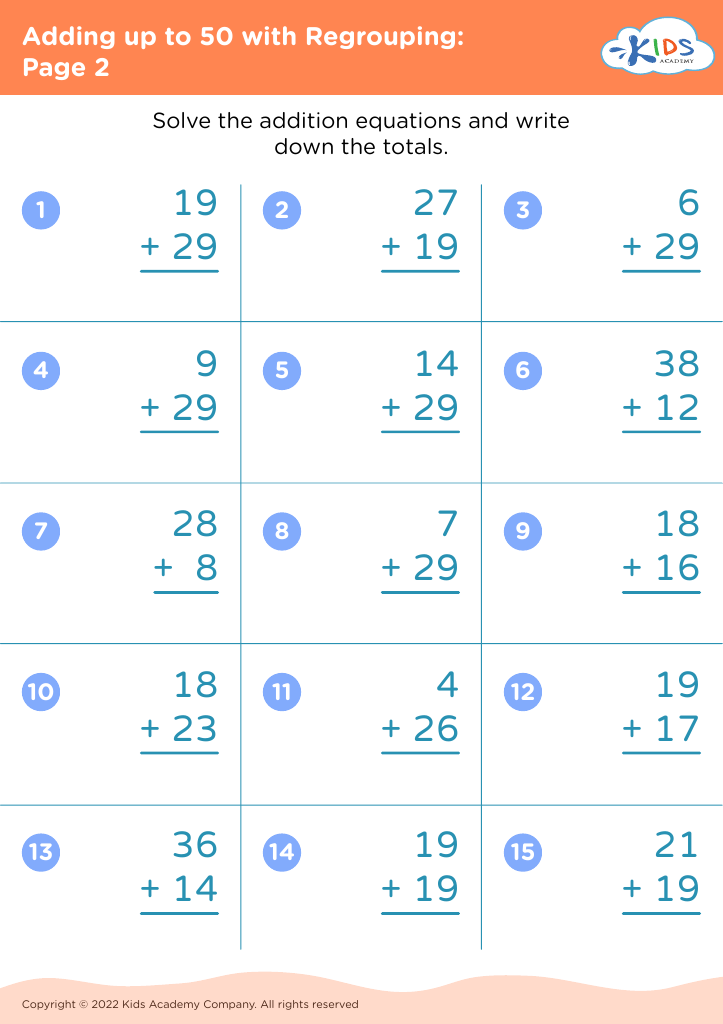
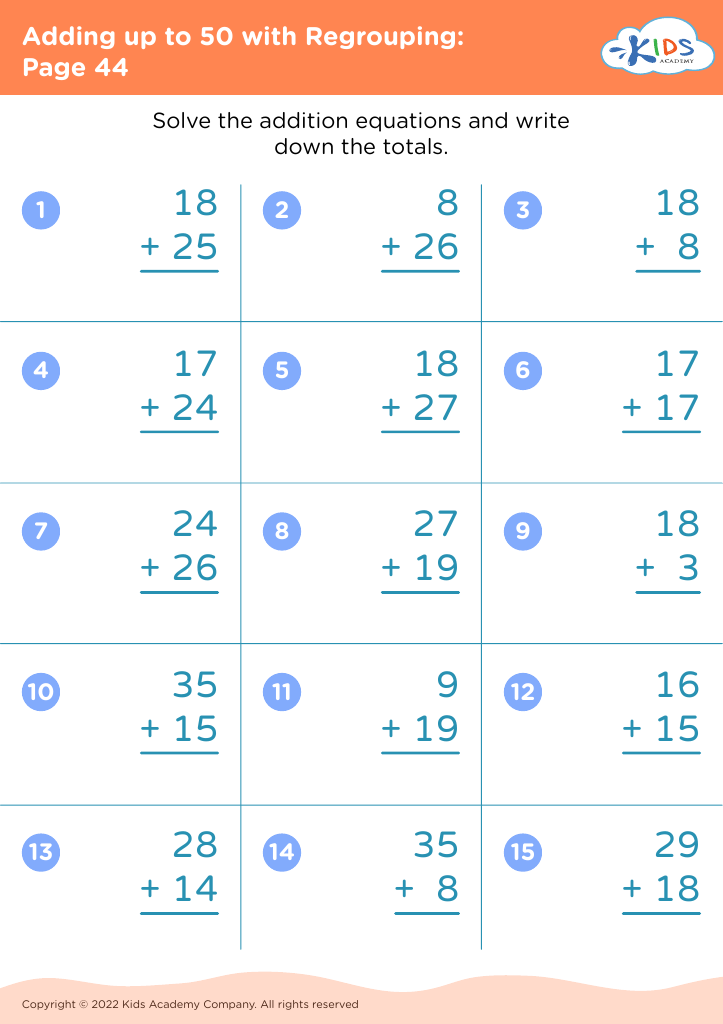
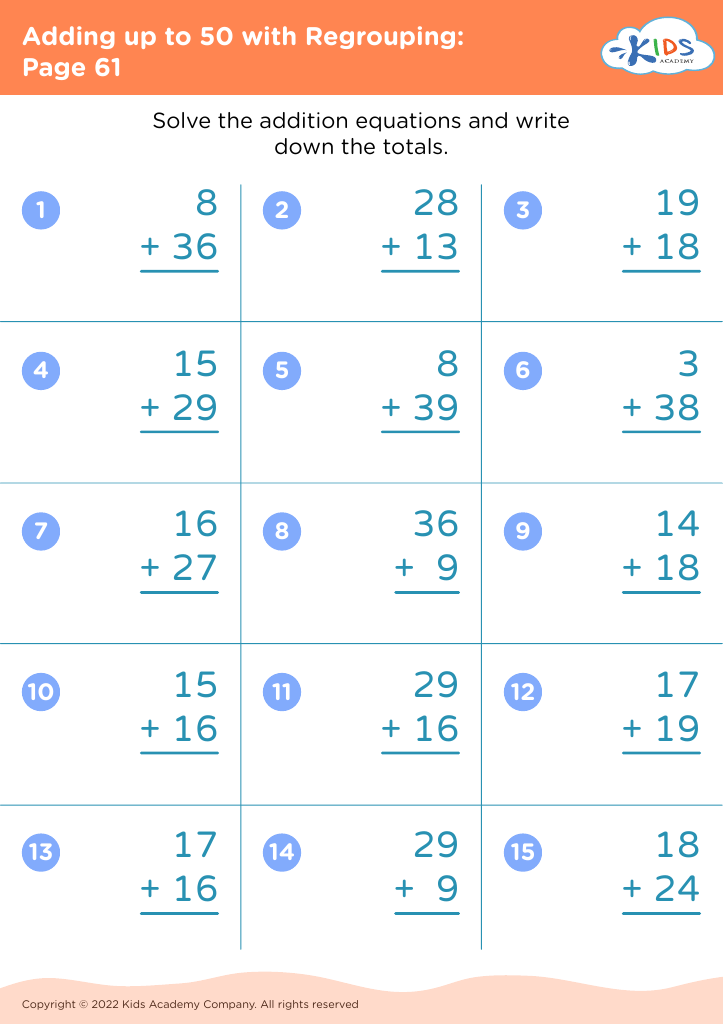


Parents and teachers should prioritize improving reading comprehension and teaching children to add up to 50 with regrouping for several crucial reasons. Firstly, reading comprehension is the foundation of all education. When children understand what they read, they engage more deeply with the text, fostering critical thinking, creativity, and strong communication skills. This skill is vital not just for academic success but also for lifelong learning and daily functioning.
Simultaneously, mastering addition up to 50 with regrouping lays the groundwork for higher mathematical concepts and problem-solving abilities. Early math skills, like adding with regrouping, are essential for more advanced arithmetic, developing logical reasoning, and enhancing cognitive development. Proficiency in these areas builds confidence, encourages a positive attitude toward math, and reduces anxiety about the subject in later years.
For ages 4-8, integrating these skills creates a balanced and robust early education. When children are strong in both reading and math, they are more prepared to tackle varied subjects in later grades. This all-rounded foundation helps diminish achievement gaps, setting students on a successful educational trajectory and opening doors to diverse future opportunities. Thus, nurturing these skills early is an investment in every child's academic and personal growth.