Shape Recognition Adding up to 50 with Regrouping Worksheets for Ages 4-8
6 filtered results
-
From - To
Enhance your child's math skills with our engaging "Shape Recognition Adding Up to 50 with Regrouping Worksheets" designed for ages 4-8! These worksheets seamlessly blend shape identification and addition, providing a fun, interactive way for young learners to grasp essential math concepts. By focusing on regrouping, children build a solid foundation for more complex math while recognizing different shapes. Ideal for homeschoolers and classroom use, these worksheets foster creativity and critical thinking, making learning enjoyable. Give your child the tools to succeed in math while exploring the world of shapes! Perfect for early education settings or at-home practice.
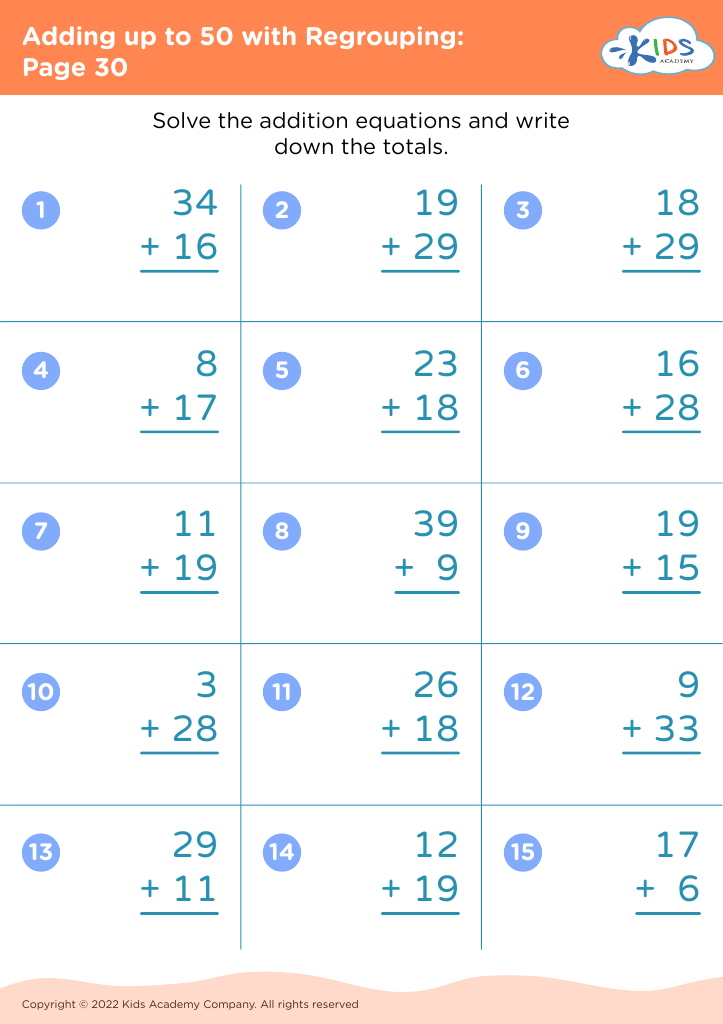
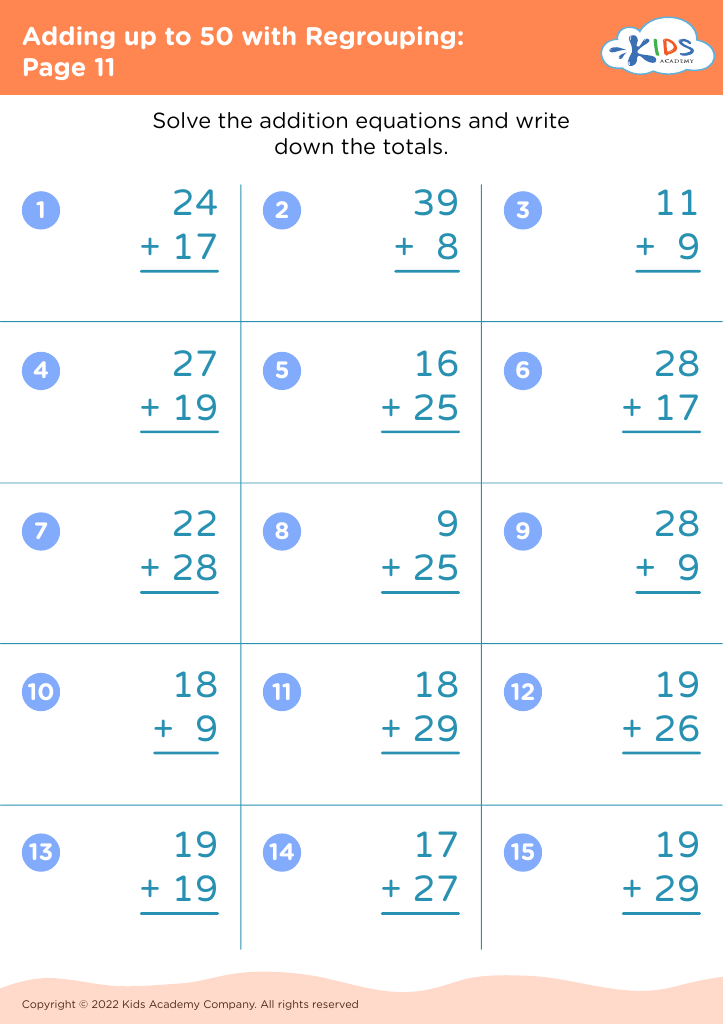
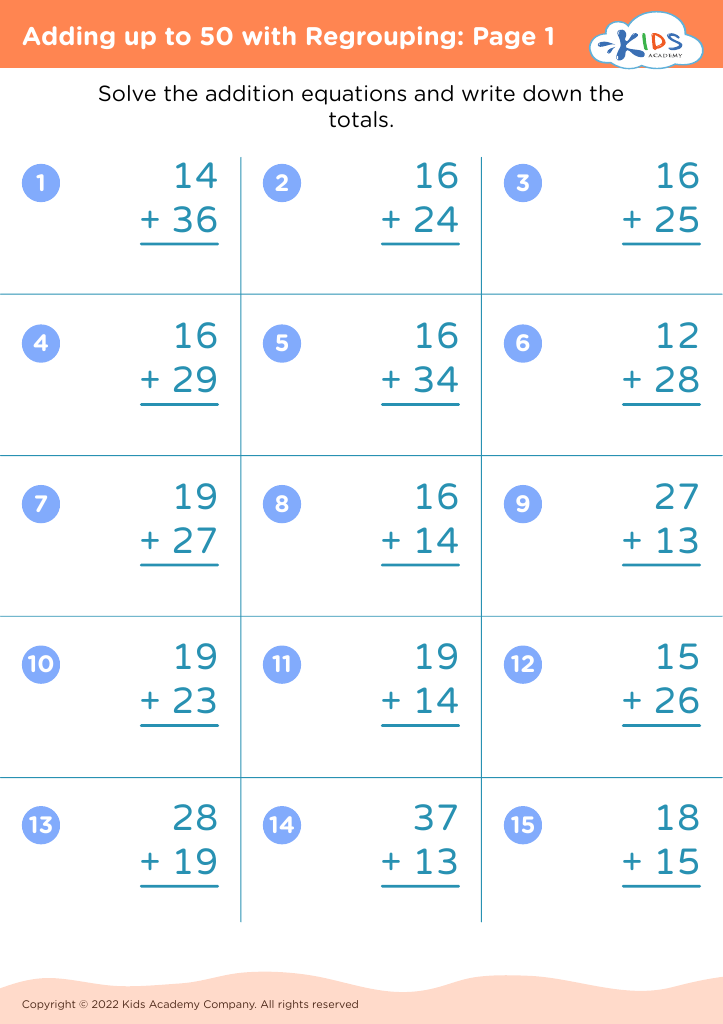
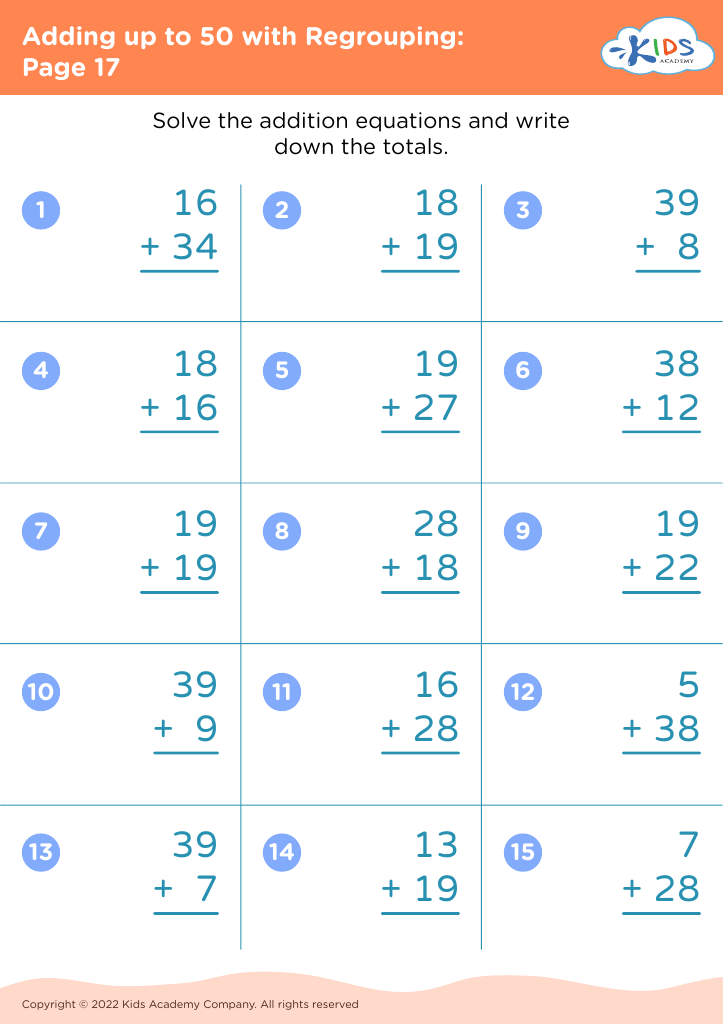
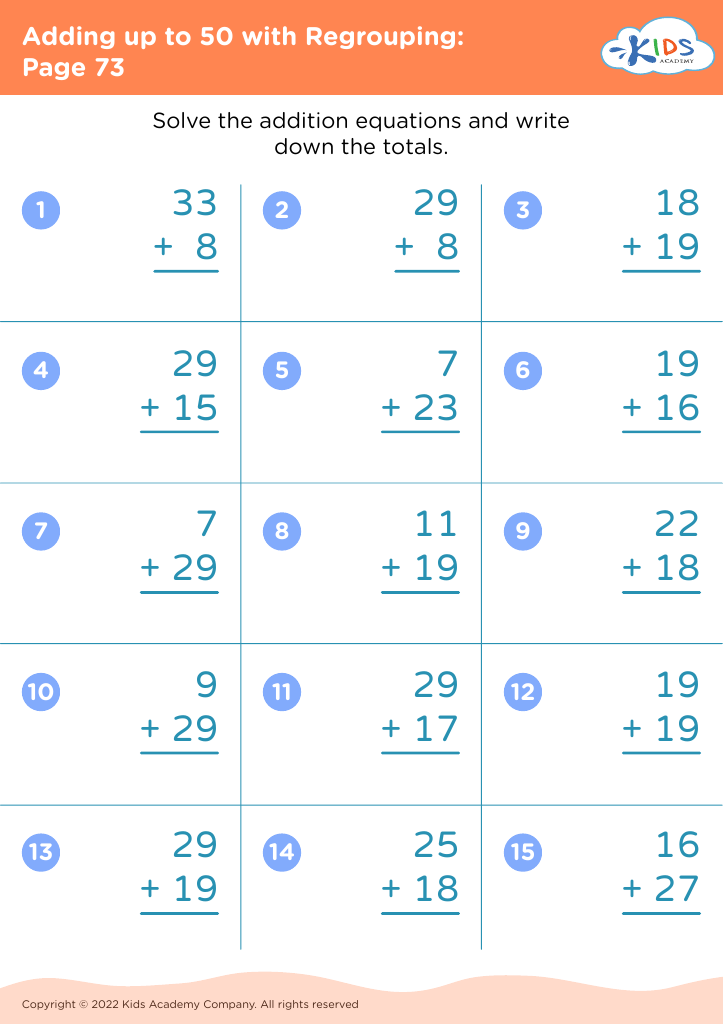
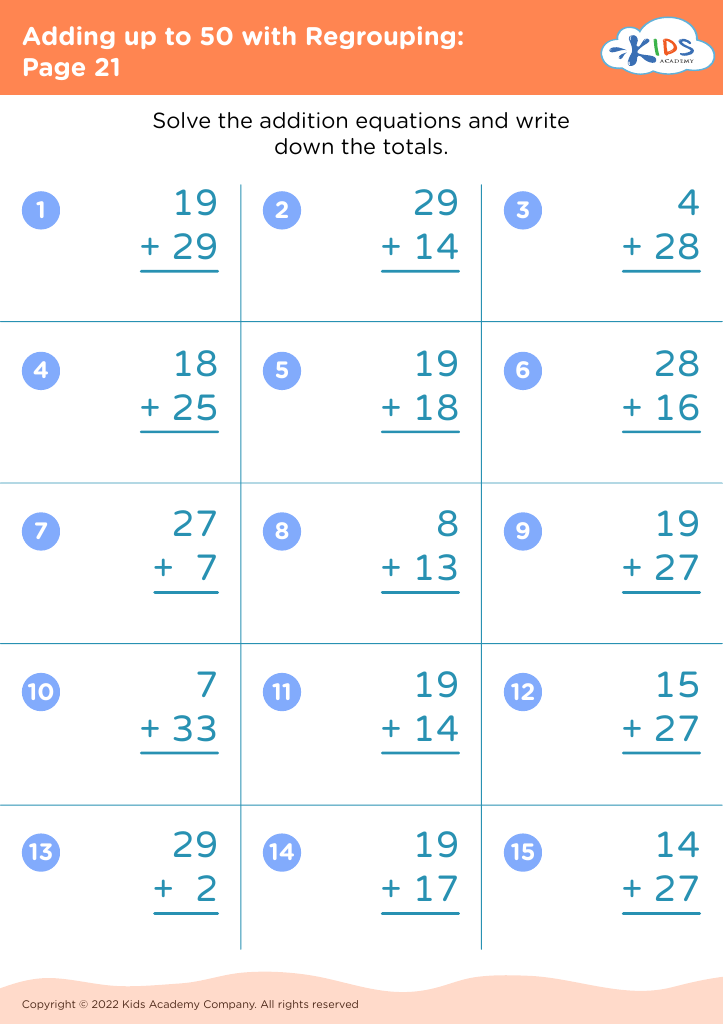


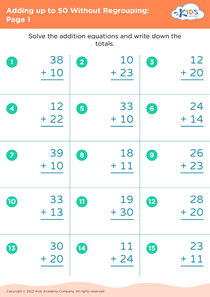
Shape recognition and adding up to 50 with regrouping are fundamental skills for children aged 4-8, significantly contributing to their cognitive development and mathematical understanding. Shape recognition lays the foundation for spatial awareness, critical problem-solving, and overall cognitive processes. By identifying and differentiating shapes, children learn to classify, compare, and build a foundational understanding of geometry, which they will encounter in more advanced math later on.
On the other hand, adding numbers up to 50 with regrouping fosters arithmetic skills essential for everyday life. Regrouping, or “carrying over,” enhances a child's ability to manipulate numbers, promoting number sense and fluency in basic operations. This process, crucial for addition, enhances critical thinking, as students learn to break down problems into manageable parts.
Together, these skills address key learning objectives outlined in early education standards, preparing children for future academic challenges. When parents and teachers emphasize these core competencies, they equip children with vital tools for success, boosting their confidence in their abilities and instilling a love for learning. As children master these early math concepts, they build resilience and a foundation for lifelong mathematical proficiency, which is valuable in an increasingly STEM-driven world.