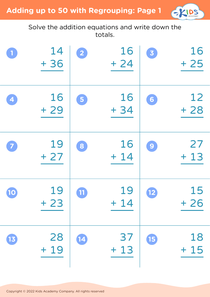
Addition Practice Adding up to 50 Without Regrouping Worksheets for Ages 4-8
6 filtered results
-
From - To
Welcome to our "Addition Practice Adding up to 50 Without Regrouping" worksheets, designed specifically for children ages 4-8! These engaging, thoughtfully crafted resources help young learners master addition skills without the complexity of regrouping. Our colorful worksheets encourage kids to practice adding numbers confidently, laying a solid foundation for their math journey. With a variety of exercises tailored to their skill level, children will enjoy building their computational abilities and numerical fluency. Perfect for at-home learning or classroom activities, these worksheets make math fun while promoting self-paced learning. Start your child's addition adventure with us today!
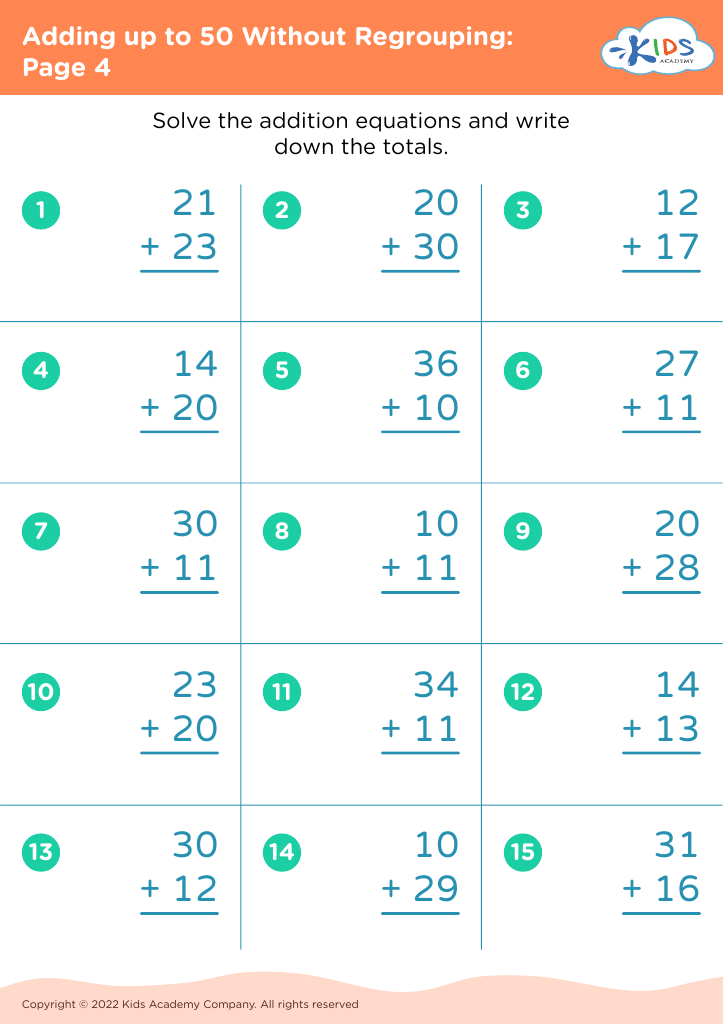
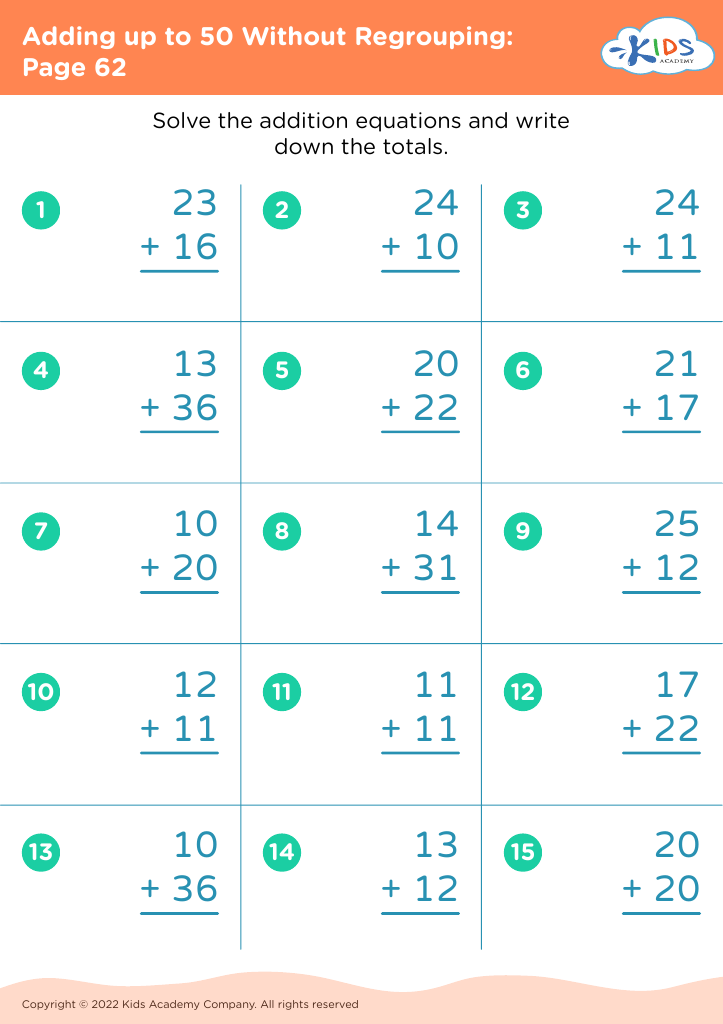
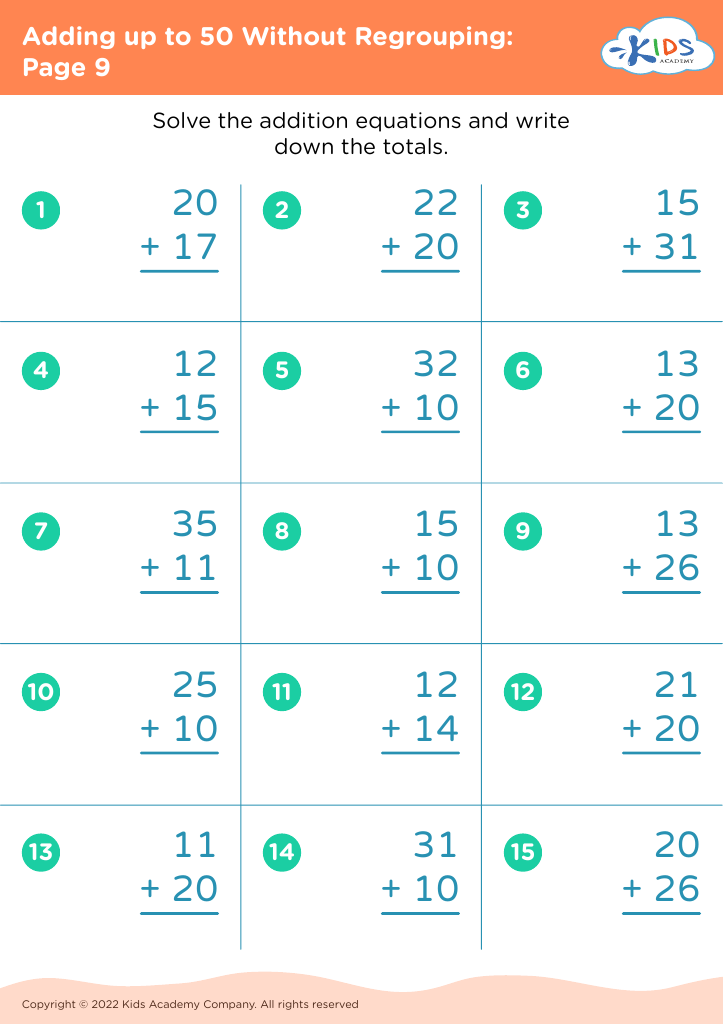
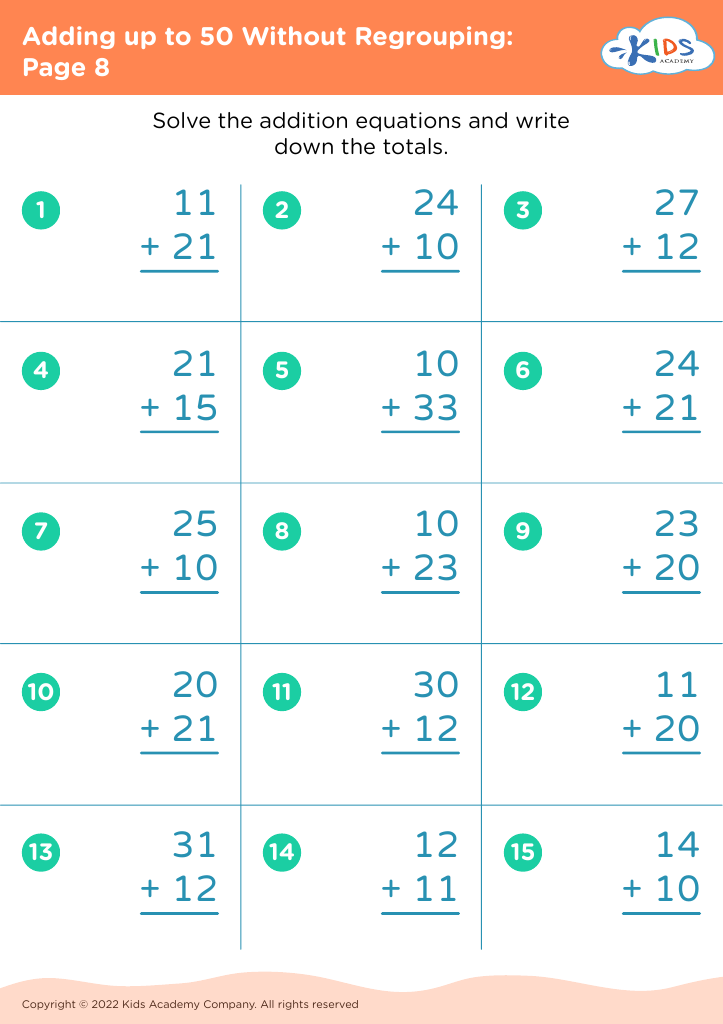
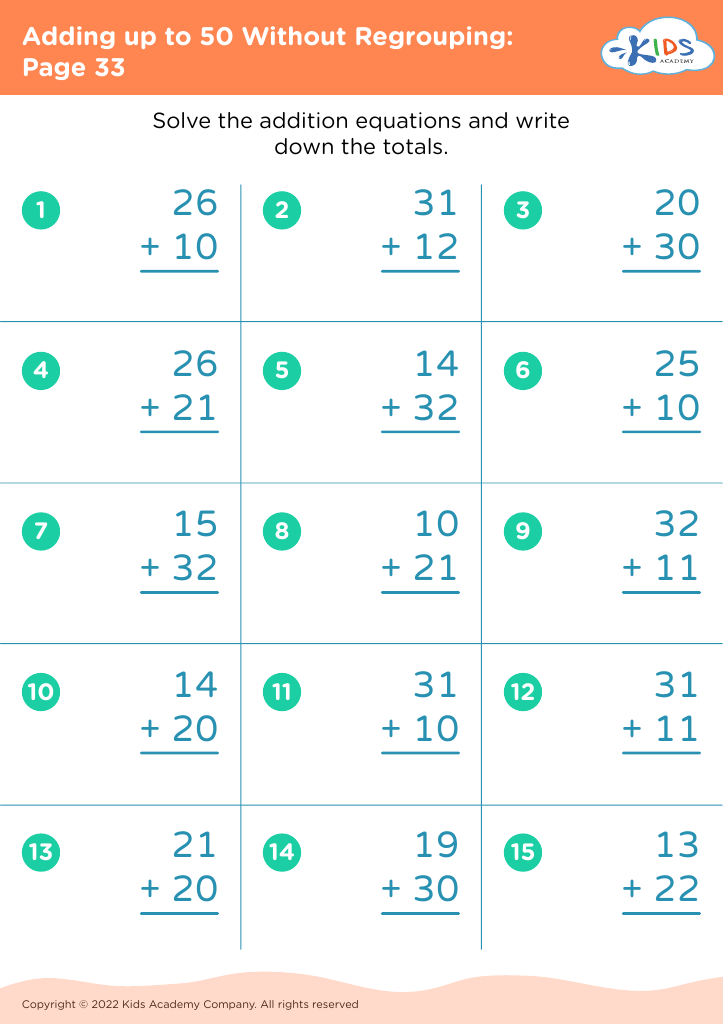
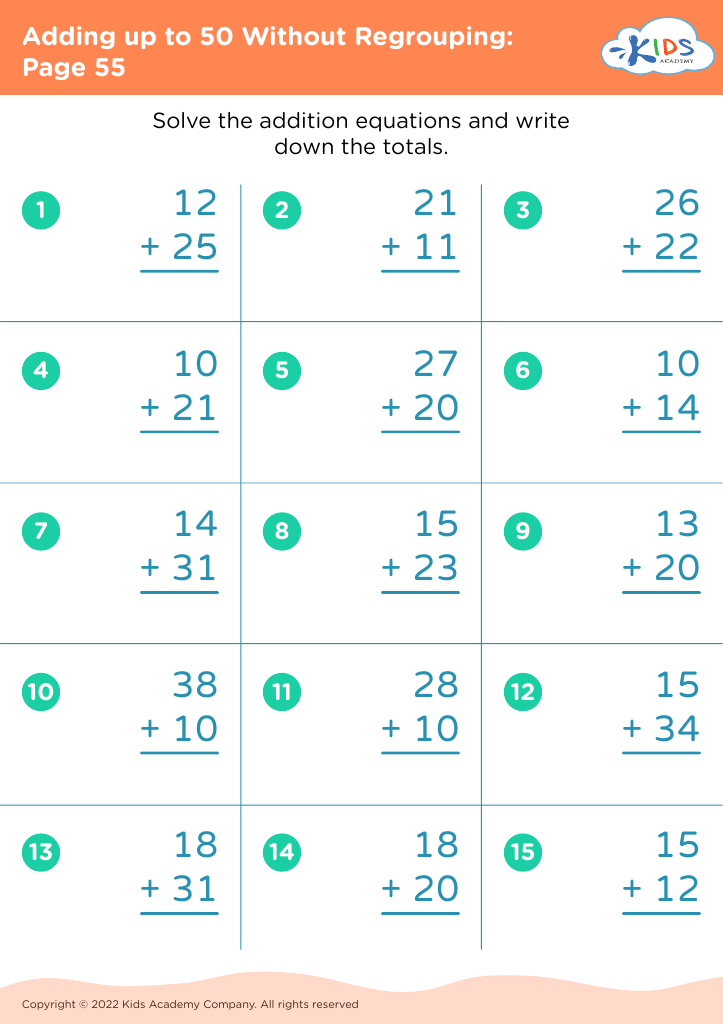


Addition practice, especially for young learners aged 4-8, is crucial for establishing a strong mathematical foundation. Learning to add numbers up to 50 without regrouping helps children develop essential skills in number recognition, counting, and problem-solving. This age range is critical, as they are often learning to connect abstract numerical concepts to real-world situations.
Engaging in addition practice cultivates a child's confidence and fluency in mathematics. It makes subsequent learning easier, as these foundational skills are a prerequisite for more complex arithmetic operations later on. Teachers and parents should care about this because repeated practice within this range allows kids to internalize basic addition concepts, leading to improved accuracy and speed in calculations.
Moreover, mastering addition up to 50 sets the stage for tackling subtraction, multiplication, and division as children progress in their education. Encouraging practice not only benefits academic growth but also enhances cognitive development and critical thinking. By reinforcing these skills in a fun and supportive environment, educators and parents can foster a love for math and encourage a mindset oriented toward growth and learning. Thus, prioritizing addition practice plays a key role in shaping well-rounded, capable learners equipped for future success.