Basic Math Skills Adding up to 50 Without Regrouping Worksheets for Ages 4-8
6 filtered results
-
From - To
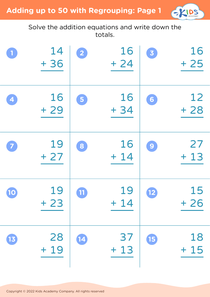
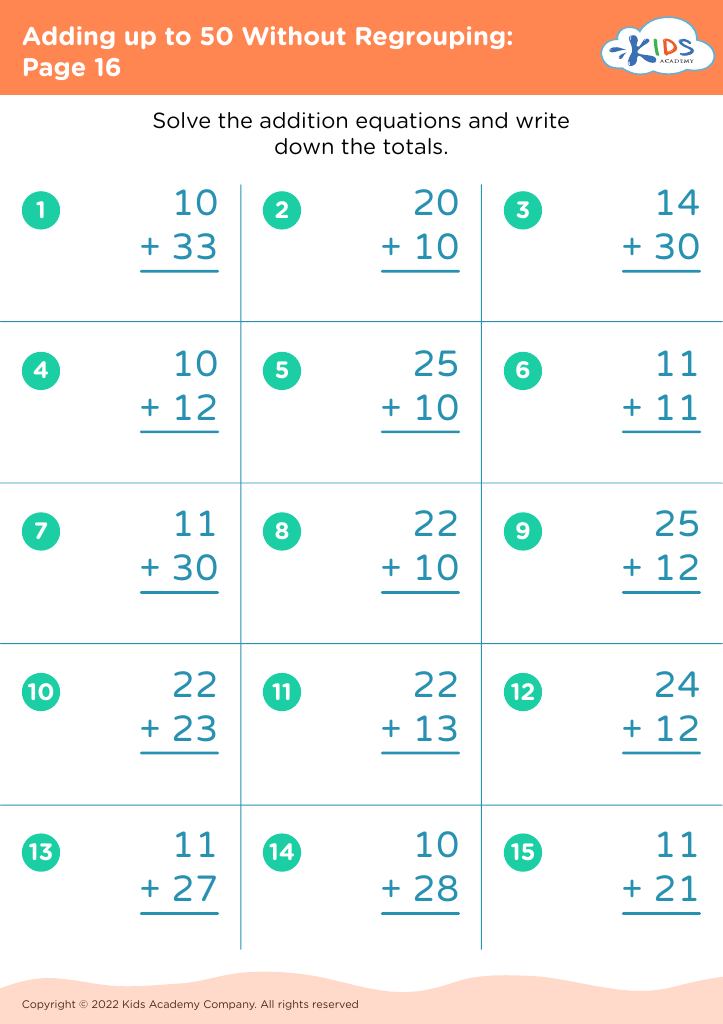
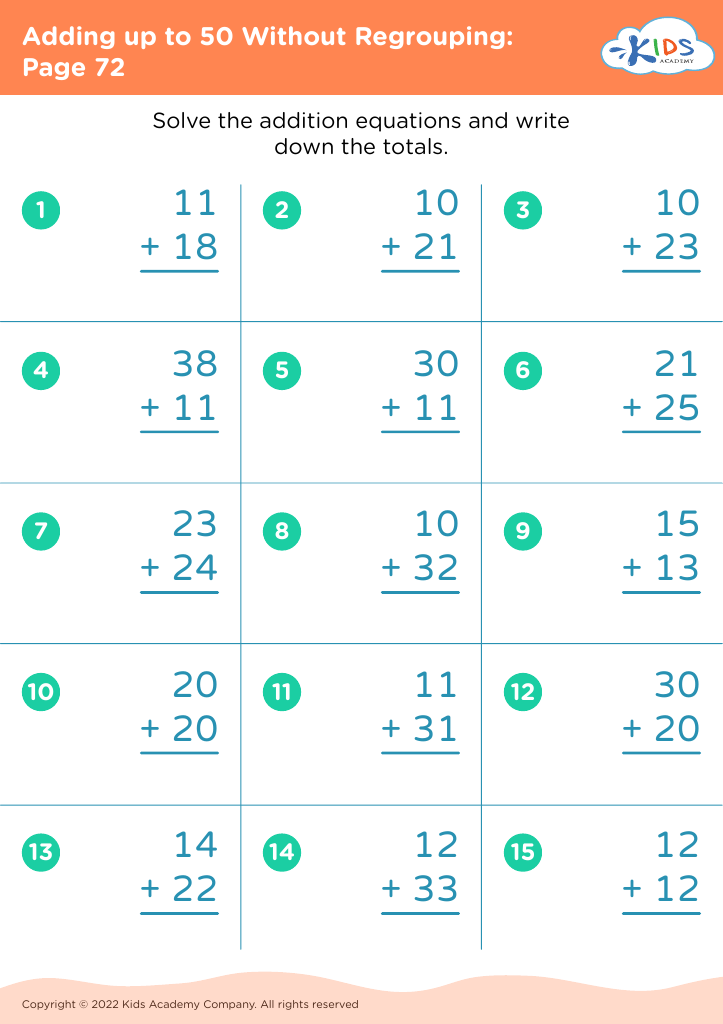
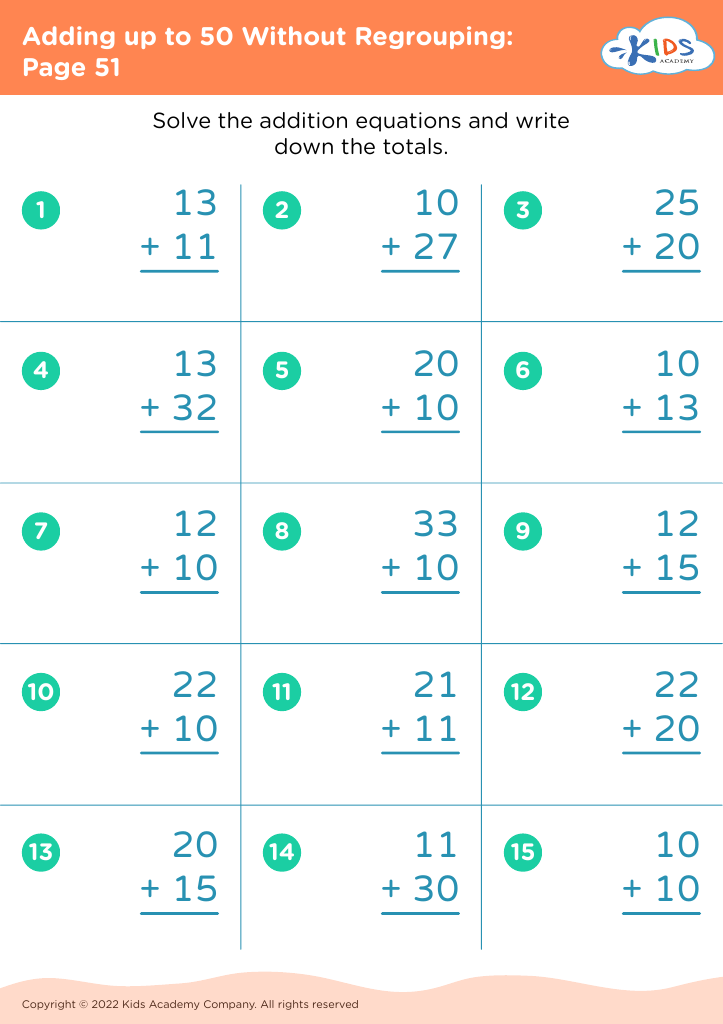
Welcome to our "Basic Math Skills Adding Up to 50 Without Regrouping Worksheets" designed for children aged 4-8! These engaging and interactive worksheets help young learners build foundational math skills through simple addition problems without the complexity of regrouping. Perfect for homeschooling, classroom activities, or extra practice, these worksheets encourage confidence and mastery in basic addition. With colorful illustrations and age-appropriate exercises, children will enjoy practicing their math while developing essential cognitive skills. Help your child add up to 50 and make learning math fun and effective – perfect for little math enthusiasts eager to enhance their skills!
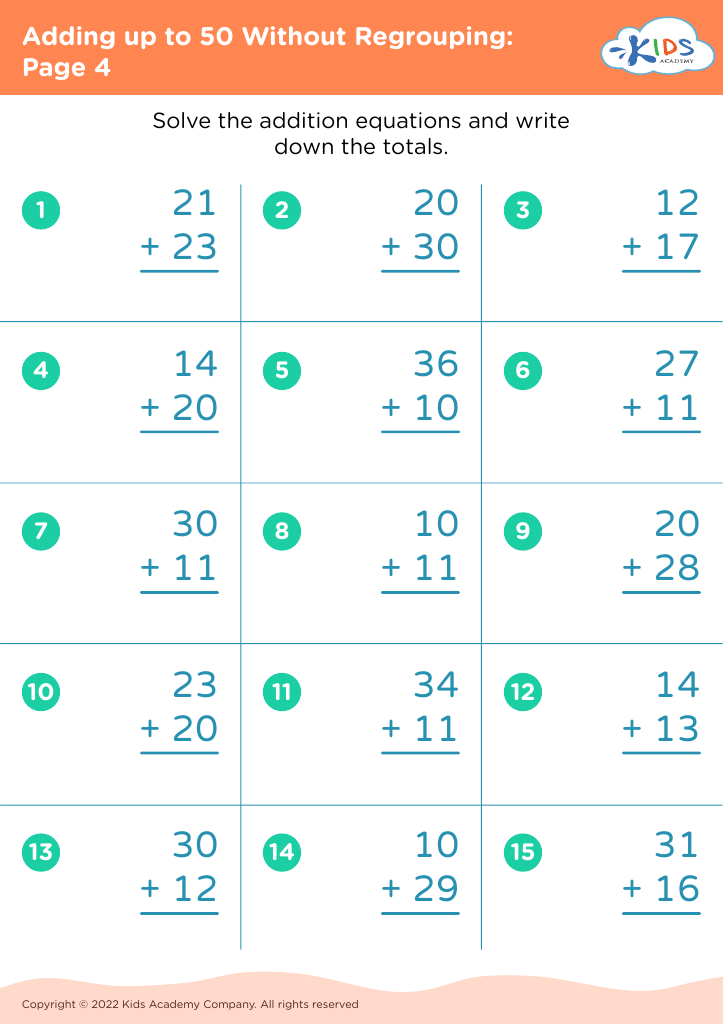
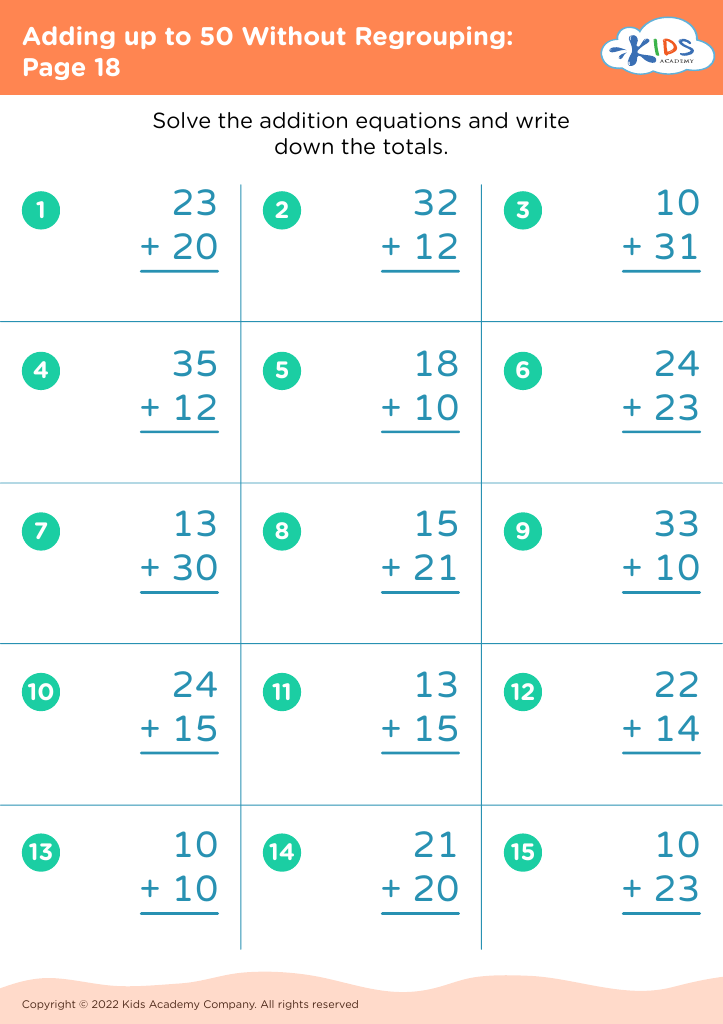
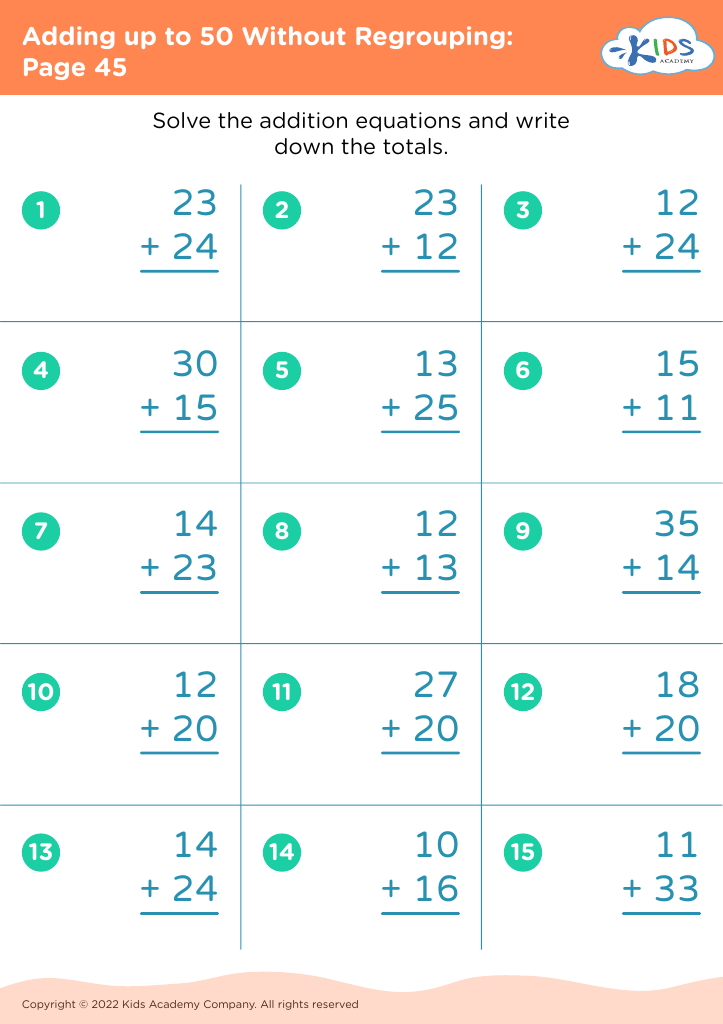


Basic math skills, such as adding up to 50 without regrouping, are crucial for children aged 4-8 as they serve as the foundation for future academic success. At this early stage, children are developing essential cognitive skills, and mastering addition reinforces their understanding of numbers and quantities. It encourages logical thinking, problem-solving, and helps enhance their overall mathematical competence.
Moreover, attaining proficiency in basic addition fosters confidence in children. When they can perform calculations with ease, they are more likely to embrace challenges and pursue further learning in mathematics and other subjects. These skills also play a critical role in everyday life, as they are involved in activities like counting money, telling time, and engaging in sports or games.
For parents and teachers, cultivating this knowledge not only aids children in their immediate curriculum but also prepares them for more advanced concepts and integrates arithmetic into their daily lives. By prioritizing basic math skills, caregivers can ensure that their children develop early numeracy that supports their overall educational trajectory and lifelong problem-solving aptitude. Ultimately, understanding how numbers combine sets the stage for success in academics and personal growth.