Enhance number recognition Adding up to 50 Without Regrouping Worksheets for Ages 4-8
3 filtered results
-
From - To
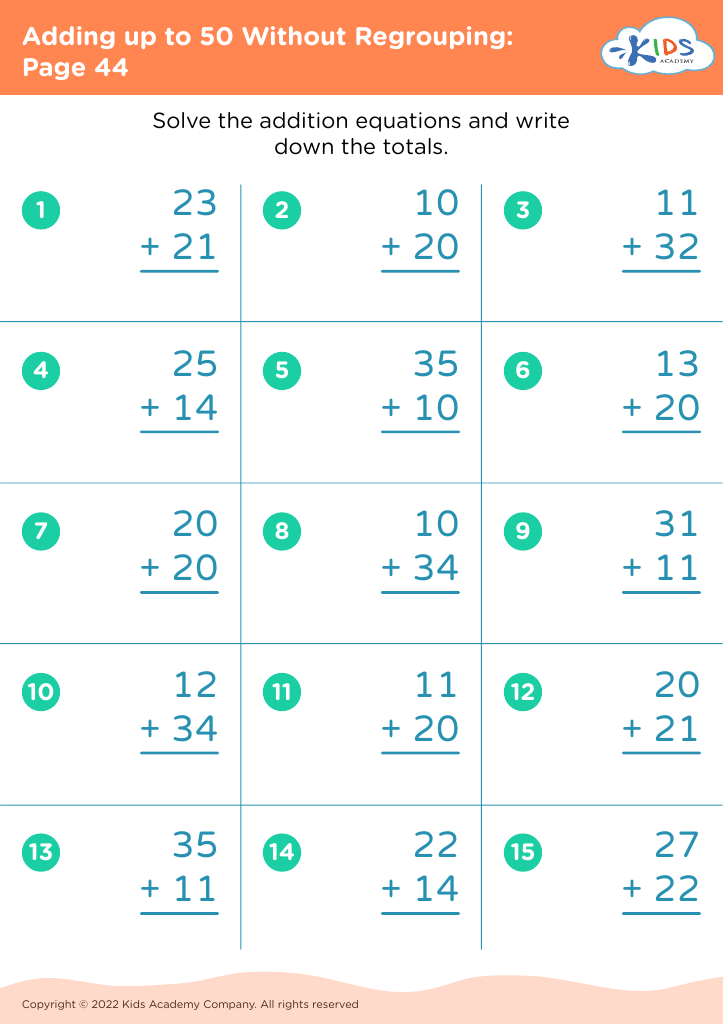
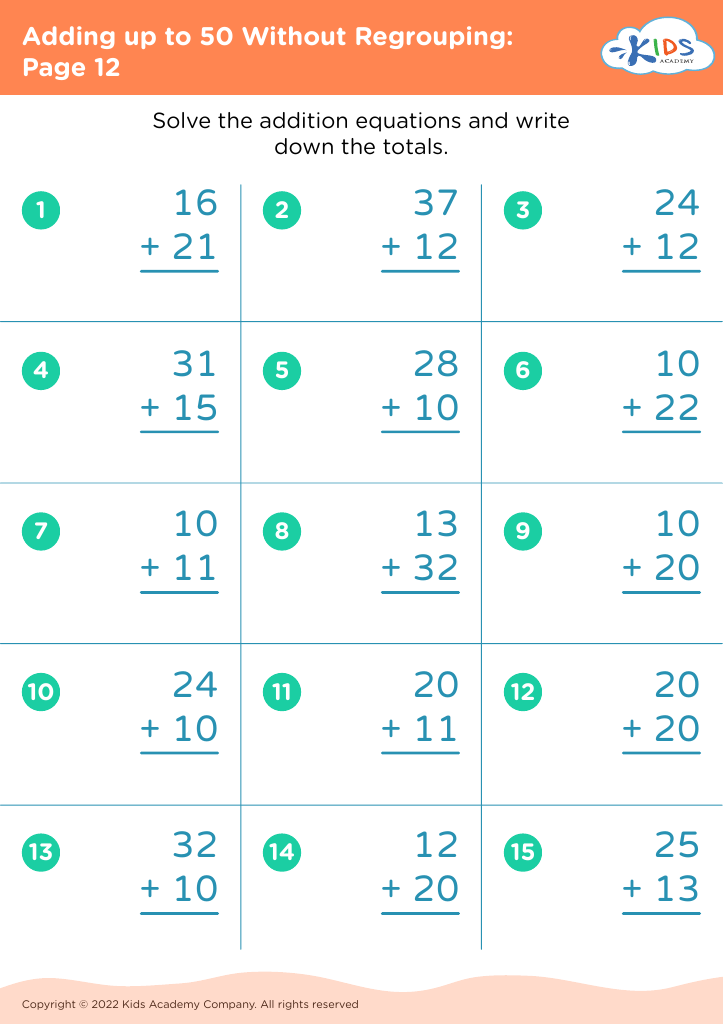
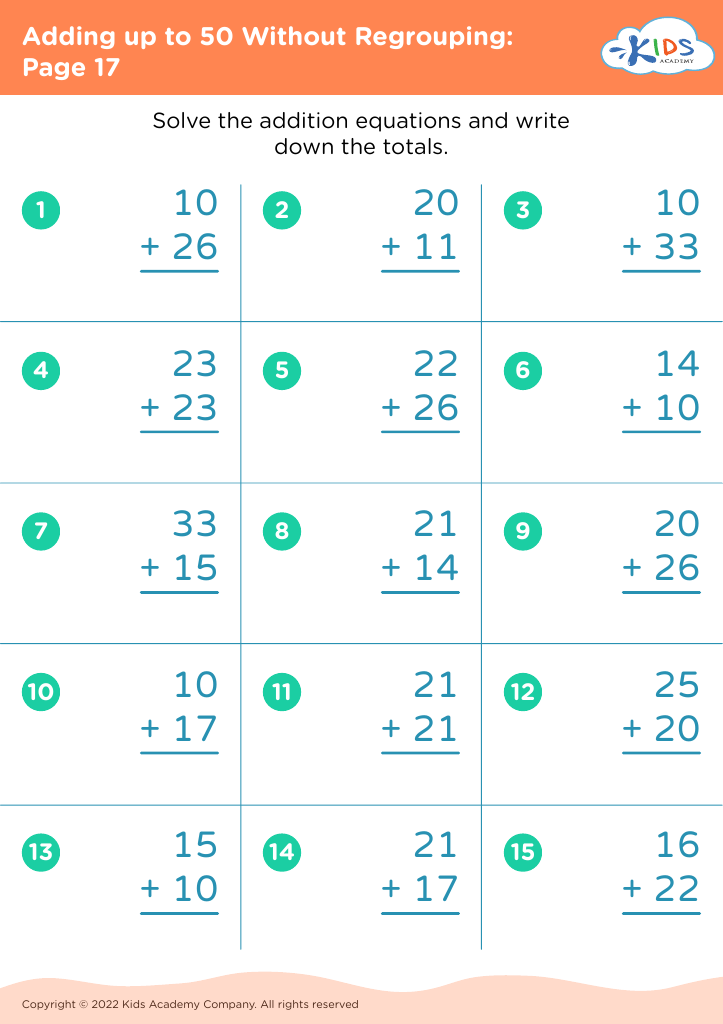
Boost your child's number skills with our "Enhance Number Recognition Adding up to 50 Without Regrouping Worksheets for Ages 4-8." Perfectly designed for young learners, these engaging worksheets help children between ages 4 to 8 master addition and number recognition within 50, fostering solid math foundations. With vibrant visuals and kid-friendly exercises, each worksheet ensures that learning is both fun and effective. Ideal for practicing at home or in the classroom, our worksheets build confidence in young mathematicians, preparing them for more advanced concepts. Download now to support your child’s math journey and watch their skills grow effortlessly!


Developing strong foundational math skills early in life sets the stage for future academic success, and enhanced number recognition and addition up to 50 is an integral part of this foundation. For children aged 4-8, mastering these skills without regrouping plays a critical role in building confidence in their mathematical abilities. When children can easily recognize and add numbers up to 50, they begin to understand the basic concepts of arithmetic, which serves as the cornerstone for more advanced mathematical lessons such as subtraction, multiplication, and division.
In addition, early proficiency in math boosts self-esteem as children experience a sense of accomplishment and mastery over essential skills. This, in turn, fosters a positive attitude towards learning, encouraging them to approach more challenging tasks with enthusiasm. Moreover, early math skills are closely linked to improved problem-solving abilities and logical thinking, critical life skills that extend beyond the classroom.
Parents and teachers should focus on enhancing number recognition and basic addition to develop these cognitive skills. Through engaging games, interactive activities, and consistent practice, children can achieve significant milestones in their numeracy journey. Ultimately, establishing these fundamental skills paves the way for complex thinking and better academic performance in future years.