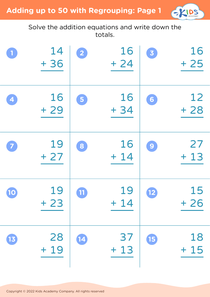
Understanding fractions Adding up to 50 Without Regrouping Worksheets for Ages 4-8
13 filtered results
-
From - To
Our "Understanding fractions Adding up to 50 Without Regrouping Worksheets for Ages 4-8" are specially designed to make learning fun and engaging for young minds. Ideal for children aged 4-8, these worksheets help build a strong foundation in fractions while fostering skills in simple addition up to 50. Each colorful and interactive activity is crafted to capture your child's interest, making learning feel like play. With step-by-step guidance and age-appropriate challenges, our worksheets empower kids to enhance their math skills with confidence and enjoyment. Unlock your child's potential today with Kid's Academy – where learning meets fun!
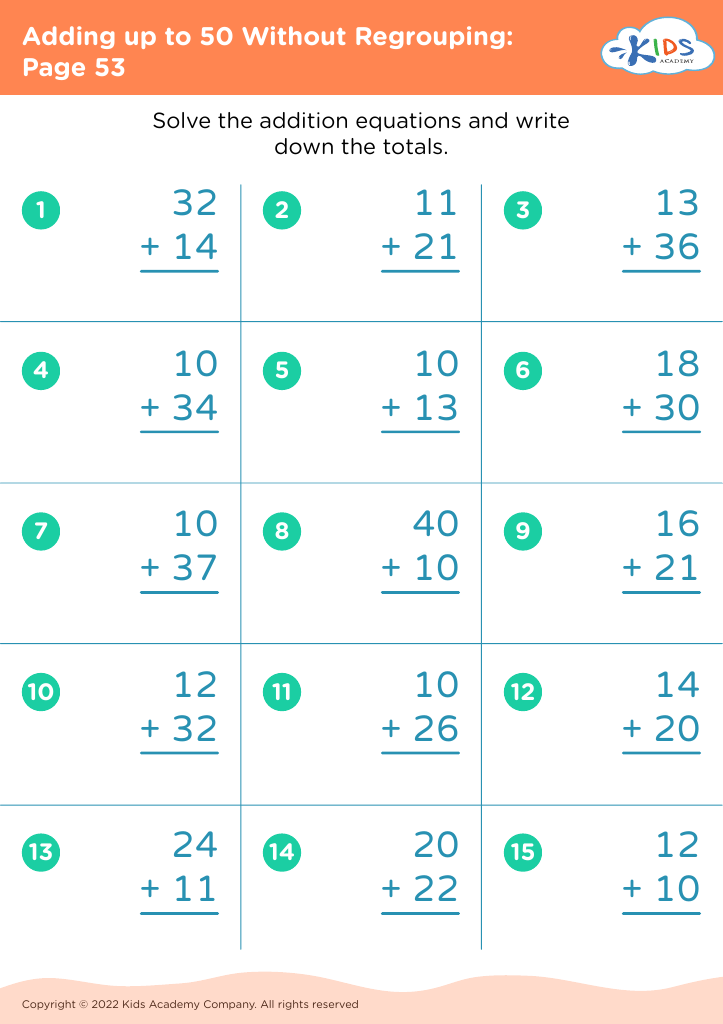
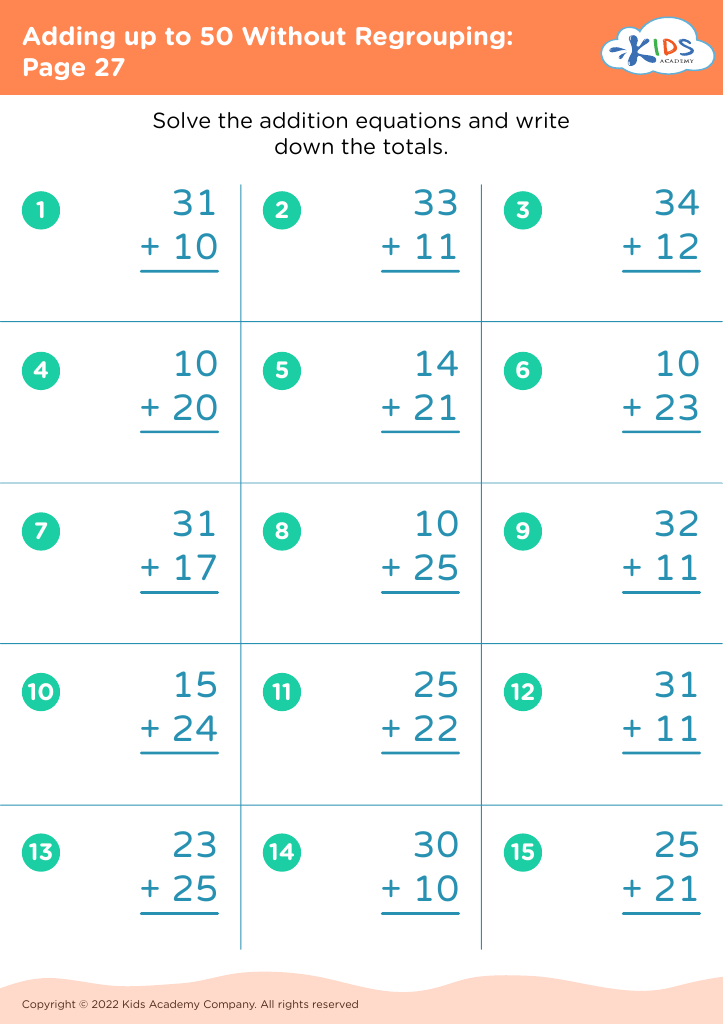
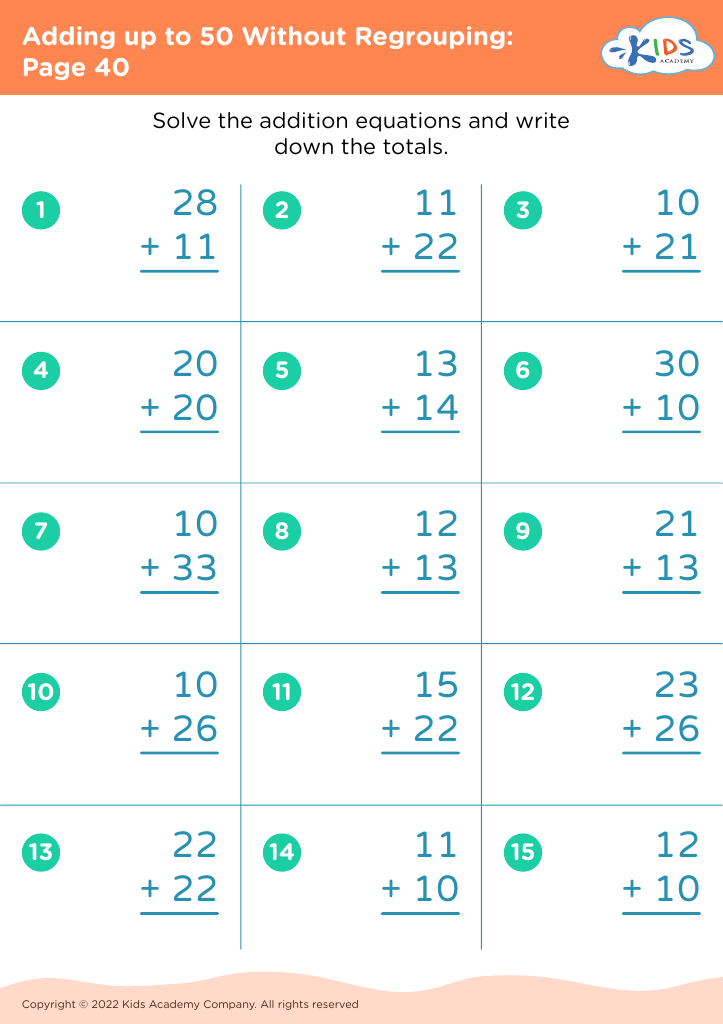
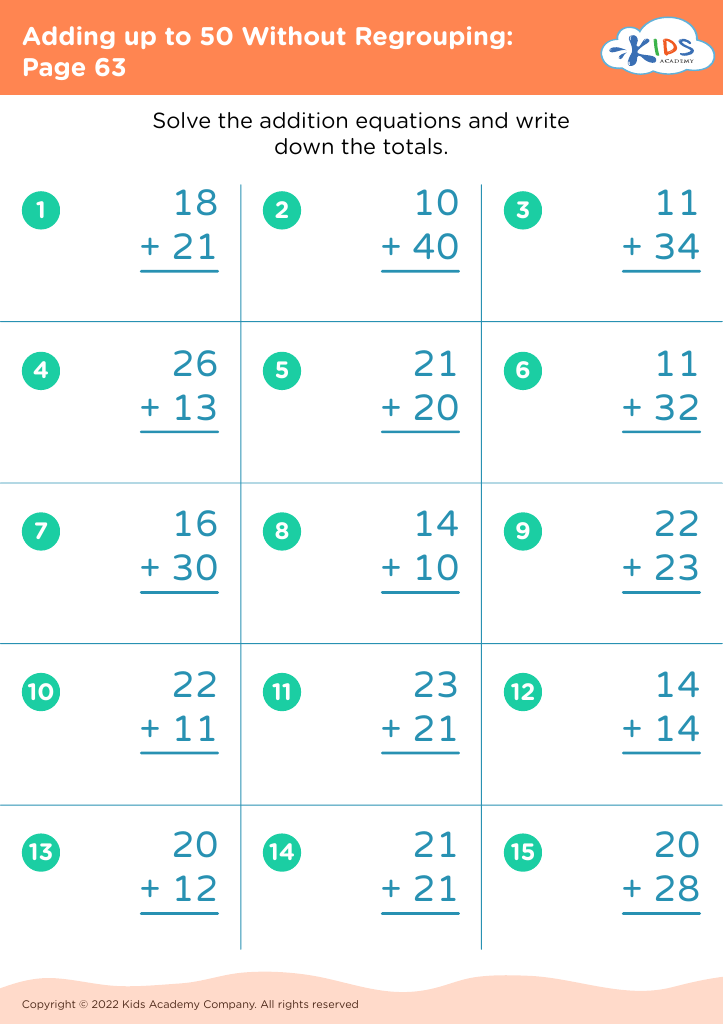
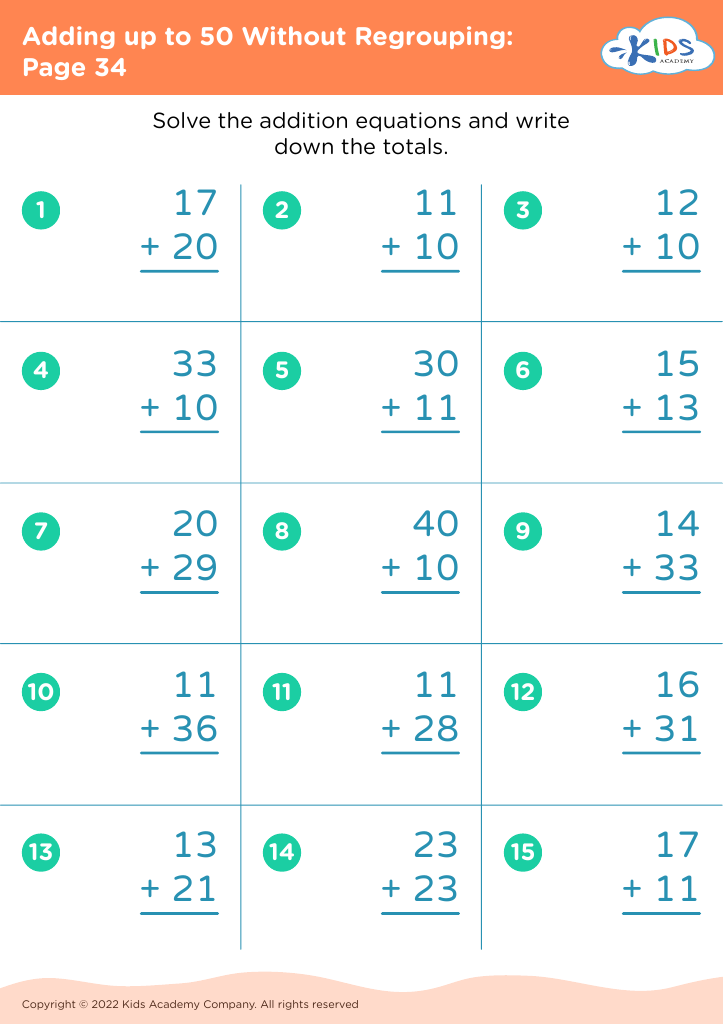
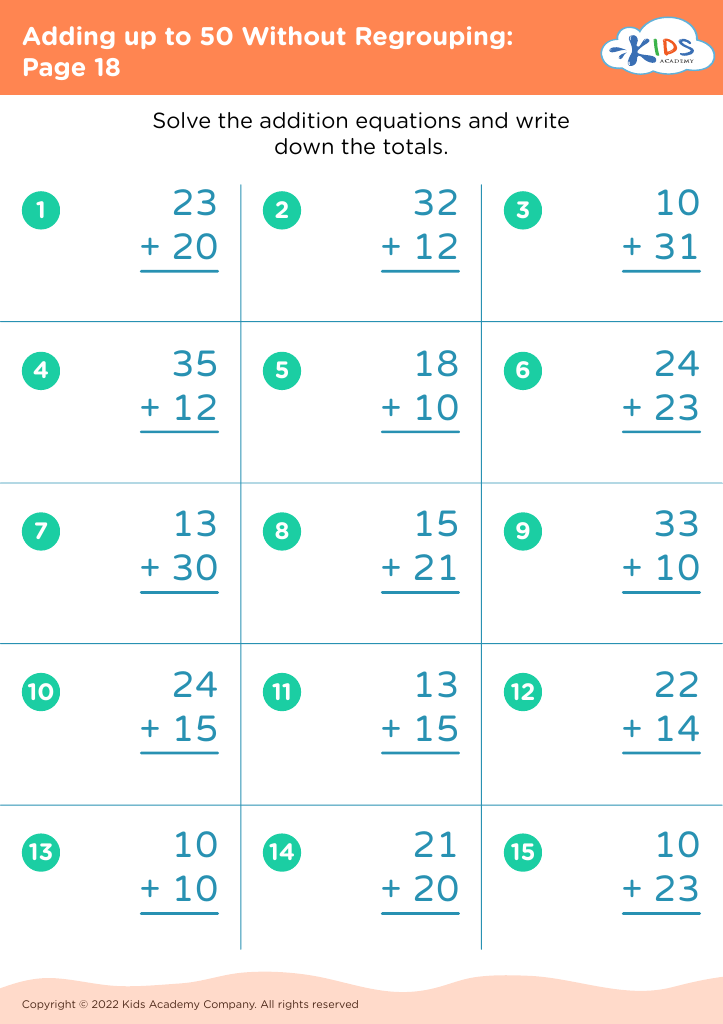
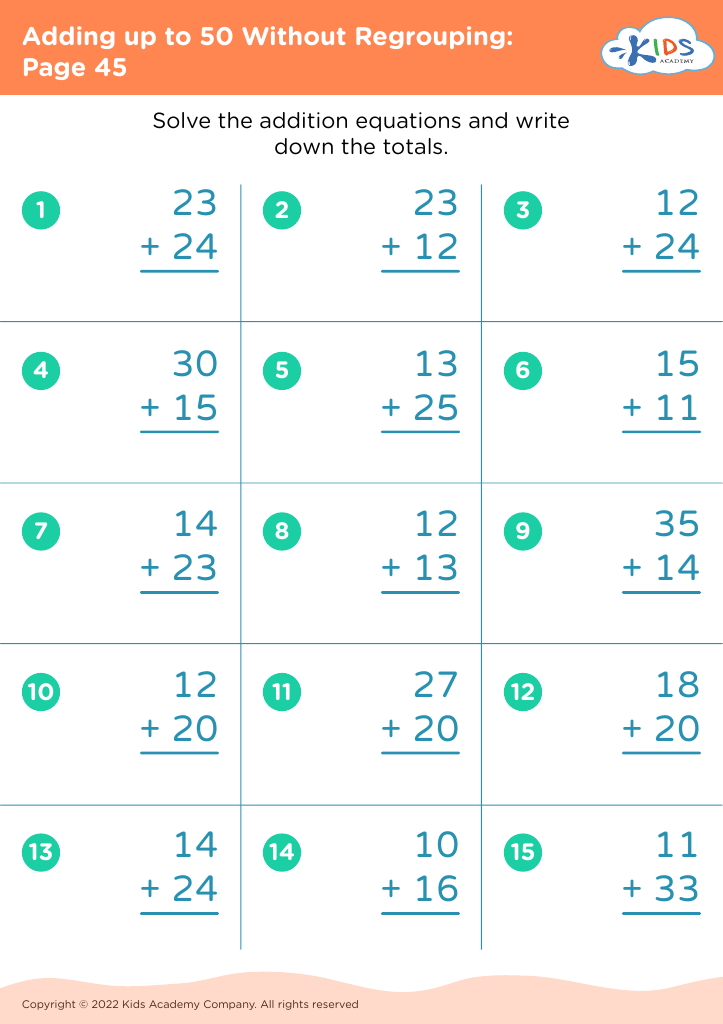
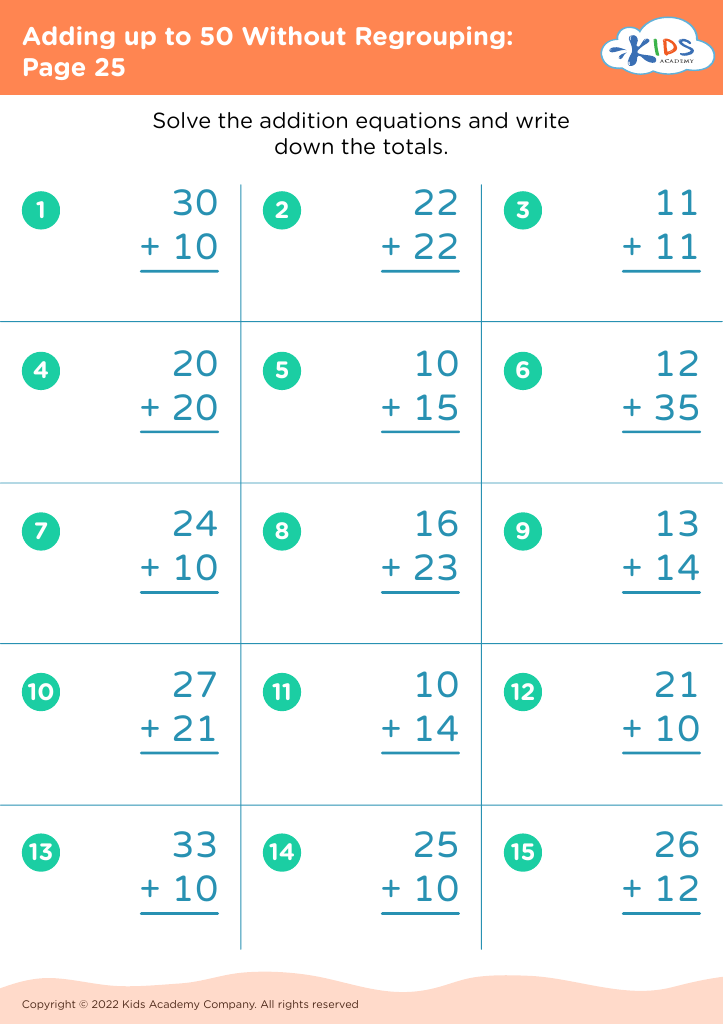
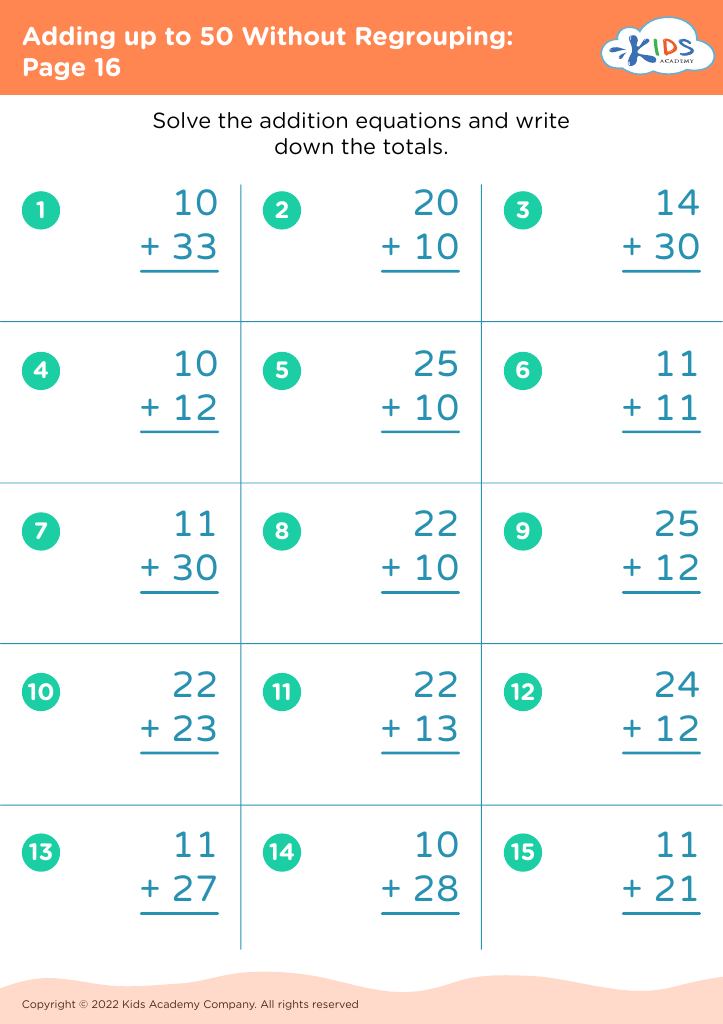
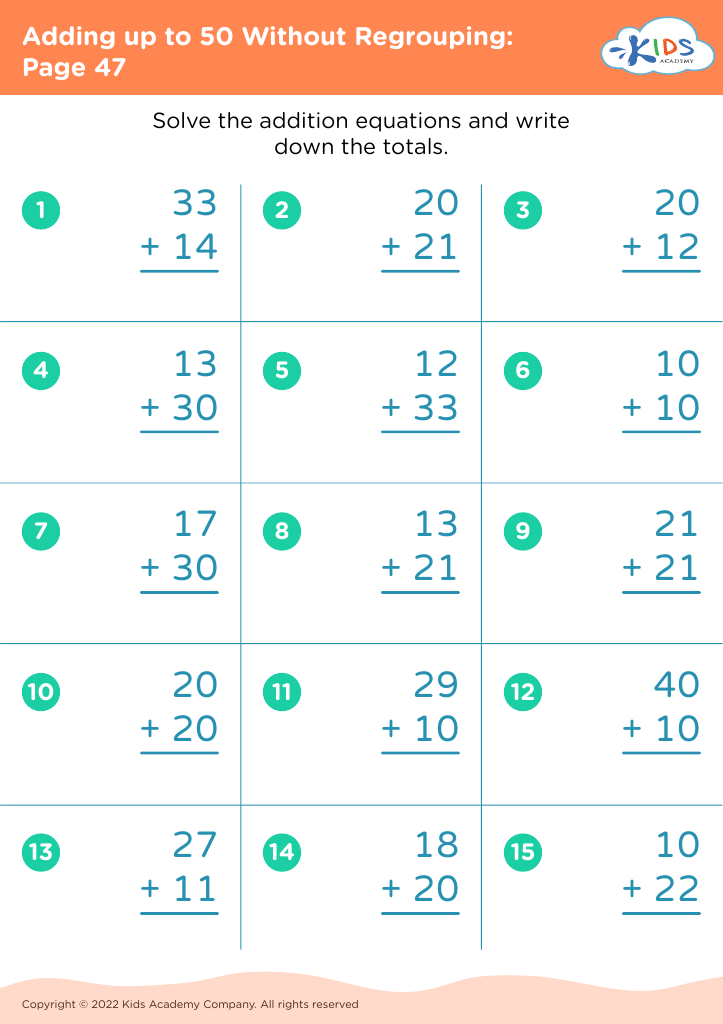
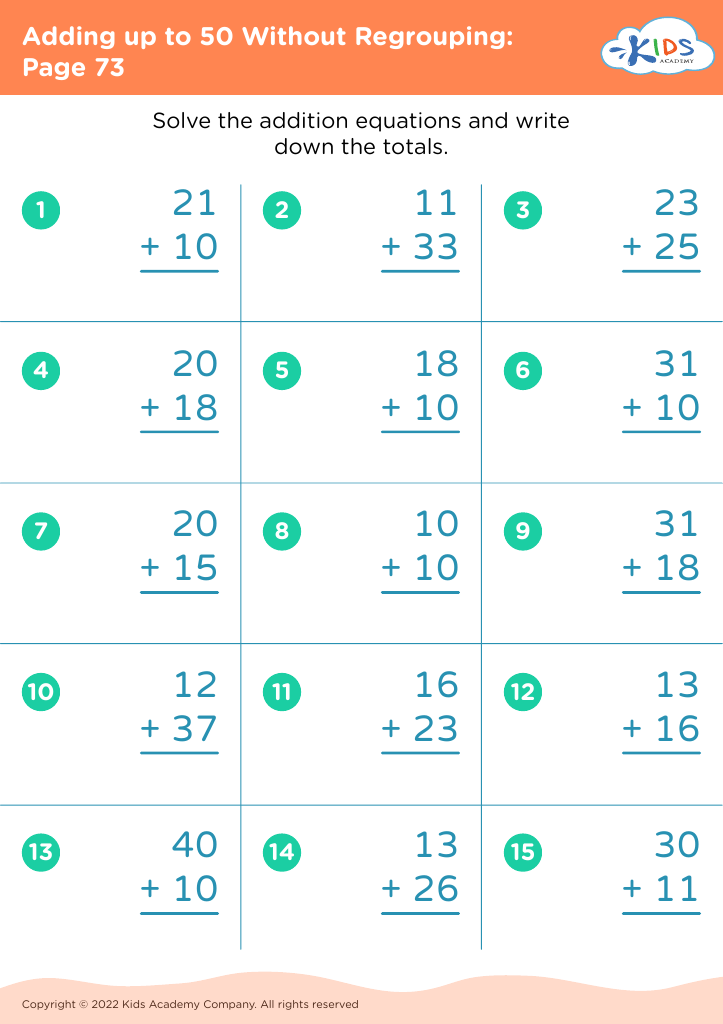
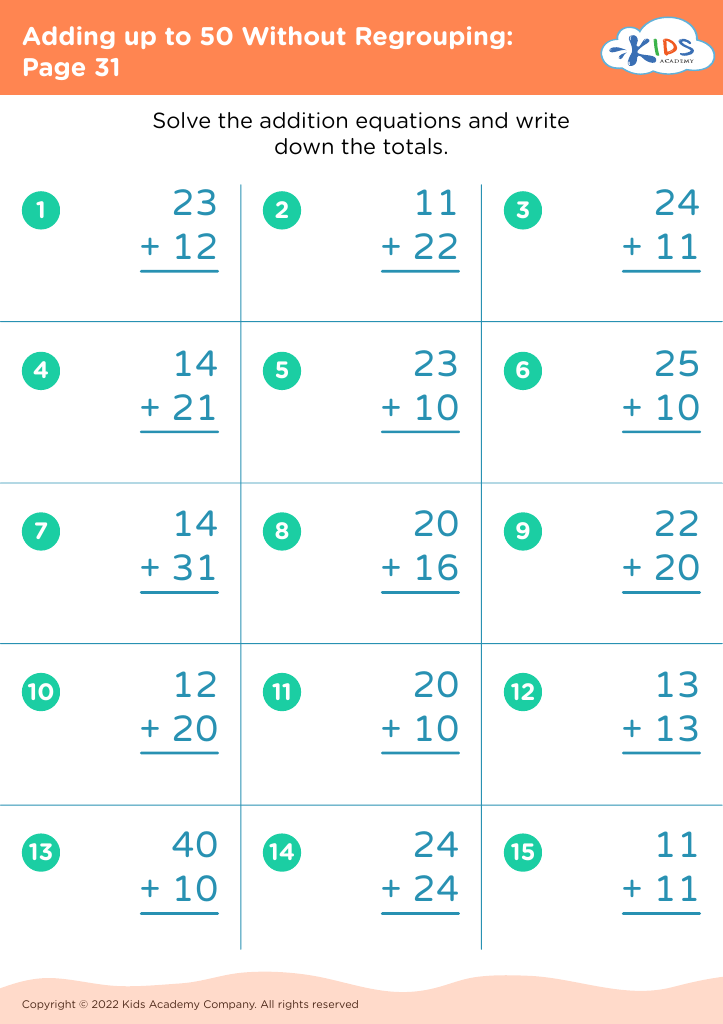
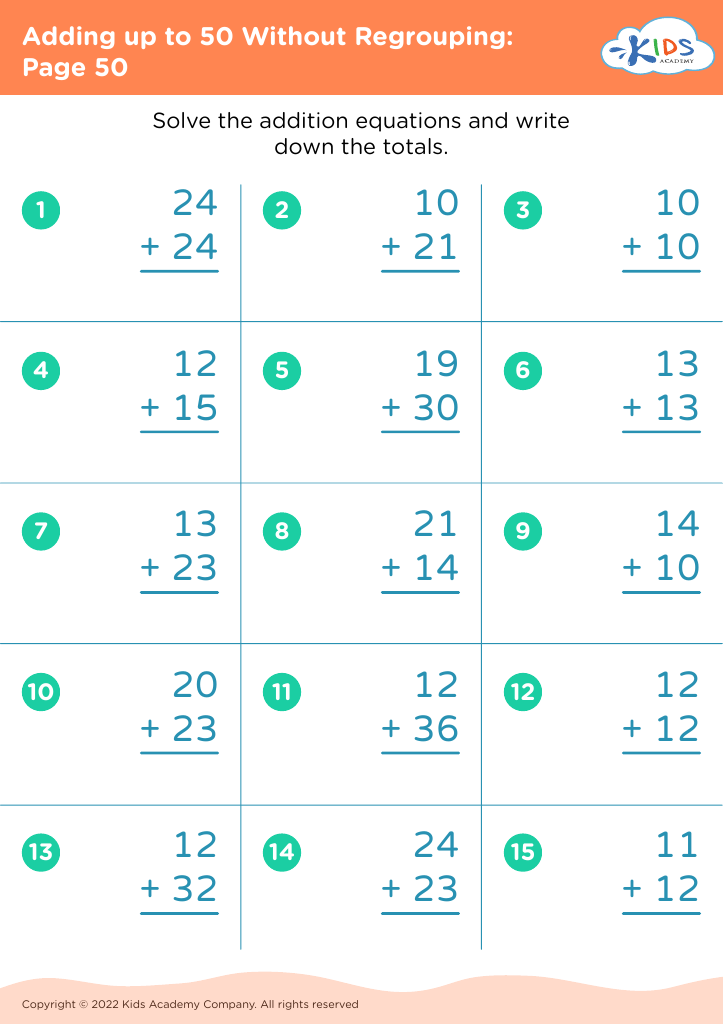


Understanding fractions and simple addition without regrouping up to 50 is crucial for children ages 4-8 as it lays the foundation for advanced mathematical concepts and everyday problem-solving skills. At this developmental stage, young minds are particularly receptive to grasping basic numerical relationships, making it an ideal time to introduce these concepts.
Fractions help children understand parts of a whole, sharing, and divisions, which are essential in both practical scenarios, like cutting a cake, and future math topics, such as percentages and algebra. Addition without regrouping reinforces the basic arithmetic needed for more complex operations. Mastery of this skill builds a child's confidence in math, paving the way for a positive attitude toward future learning.
Moreover, these mathematical skills follow a step-by-step logical sequence that enhances a child's reasoning and critical thinking abilities. Early proficiency in fractions and straightforward addition also supports cognitive development in other areas, like spatial awareness and problem-solving. Engaging activities and visuals can make learning fractions fun and relevant, ensuring children grasp these key concepts in a meaningful way.
Ultimately, fostering an early understanding of fractions and addition strengthens a child's academic foundation, empowering them with the tools necessary for success in school and everyday life.