Animal identification Addition & Subtraction Worksheets for Ages 4-8 - Page 2
28 filtered results
-
From - To
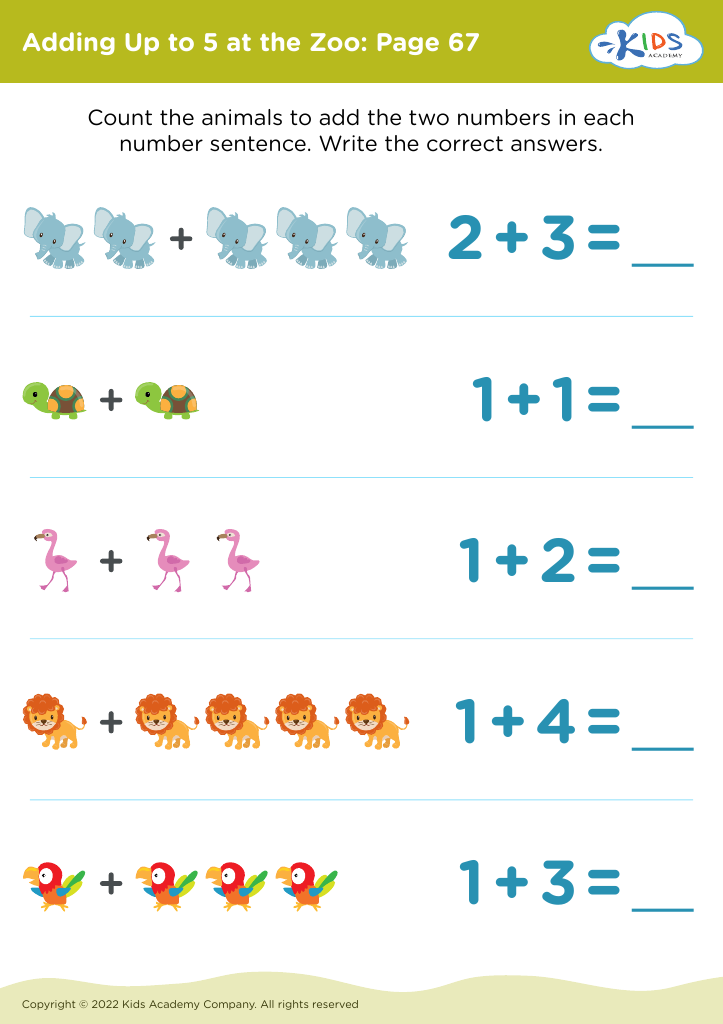
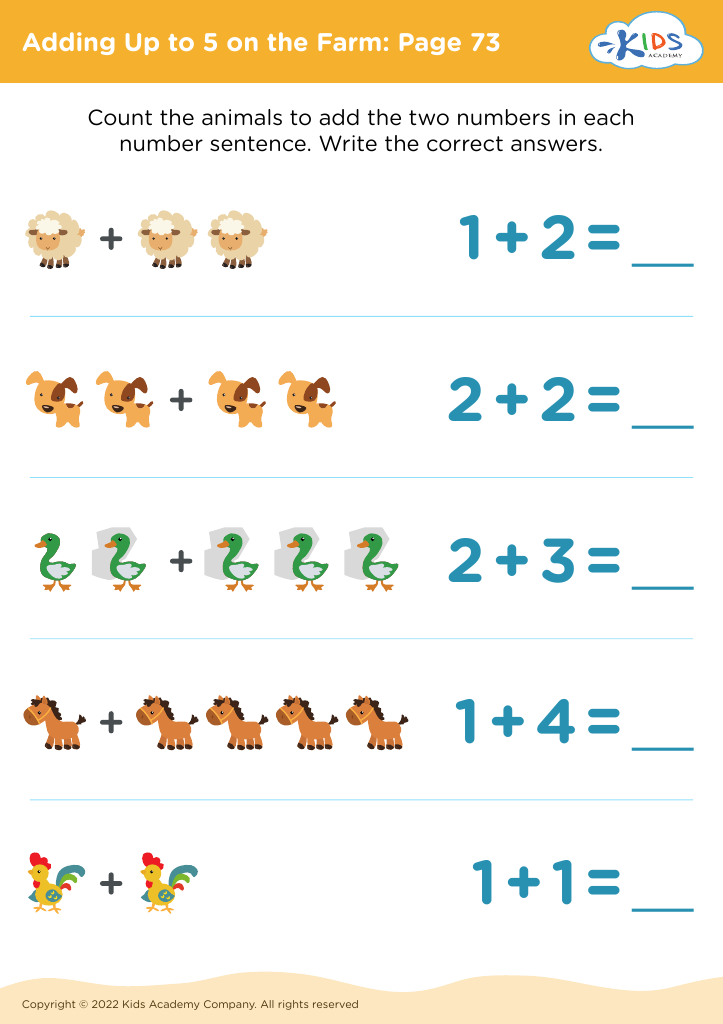
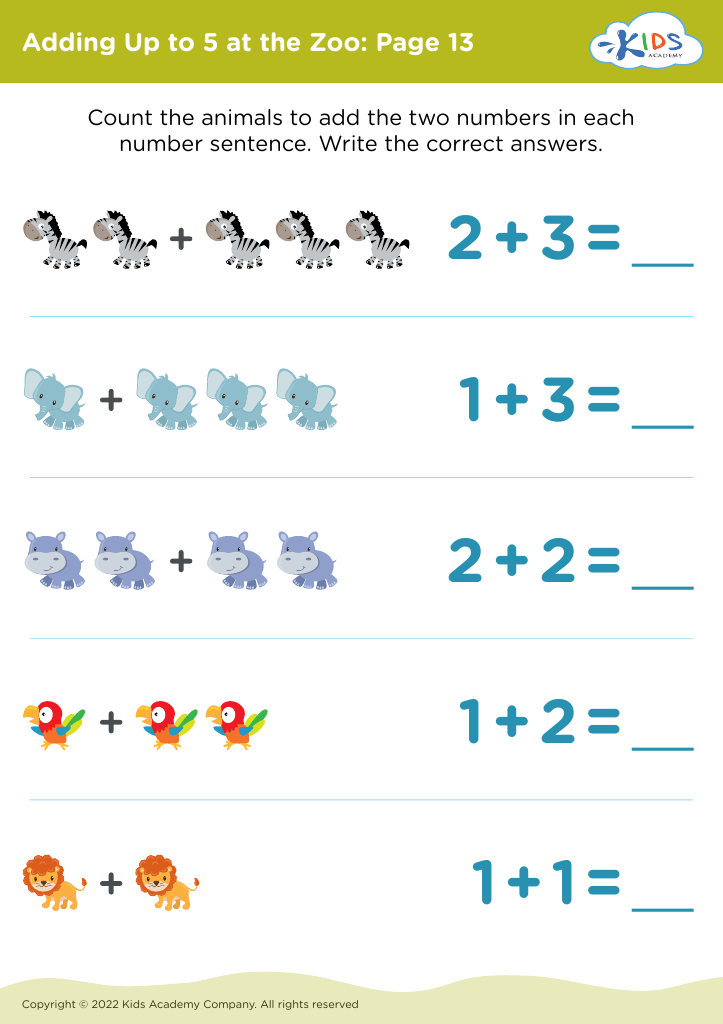
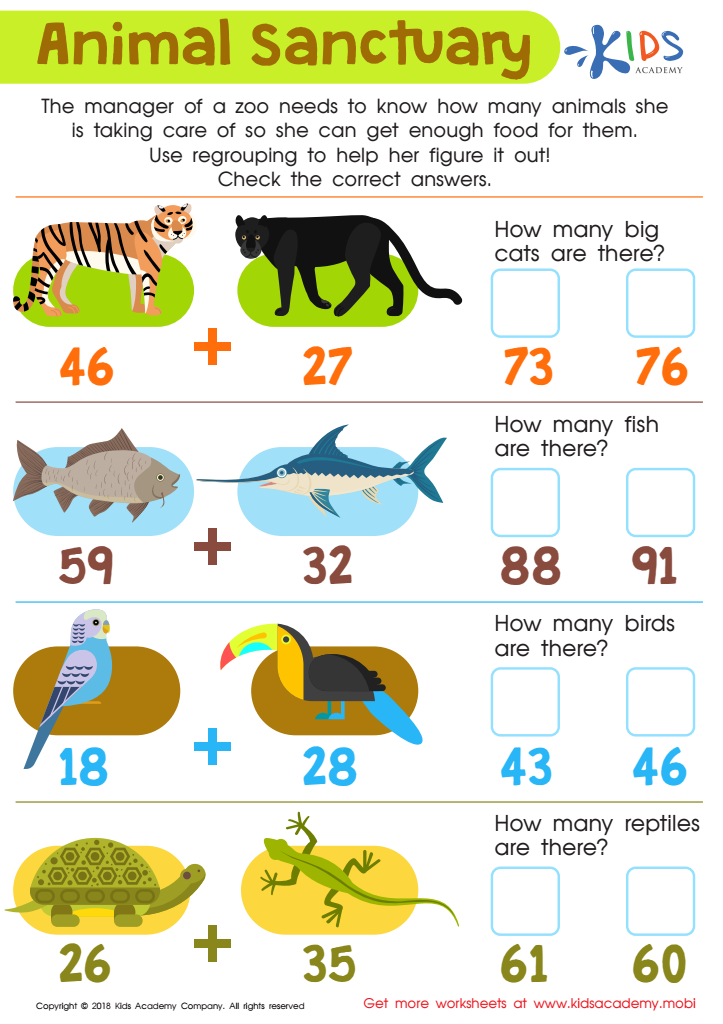
Animal Sanctuary Worksheet
 Assign to My Students








Animal identification, combined with addition and subtraction, offers a unique and engaging way for children aged 4-8 to enhance their mathematical skills while nurturing a sense of curiosity about the world around them. Parents and teachers should care about this approach as it seamlessly integrates learning with play, making math fun and relatable.
This method not only helps children recognize various animals but also encourages counting, comparison, and basic operations through interactive activities. For instance, using animals in story problems can simplify complex concepts by connecting abstract numbers to tangible, familiar images. When children identify animals and solve problems involving them—like figuring out how many more elephants than lions there are—they are actively applying math skills in real-life contexts.
Moreover, it cultivates critical thinking and increases cognitive development as children learn to analyze and evaluate information. As they engage in collaborative activities with peers or family, social skills are sharpened. In fostering such connections, parents and educators prepare young learners for more advanced concepts, ensuring a solid foundation in math while also promoting a love for learning about animals and nature. Ultimately, this intersection of subjects can inspire lifelong interests and skills in both mathematics and environmental awareness.








