Comparing quantities Addition & Subtraction Worksheets for Ages 4-8
8 filtered results
-
From - To
Discover our Collection of Comparing Quantities Addition & Subtraction Worksheets for Ages 4-8! These engaging and colorful worksheets are designed to help young learners build strong foundational math skills. Through fun, interactive activities, children will learn to compare quantities, and perform basic addition and subtraction. Developed to align with educational standards, our printable resources not only foster problem-solving skills but also boost confidence in math. Ideal for both classroom and home use, these worksheets are perfect for making math enjoyable and exciting for your little ones. Download now to jumpstart their love for learning!
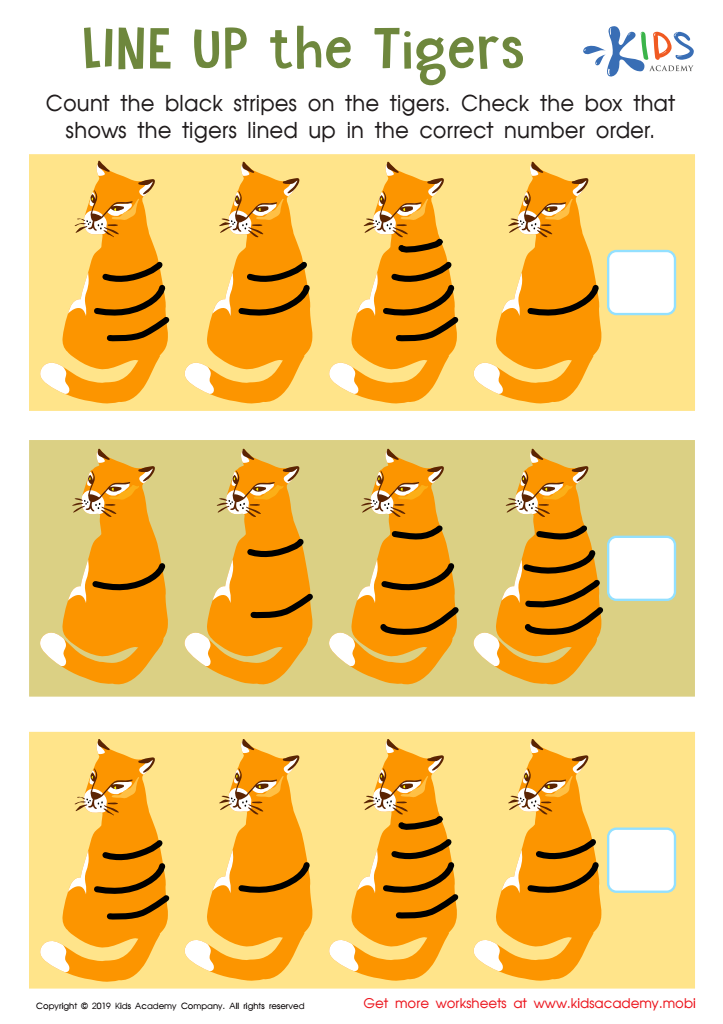
Line up the Tigers Worksheet
 Assign to My Students
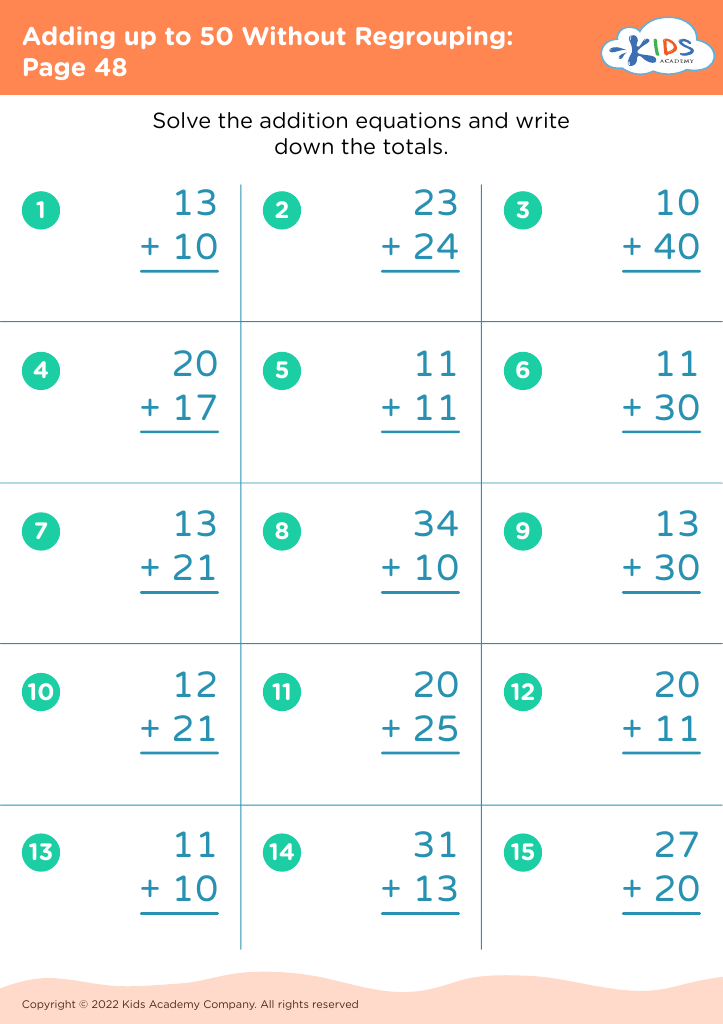
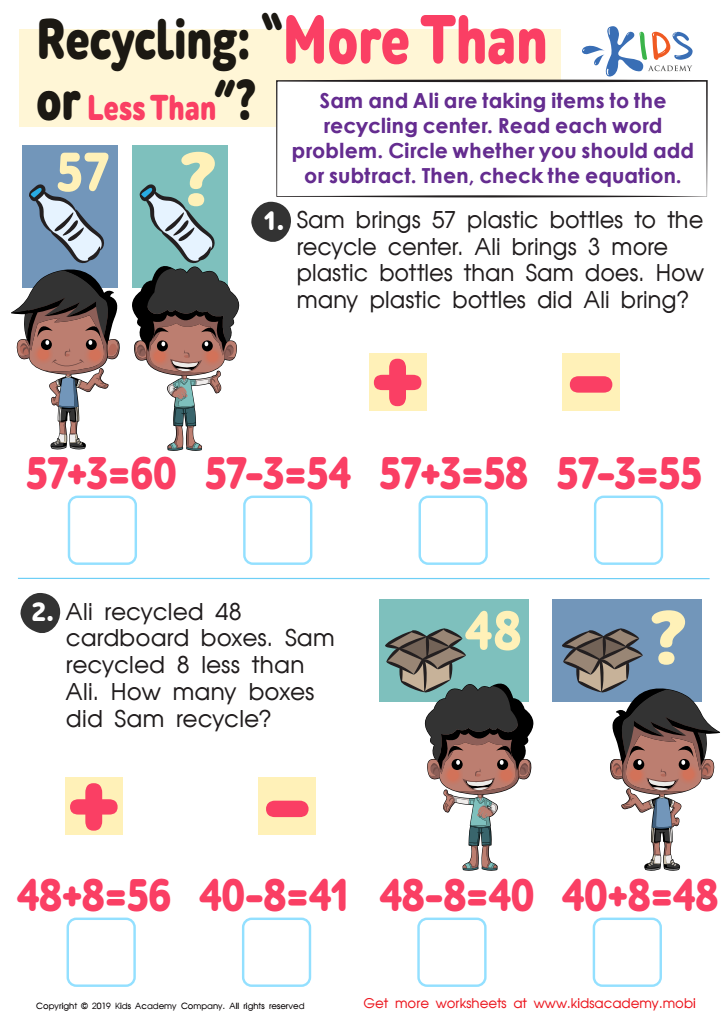
Recycling - More or Less Worksheet
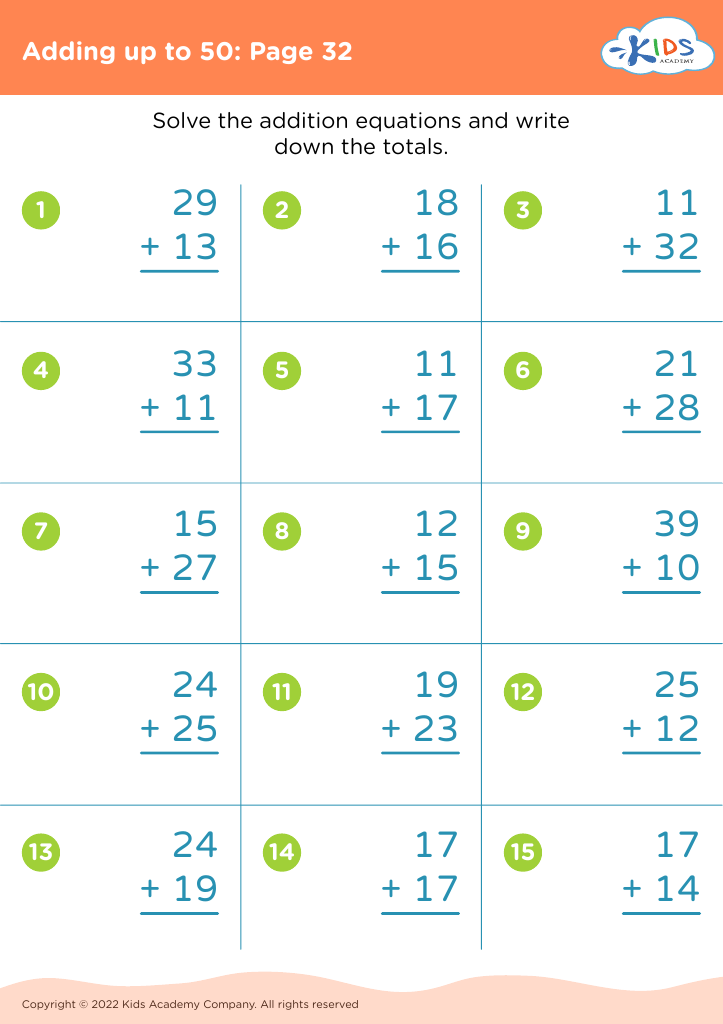








Parents and teachers should be deeply invested in teaching comparing quantities, addition, and subtraction to children aged 4-8 because these fundamental skills lay the groundwork for future mathematical understanding and everyday problem-solving. At this developmental stage, young minds are highly receptive and capable of grasping basic mathematical concepts through engaging, hands-on activities.
Learning to compare quantities helps children understand the concepts of more and less, which is essential for making sense of the world around them. It introduces them to critical thinking and decision-making, fostering analytical skills they'll use throughout their lives.
Addition and subtraction are foundational arithmetic skills that underpin nearly all subsequent math learning. Mastery of these operations provides children with the tools needed to tackle more complex mathematical problems in later grades. These skills also enhance cognitive development, improving memory, focus, and logical reasoning.
Furthermore, engaging children in math-related activities promotes a positive attitude toward the subject, reducing math anxiety as they grow older. Parents and teachers who prioritize these mathematical foundations help build children's confidence, encouraging them to view math not as a daunting challenge, but as an enjoyable and approachable subject critical to their academic and personal growth. Fueling this curiosity early can lead to a lifelong love for learning and exploring numerical concepts.








