Counting accuracy Addition & Subtraction Worksheets for Ages 4-8
3 filtered results
-
From - To
Discover a fun and engaging way to enhance your child's math skills with our Counting Accuracy Addition & Subtraction Worksheets, designed for ages 4 to 8! These worksheets focus on building a solid foundation in counting accuracy while introducing essential addition and subtraction concepts. Each activity is tailored to capture your child’s interest, promoting both understanding and enjoyment in learning. Ideal for use at home or in the classroom, our printable resources help young learners develop confidence in their math abilities. Boost your child's math proficiency and make learning enjoyable with our thoughtfully crafted worksheets today!
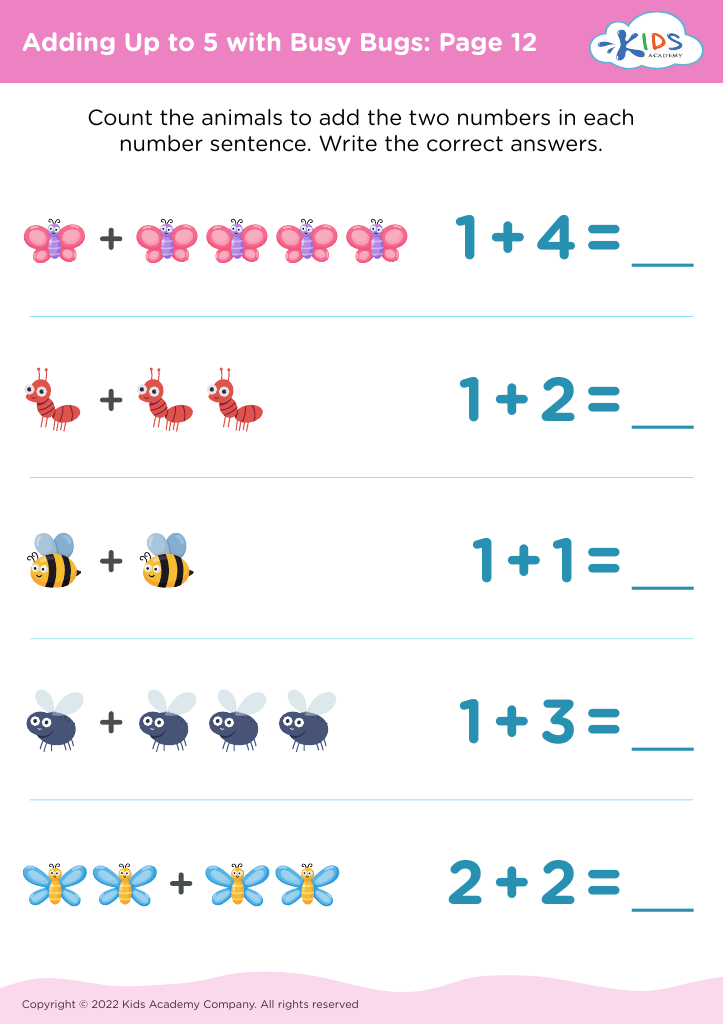
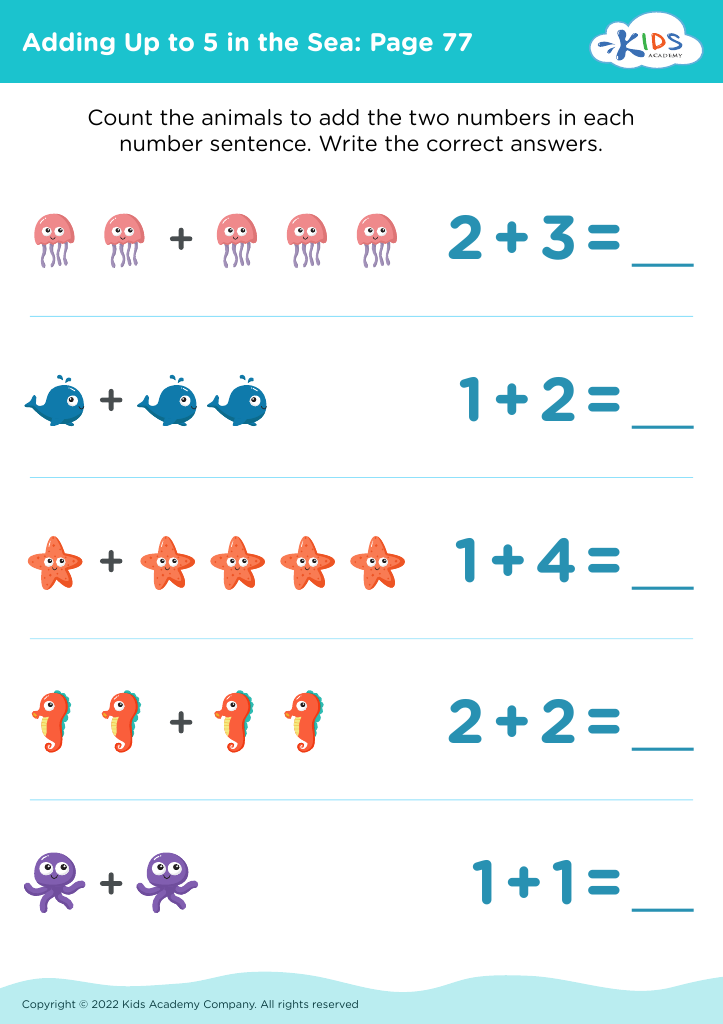
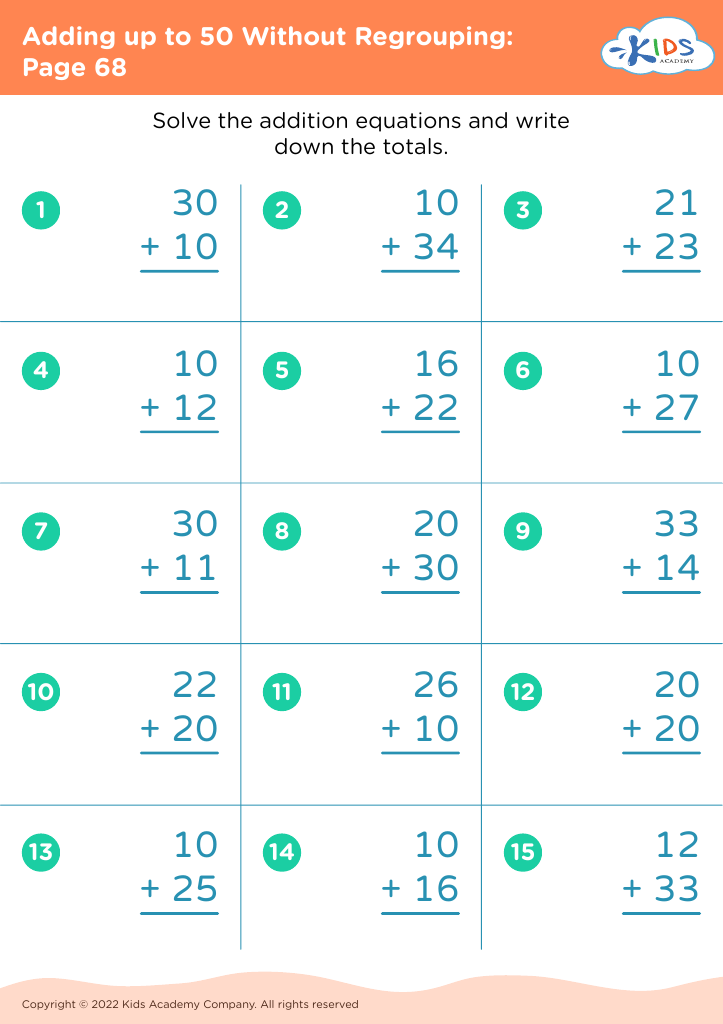








Counting accuracy in addition and subtraction is crucial for children aged 4 to 8 as it lays the foundational skills for their future mathematical learning. During these formative years, children are developing their understanding of numbers and mathematical concepts. Mastery of counting helps them not only assess quantities accurately but also serves as a stepping stone for grasping more complex operations.
When children learn to add and subtract accurately, they enhance their problem-solving skills and boost their confidence in tackling math-related tasks. This proficiency is essential not just for academic success but also for everyday life situations, such as managing time, money, and resources.
Moreover, early mastery of counting and basic calculations promotes critical thinking and cognitive skills, encouraging children to recognize patterns and relationships among numbers. As parents and teachers, emphasizing counting accuracy fosters a positive attitude toward math, reducing future anxieties related to the subject. Addressing these skills during this developmental stage enhances their overall learning experience, making math fun and approachable. In short, nurturing counting accuracy in young learners is vital for cultivating a strong mathematical foundation that supports lifelong learning and competence in mathematics.








