Improving math skills Addition & Subtraction Worksheets for Ages 4-8 - Page 2
32 filtered results
-
From - To
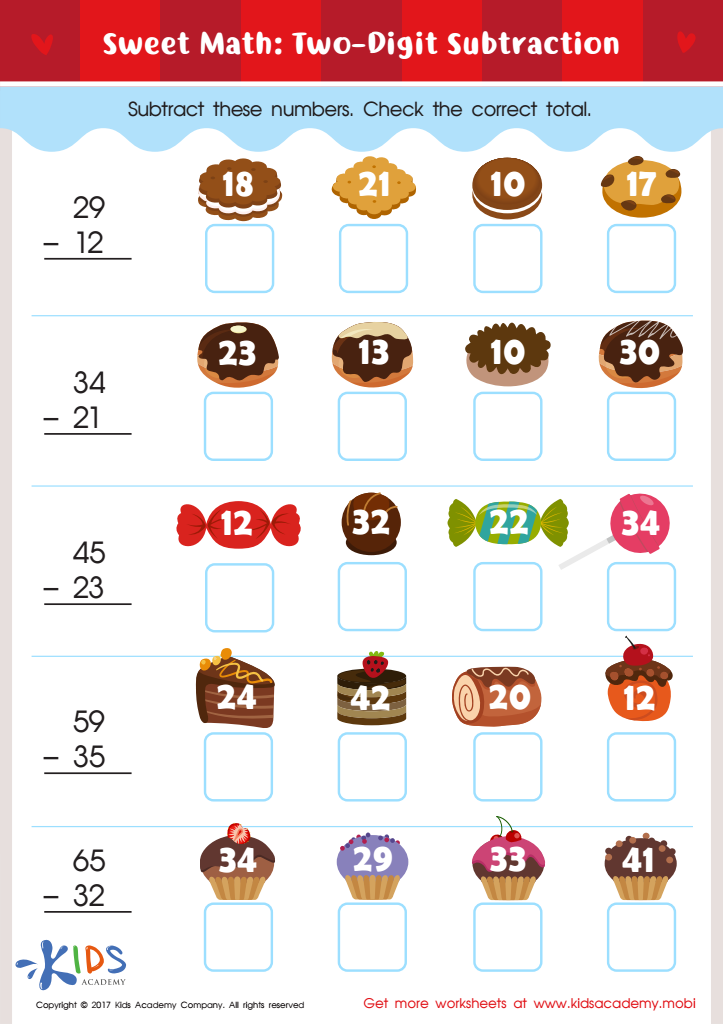
Two Digit Subtraction Worksheet
 Assign to My Students
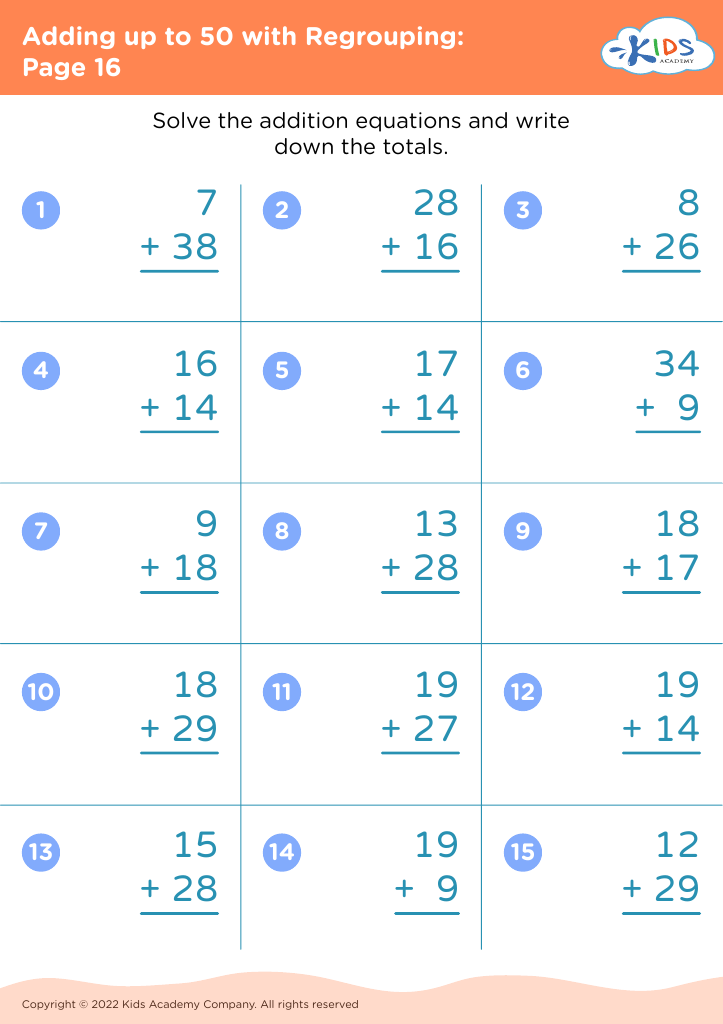
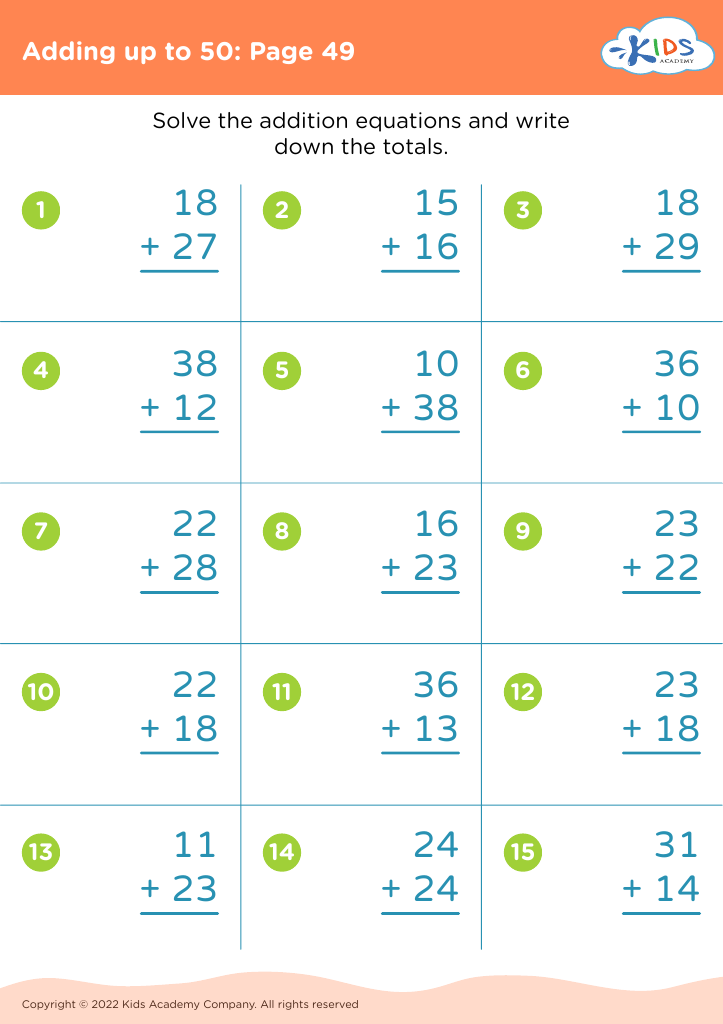
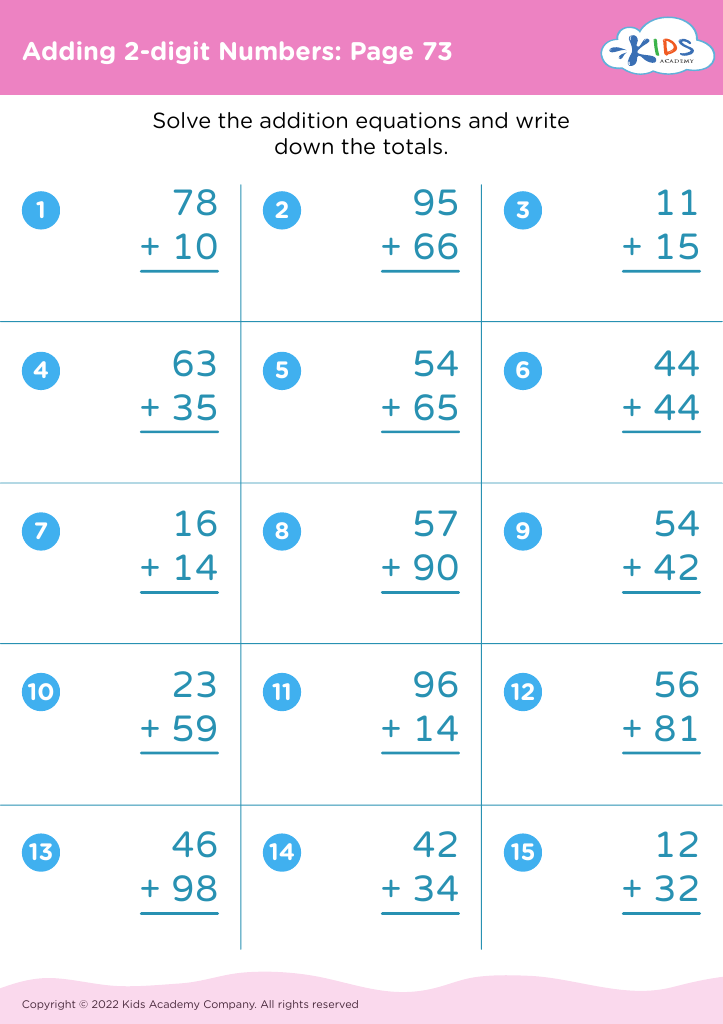
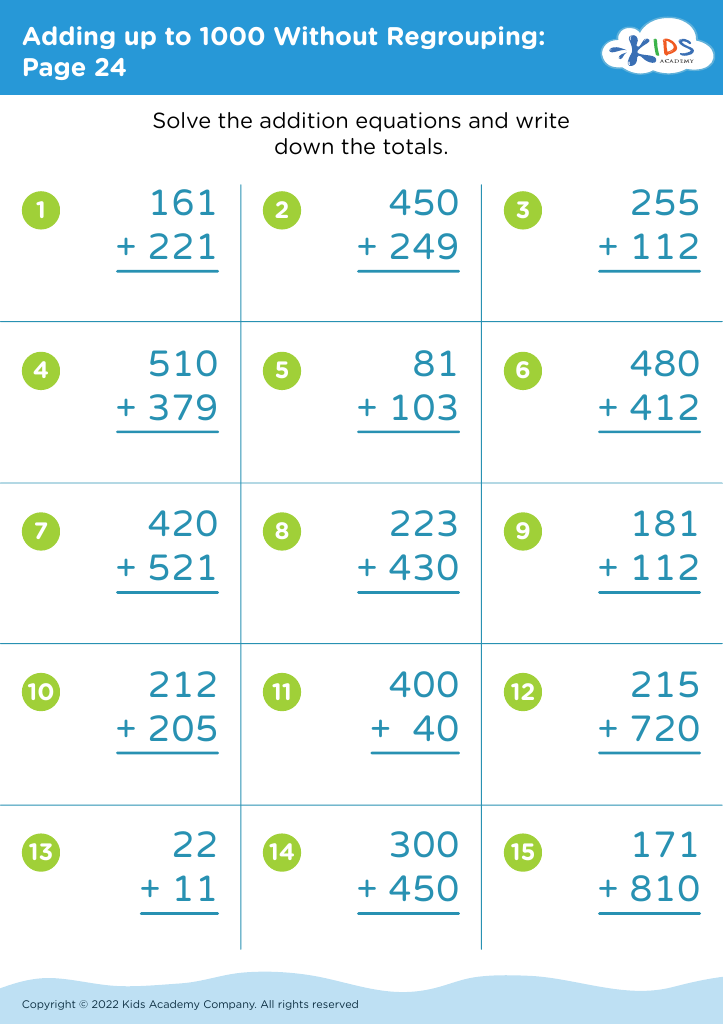








Improving math skills in addition and subtraction for children ages 4-8 is crucial because it serves as the foundation for their future academic success and overall cognitive development. At this developmental stage, kids are highly receptive to new information, and nurturing their numerical abilities can positively impact their problem-solving skills and logical thinking. Mastering basic arithmetic operations like addition and subtraction can build their confidence, making them more inclined to tackle more complex mathematical concepts later on.
Early exposure to these skills also enhances their ability to perform everyday tasks, such as counting money, measuring ingredients for a recipe, or following a schedule. These activities integrate math into their daily lives, making it more relevant and less intimidating.
Additionally, proficiency in math fosters a sense of accomplishment that can be highly motivating. It prepares them for formal schooling where understanding math is essential not just for math classes but across various subjects that require analytical thinking.
Parents and teachers play a pivotal role in creating a supportive learning environment that encourages curiosity and perseverance. Through engaging activities and practice, they can help eliminate the myth that math is difficult or scary, setting children on a path to lifelong curiosity and academic achievement.








