
Pattern identification Addition & Subtraction Worksheets for Ages 4-8
4 filtered results
Difficulty Level
Grade
Age
-
From - To
Subject
Activity
Standards
Discover our engaging Pattern Identification Addition & Subtraction Worksheets designed specifically for children aged 4-8! These worksheets not only reinforce foundational math skills but also encourage kids to recognize and create patterns. By incorporating fun illustrations and interactive exercises, children will develop their critical thinking and problem-solving abilities. Perfect for parents and educators, these resources make learning math enjoyable and effective. Help your child build confidence in their arithmetic skills while enhancing their cognitive development through playful pattern-related activities. Explore our collection today to give your young learner the tools they need for a successful math journey!
Favorites
With answer key
Interactive
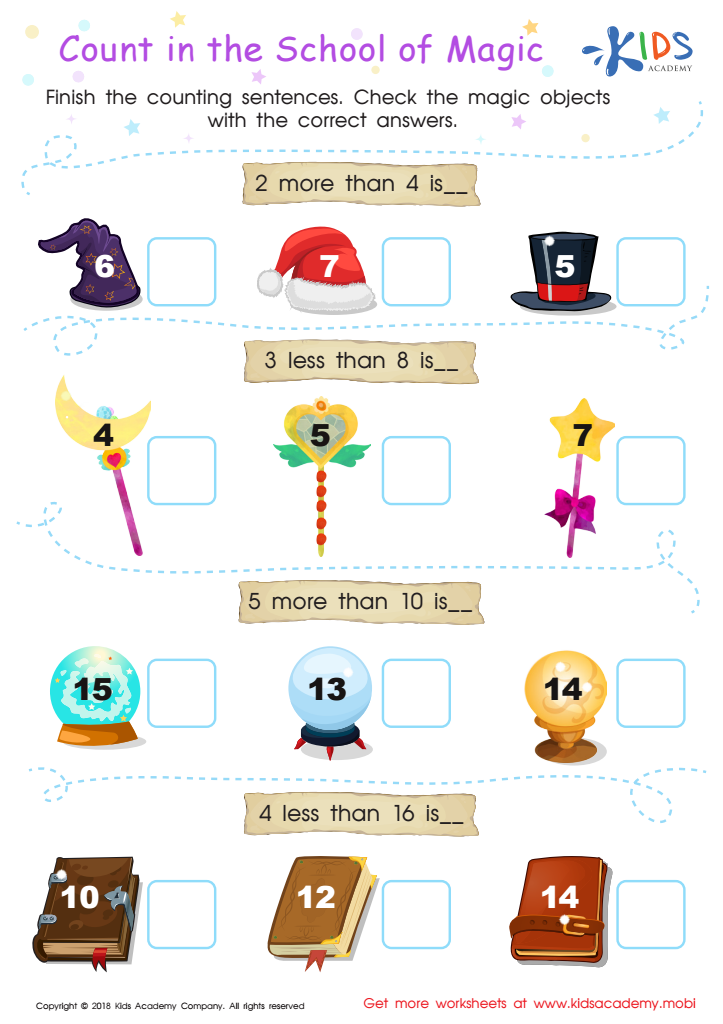
Count in the School of Magic Worksheet
Your math learners can explore the School of Magic with this worksheet. They'll read equations with addition and subtraction numbers under 20, count back and forth to find the answer, then complete the counting sentences. Fun pictures and easy accuracy make it an enjoyable and successful learning experience.
 Assign to My Students
Count in the School of Magic Worksheet
Worksheet
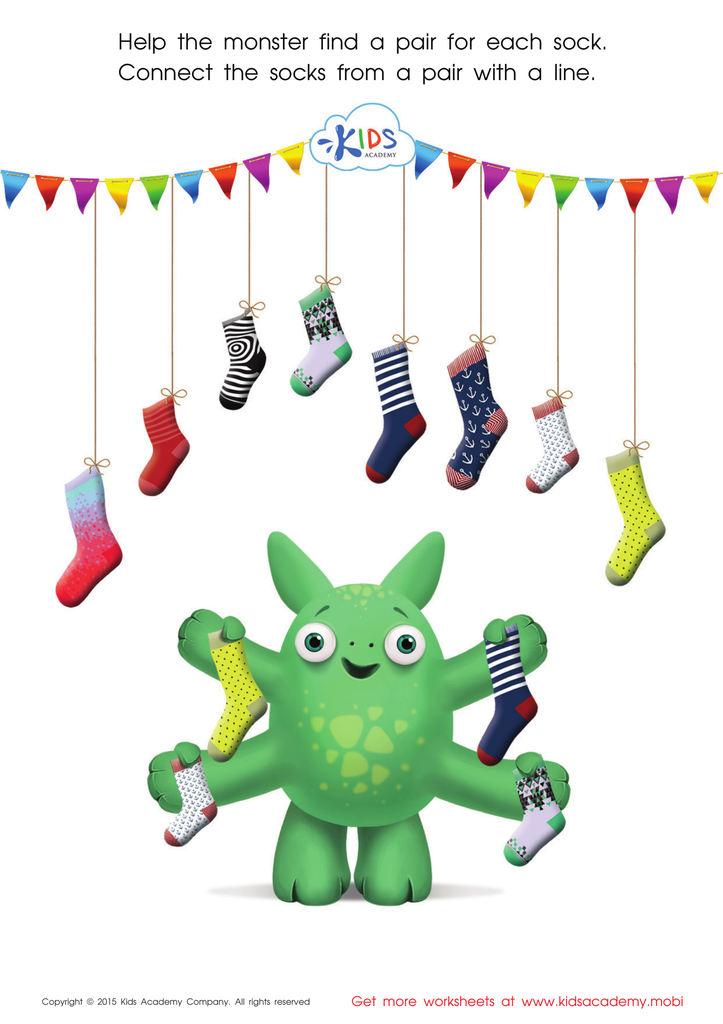
Math Matching Pairs Game: Monsterв's Socks Worksheet
Let your child learn, concentrate and practice sorting skills with this fun kindergarten worksheet. Matching polka dots, anchors, geo shapes and stripes on Monster's socks will help improve fine motor skills. Download and print this free worksheet and several others on different topics.
Math Matching Pairs Game: Monsterв's Socks Worksheet
Worksheet
Join Kids Academy for Free
Who is primarily going to use this learning content?








Pattern identification in addition and subtraction is crucial for children aged 4-8, laying the foundation for their future math skills. Understanding patterns helps children recognize relationships between numbers, enabling them to predict outcomes and solve problems more efficiently. This skill fosters critical thinking and enhances their ability to grasp more complex mathematical concepts later, such as multiplication, division, and algebra.
Additionally, mastering basic addition and subtraction through patterns facilitates mental math skills, promoting quicker calculations and boosting confidence in their mathematical abilities. When children discover numerical patterns, they begin to see math as a structured and logical subject rather than abstract and intimidating. This increases engagement and motivation, essential elements for learning at this age.
For parents and teachers, nurturing these skills through games, activities, and discussions can create a positive learning environment, instilling a love for mathematics in young learners. Encouraging exploration of numerical patterns invites curiosity and validates their intuition in math. Engaged parents and teachers will notice improved problem-solving abilities, readying children for academic success and everyday life challenges. Ultimately, fostering pattern identification in young learners sets them up for a promising mathematical journey ahead.








