
Sequencing Skills Addition & Subtraction Worksheets for Ages 4-8
3 filtered results
Difficulty Level
Grade
Age
-
From - To
Subject
Activity
Standards
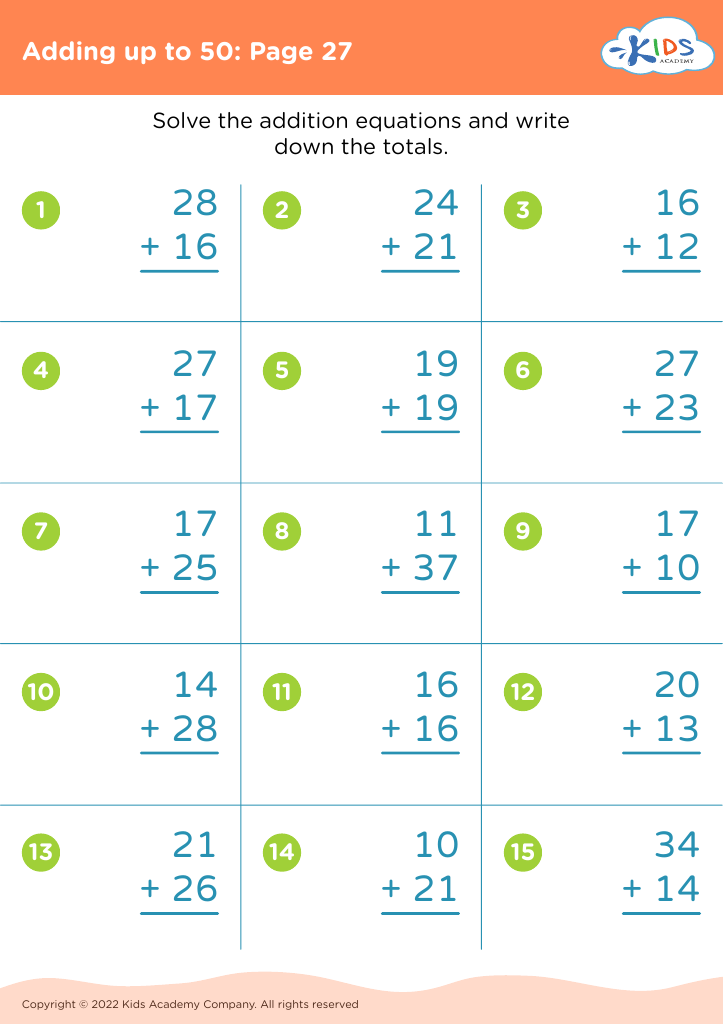
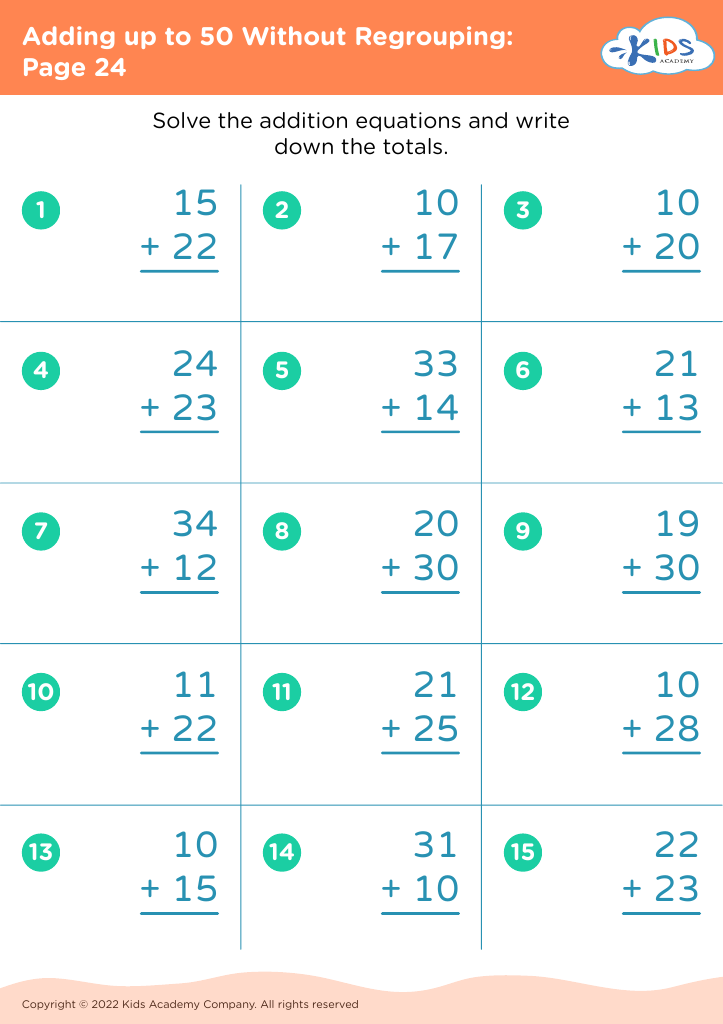
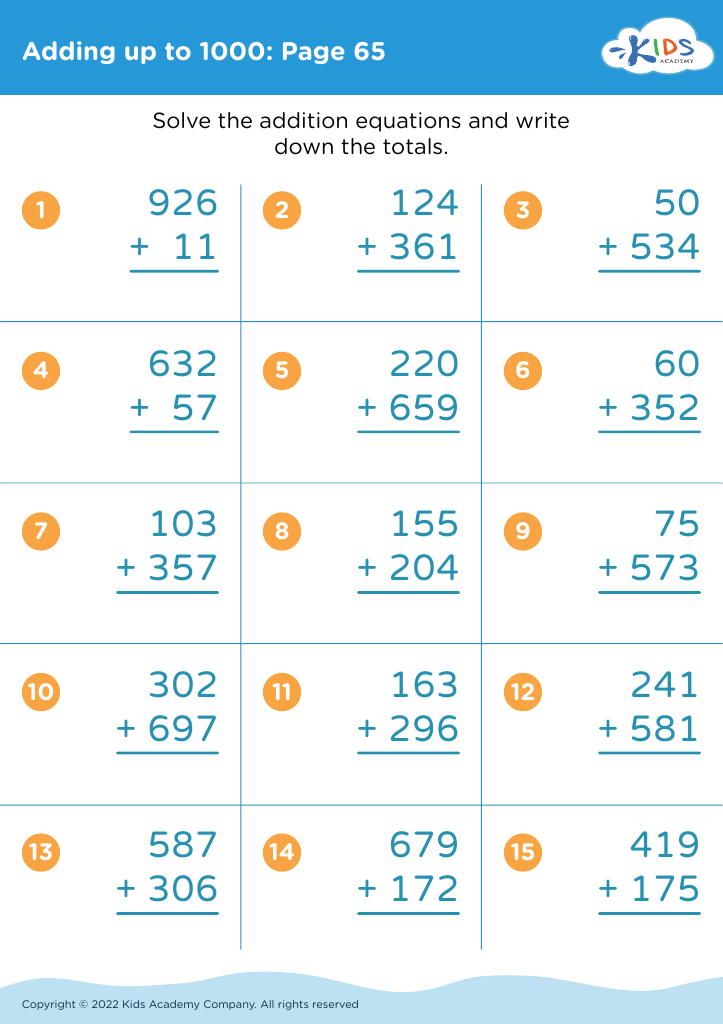
Discover our Sequencing Skills Addition and Subtraction Worksheets, designed specifically for children ages 4-8! These engaging worksheets help young learners master essential math concepts while developing sequencing skills. Each activity promotes logical thinking and problem-solving as kids practice placing numbers and operations in the correct order. With colorful illustrations and interactive exercises, these worksheets make math fun and accessible for early learners. Ideal for both classroom use and at-home practice, our resources support your child's academic growth and build a strong foundation in basic arithmetic. Get started today and unlock the joy of learning with our thoughtfully crafted worksheets!
Favorites
With answer key
Interactive
Join Kids Academy for Free
Who is primarily going to use this learning content?








Sequencing skills in addition and subtraction are fundamental for children aged 4-8 as they form the cornerstone of mathematical understanding. Developing these skills helps children grasp the logical order of operations, which is crucial for problem-solving and critical thinking tasks. When children learn to sequence steps in addition and subtraction, they build a solid foundation that supports more complex mathematical concepts later in their education, such as addition with larger numbers or even basic algebra.
Teachers and parents play a vital role in nurturing these skills, as early experiences can significantly impact a child's confidence in math. Engaging kids in activities that promote sequencing—like using number lines, manipulatives, and visual aids—can enhance their understanding and retention of mathematical concepts. Furthermore, strong sequencing skills can improve overall cognitive abilities and can help children more efficiently plan and execute tasks in various everyday situations beyond just math.
By caring about and fostering these skills, caregivers help create more competent and confident learners. This foundational understanding not only stimulates a love for mathematics but also lays the groundwork for academic success, enabling children to approach new challenges with curiosity and resilience. Investing time in sequencing skills today benefits children for years to come.








