
Basic Mathematics Addition Worksheets for Ages 4-8
3 filtered results
Difficulty Level
Grade
Age
-
From - To
Subject
Activity
Standards
Welcome to our Basic Mathematics Addition Worksheets for Ages 4-8! Our thoughtfully designed worksheets aim to make learning addition fun and engaging for young learners. Each activity focuses on helping children grasp fundamental mathematical concepts through colorful visuals, interactive exercises, and stimulating challenges. Suitable for preschoolers and early elementary students, these worksheets promote essential skills like number recognition, counting, and simple equations. Whether you’re homeschooling or supplementing classroom learning, our resources are perfect for building a solid math foundation. Encourage your child's growth and confidence in addition with our carefully curated worksheets tailored to their developmental needs!
Favorites
With answer key
Interactive
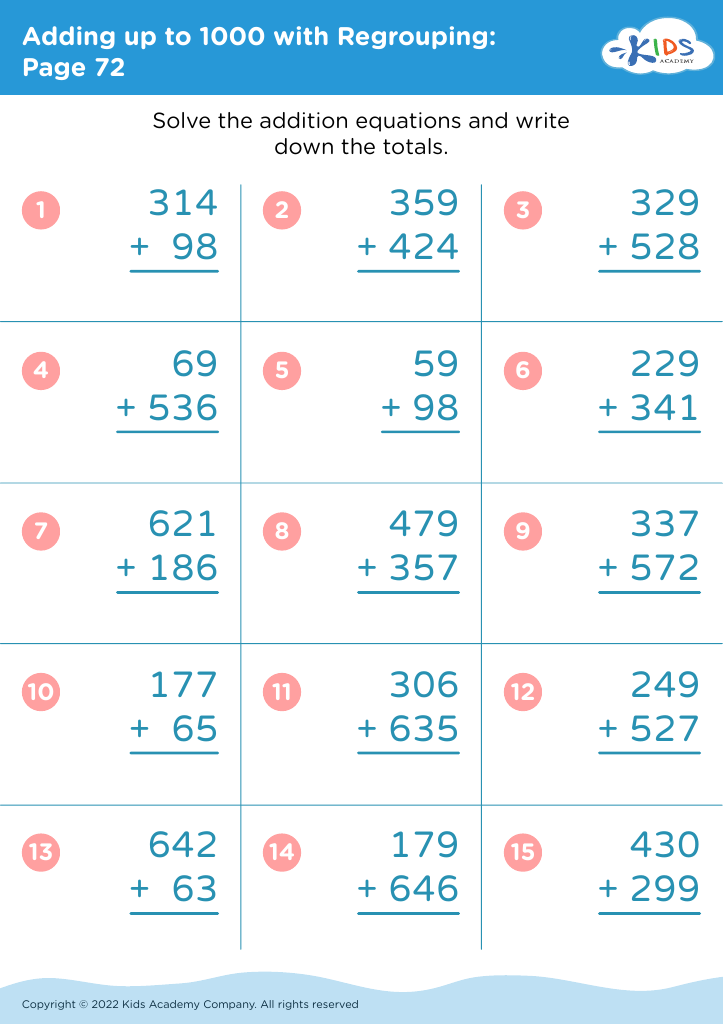
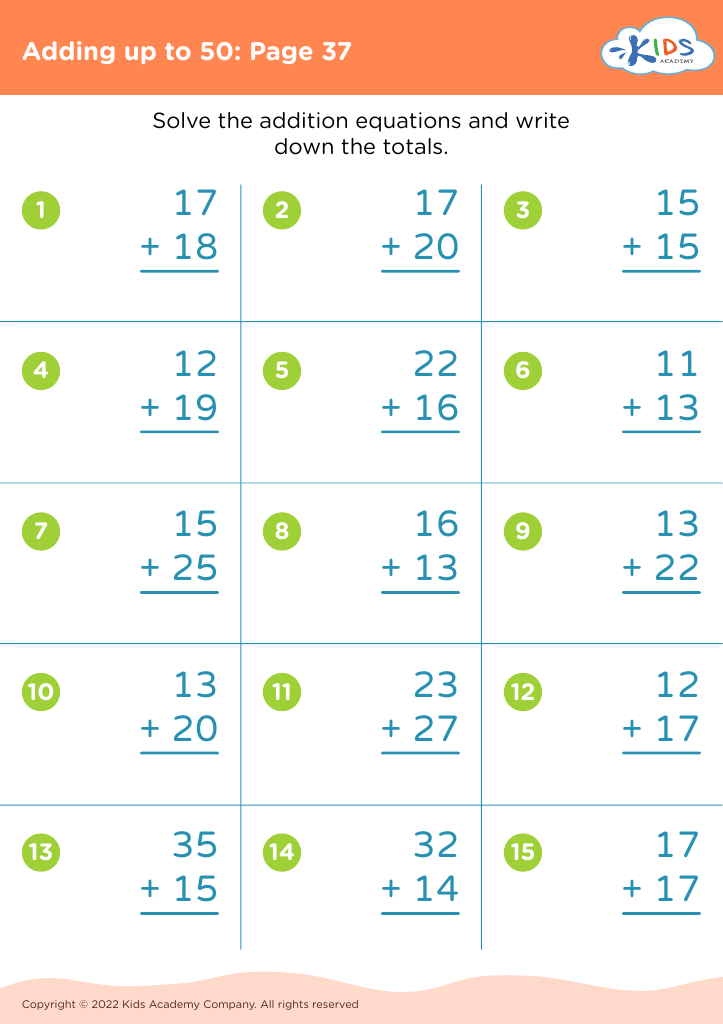
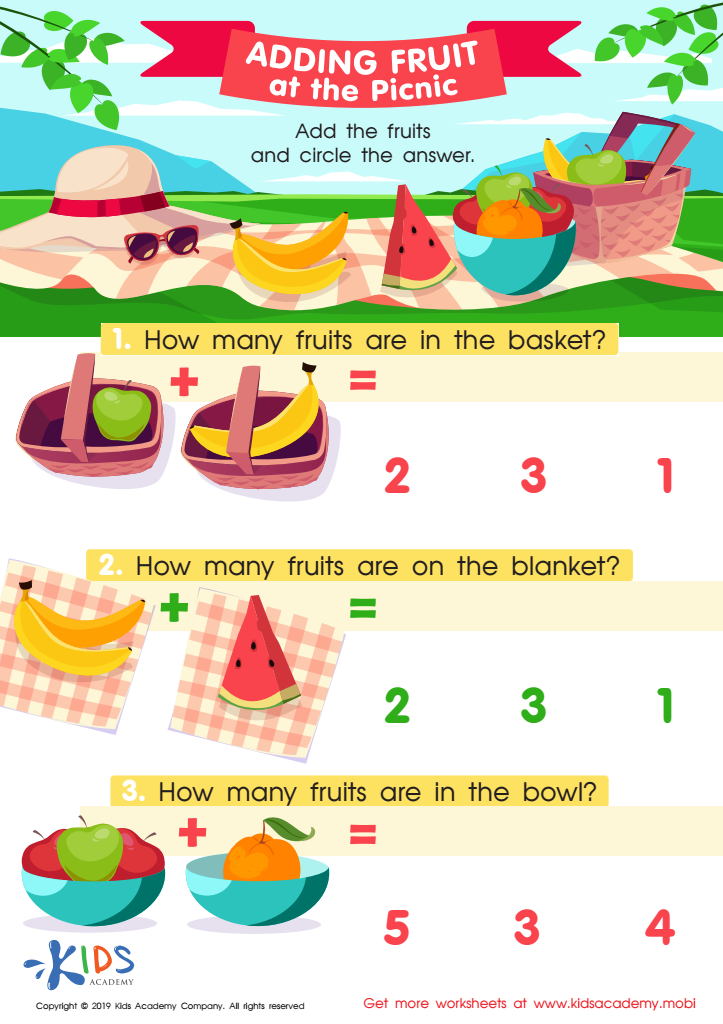
Adding Fruit at the Picnic Worksheet
Picnics are a great way for the family to enjoy a fun day in the sun! Get your kids involved by having them help load the picnic basket and do this worksheet to practice their math skills while they get ready. Identify the fruits in the picture, add them up, and circle the correct answer.
 Assign to My Students
Adding Fruit at the Picnic Worksheet
Worksheet
Join Kids Academy for Free
Who is primarily going to use this learning content?








Basic mathematics addition is a foundational skill for children aged 4-8 that plays a crucial role in their cognitive development. Understanding addition not only enhances a child's mathematical abilities but also builds problem-solving skills. Early math experiences help children begin to understand the concept of quantity and relationships, laying the groundwork for more complex mathematical ideas in later years.
Parents and teachers should prioritize addition because it encourages critical thinking and logical reasoning. Engaging with numbers can enhance memory and concentration; as children learn to add, they activate different areas of their brains, fostering overall cognitive development. Moreover, proficiency in addition boosts children's confidence and instills a positive attitude toward learning.
Additionally, mastering addition in early childhood can alleviate future math anxiety. Children who struggle with basic concepts are more likely to experience challenges in higher math. By nurturing these skills early, educators and parents can establish a strong base, facilitating easier transitions to more advanced topics in math.
Ultimately, fostering a love for math through engaging addition activities can create lifelong learners who appreciate the value of mathematical concepts in everyday life. Thus, parents and teachers should view basics like addition as vital investments in their children's future success.








