Filters

83 filtered results

Clear all filters
Favorites
With answer key
Interactive

83 filtered results

Difficulty Level

Grade


Boost your child's math skills with our "Comparing Fractions Addition Worksheets for Ages 4-8." These engaging and educational resources are designed to help young learners understand and compare basic fractions through fun and interactive addition exercises. Perfect for preschool to early elementary children, our worksheets simplify complex concepts with colorful visuals and easy-to-follow instructions. Whether used at home or in the classroom, these printables will enhance their number sense, encourage critical thinking, and foster a love for math. Join us at Kids Academy and make learning fractions an enjoyable adventure for your little ones!
Check out this FREE Trial Lesson on Addition for age 4-8!

Z

Favorites
With answer key
Interactive
  • 4-8
  • Comparing Fractions
  • Addition
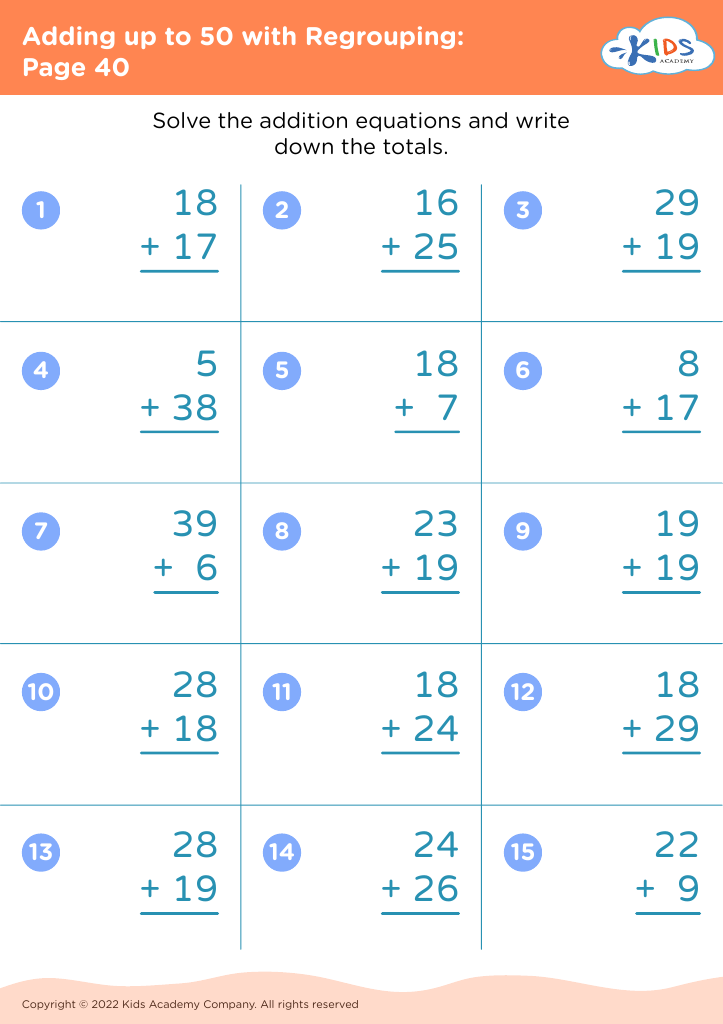
Adding up to 50 with Regrouping: Page 40
Worksheet
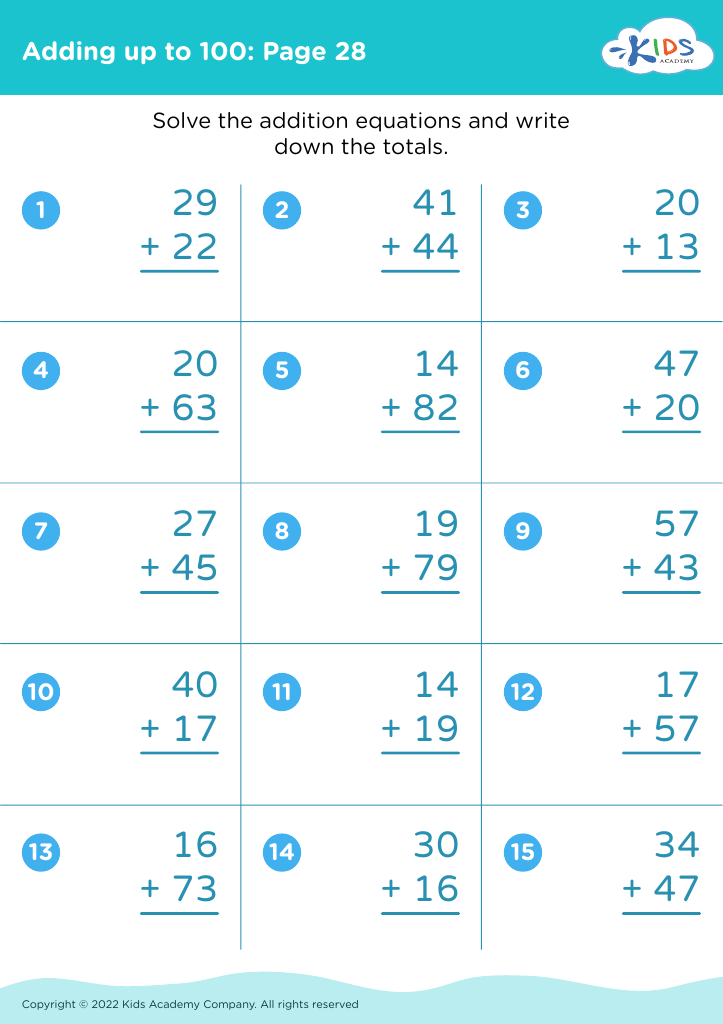
Adding up to 100: Page 28

Adding up to 100: Page 28

Adding up to 100: Page 28
Worksheet
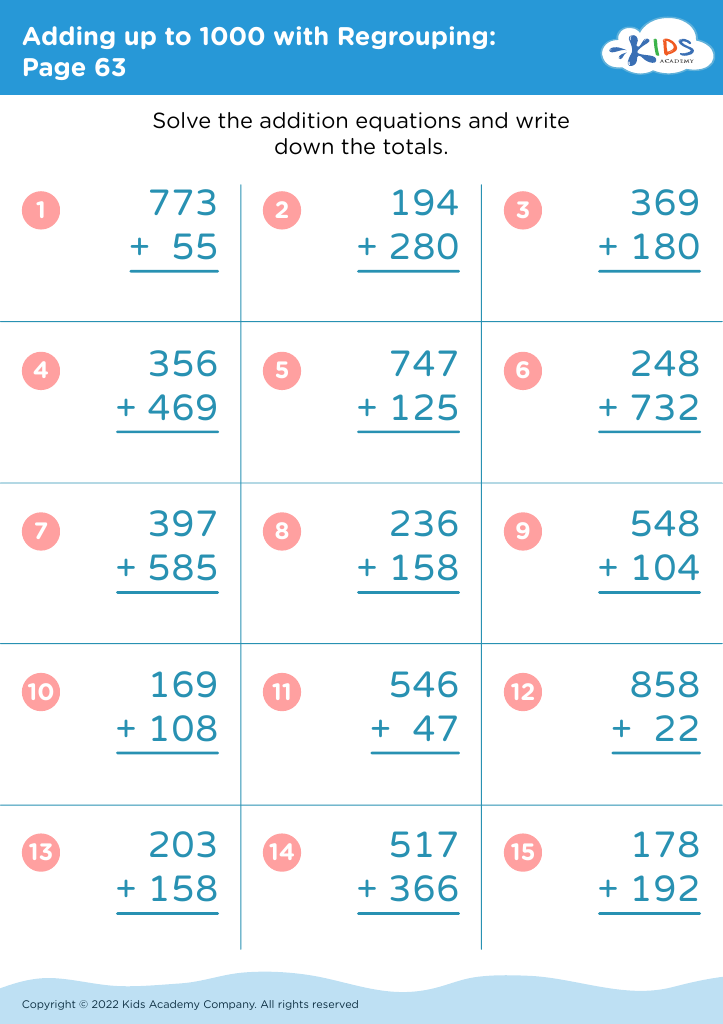
Adding up to 1000 with Regrouping: Page 63
Worksheet
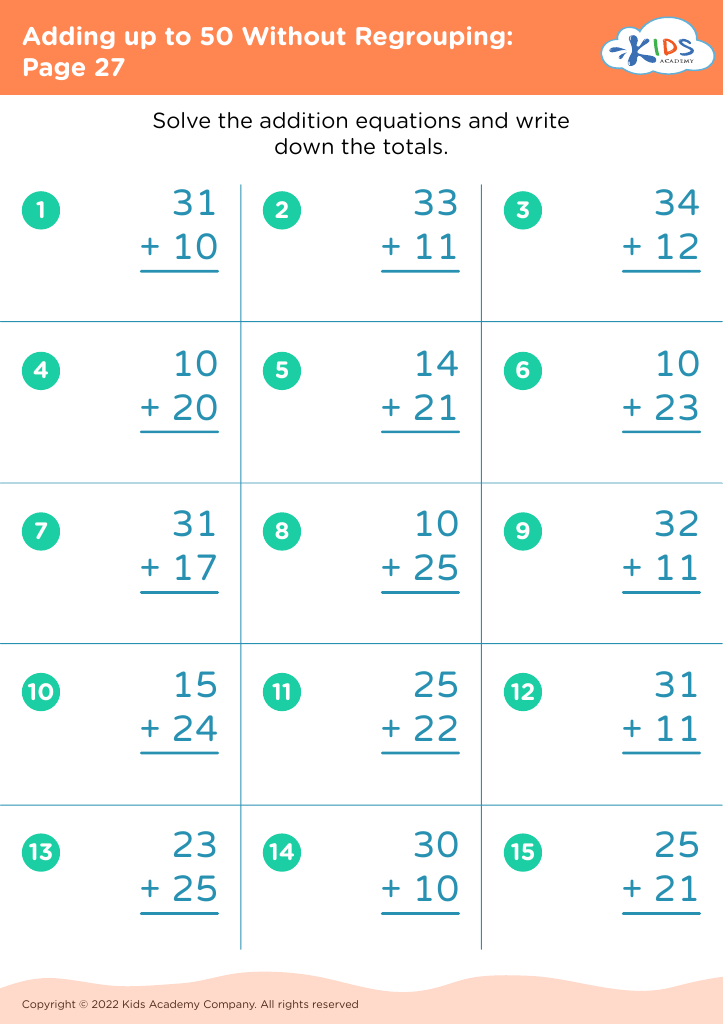
Adding up to 50 Without Regrouping: Page 27
Worksheet
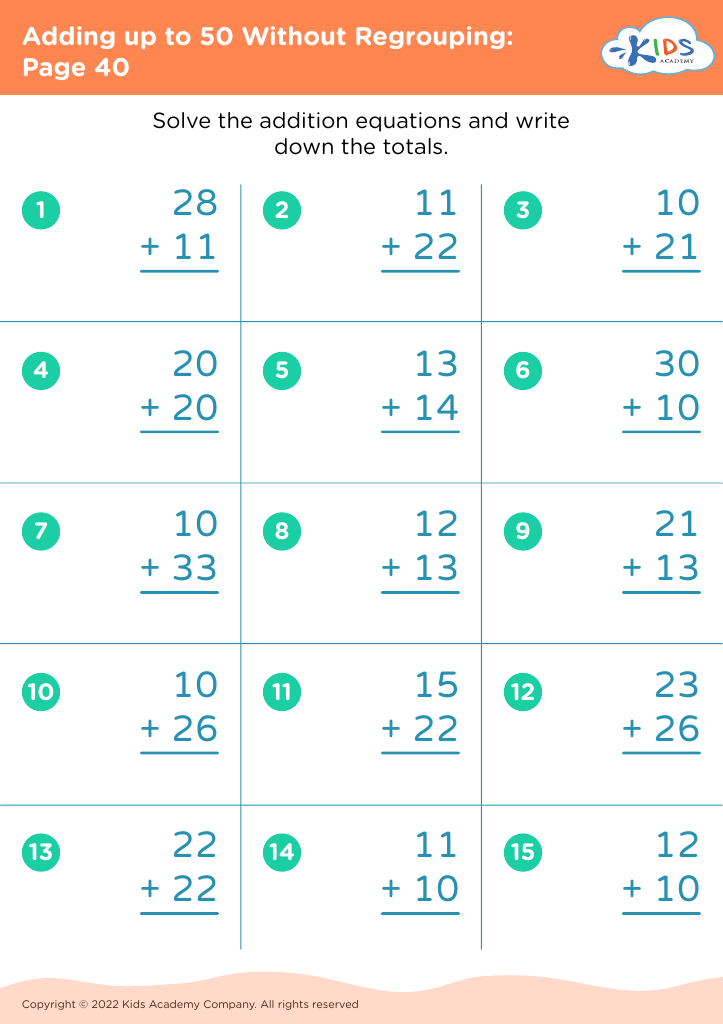
Adding up to 50 Without Regrouping: Page 40
Worksheet
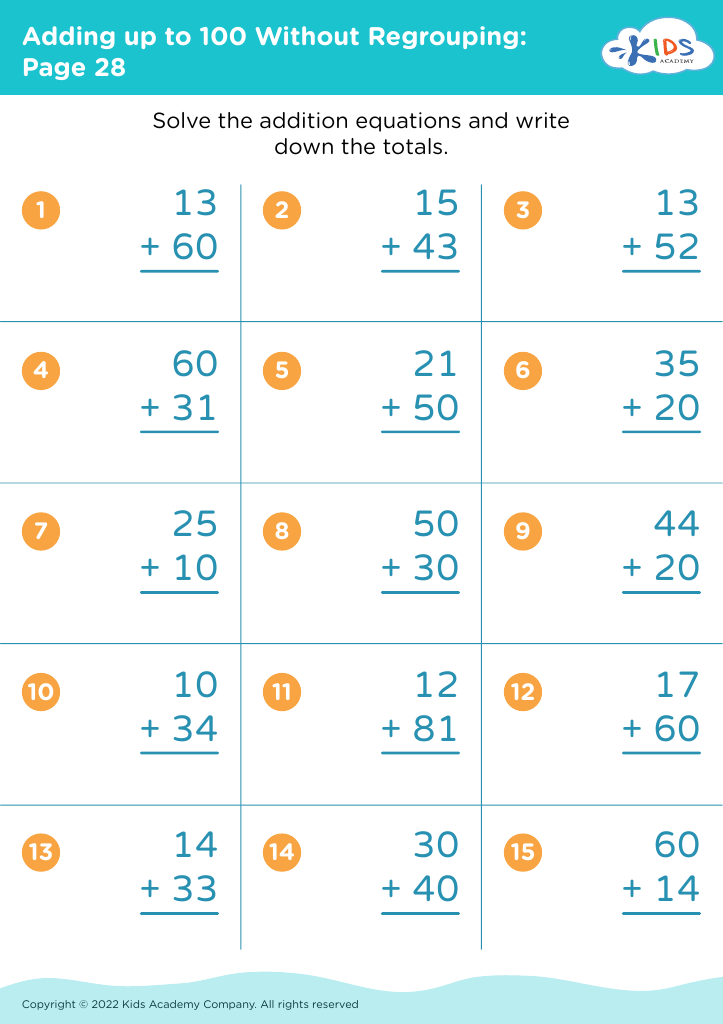
Adding up to 100 Without Regrouping: Page 28
Worksheet
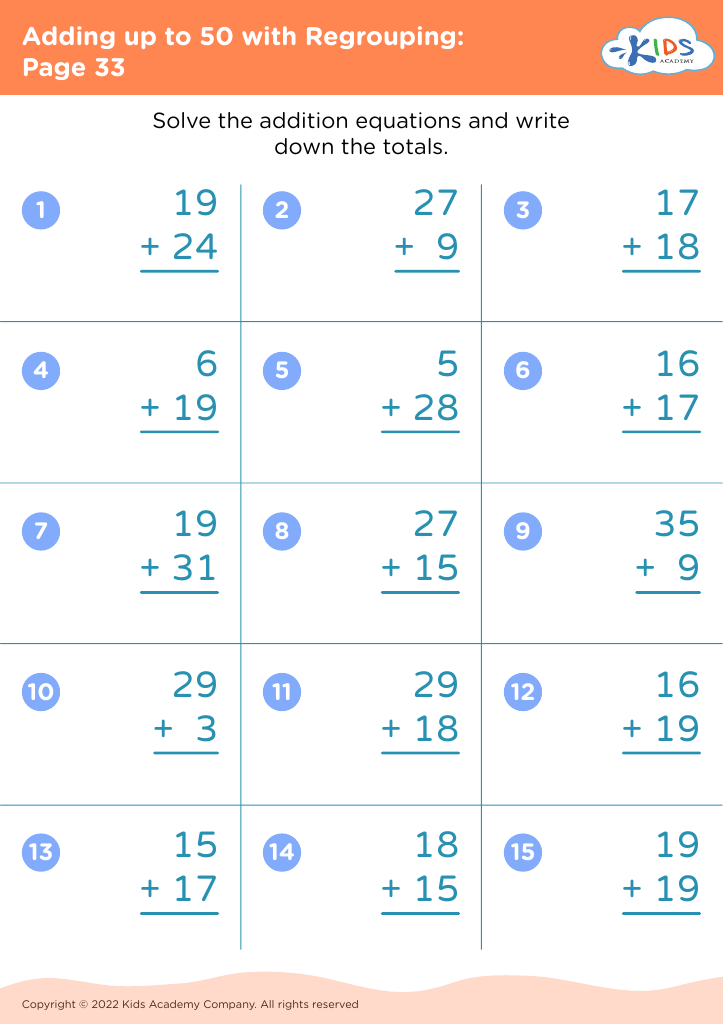
Adding up to 50 with Regrouping: Page 33
Worksheet
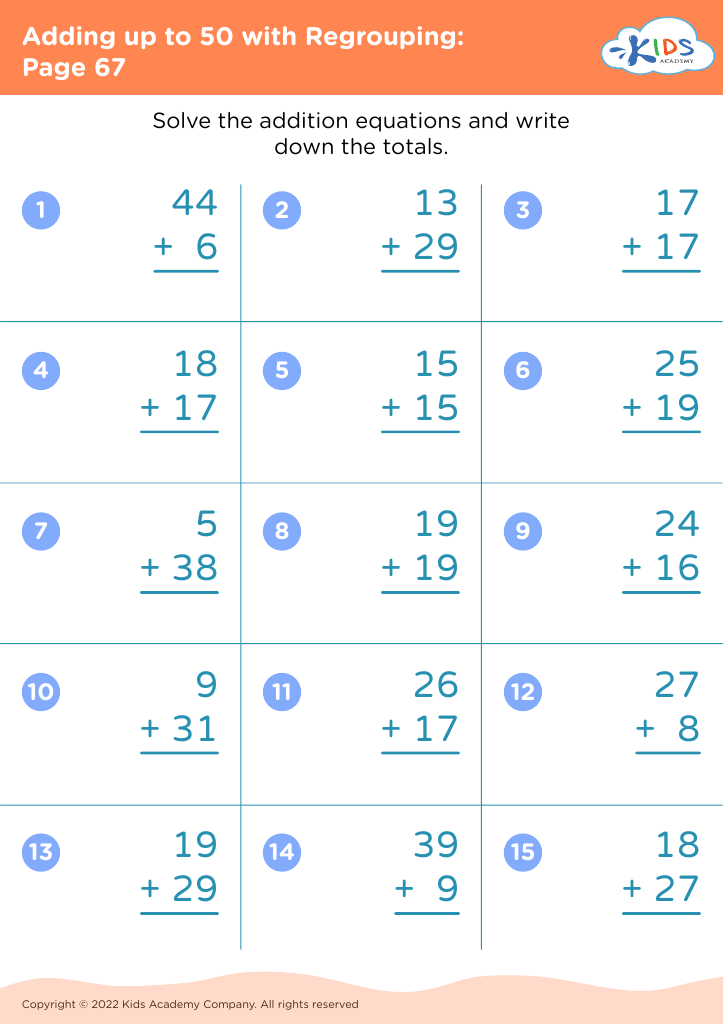
Adding up to 50 with Regrouping: Page 67
Worksheet
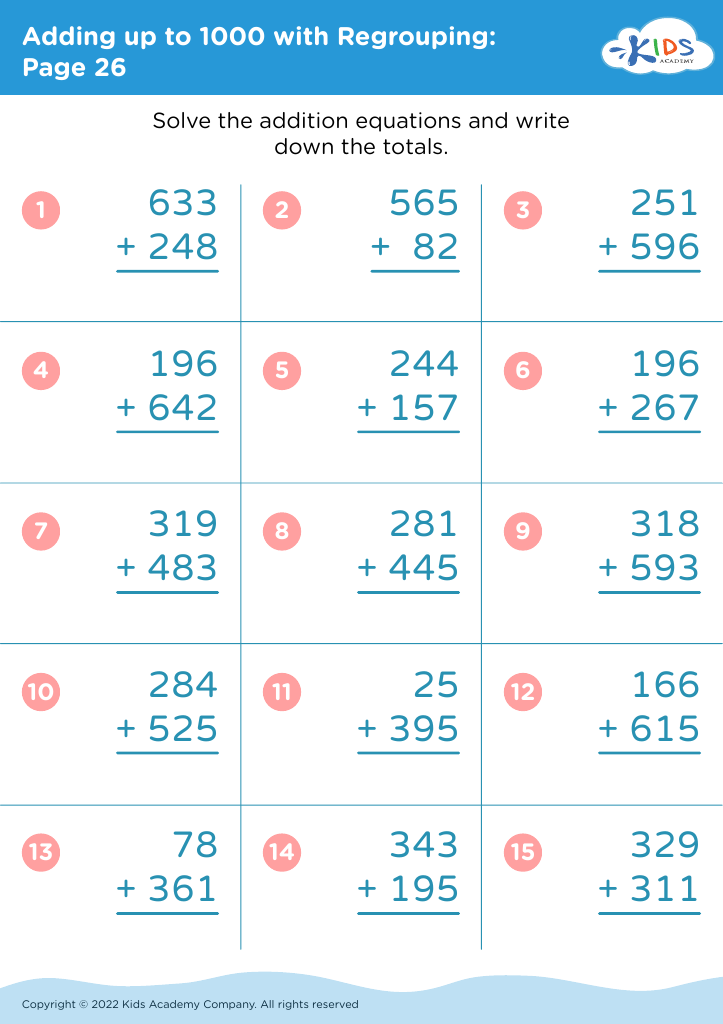
Adding up to 1000 with Regrouping: Page 26
Worksheet
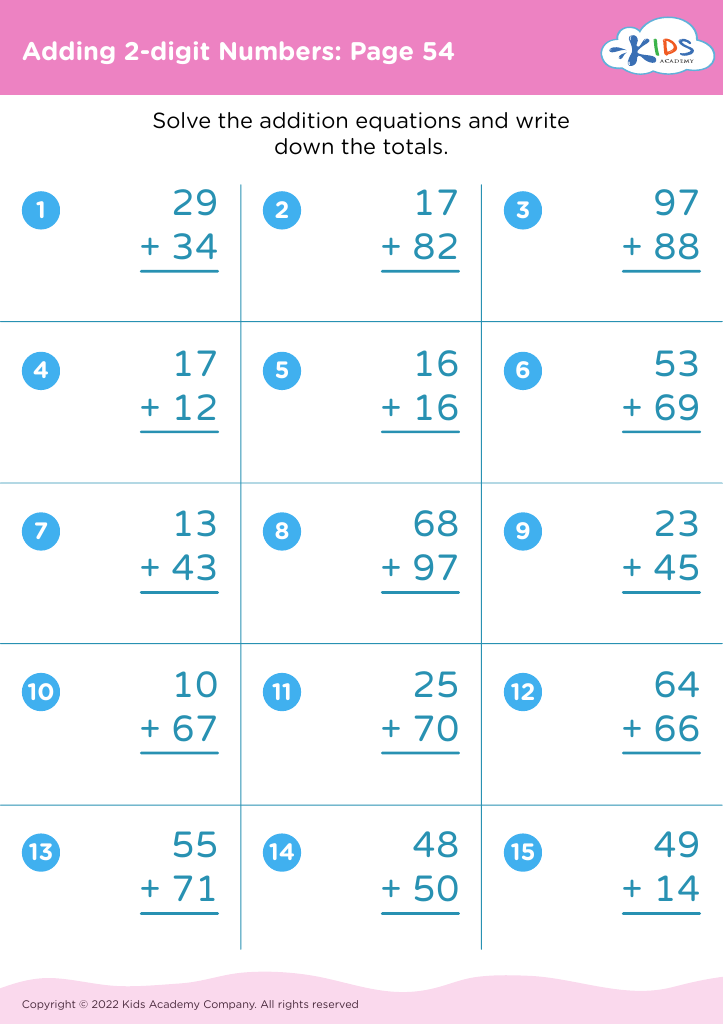
Adding 2-digit Numbers: Page 54

Adding 2-digit Numbers: Page 54

Adding 2-digit Numbers: Page 54
Worksheet
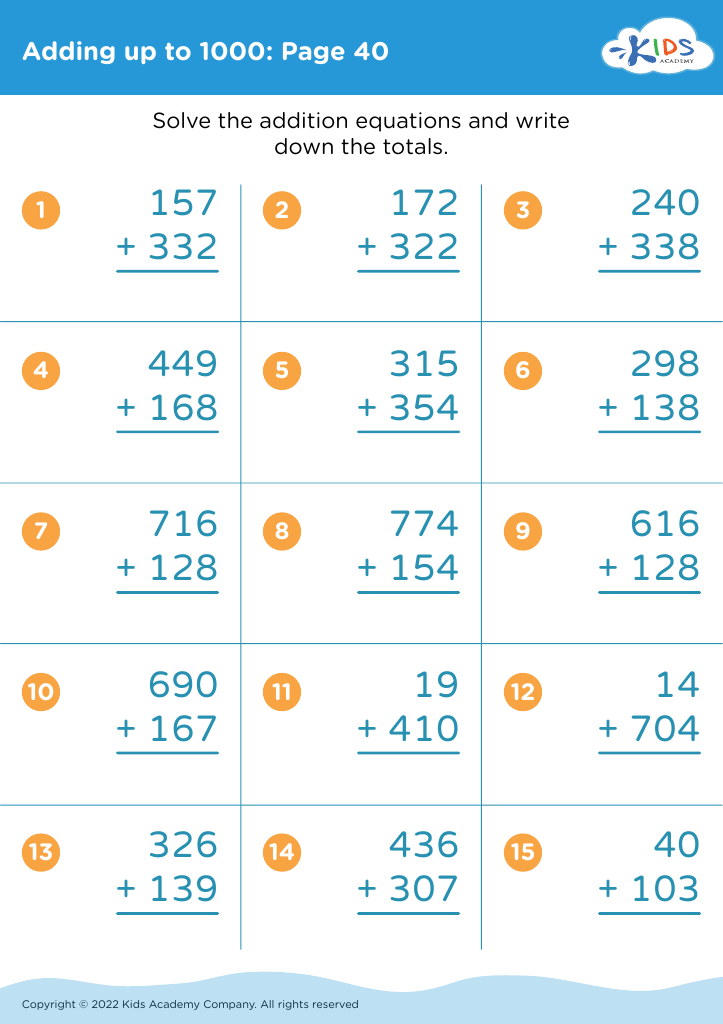
Adding up to 1000: Page 40

Adding up to 1000: Page 40

Adding up to 1000: Page 40
Worksheet
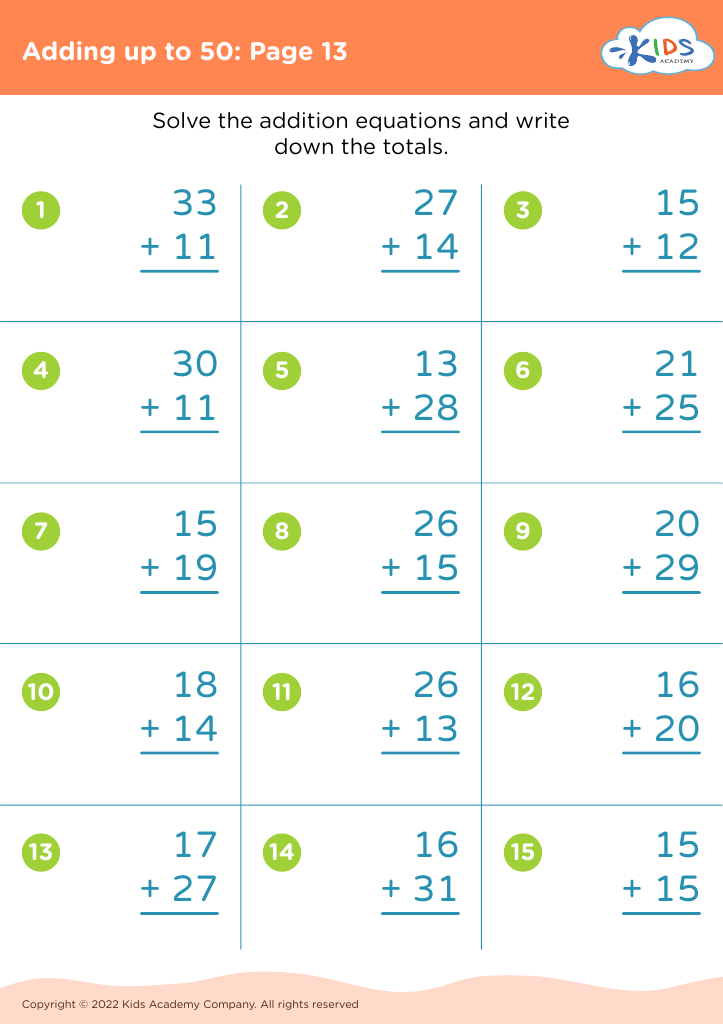
Adding up to 50: Page 13

Adding up to 50: Page 13

Adding up to 50: Page 13
Worksheet
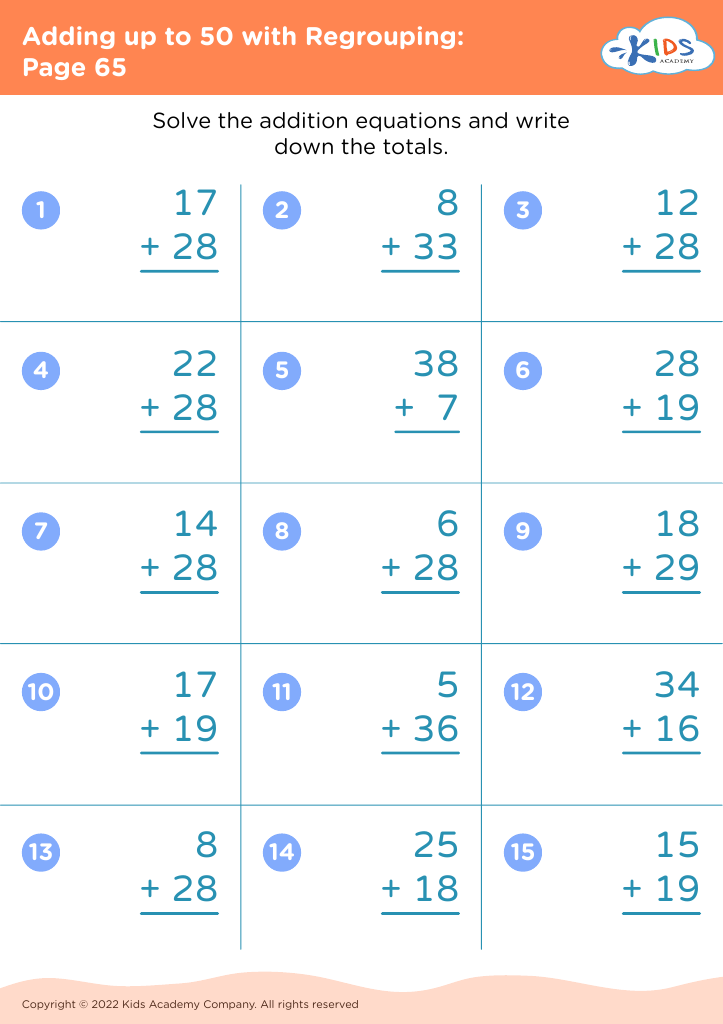
Adding up to 50 with Regrouping: Page 65
Worksheet
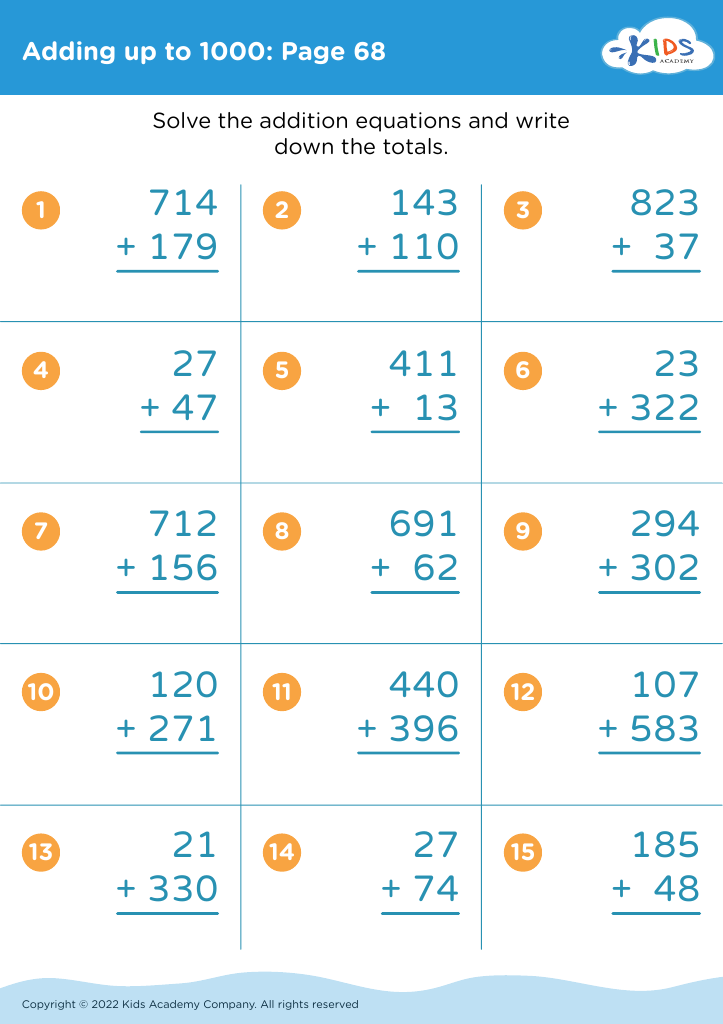
Adding up to 1000: Page 68

Adding up to 1000: Page 68

Adding up to 1000: Page 68
Worksheet
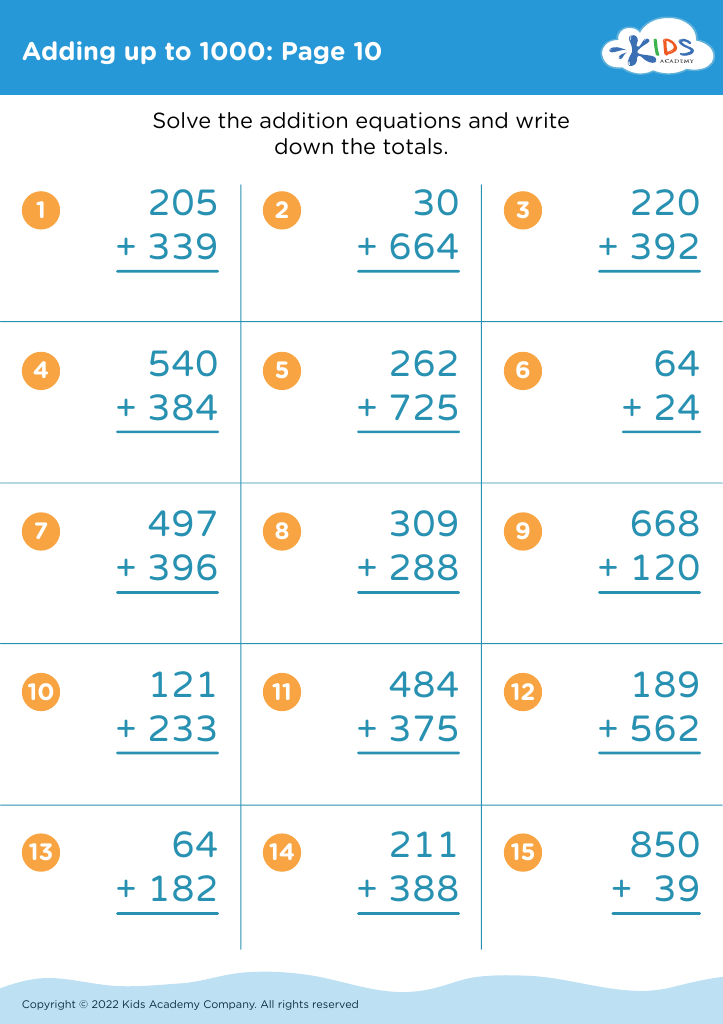
Adding up to 1000: Page 10

Adding up to 1000: Page 10

Adding up to 1000: Page 10
Worksheet
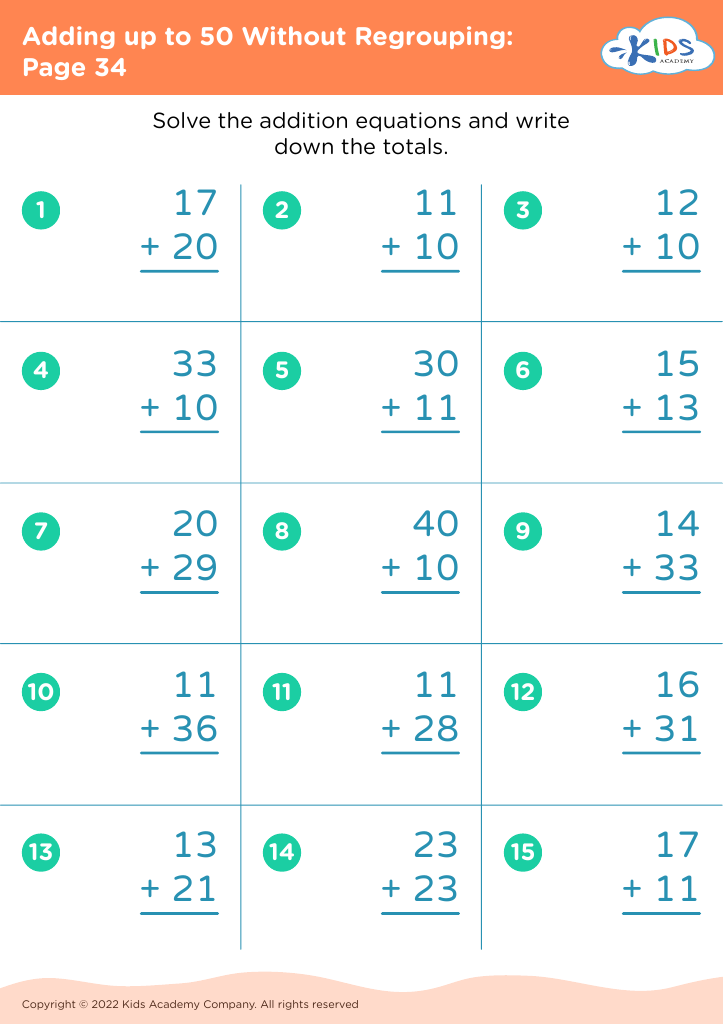
Adding up to 50 Without Regrouping: Page 34
Worksheet
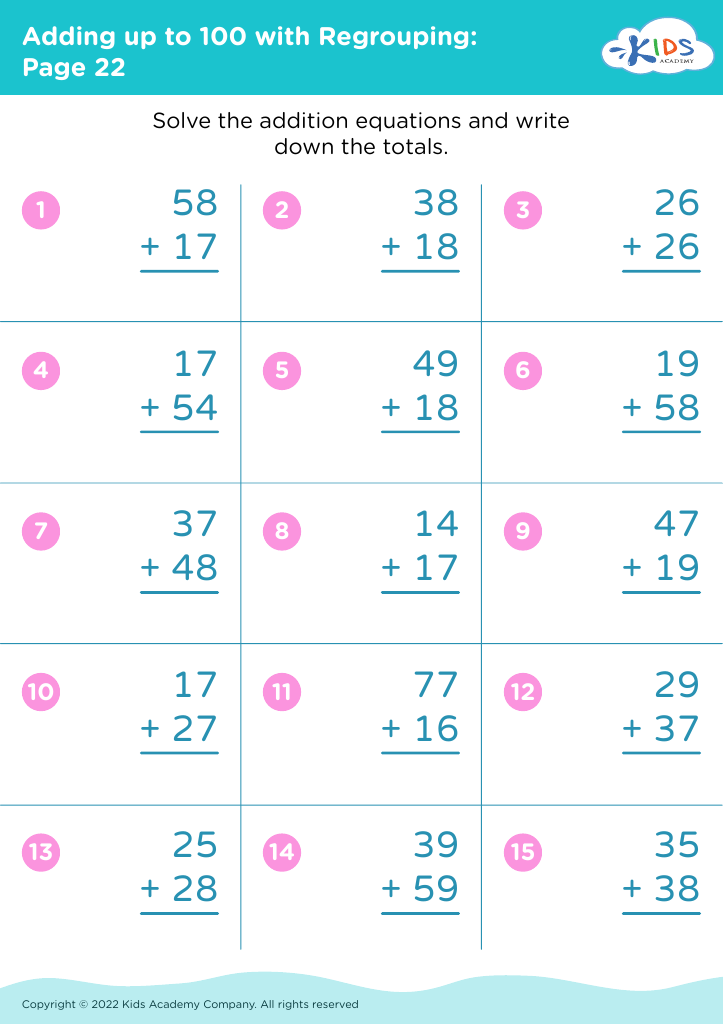
Adding up to 100 with Regrouping: Page 22
Worksheet
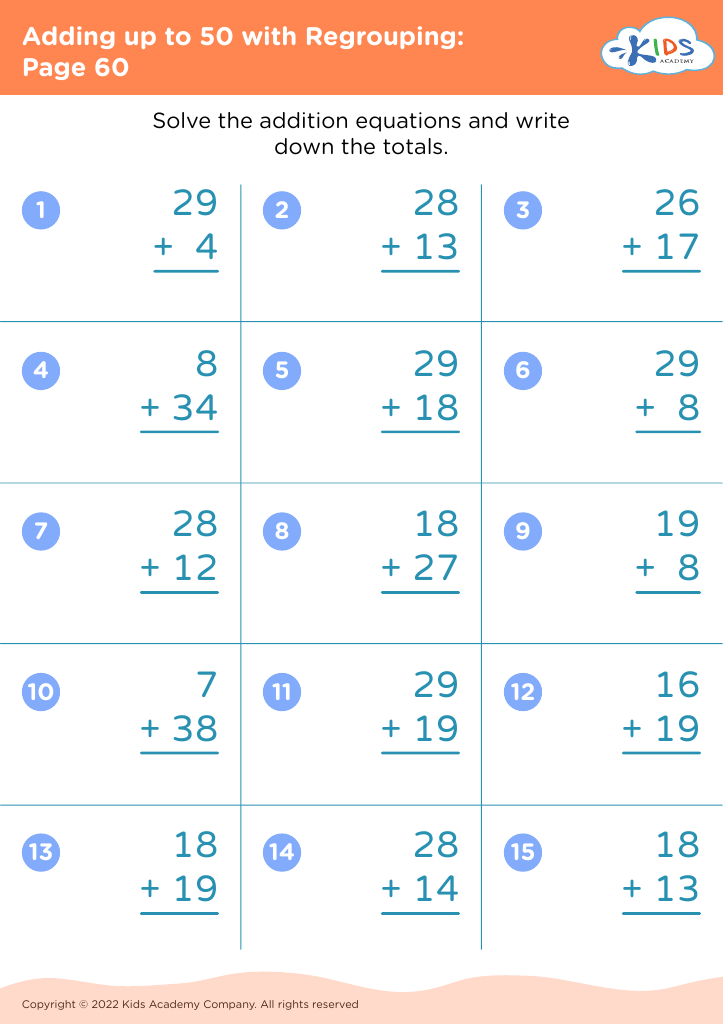
Adding up to 50 with Regrouping: Page 60
Worksheet
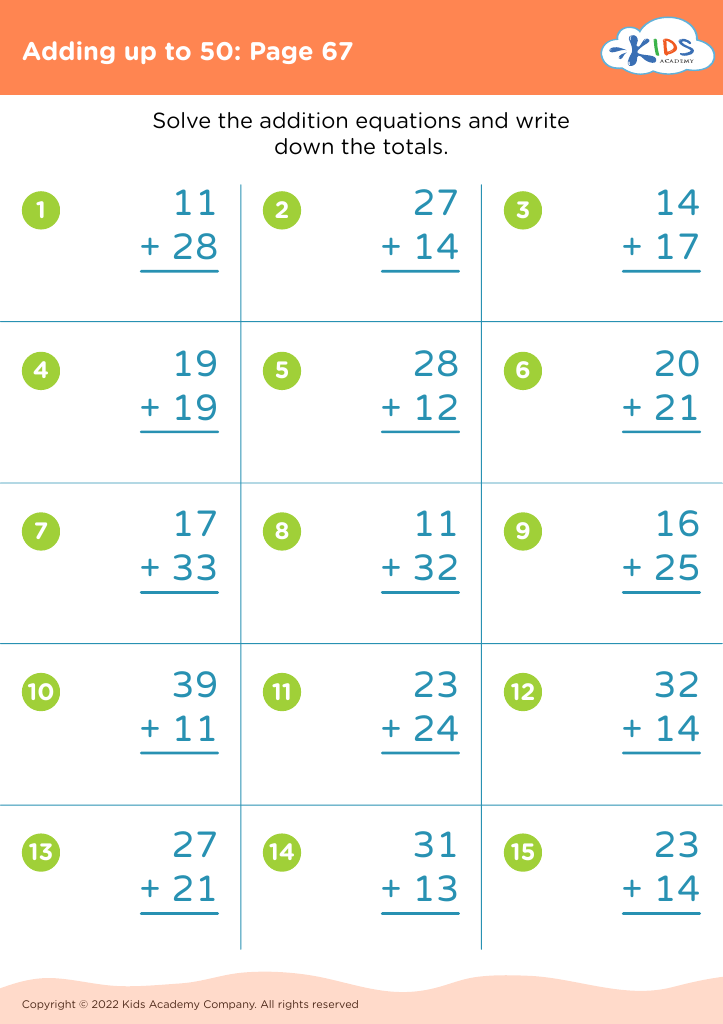
Adding up to 50: Page 67

Adding up to 50: Page 67

Adding up to 50: Page 67
Worksheet
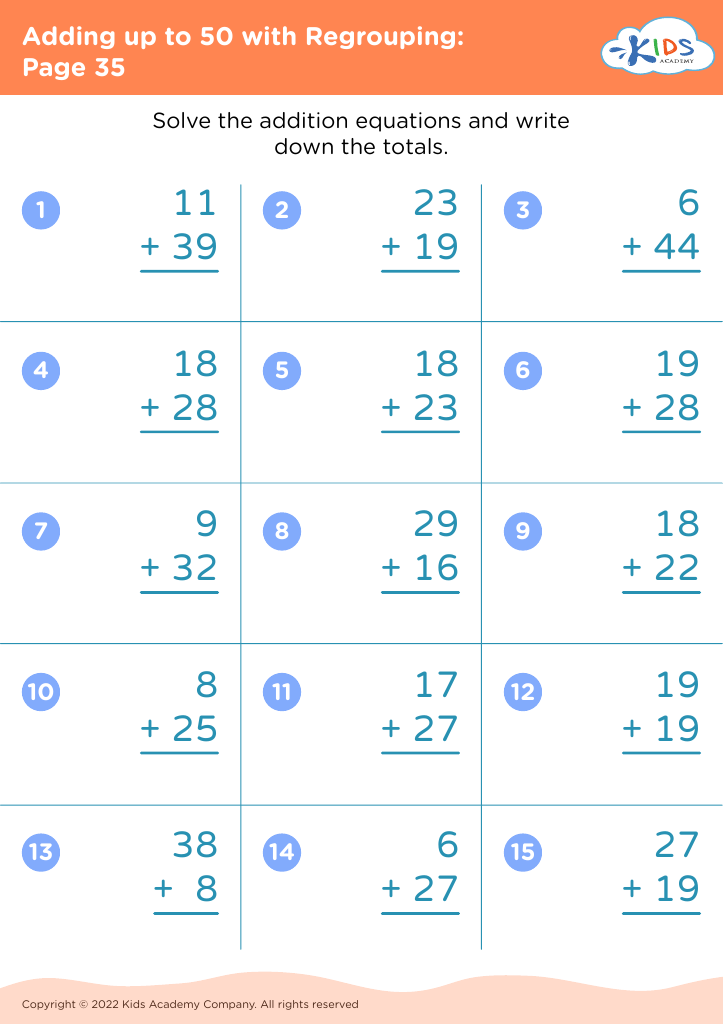
Adding up to 50 with Regrouping: Page 35
Worksheet
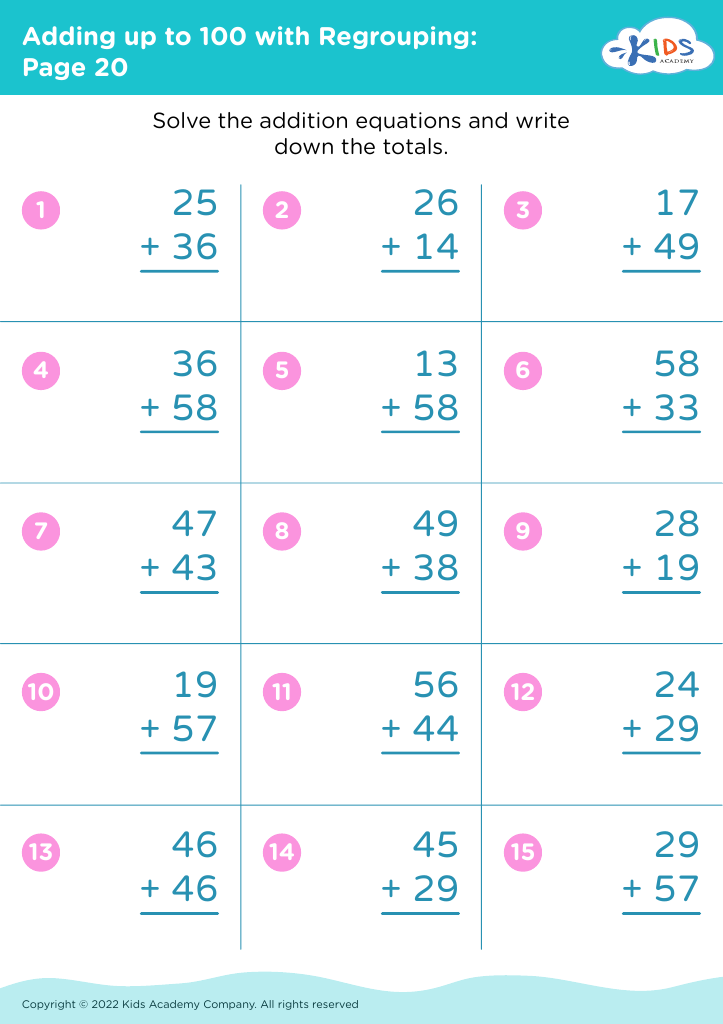
Adding up to 100 with Regrouping: Page 20
Worksheet
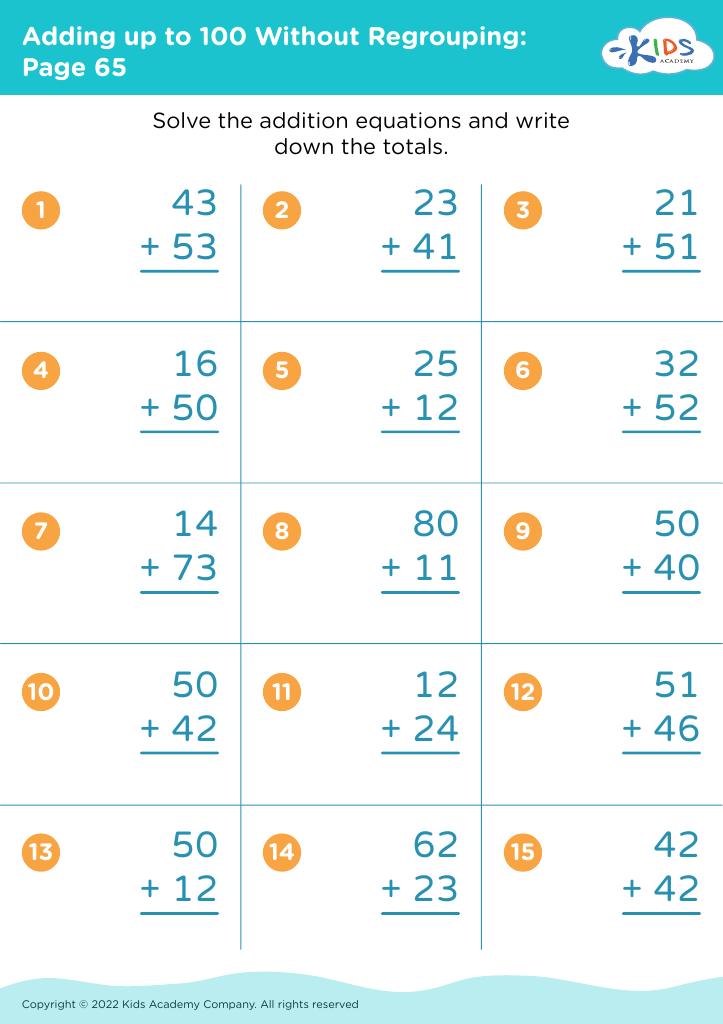
Adding up to 100 Without Regrouping: Page 65
Worksheet
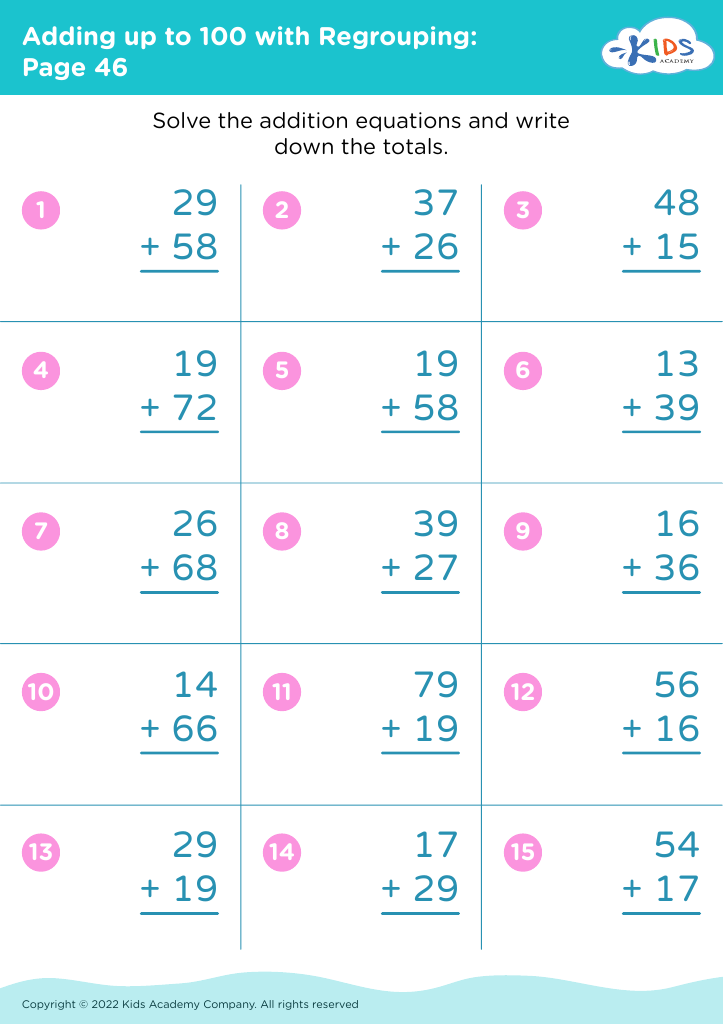
Adding up to 100 with Regrouping: Page 46
Worksheet
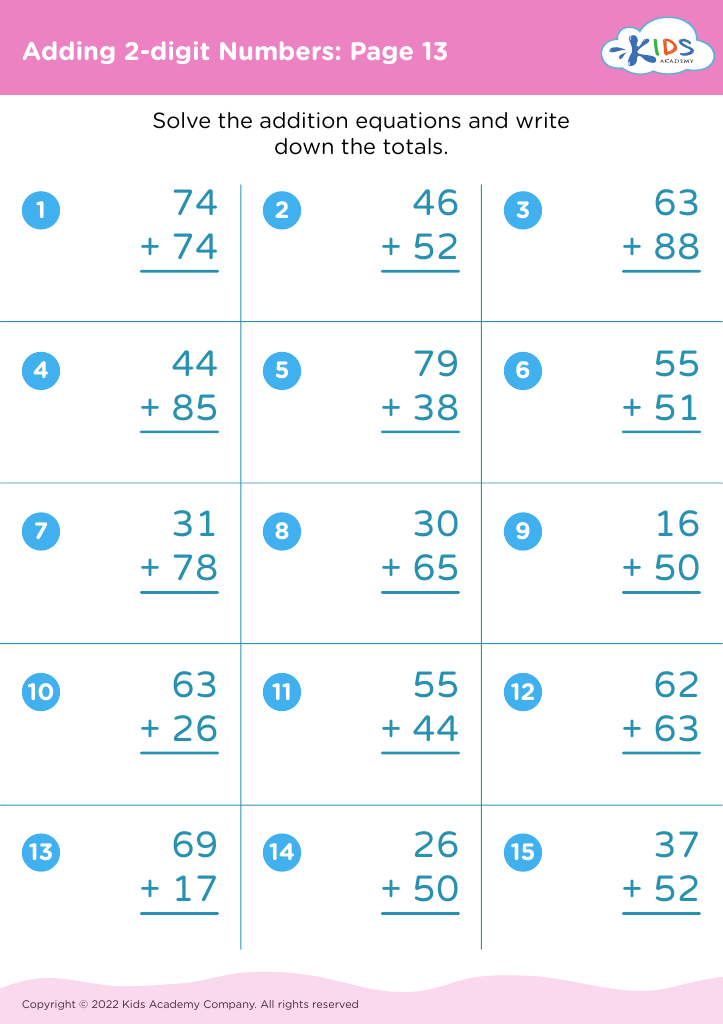
Adding 2-digit Numbers: Page 13

Adding 2-digit Numbers: Page 13

Adding 2-digit Numbers: Page 13
Worksheet


Introducing children between ages 4-8 to the concept of comparing fractions and understanding fraction addition is vital for several reasons. Firstly, it lays the groundwork for essential math skills used in everyday life. Children who grasp these concepts early on can tackle more complex math problems with confidence as they progress through their education.

Additionally, early exposure to fractions helps develop critical thinking and problem-solving abilities. Comparing fractions involves understanding equivalency and learning how to discern which values are larger or smaller, fostering logical reasoning. These skills are transferable across various subjects and real-world situations, from dividing a pizza into equal parts to sharing toys fairly with friends.

Furthermore, mastering the basics of fraction addition helps children advance in their number sense—a key aspect of early mathematical education. Starting with simple activities like comparing fractions in visual and hands-on ways ensures they form a concrete understanding of numerical relationships before advancing to abstract concepts.

Finally, introducing these skills at a young age can boost self-confidence. Experienced success in understanding and solving fraction problems early on can make children more confident learners and reduce the math anxiety often encountered in later years.

In sum, teaching comparing fractions and fraction addition sets a strong mathematical foundation, enhances cognitive skills, and fosters a positive learning environment.