Enhance concentration Addition Worksheets for Ages 4-8
5 filtered results
-
From - To
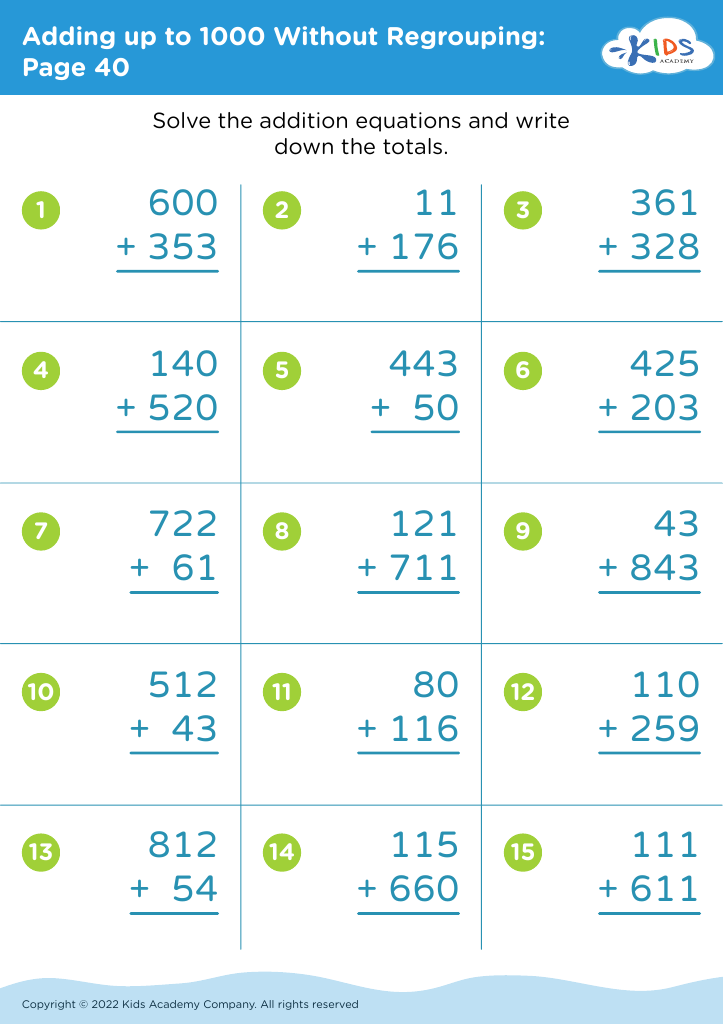
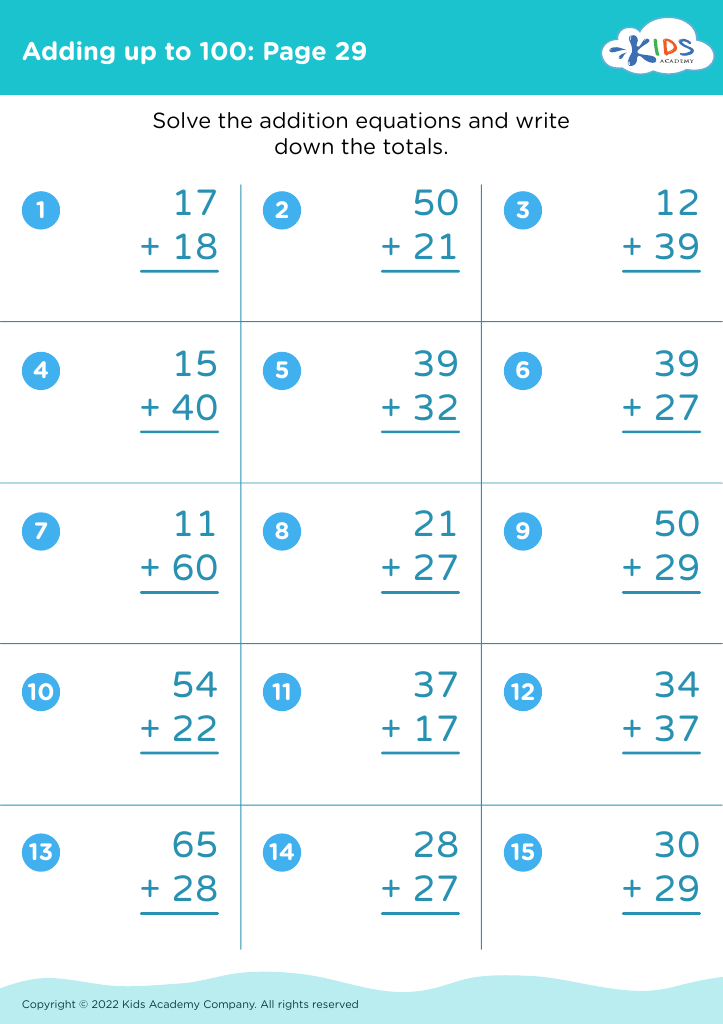
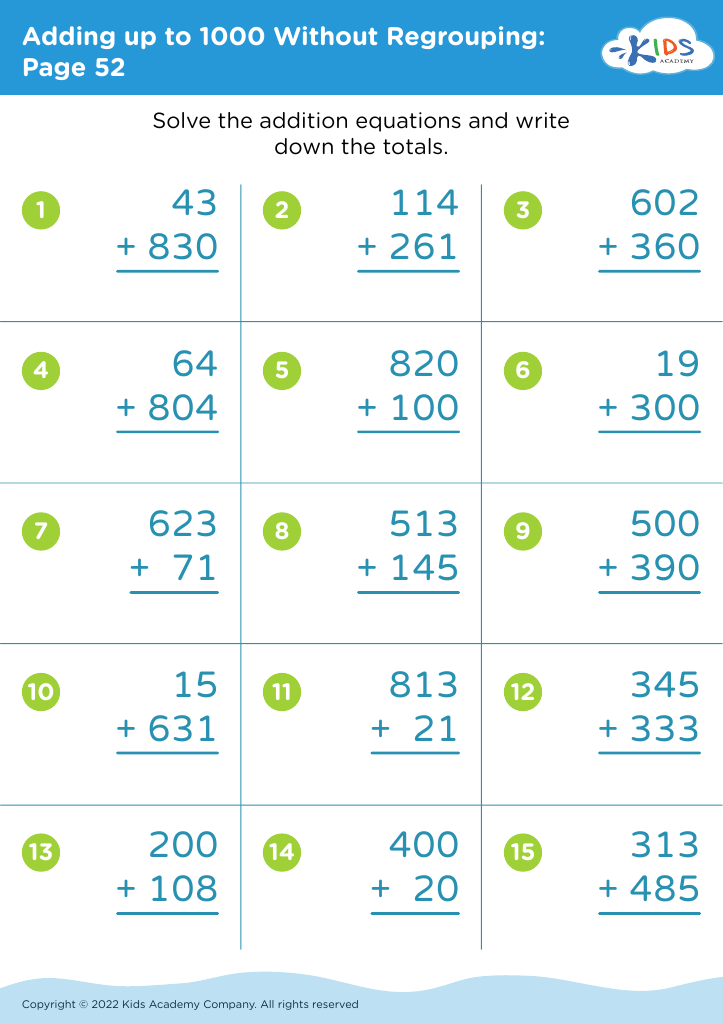
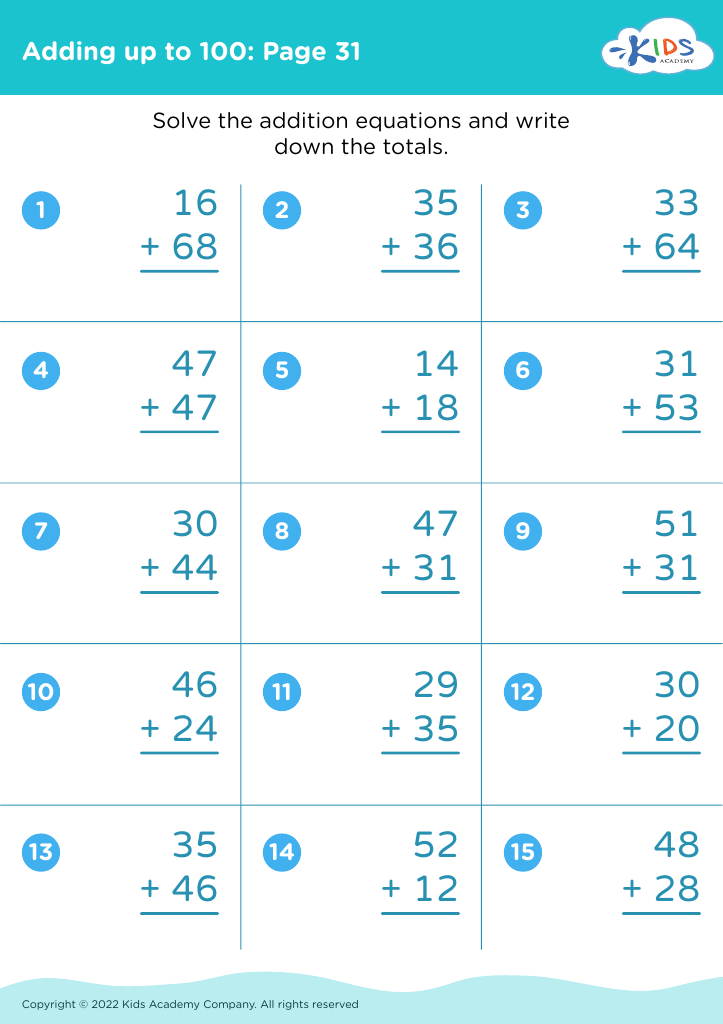
Boost your child's math skills and concentration with our "Enhance Concentration Addition Worksheets" designed specifically for ages 4-8. These engaging and interactive worksheets make learning addition fun, fostering both numerical skills and attention spans. Each worksheet features vibrant illustrations and cleverly crafted problems that challenge young learners while maintaining their interest. As children practice addition through enjoyable exercises, they develop essential cognitive abilities and improve focus. Perfect for home or classroom use, our worksheets integrate play with education, ensuring students remain motivated. Discover the joy of learning with these thoughtfully designed resources that cater to early learners at every stage of their math journey.
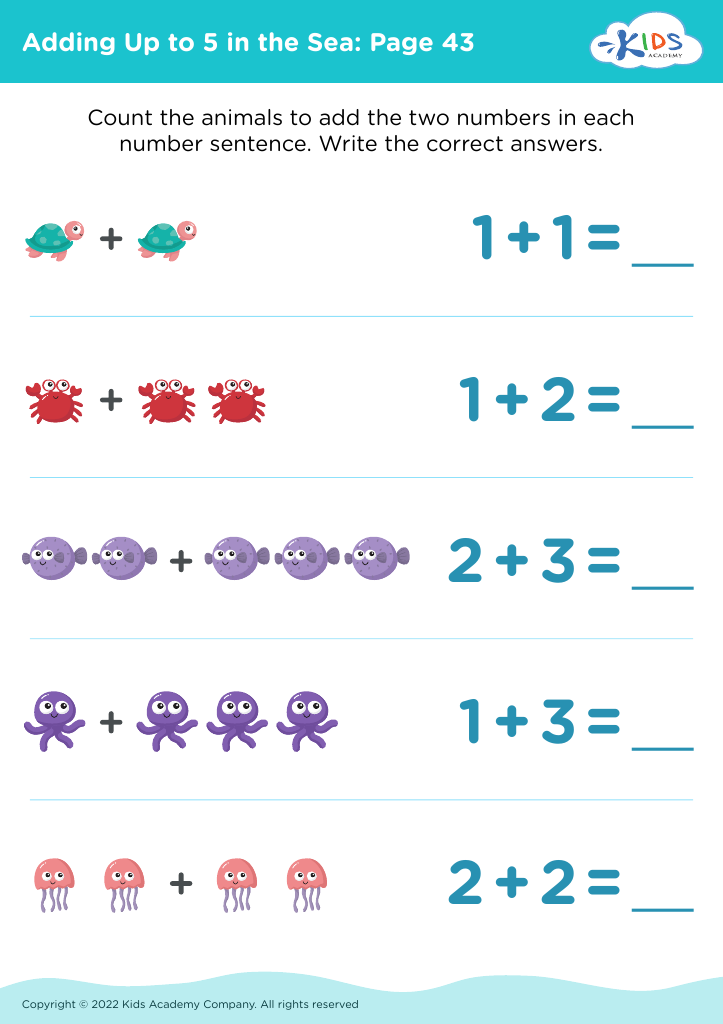








Enhancing concentration skills in children aged 4-8 is crucial for their overall development and academic success. During these formative years, children are developing their cognitive abilities, and a strong focus can significantly impact their learning experiences. Parents and teachers should care about fostering concentration because it enables students to absorb information more effectively, process tasks systematically, and retain knowledge longer.
Moreover, enhanced concentration fosters better listening skills, allowing children to engage more meaningfully in classroom activities and discussions. This is essential not only for their academic performance but also for their social interactions. As children learn to concentrate, they become more self-disciplined and better at managing their time—skills that will serve them throughout their lives.
Incorporating concentration-building practices—such as fun games that involve addition—can make learning enjoyable and relatable. Such activities not only capture and hold a child’s attention but also integrate essential numerical skills in a playful context. Furthermore, supporting concentration in young learners can lead to improved behavior and reduced frustration during learning tasks, creating a more harmonious classroom environment. Overall, prioritizing concentration development is a valuable investment in a child’s future academic and personal success.








