
Enhance logical thinking Addition Worksheets for Ages 4-8
3 filtered results
Difficulty Level
Grade
Age
-
From - To
Subject
Activity
Standards
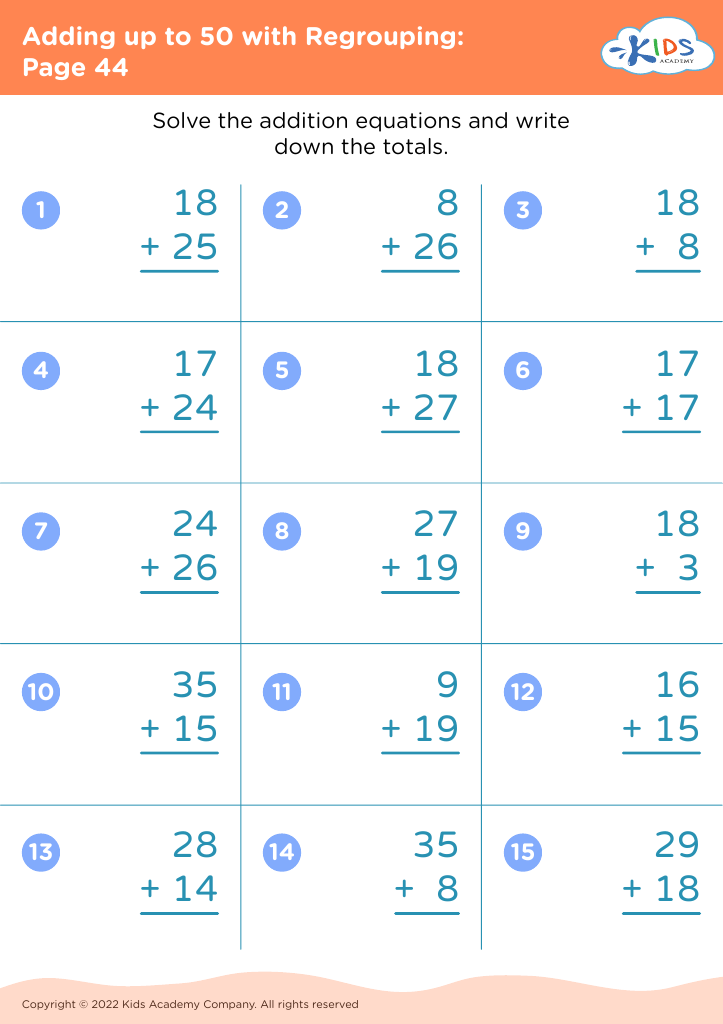
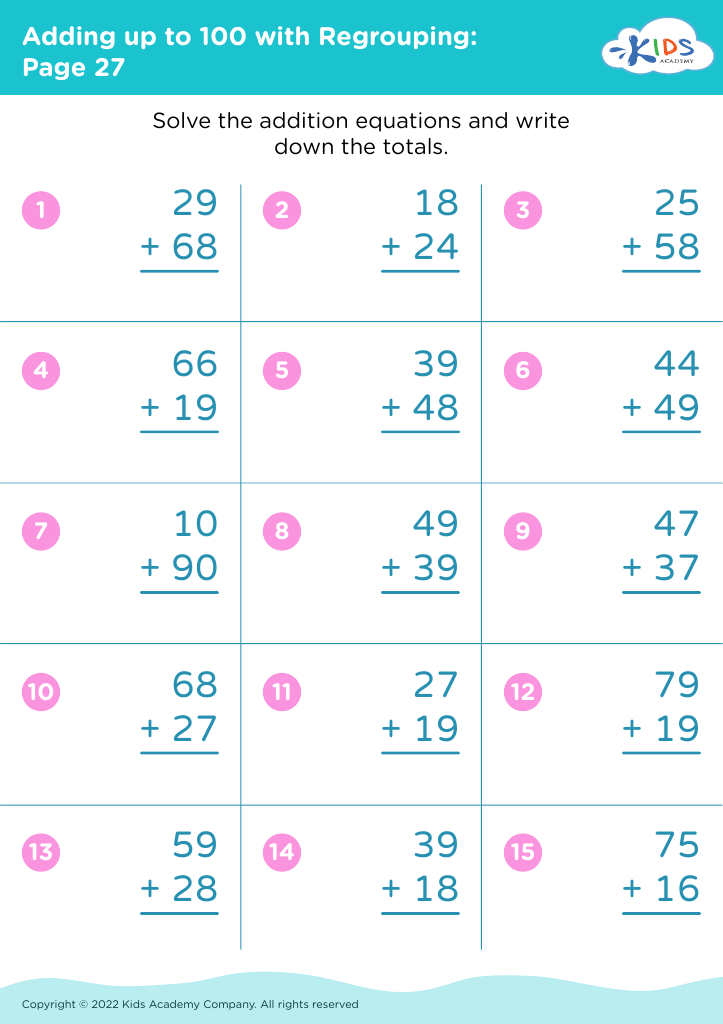
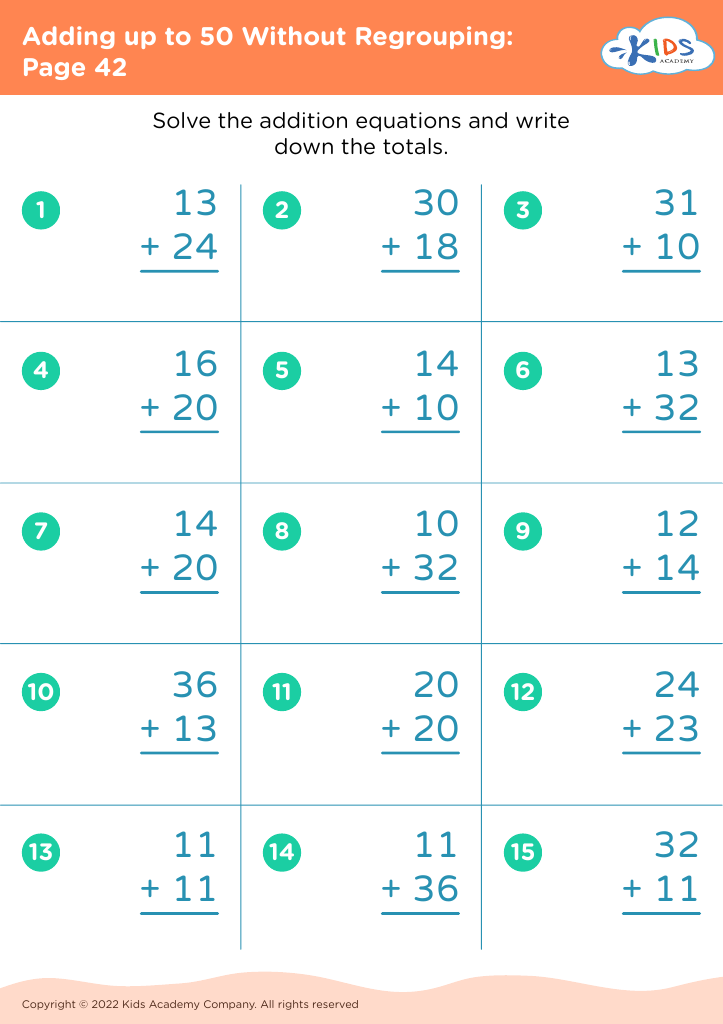
Enhance logical thinking with our engaging addition worksheets designed specifically for children aged 4-8. These thoughtfully crafted worksheets focus on improving problem-solving skills while introducing addition concepts in a fun and interactive way. Through colorful illustrations and relatable scenarios, young learners will develop critical thinking abilities as they tackle various addition problems. Our resources cater to diverse learning styles, ensuring a well-rounded approach to mathematics. Ideal for both classroom settings and at-home practice, these worksheets encourage creativity, boost confidence, and foster a love for mathematics in early learners. Start your child’s journey to math mastery today!
Favorites
With answer key
Interactive
Join Kids Academy for Free
Who is primarily going to use this learning content?








Enhancing logical thinking in children aged 4-8 through addition is crucial for several reasons. At this developmental stage, children are not only learning basic mathematical skills but also developing critical thinking abilities that will serve them throughout their lives. Logical thinking fosters problem-solving skills, enabling children to analyze situations, make informed decisions, and tackle challenges effectively.
Engaging children in fun and interactive addition activities helps them grasp foundational math concepts. By using visual aids or games, parents and teachers can reinforce these skills while making learning enjoyable. An early understanding of addition also encourages a sense of confidence, as children learn to navigate numerical problems independently.
Moreover, strong logical thinking skills are not limited to mathematics; they extend to other subjects, enhancing overall academic performance. These skills develop the cognitive framework necessary for more complex concepts, laying a strong foundation for future learning in math and beyond.
Parents and teachers play a pivotal role in nurturing these abilities, as their support can greatly influence a child’s attitude toward learning. By emphasizing the importance of logical thinking in addition, caregivers can prepare children for success in school and everyday life, fostering lifelong learners who approach challenges with curiosity and resilience.








