
Enhancing creativity Addition Worksheets for Ages 4-8
4 filtered results
Difficulty Level
Grade
Age
-
From - To
Subject
Activity
Standards
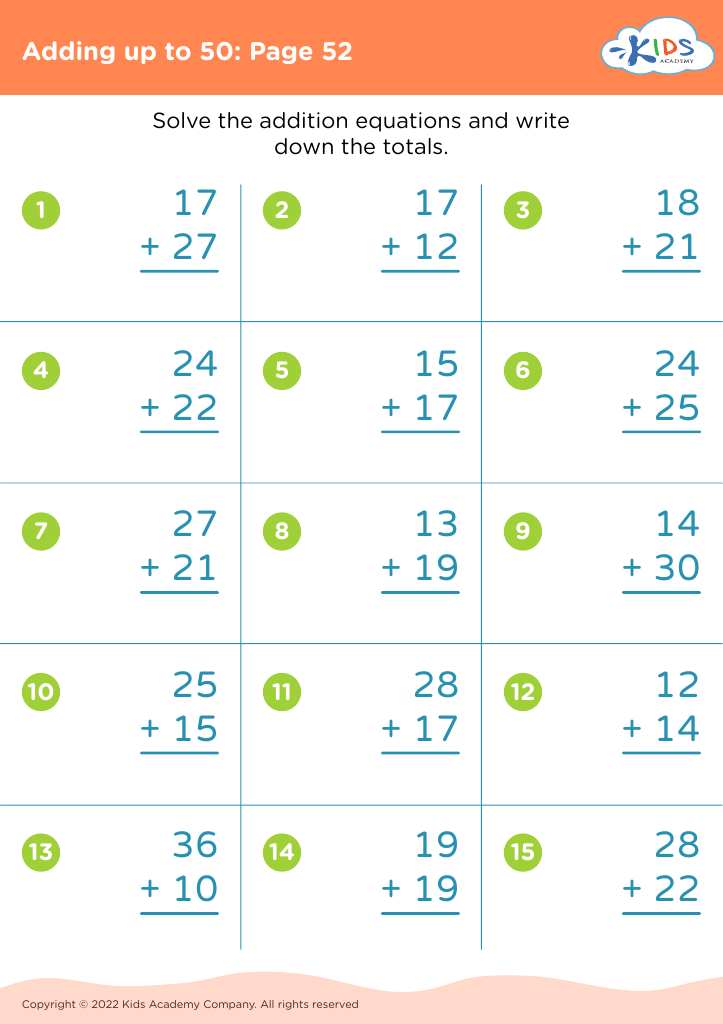
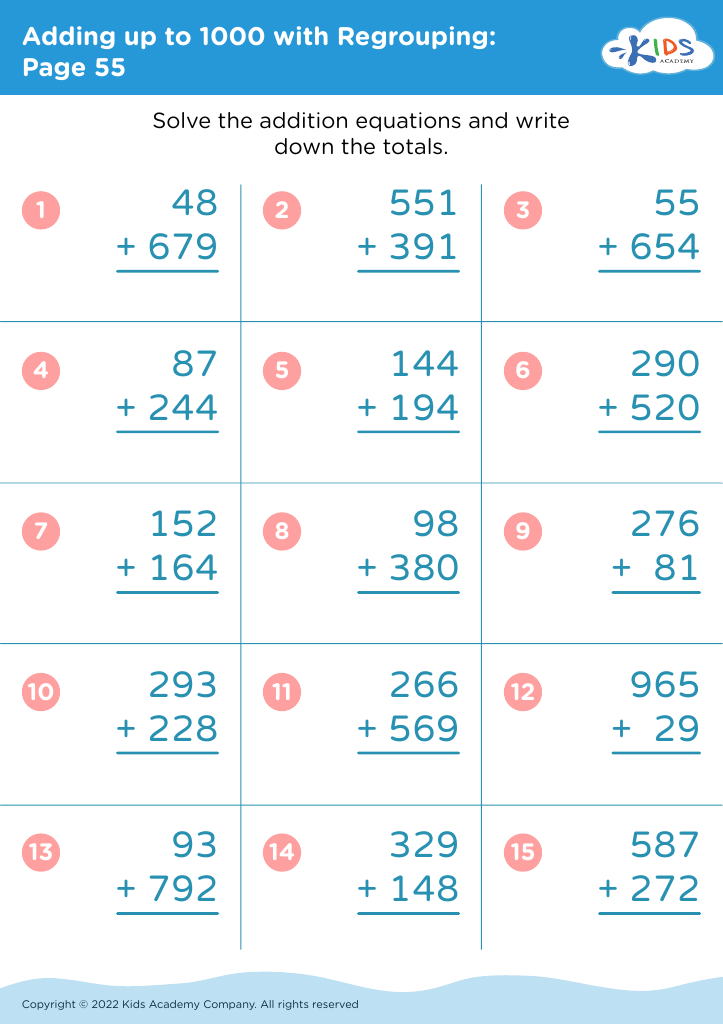
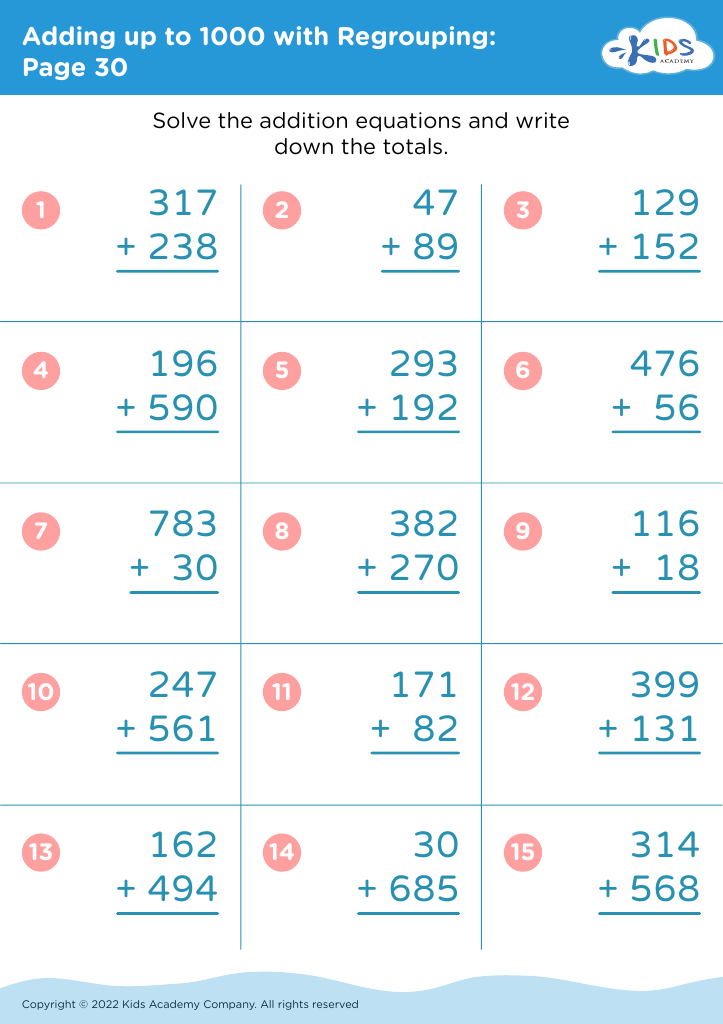
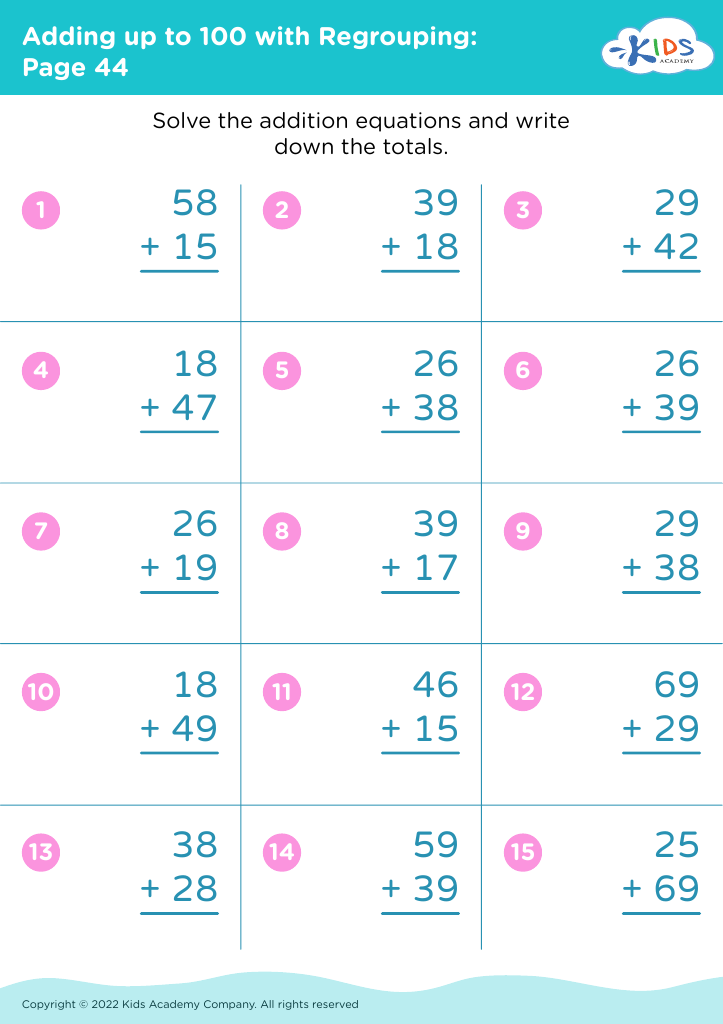
Unlock your child's potential with our "Enhancing Creativity Addition Worksheets" designed for ages 4-8. These engaging and educational worksheets combine essential math skills with fun, creative activities to keep young learners captivated. Each worksheet incorporates colorful visuals and imaginative scenarios to make learning addition an enjoyable experience. Perfect for both classroom and at-home practice, these worksheets help improve numerical fluency while nurturing creativity. Children will build confidence and develop critical thinking abilities as they solve addition problems in a playful and inspiring environment. Help your child excel in math and unlock their inner artist with our all-in-one collection!
Favorites
With answer key
Interactive
Join Kids Academy for Free
Who is primarily going to use this learning content?


.jpg)





Parents and teachers should deeply care about enhancing creativity in addition for children aged 4-8 because it establishes a vital foundation for their overall cognitive and emotional development. At this developmental stage, children are curiosities, eager to explore the world with their budding minds. Encouraging creativity in addition helps them see mathematics not as a rote, formulaic process, but as an enjoyable, imaginative activity.
Creative methods, such as using art, manipulatives, and stories, can demystify math and help children see patterns and relationships more clearly. This nurturing of creativity fosters a positive attitude towards learning, decreasing anxiety and increasing curiosity and persistence.
Moreover, creativity in problem-solving enhances critical thinking and flexibility, skills imperative not only in mathematics but in everyday decision-making and future academic challenges. It's crucial for building resilience and confidence in young learners as they understand there are many paths to finding a solution.
Additionally, enhancing creativity helps accommodate diverse learning styles, making math accessible and engaging for all students. In a holistic sense, a strong mathematical foundation builds literacy in many other subjects, contributing to a child's success far beyond their early education years. Thus, prioritizing creativity in addition equips children with lifelong skills and a love for learning.








