Enhancing problem-solving abilities Addition Worksheets for Ages 4-8
10 filtered results
-
From - To
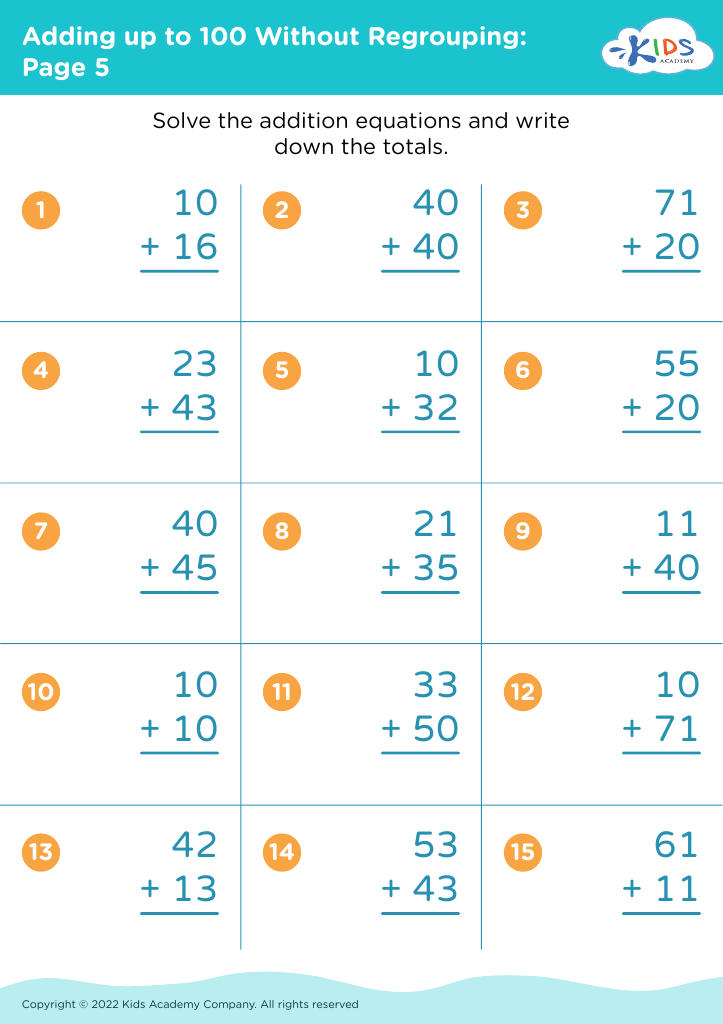
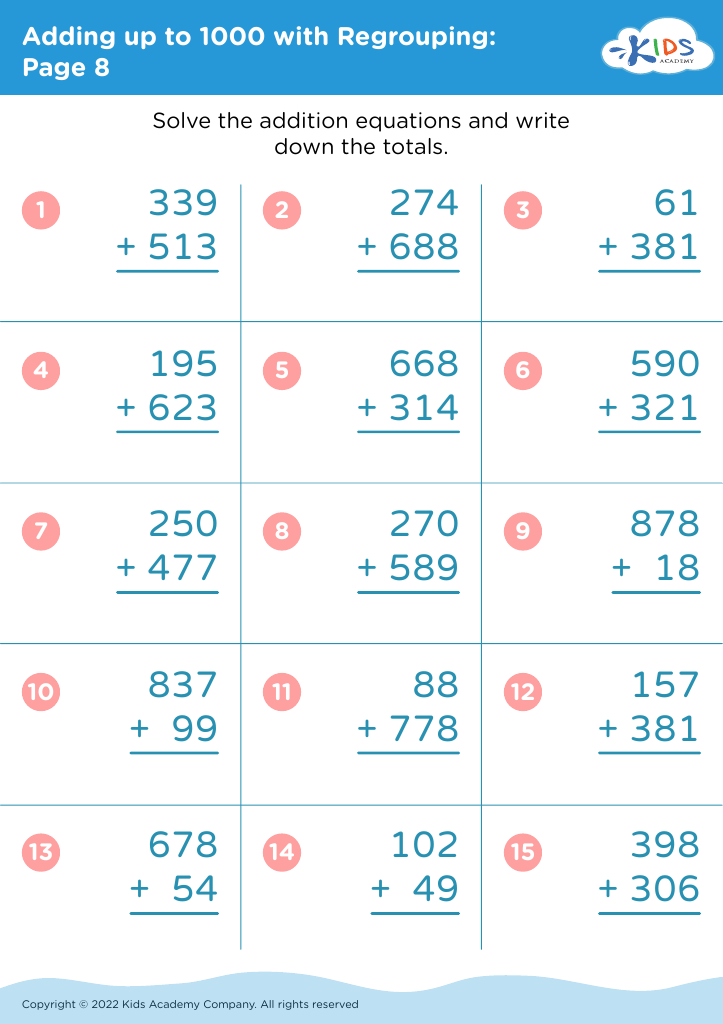
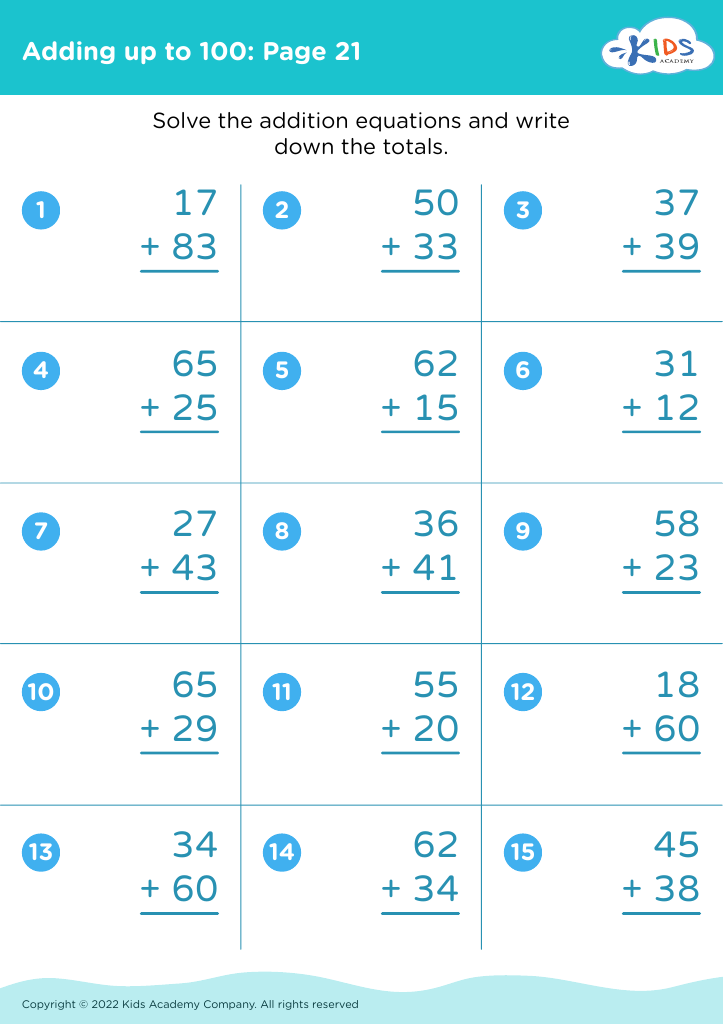
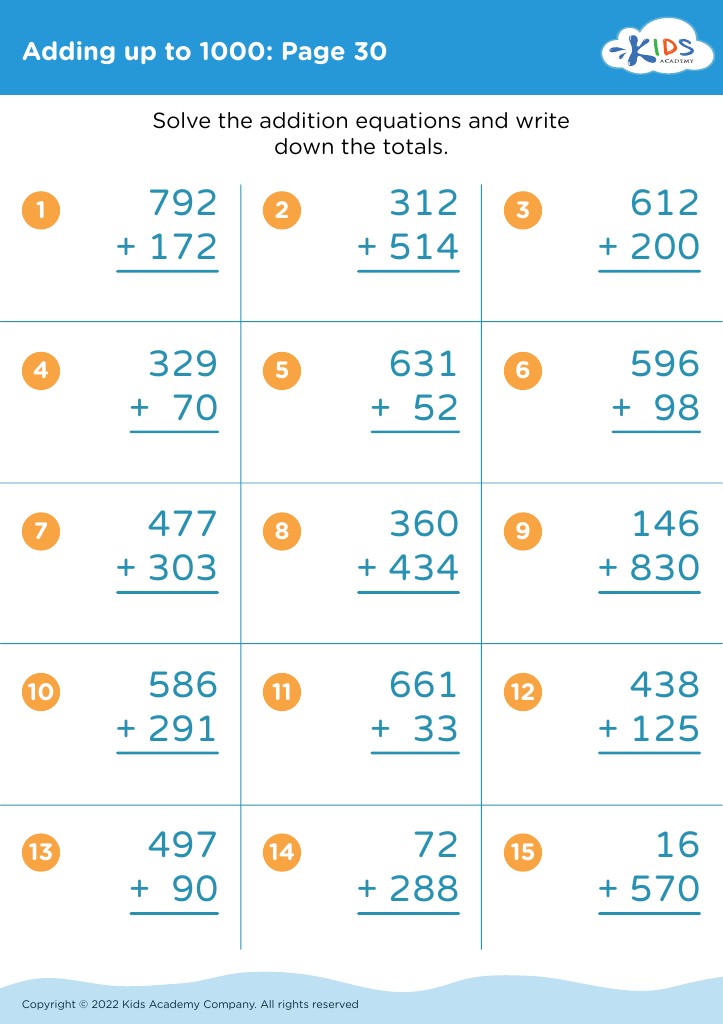
Enhance your child's problem-solving abilities with our expertly designed addition worksheets for ages 4-8 at Kids Academy! These engaging and educational worksheets are tailored to build core math skills while making learning fun. Perfect for young learners, our addition activities not only teach basic arithmetic but also help children develop critical thinking and logical reasoning. Each worksheet offers a variety of problems, progressively increasing in difficulty to ensure continual growth and confidence in math. Visit Kids Academy now to explore our collection and give your child the tools to excel in mathematics through playful learning experiences!
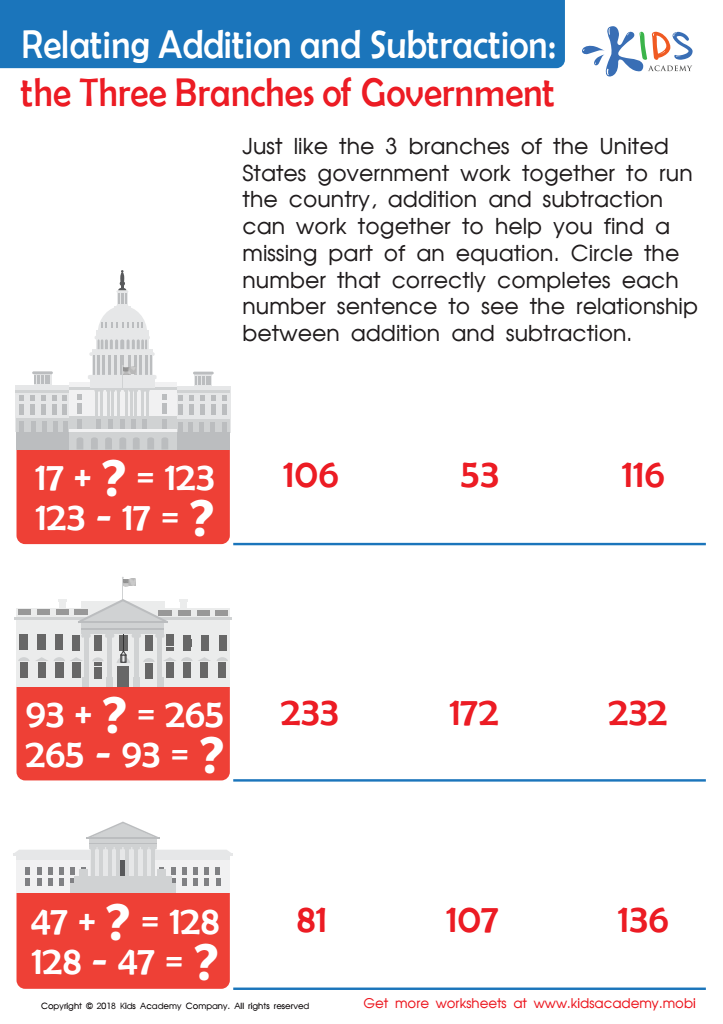
The Three Branches of Government Worksheet
 Assign to My Students
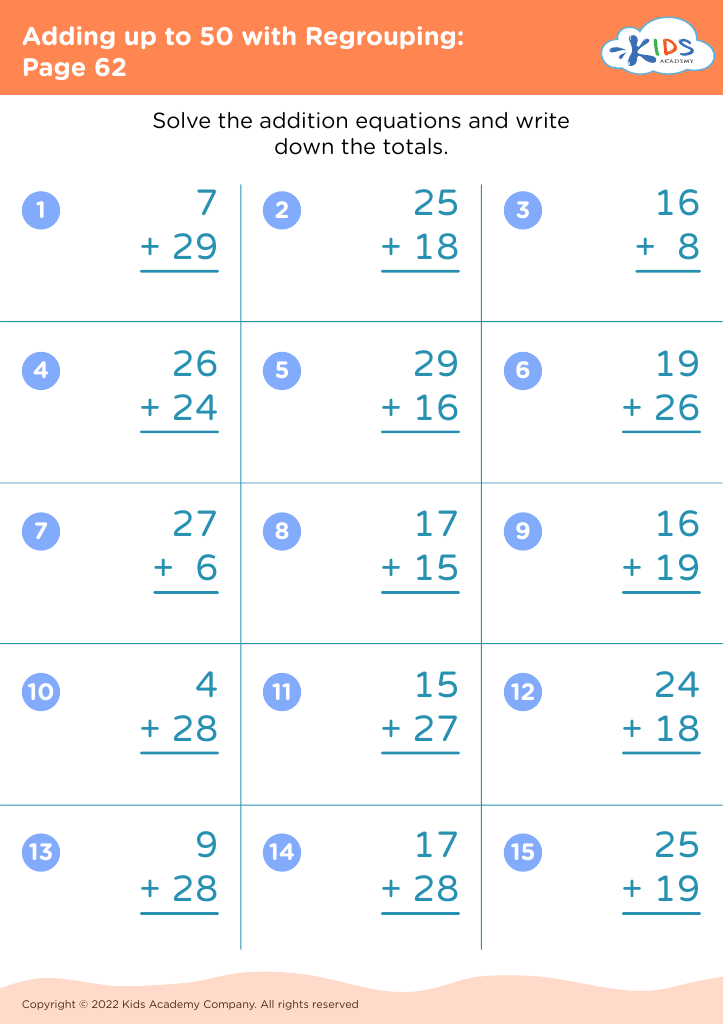
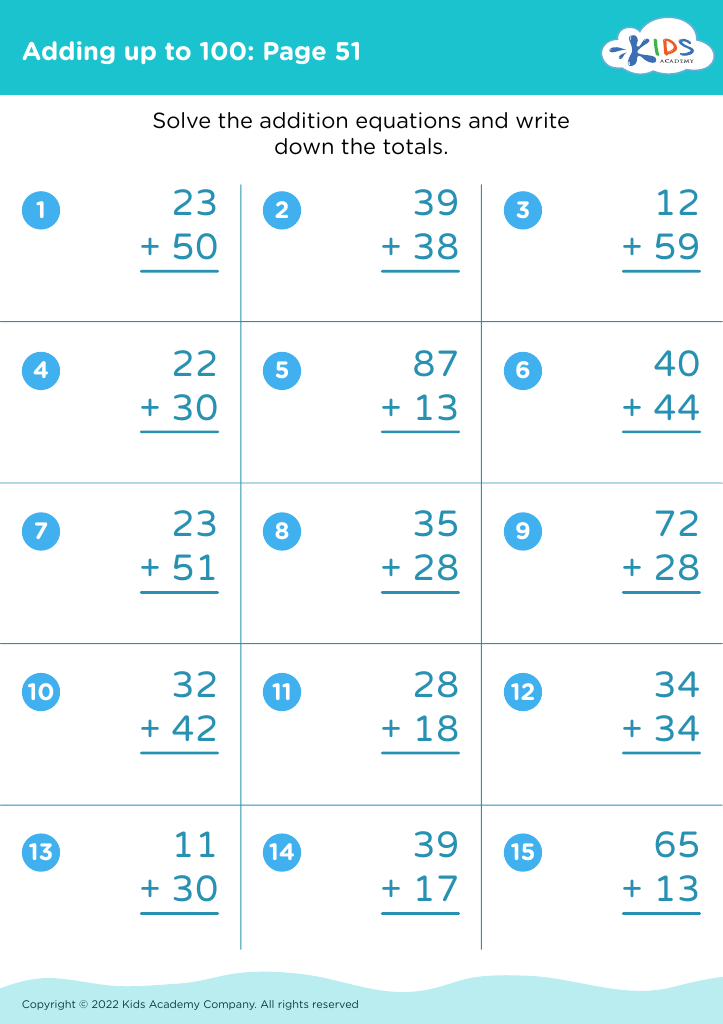
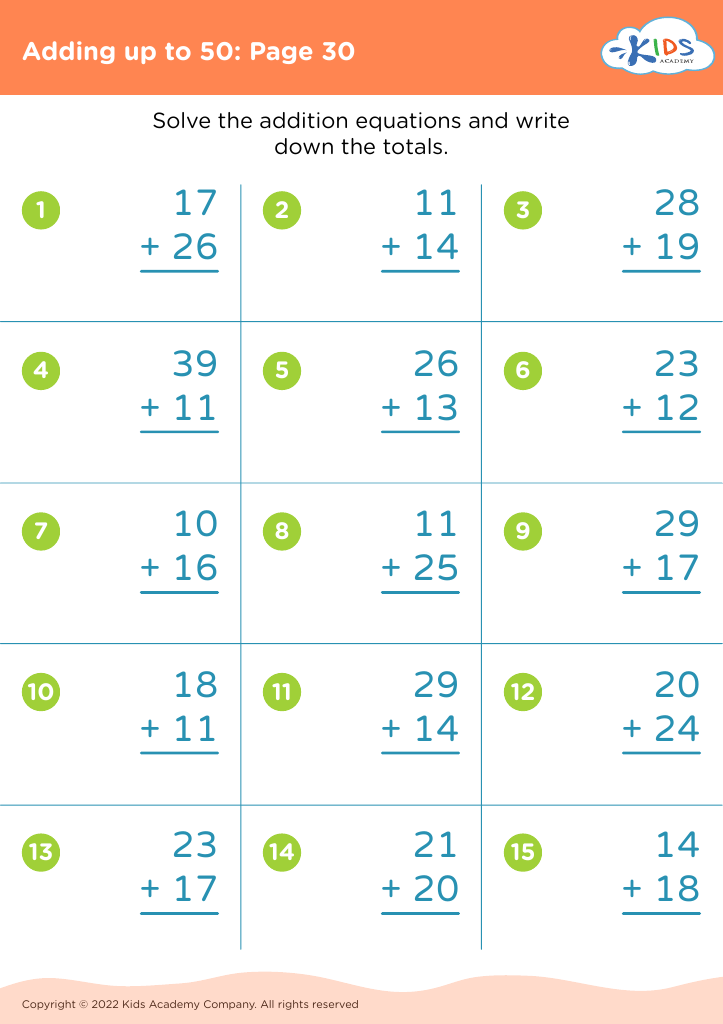
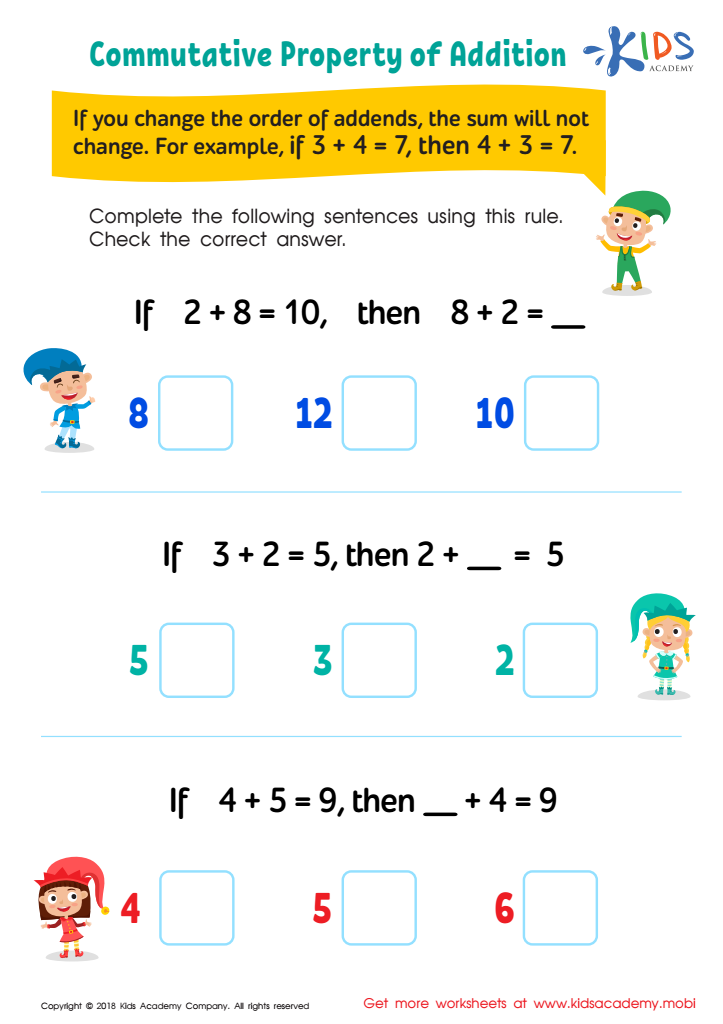
Commutative Property of Addition Worksheet
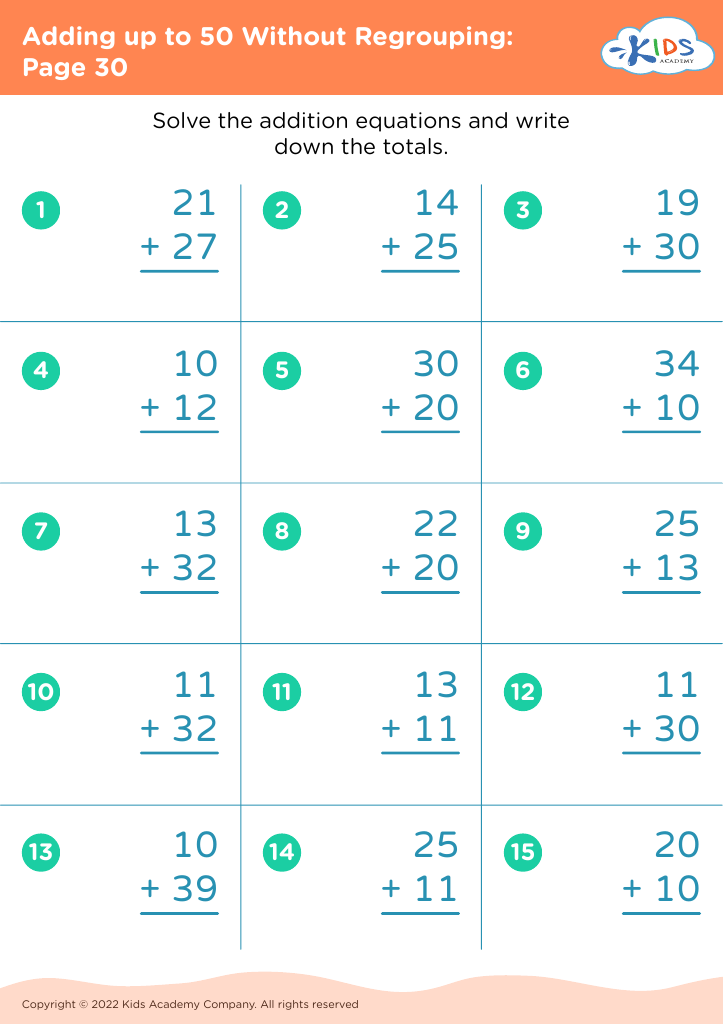








Enhancing problem-solving abilities in addition for children aged 4-8 is crucial because it lays a strong foundation for their future academic success and daily life skills. At this early age, children's brains are highly adaptive and capable of developing critical thinking skills. Introducing addition helps them understand numerical relationships, promotes cognitive development, and sharpens their logical reasoning.
Problem-solving in addition enhances their ability to tackle more complex mathematical concepts as they grow older. It also strengthens memory retention and concentration, two vital skills for overall academic performance. Additionally, these activities foster a growth mindset, encouraging children to embrace challenges and persist through difficulties.
Moreover, early problem-solving experiences build confidence and independence. Kids feel accomplished when they solve problems, which boosts their self-esteem and encourages a positive attitude toward learning. These skills are not limited to mathematics; they're transferable to other subjects and life scenarios, helping children navigate obstacles, make decisions, and think analytically.
For teachers and parents, nurturing these abilities enhances classroom engagement and offers opportunities for interactive, hands-on learning. It makes education more dynamic and enjoyable for young learners. By focusing on problem-solving in addition, we equip our children with essential tools for lifelong learning and success.








