Fine motor skills (writing) Addition Worksheets for Ages 4-8 - Page 2
38 filtered results
-
From - To
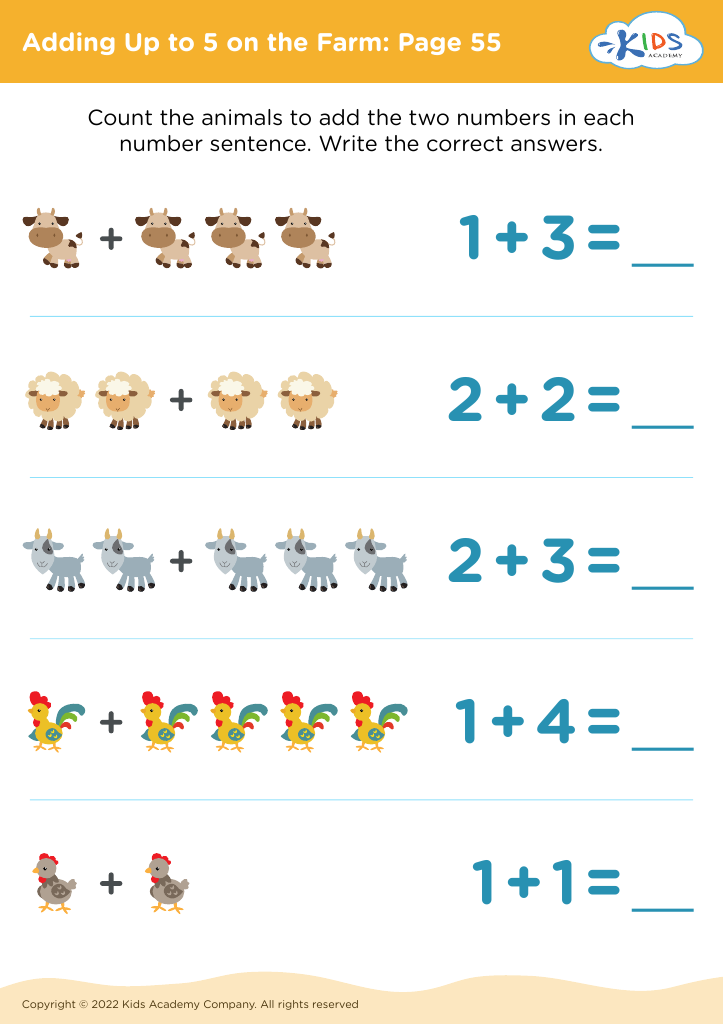
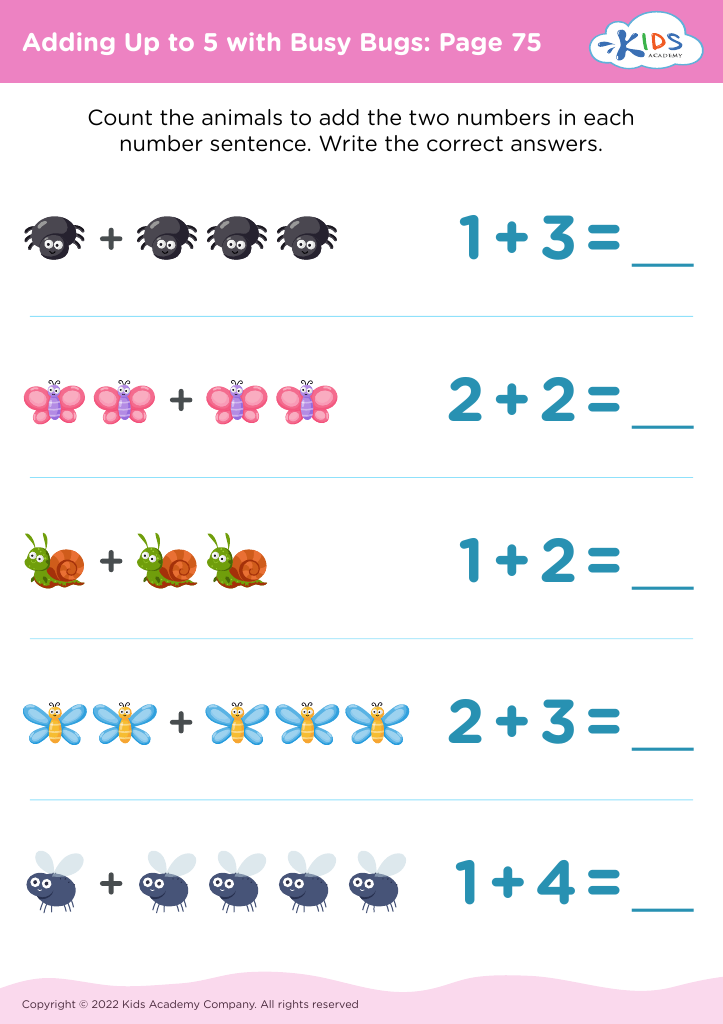
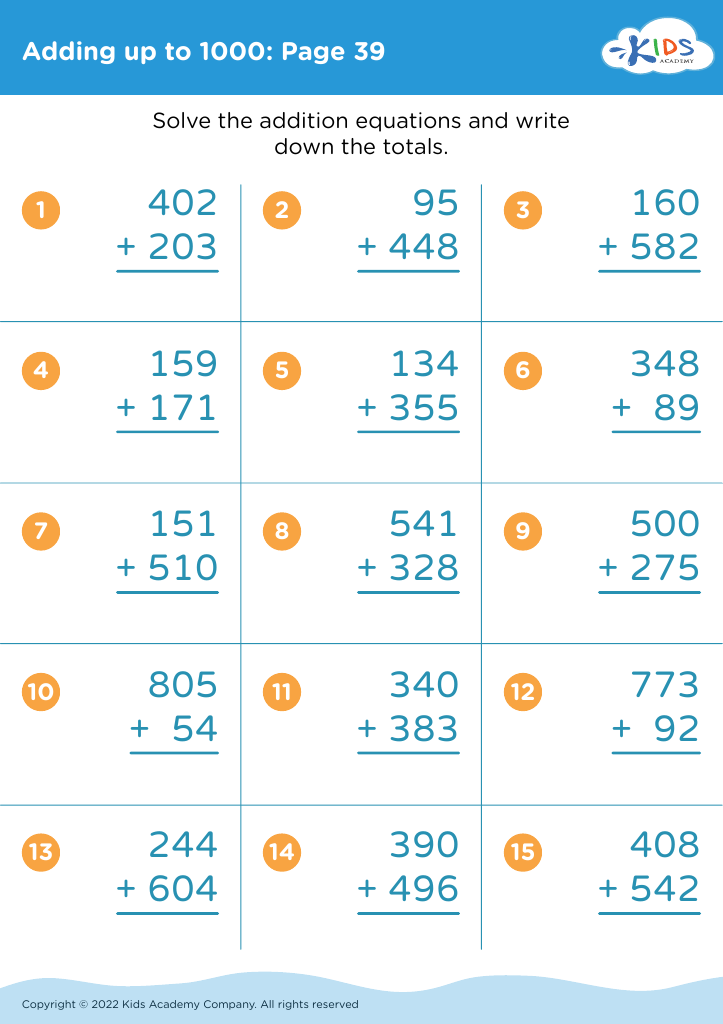
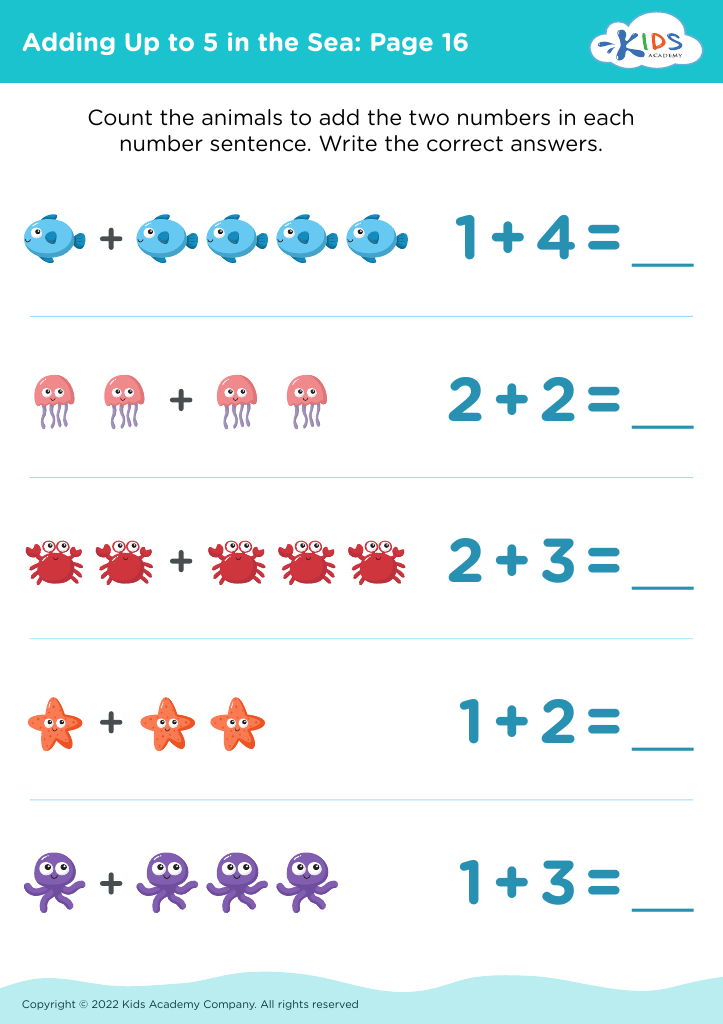
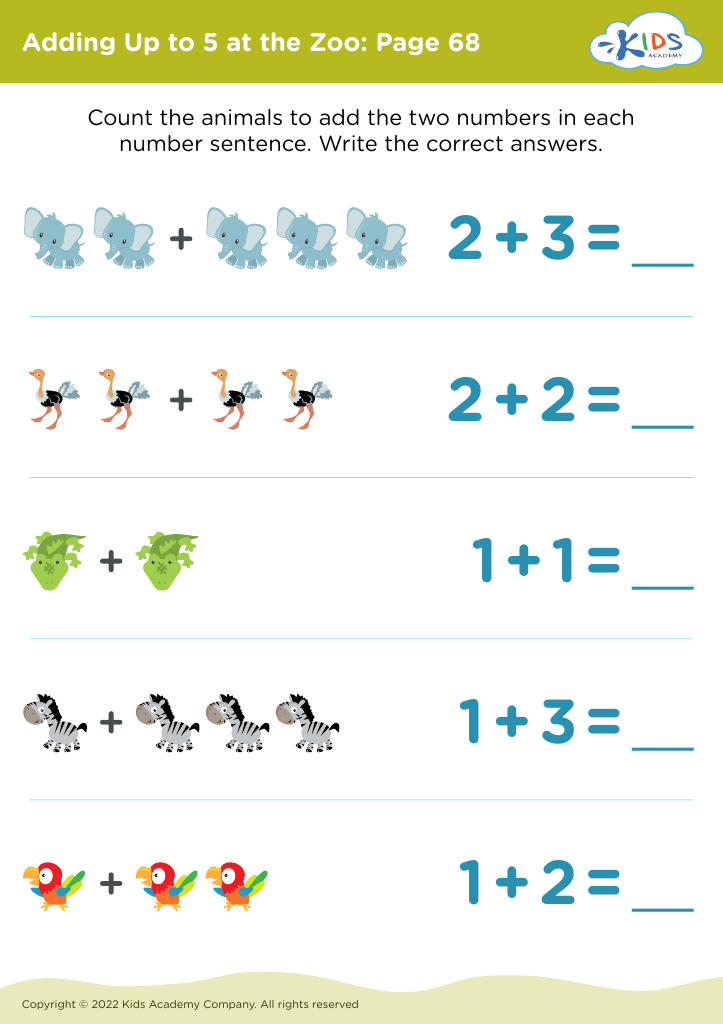
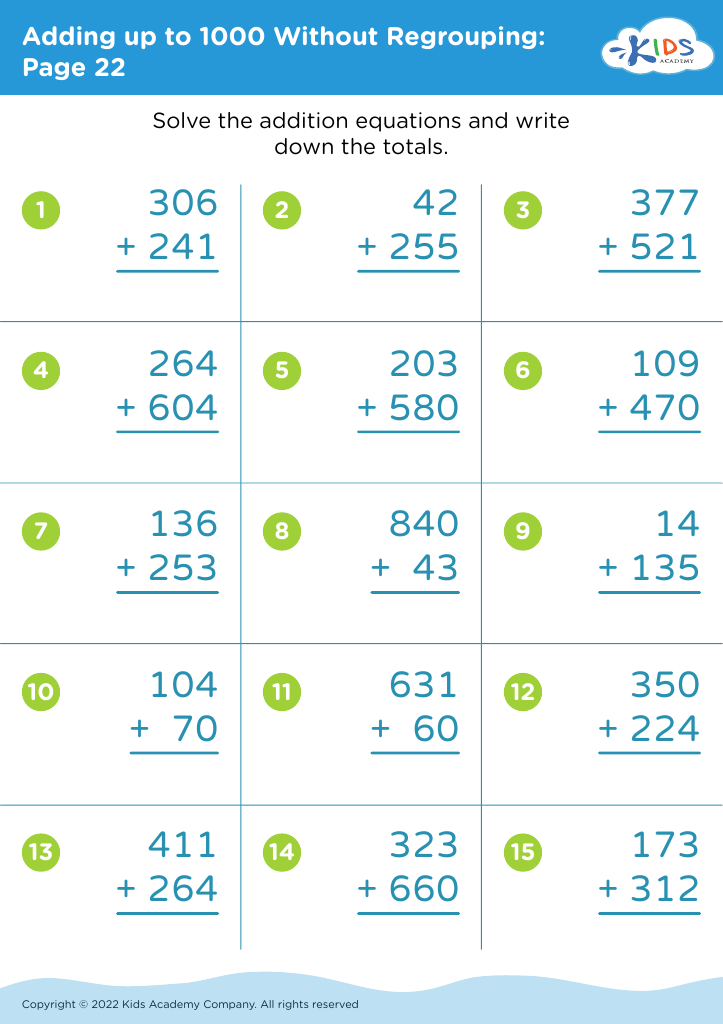
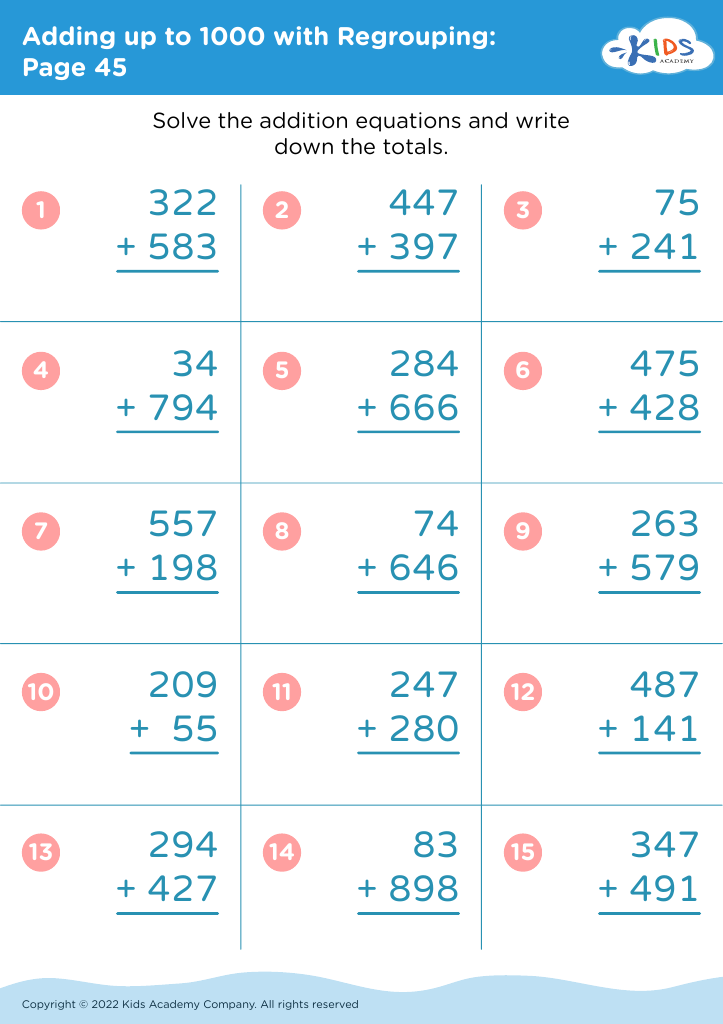
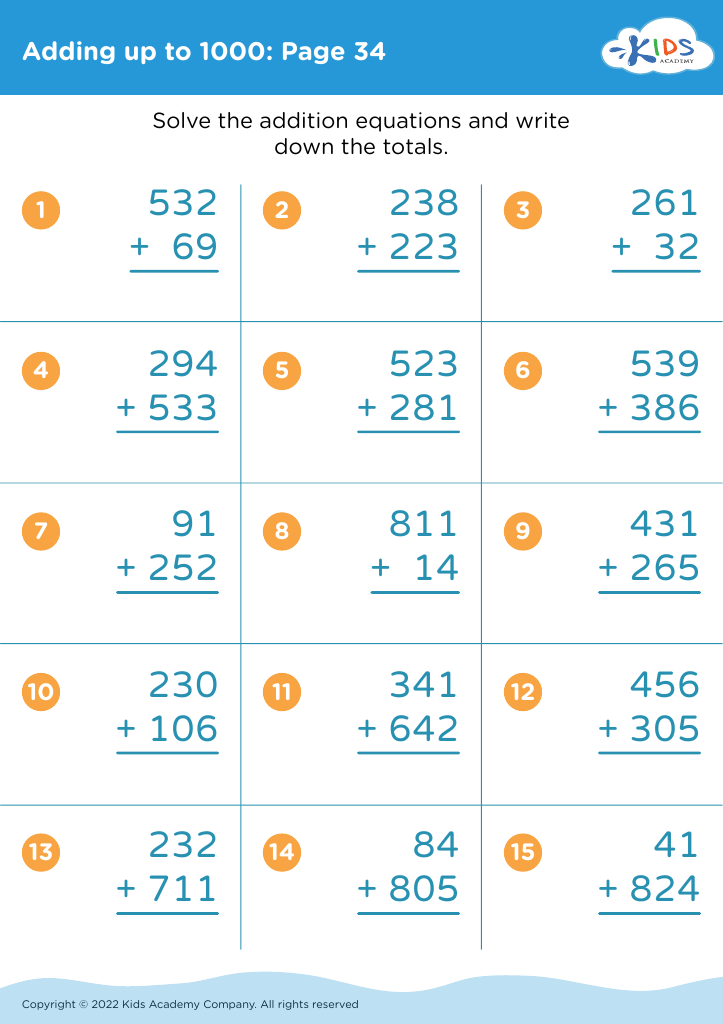
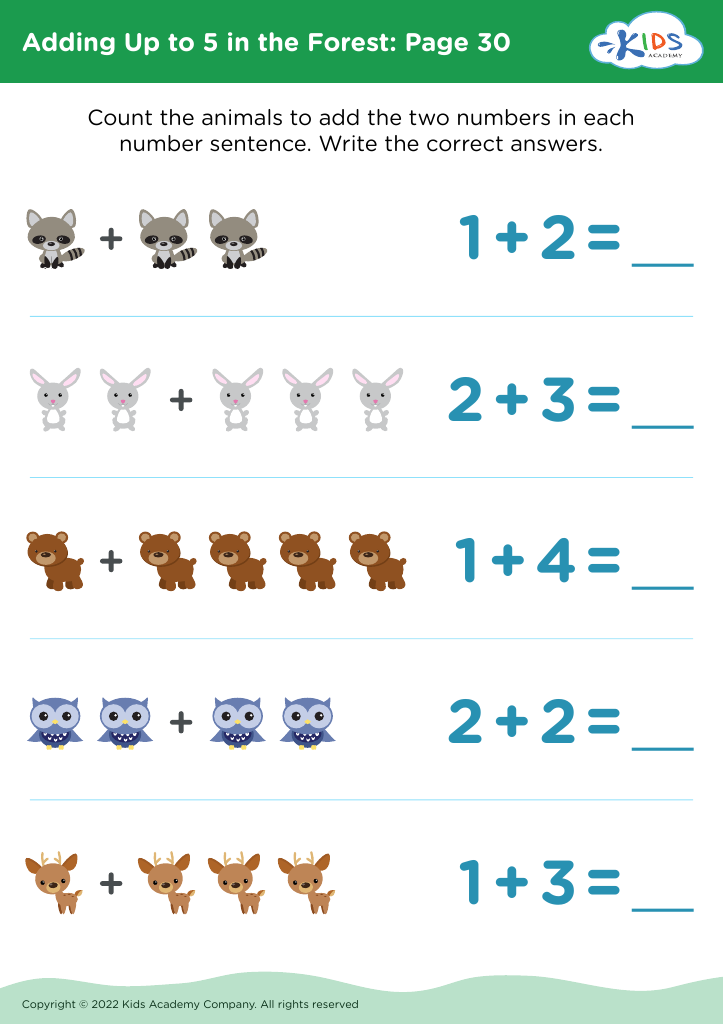
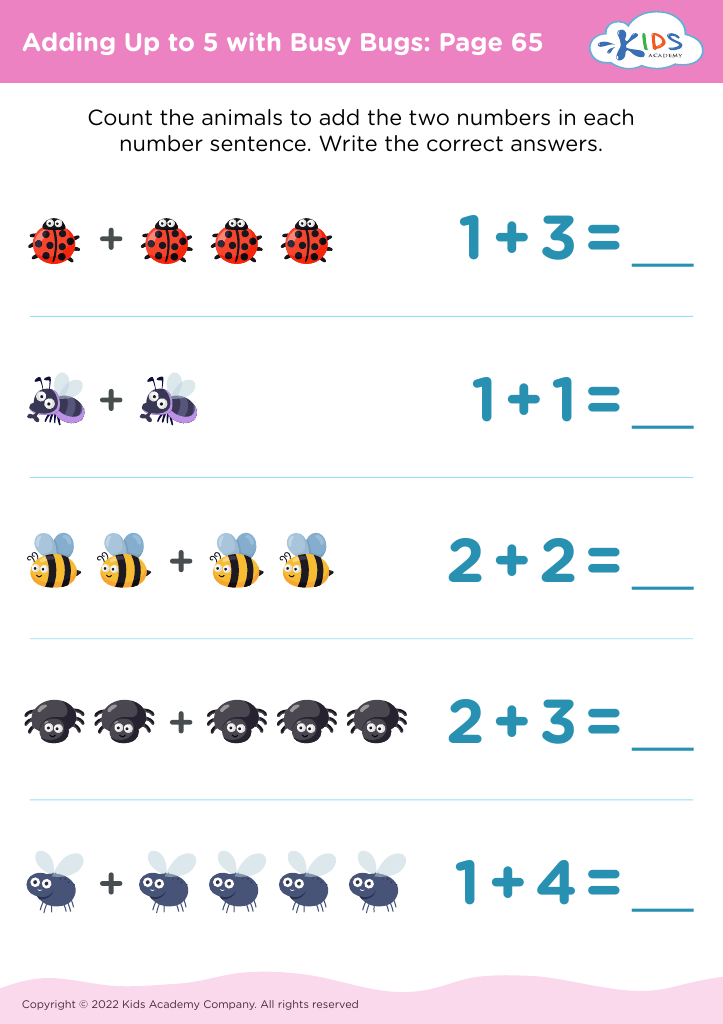








Fine motor skills, particularly those involved in writing, play a crucial role in the developmental journey of children aged 4 to 8. These skills involve the coordination of small muscles, especially those in the hands and fingers, and they are essential for performing tasks such as writing, cutting with scissors, and buttoning clothes. A focus on developing these skills is vital for several reasons.
Firstly, fine motor skills facilitate academic success. Proficiency in writing allows children to express their thoughts and ideas clearly on paper, aiding in literacy development and overall academic performance. Secondly, strong fine motor skills enhance daily life activities, fostering independence and self-esteem as children can perform tasks like feeding themselves or tying shoelaces.
Moreover, practicing writing improves hand-eye coordination and cognitive skills, as it requires attention to detail and planning. Inadequate development of fine motor skills could lead to frustration and aversion to tasks that involve writing, impacting a child's educational experience negatively.
Teachers and parents play a crucial role in nurturing these skills through engaging and varied activities, such as coloring, crafting, and using interactive writing tools. By prioritizing fine motor skills development, we set a foundation for lifelong learning and practical competence, ensuring children are well-prepared for future challenges.








