Fraction simplification Addition Worksheets for Ages 4-8 - Page 3
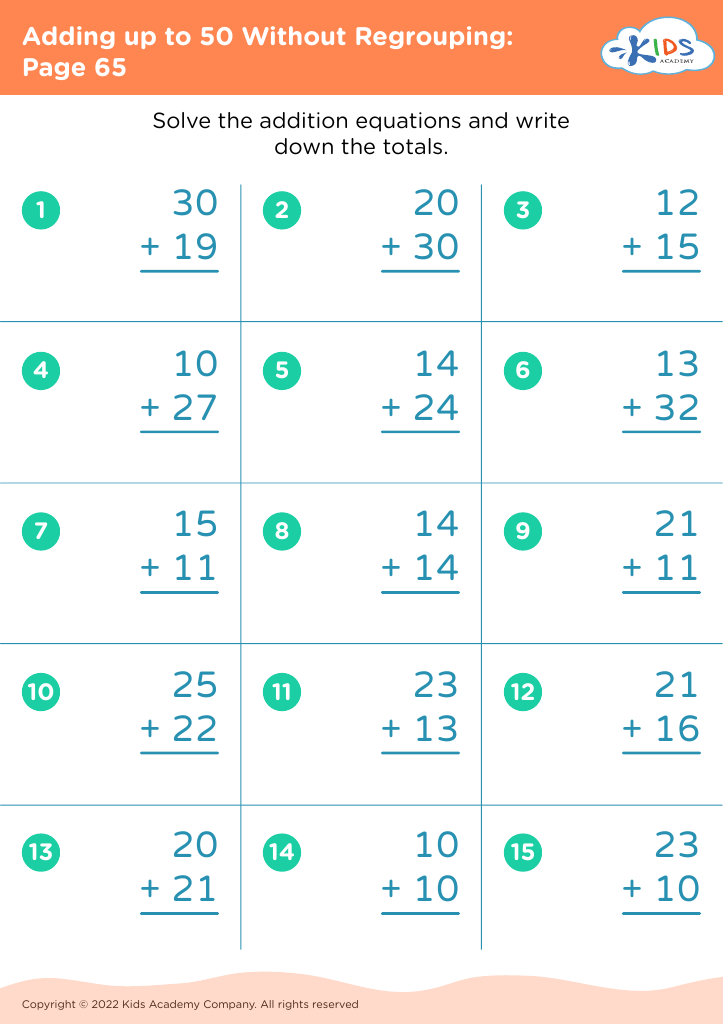
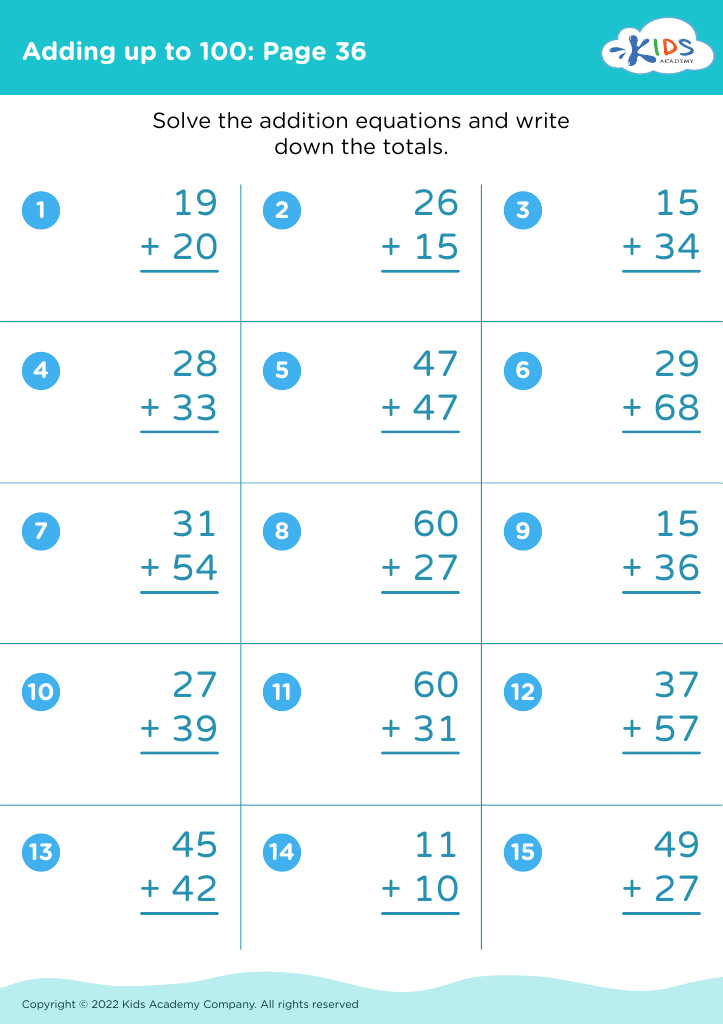
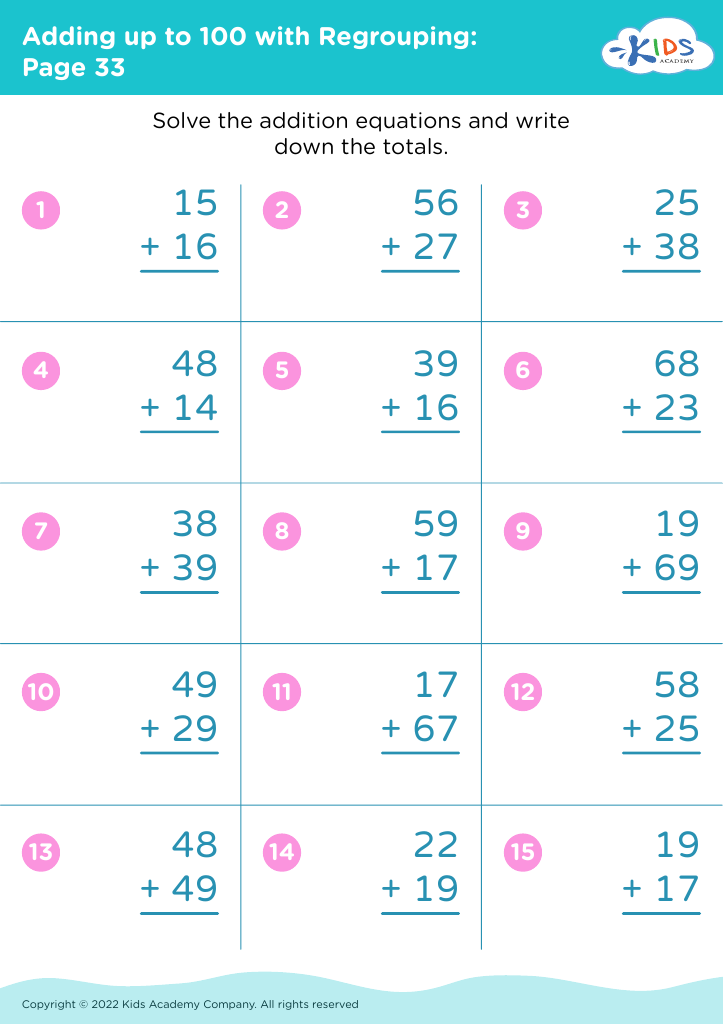
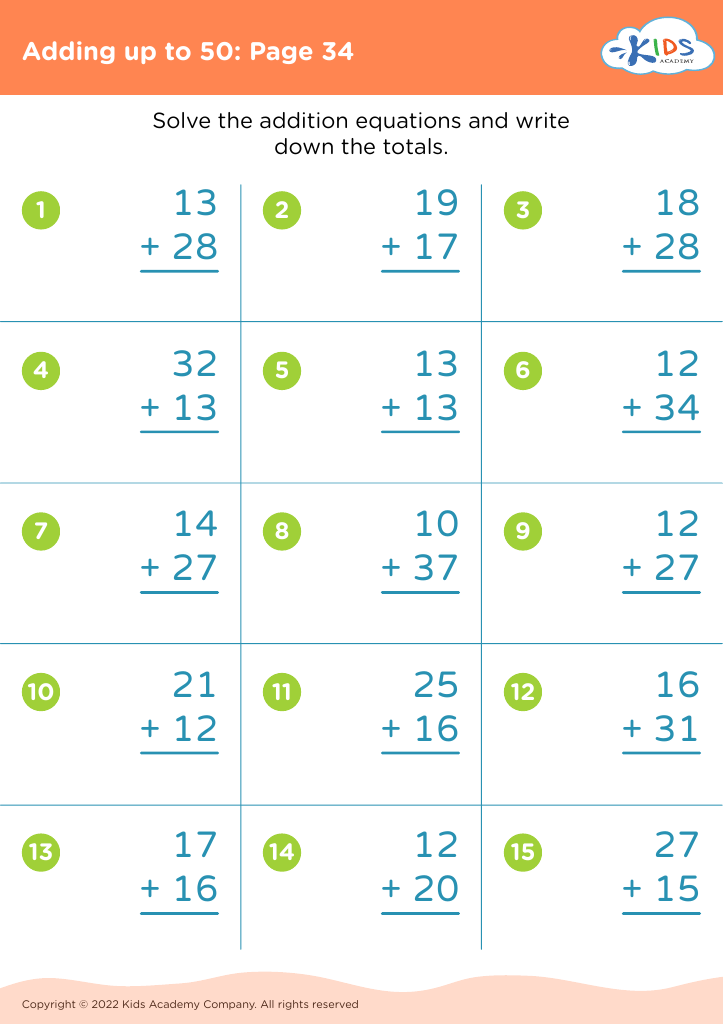







.jpg)
Fraction simplification and addition are critical foundational concepts in early childhood mathematics, especially for children ages 4-8. Understanding these concepts equips young learners with essential problem-solving skills and mathematical reasoning, which serve as building blocks for more complex topics in the future.
Parents and teachers should care about fraction simplification because it helps children grasp the idea of equivalency among numbers, fostering a deeper comprehension of mathematical operations. This early insight into fractions prepares them to react instinctively in real-life situations involving parts, sharing, and comparison.
Moreover, understanding fraction addition strengthens children’s ability to handle various numerical situations, promotes logical thinking, and cultivates a positive attitude towards mathematics. By integrating hands-on activities, such as using visual aids and manipulatives, educators and parents can make these concepts engaging and relatable.
Incorporating fun games and relatable scenarios into learning further encourages a love for math while enhancing children's confidence. Ultimately, mastery of fraction simplification and addition at an early age enhances students’ performance in math, nurtures critical thinking skills, and provides them with the necessary tools to navigate everyday problems. Thus, fostering these skills lays the groundwork for future academic and life success.








