Improve counting skills Addition Worksheets for Ages 4-8 - Page 2
44 filtered results
-
From - To
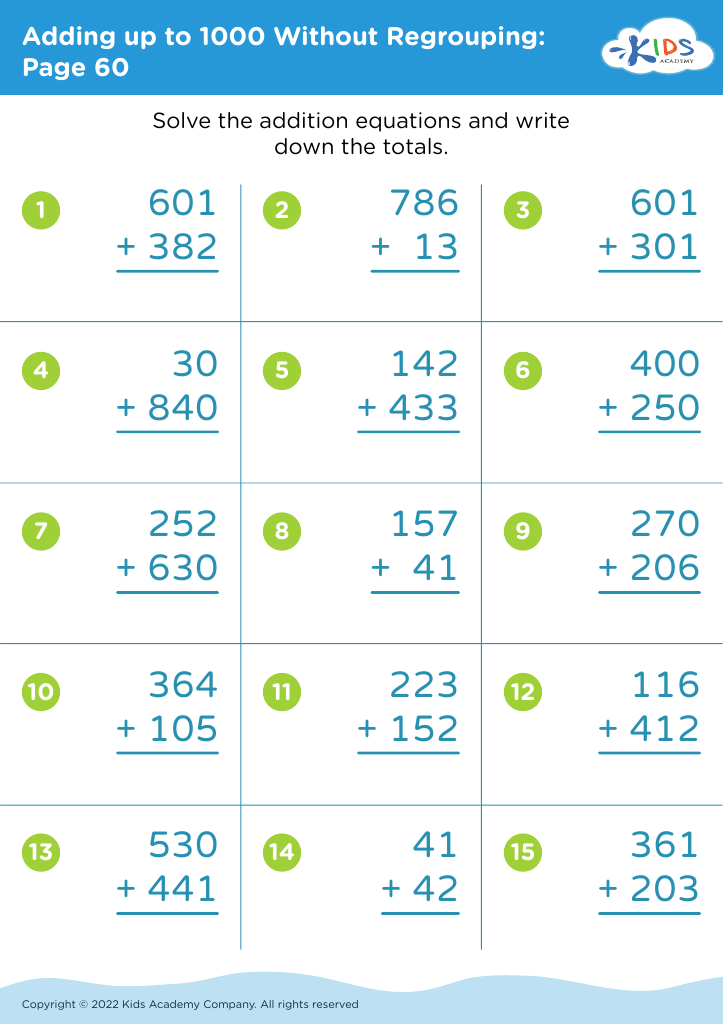
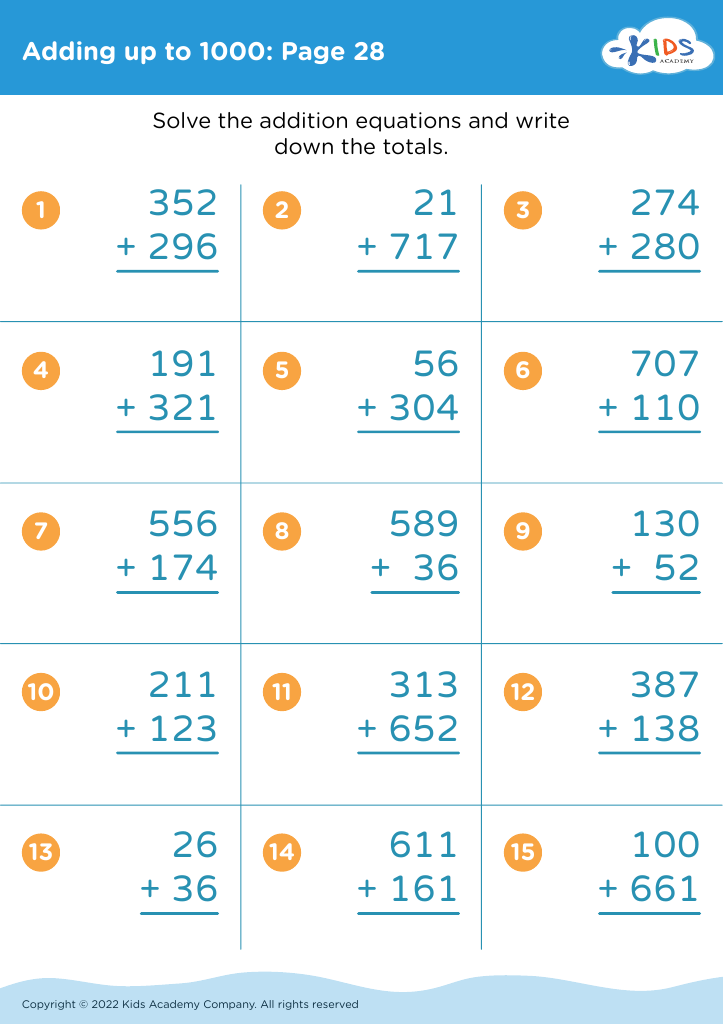
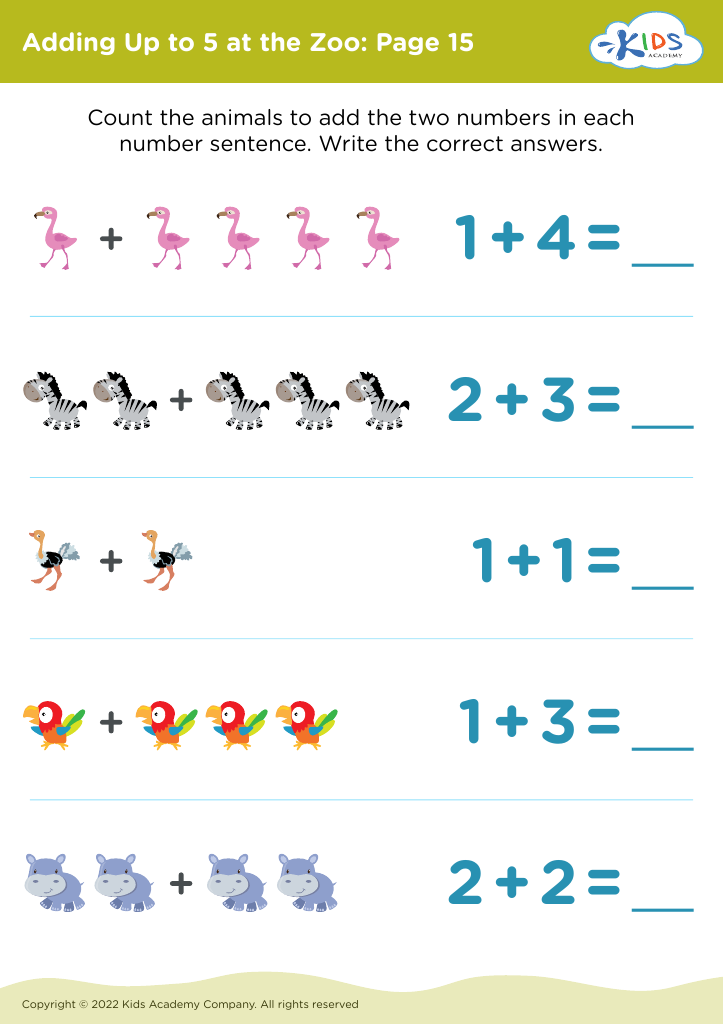
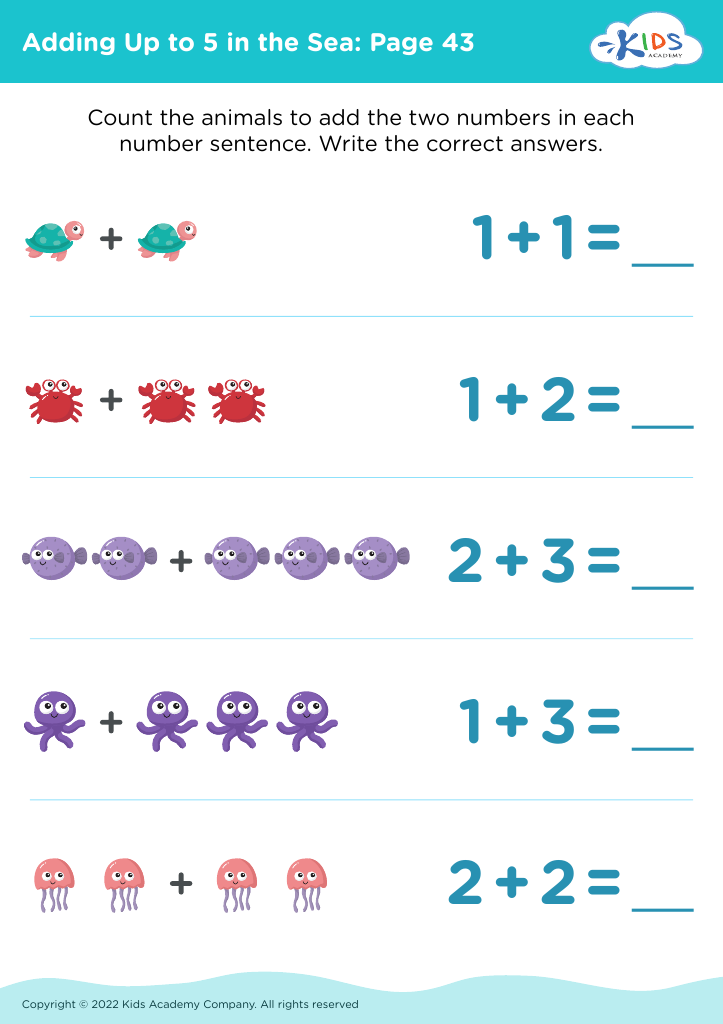
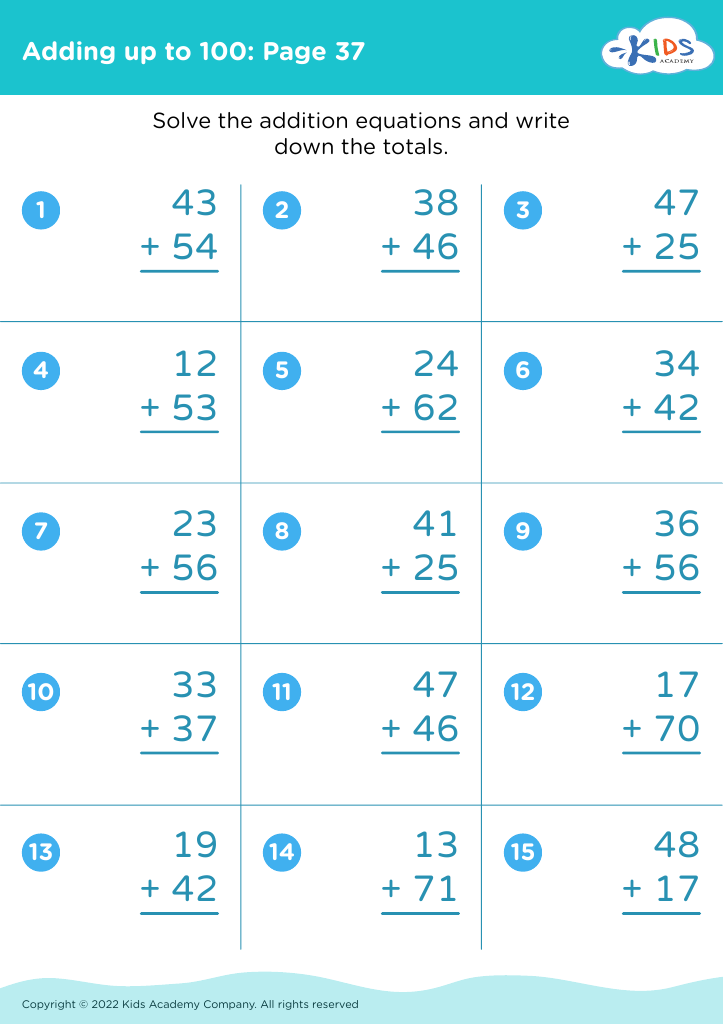
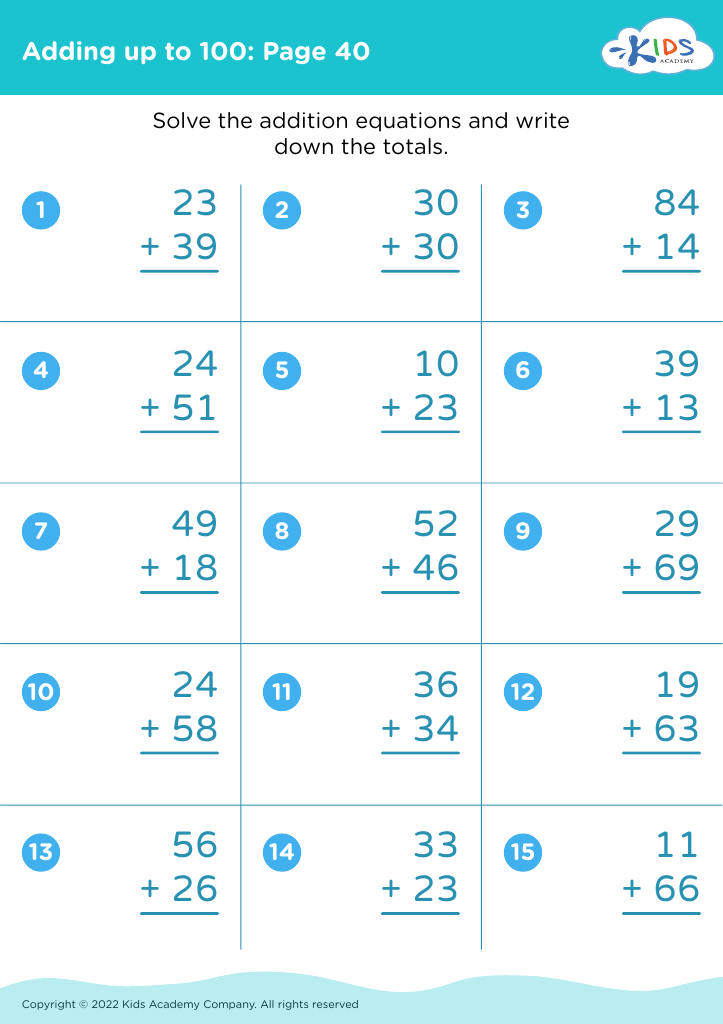
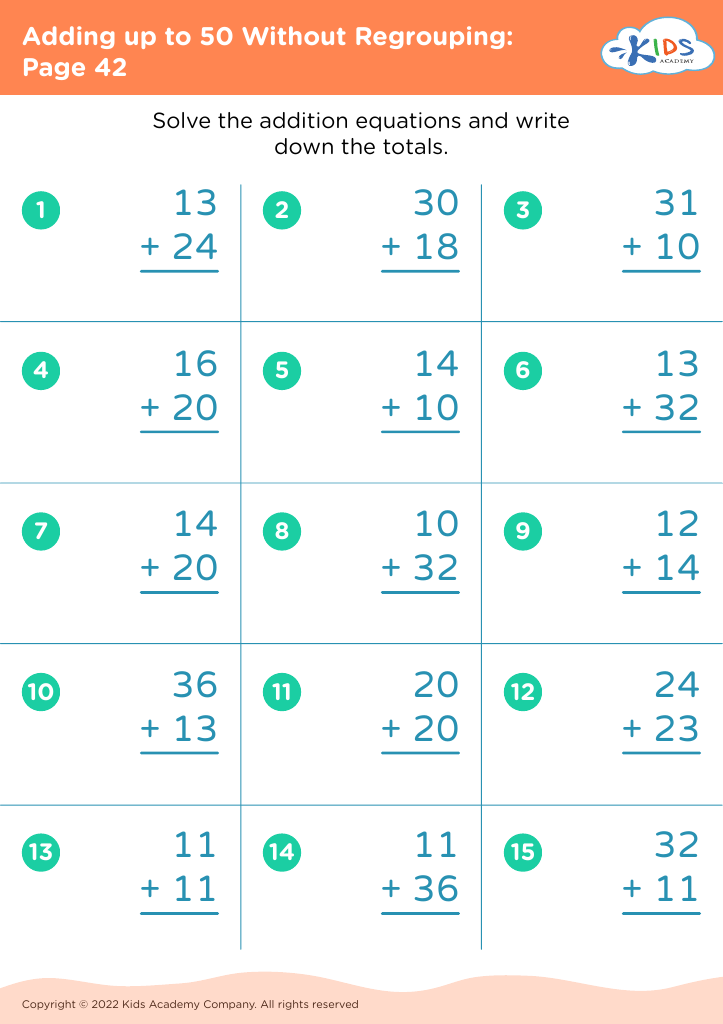
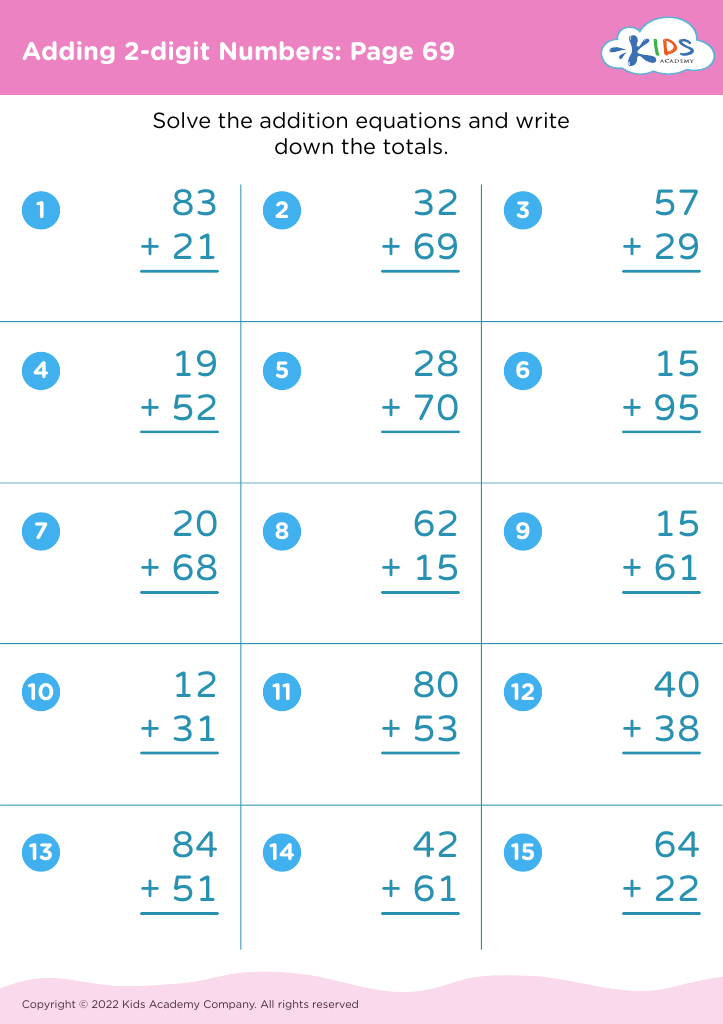
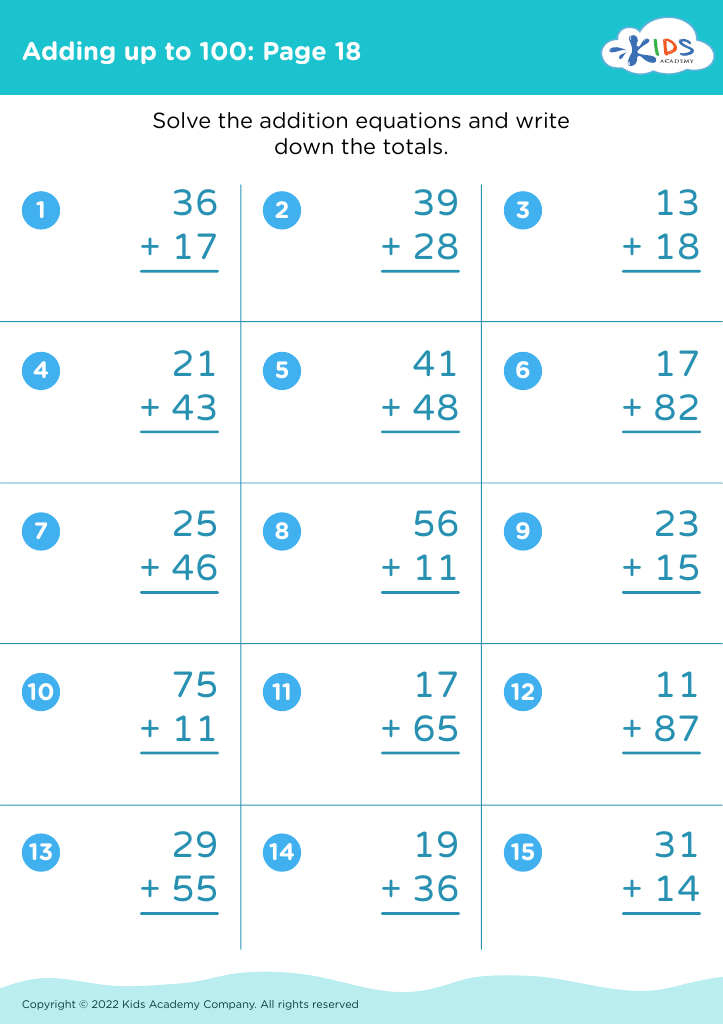
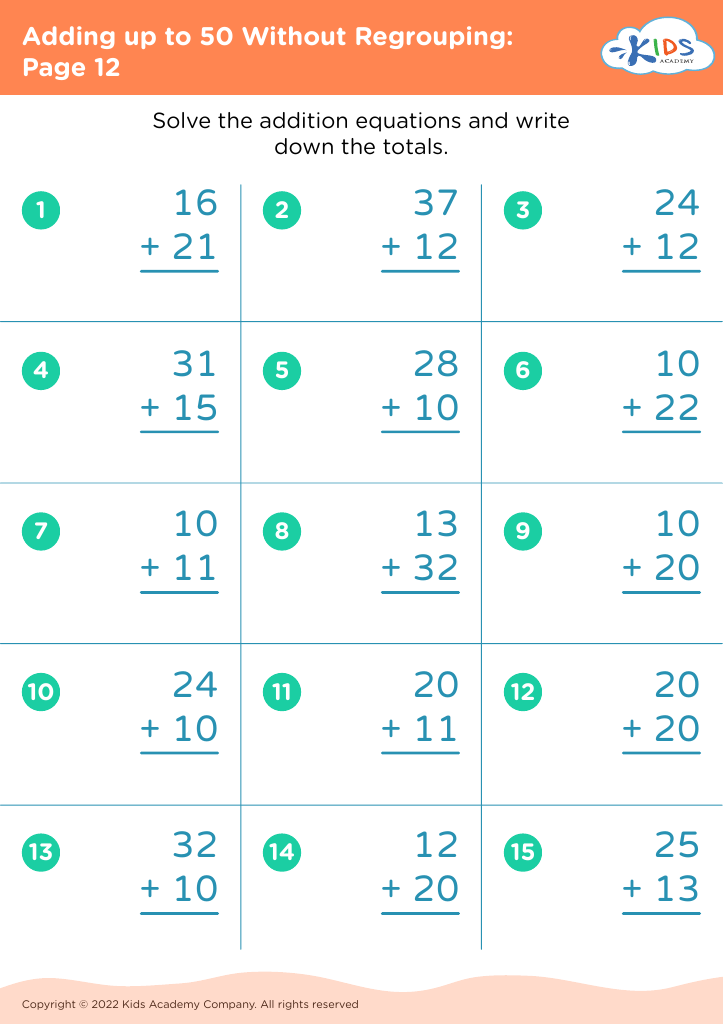
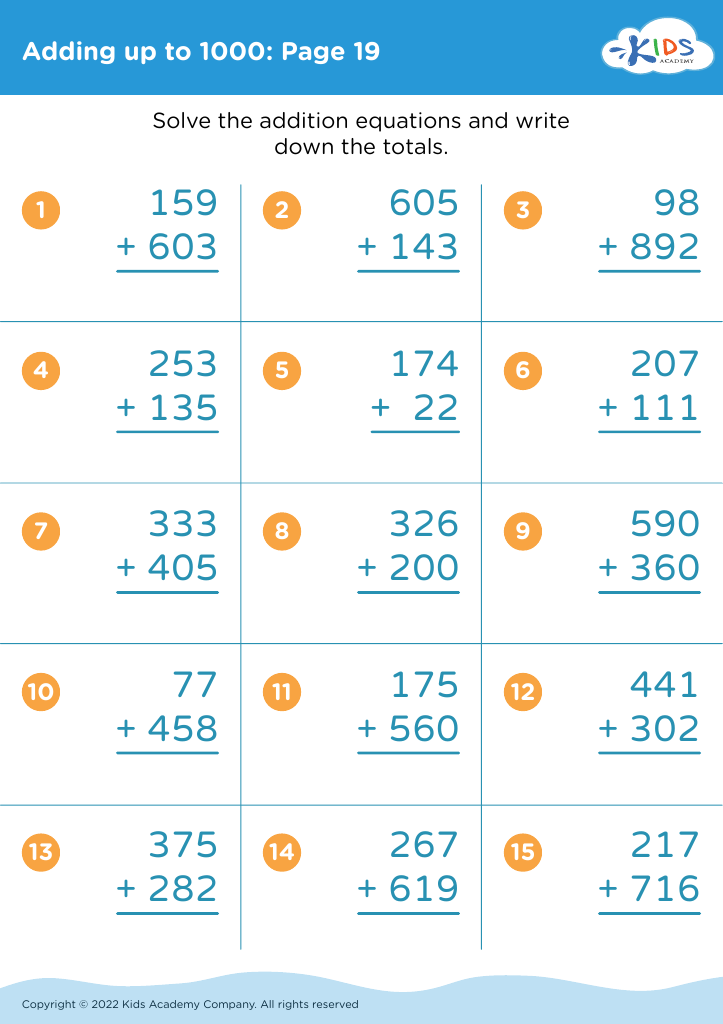
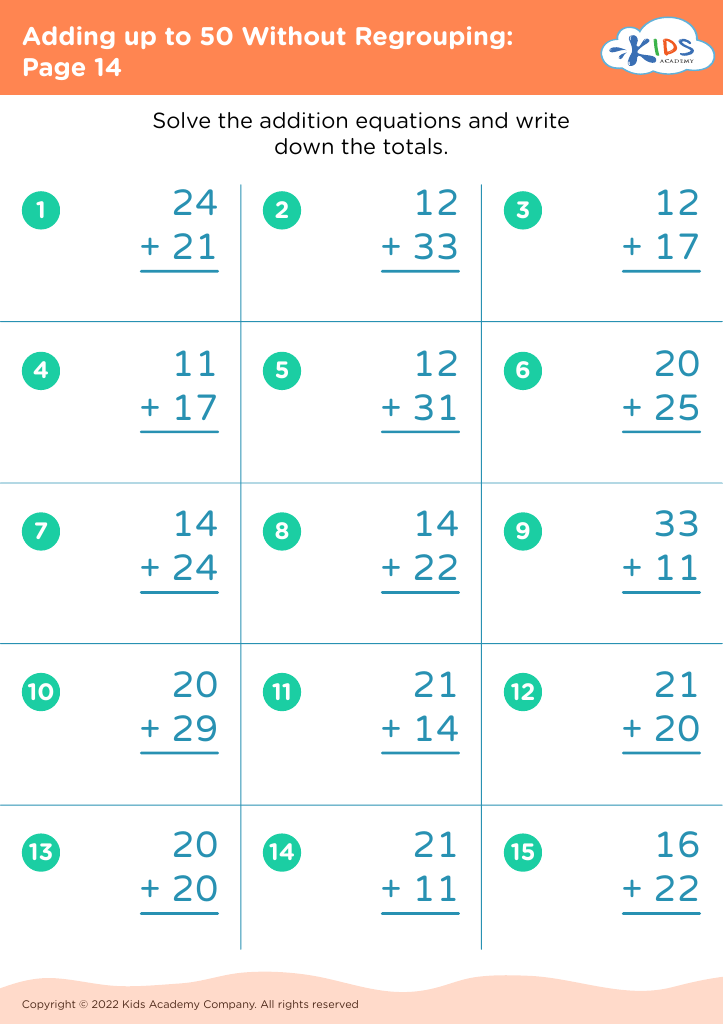
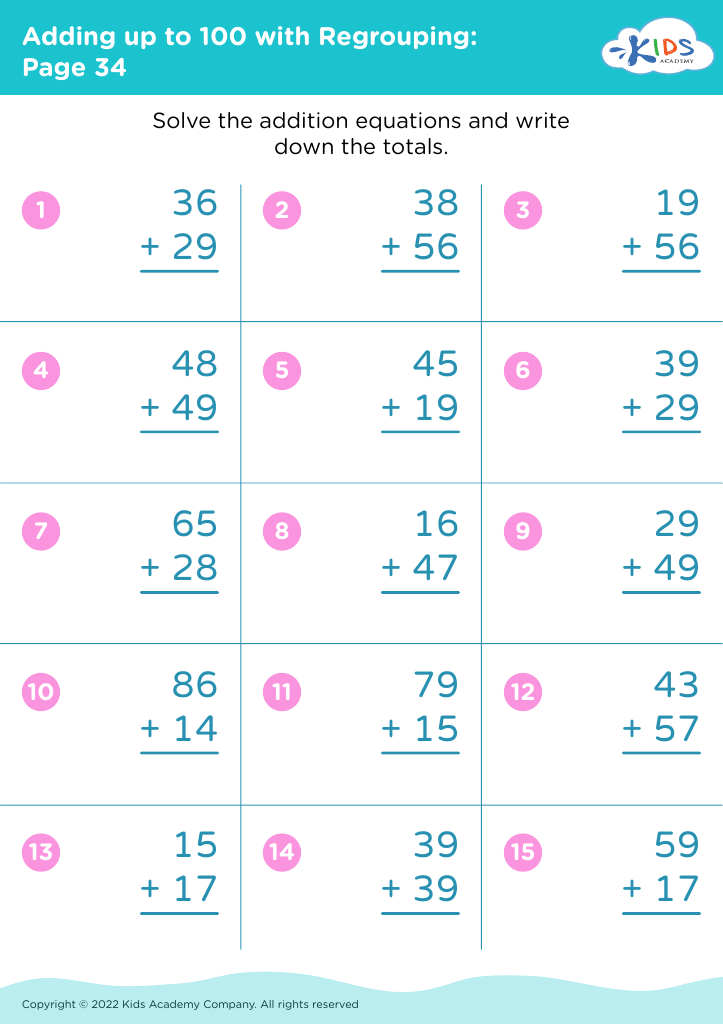
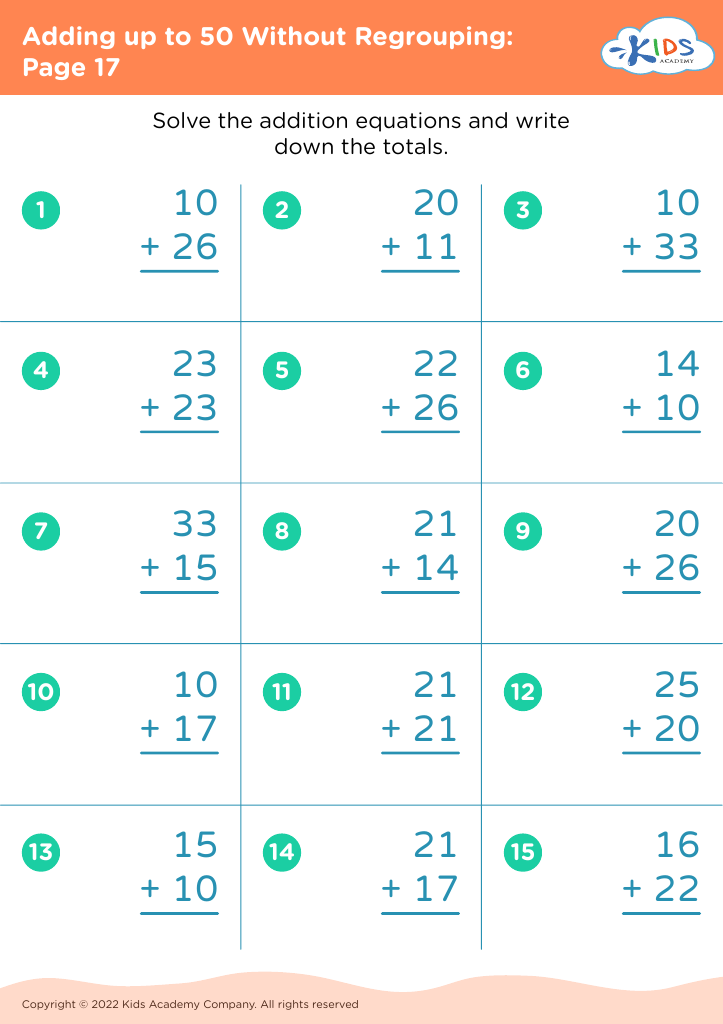
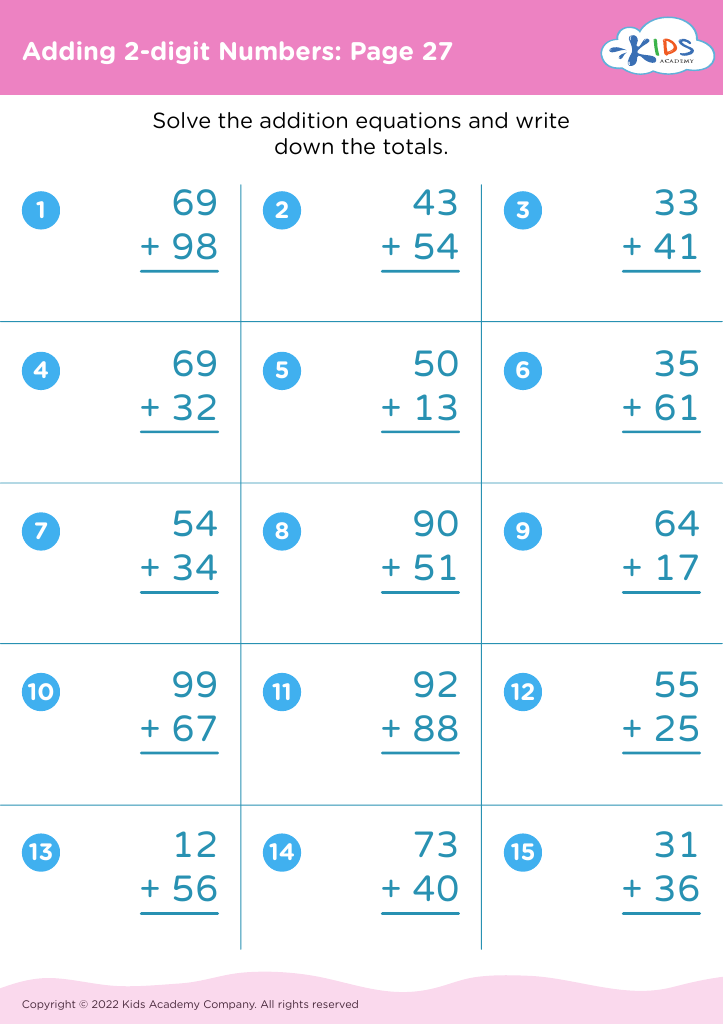
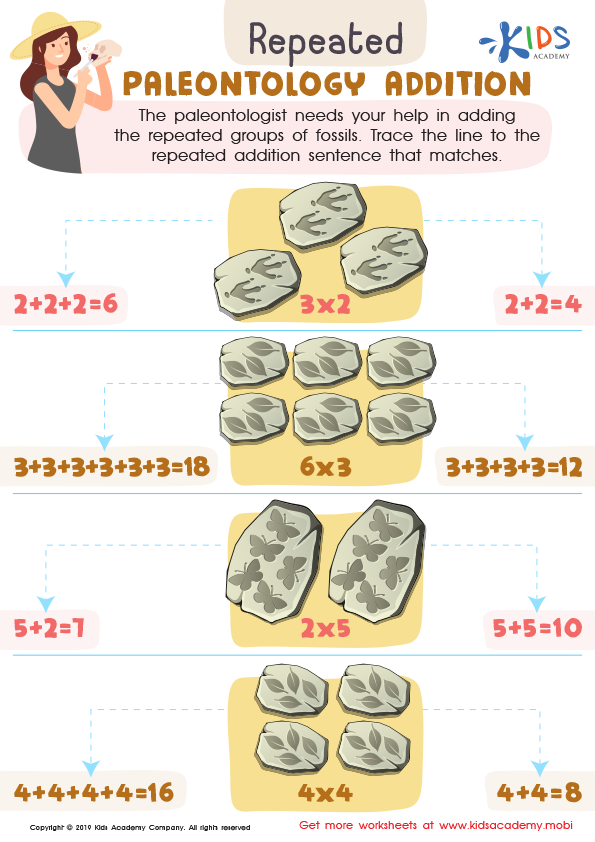
Repeated Archaeology Addition Worksheet
 Assign to My Students
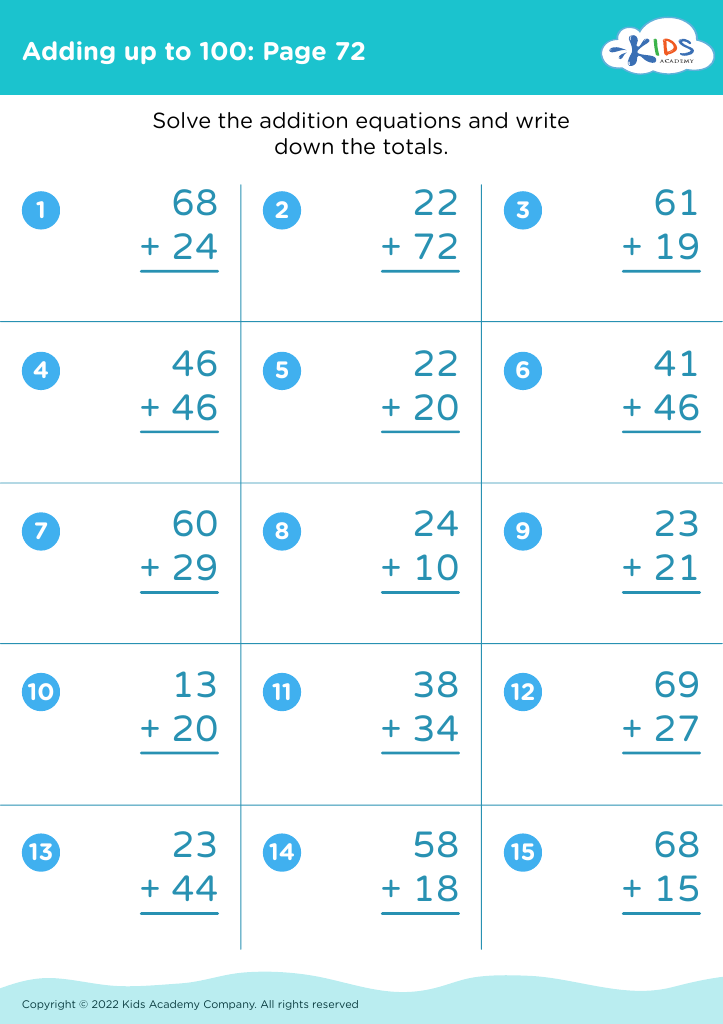
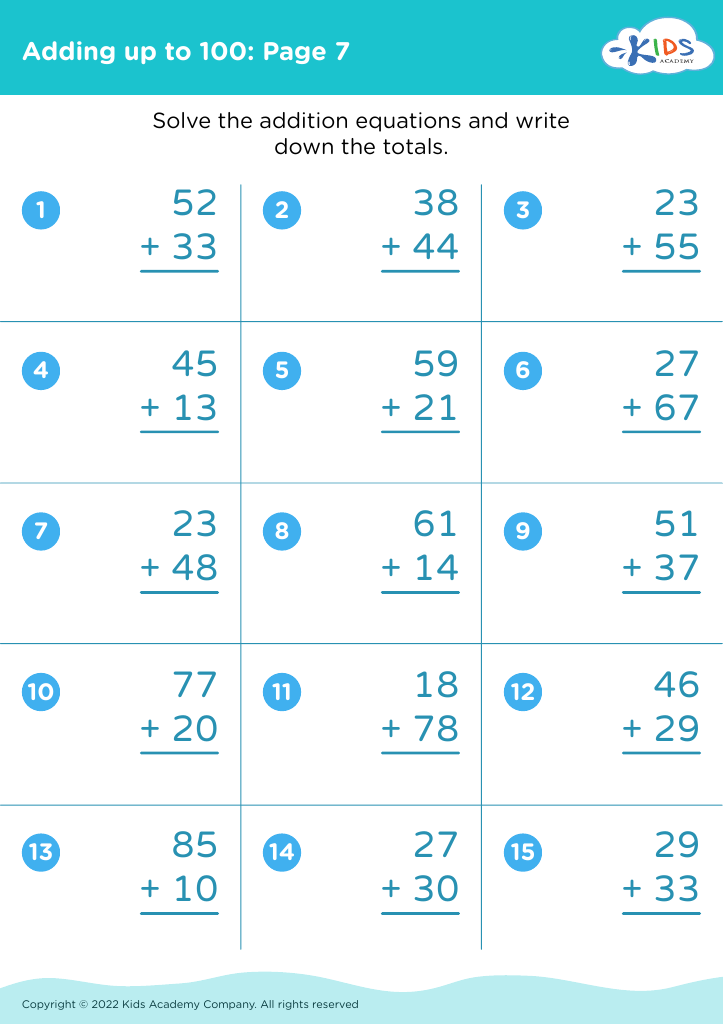
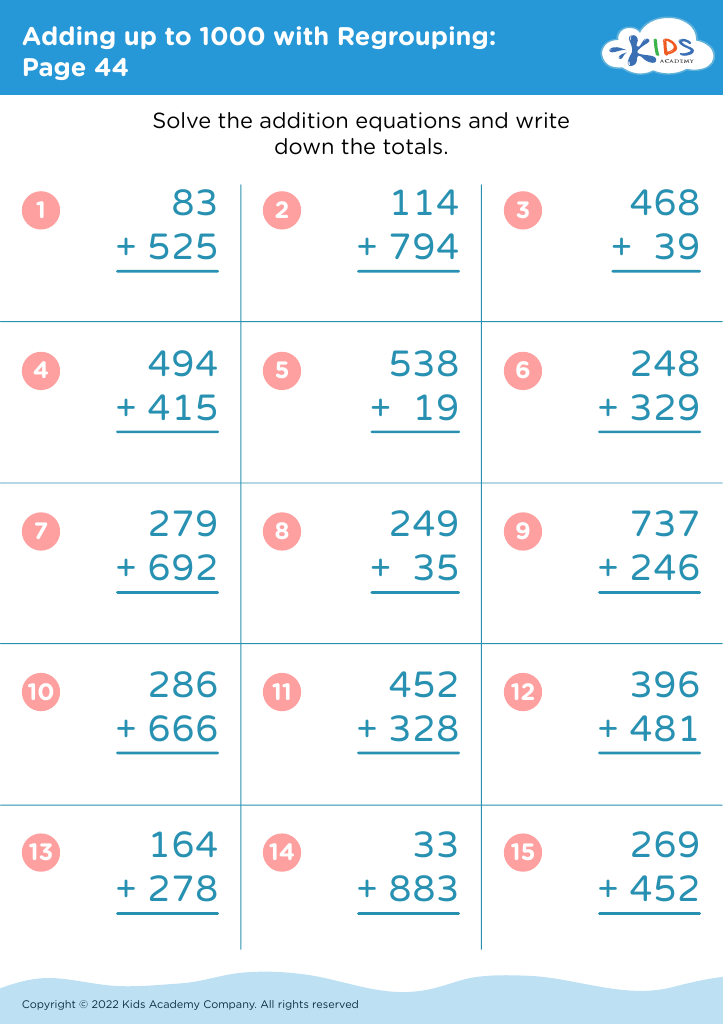
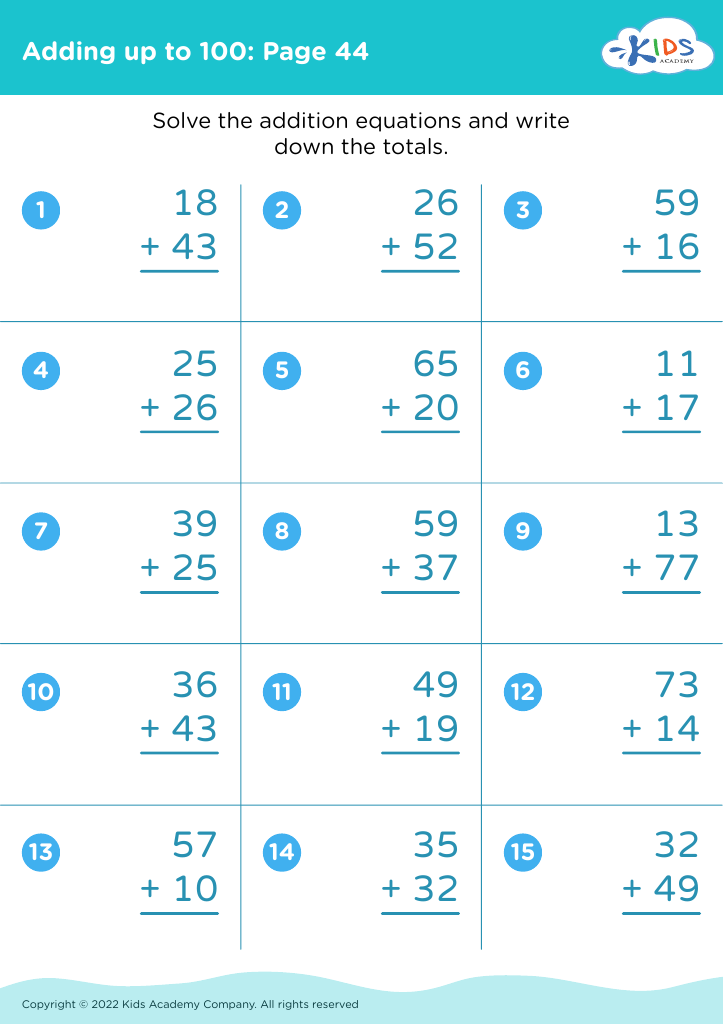








Parents and teachers should prioritize improving counting skills and addition proficiency for children aged 4-8 because foundational math abilities are crucial for later academic success and daily life. During these early years, children's brains are highly adaptable, making it the ideal time to establish essential math concepts. Children who develop strong counting and addition skills not only build confidence in their numerical abilities but also gain a head start in more complex mathematical operations they will encounter in the future.
Counting and addition help improve cognitive development by enhancing memory, attention span, and logical thinking. These skills form the building blocks for understanding other math topics such as subtraction, multiplication, and division. Additionally, early math skills are closely linked to skills in other domains. For instance, quantitative reasoning often overlaps with problem-solving skills in subjects like science and technology.
Promoting these skills also equips children with practical, real-life abilities. From understanding money to knowing time and managing everyday tasks like cooking or shopping, numeracy is omnipresent. Therefore, encouraging counting and addition in early childhood not only benefits academic performance but also prepares kids for a lifetime of practical decision-making and complex problem-solving. Investing in these skills can ensure a well-rounded, confident, and successful next generation.








