Improving reading skills Addition Worksheets for Ages 4-8
4 filtered results
-
From - To
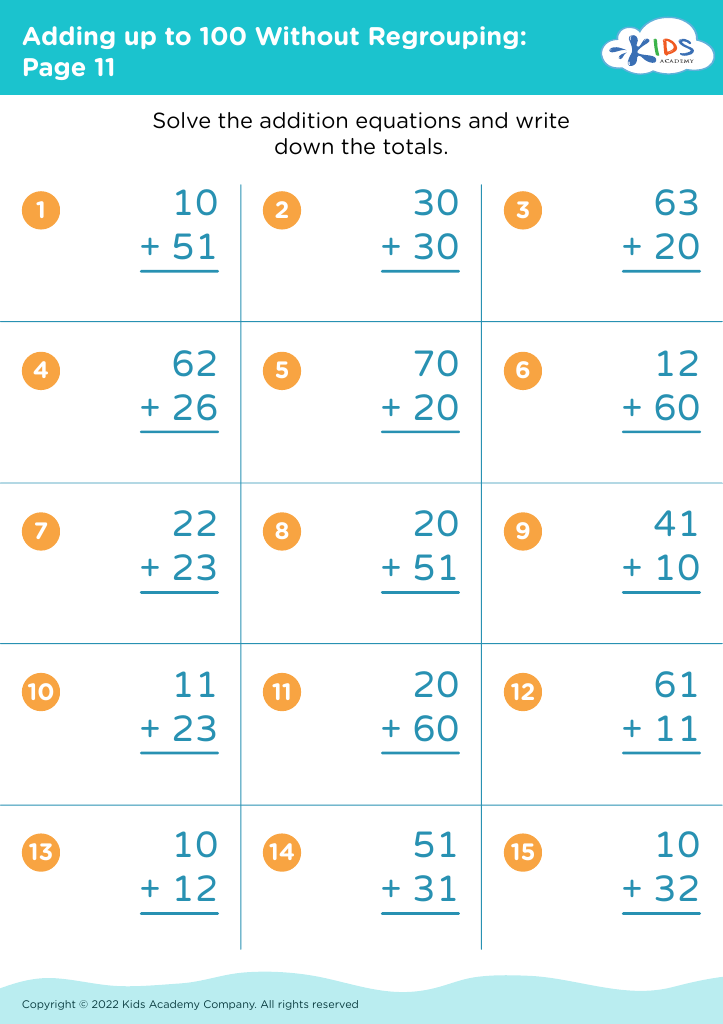
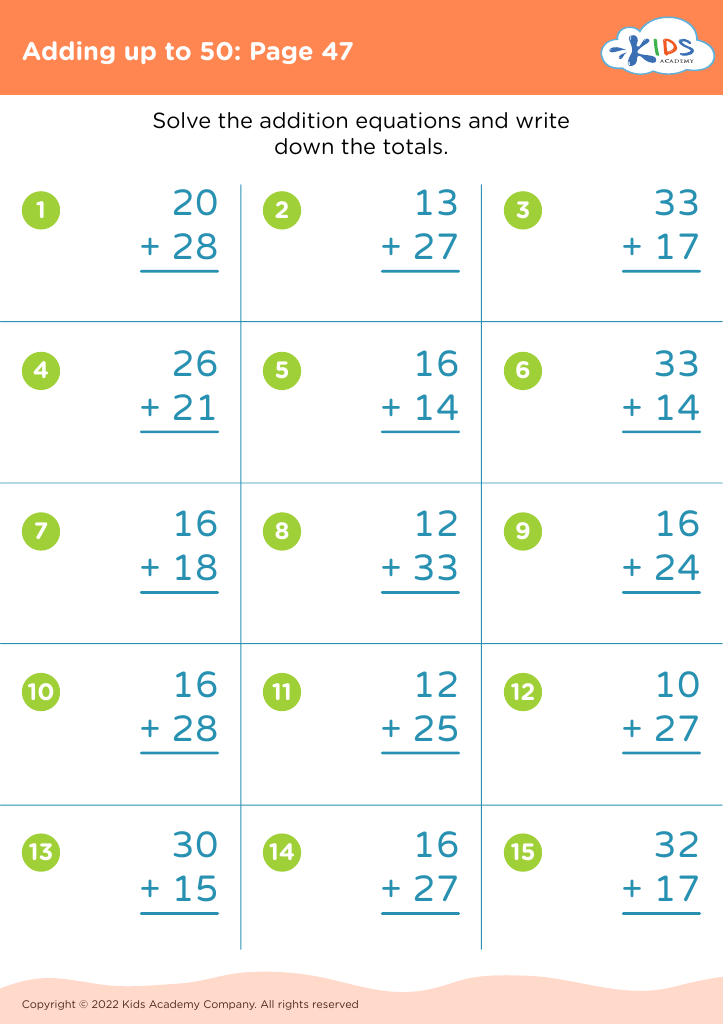
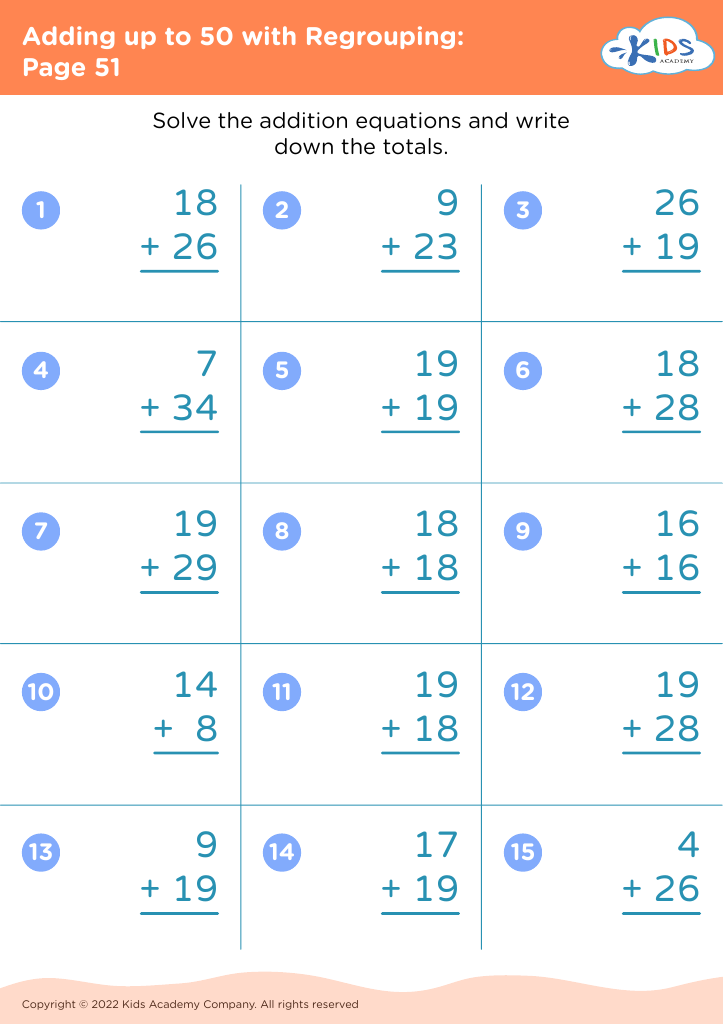
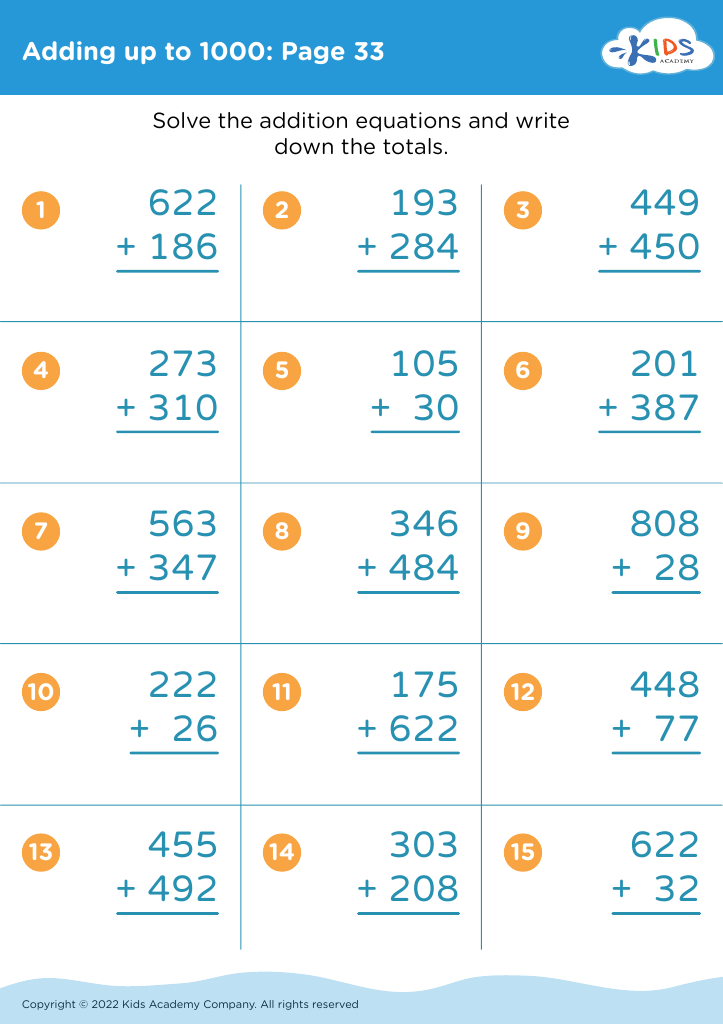
Enhance your child's learning experience with our "Improving Reading Skills Addition Worksheets" designed for ages 4-8. These fun, interactive worksheets not only focus on mastering addition but also incorporate reading practice, fostering a love for both math and literacy. Through engaging exercises, kids will strengthen their understanding of basic math concepts while enhancing their vocabulary and reading comprehension. Perfect for at-home learning or as supplemental classroom resources, these worksheets are crafted to cater to young learners’ developmental needs. Download now to provide your child with the tools they need to excel in math and reading, setting the foundation for lifelong learning!








Improving reading skills in children aged 4-8 is crucial for several reasons. First, these early years lay the foundation for lifelong learning. Strong reading skills not only enhance a child's language abilities but also promote cognitive development, critical thinking, and creativity. When children learn to read effectively, they become more competent in other subjects, aiding their overall academic performance.
Moreover, reading fosters imagination and emotional intelligence, allowing kids to connect with varied perspectives. This is essential for developing empathy and social skills. Through stories and text, children learn about different cultures, experiences, and ideas.
For parents and teachers, nurturing reading skills also helps in identifying children’s interests and preferences, enabling more tailored learning experiences. Engaging children in books can cultivate a love for learning, making education enjoyable. This, in turn, leads to greater motivation and perseverance in school.
Lastly, early reading proficiency is linked to better opportunities later in life, influencing future academic and career success. By prioritizing reading from an early age, parents and teachers are investing not only in academic achievements but also in the personal growth and well-being of the child. Therefore, it is integral for them to take an active role in fostering these skills.








