
Logical Reasoning Addition Worksheets for Ages 4-8
7 filtered results
Difficulty Level
Grade
Age
-
From - To
Subject
Activity
Standards
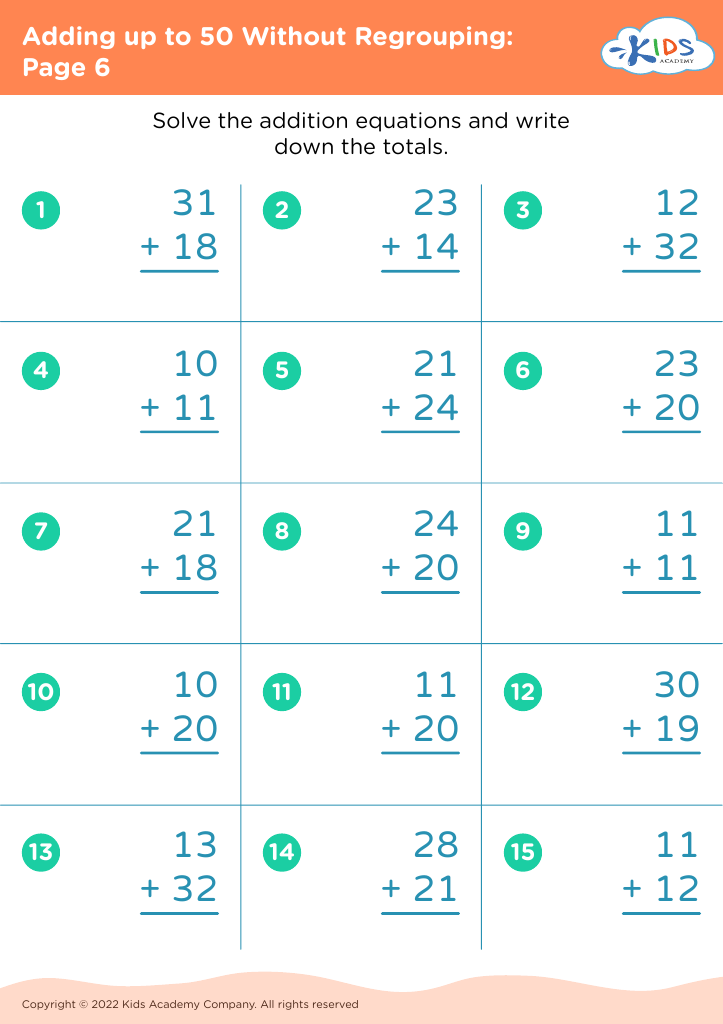
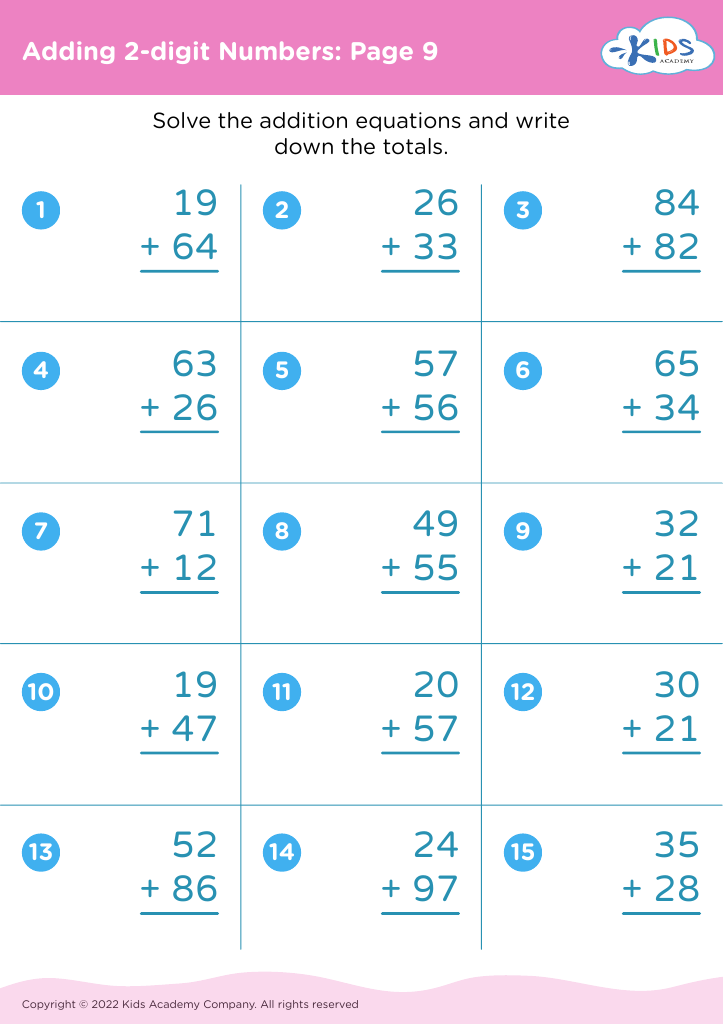
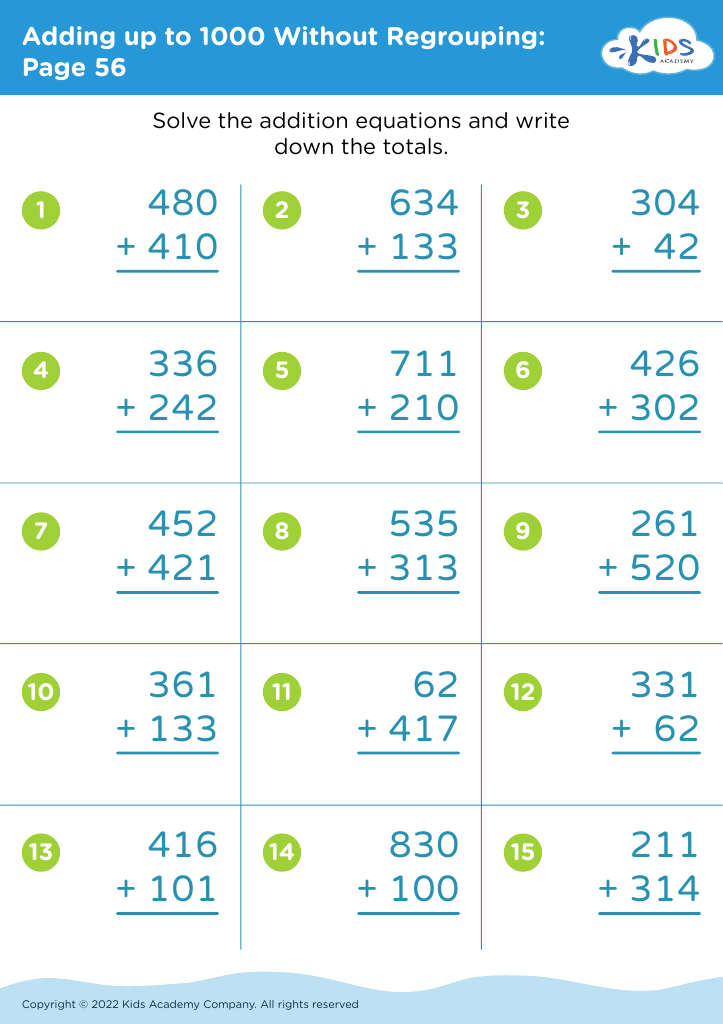
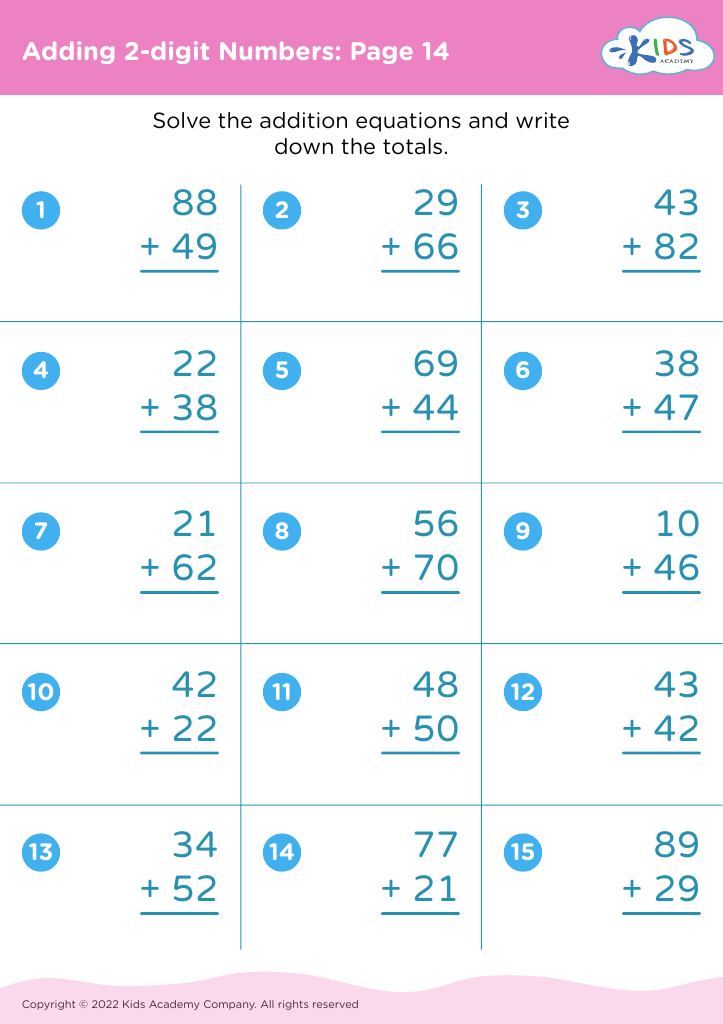
Boost your child's learning experience with our engaging Logical Reasoning Addition Worksheets for ages 4-8! Designed to develop critical thinking alongside math skills, these worksheets introduce fun, interactive challenges that promote logical reasoning through addition exercises. Children will solve puzzles, explore patterns, and apply problem-solving skills while reinforcing their understanding of numbers. Ideal for both classroom and home settings, our worksheets cater to various learning styles and capabilities. With colorful graphics and captivating exercises, kids will enjoy honing their reasoning abilities as they excel in early math. Start your young learner’s journey towards math proficiency and critical thinking today!
Favorites
With answer key
Interactive
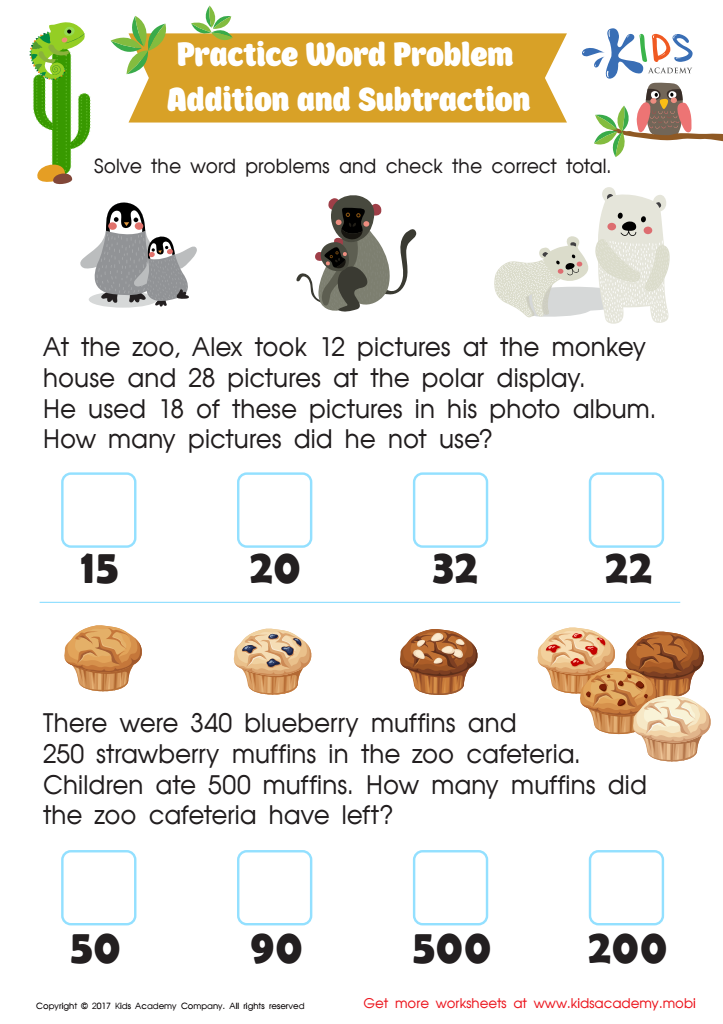
Addition and Subtraction: Word Problems Worksheet
Word problems can be difficult, but they offer another way to understand math. Our 3rd grade worksheet takes your child to the zoo; two intriguing word problems will test their thinking skills and help them find the total.
 Assign to My Students
Addition and Subtraction: Word Problems Worksheet
Worksheet
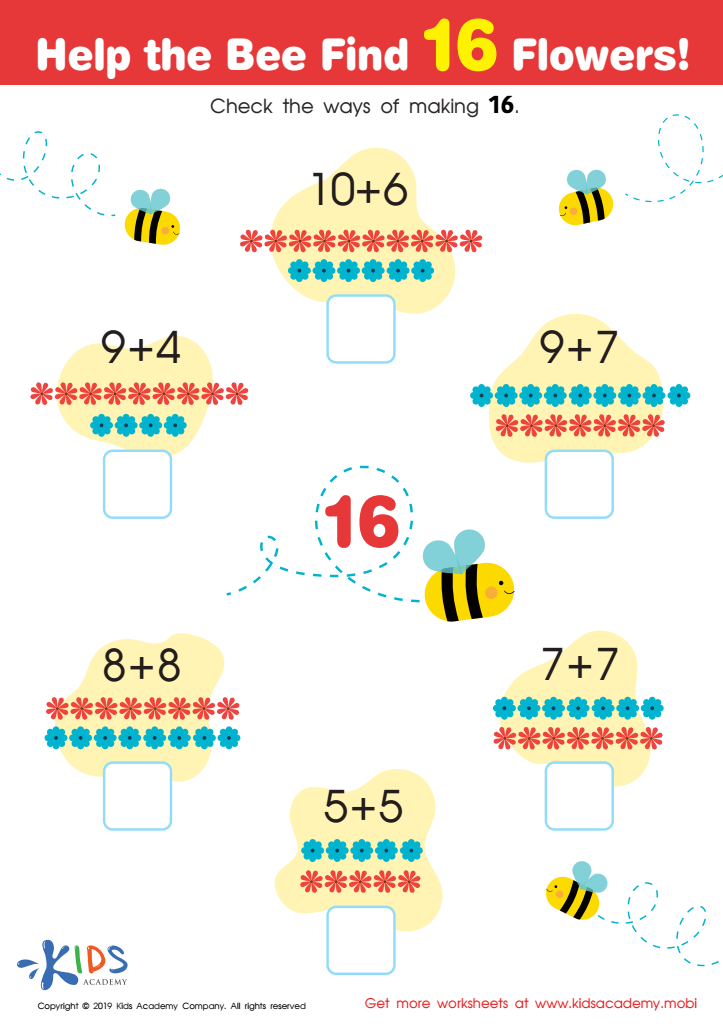
Help the Bee Find 16 Flowers Worksheet
Ask your students to count as high as they can. Show them that different numbers can equal the same figure with examples like 2+2=4 and 3+1=4. Ask for more examples, then help the bees find 16 flowers by checking the ways of making 16.
Help the Bee Find 16 Flowers Worksheet
Worksheet
Join Kids Academy for Free
Who is primarily going to use this learning content?








Logical reasoning addition is a critical skill for children ages 4-8, as it lays the foundation for their overall mathematical understanding. At this developmental stage, children are naturally curious, and fostering their logical reasoning enhances their problem-solving abilities. Engaging with logical reasoning addition encourages them to understand numbers and relationships between them, which is vital for their cognitive development.
Parents and teachers should care because this skill promotes not only mathematical proficiency but also vital life skills such as critical thinking, pattern recognition, and analytical reasoning. It helps children learn how to approach problems systematically, enhancing their resilience and perseverance when faced with challenges. In addition, mastering logical reasoning addition can boost a child's confidence in their math abilities, making them more likely to enjoy and pursue advanced math topics in the future.
Moreover, incorporating fun activities and games centered around logical reasoning addition can create a positive learning environment, making math enjoyable and interactive. When parents and teachers actively support the development of these skills, they equip children with the tools necessary for academic success, leading to better learning outcomes in more complex subjects later on. Ultimately, these foundational skills are essential in shaping well-rounded, capable learners.








