
Number identification Addition Worksheets for Ages 4-8
5 filtered results
Difficulty Level
Grade
Age
-
From - To
Subject
Activity
Standards
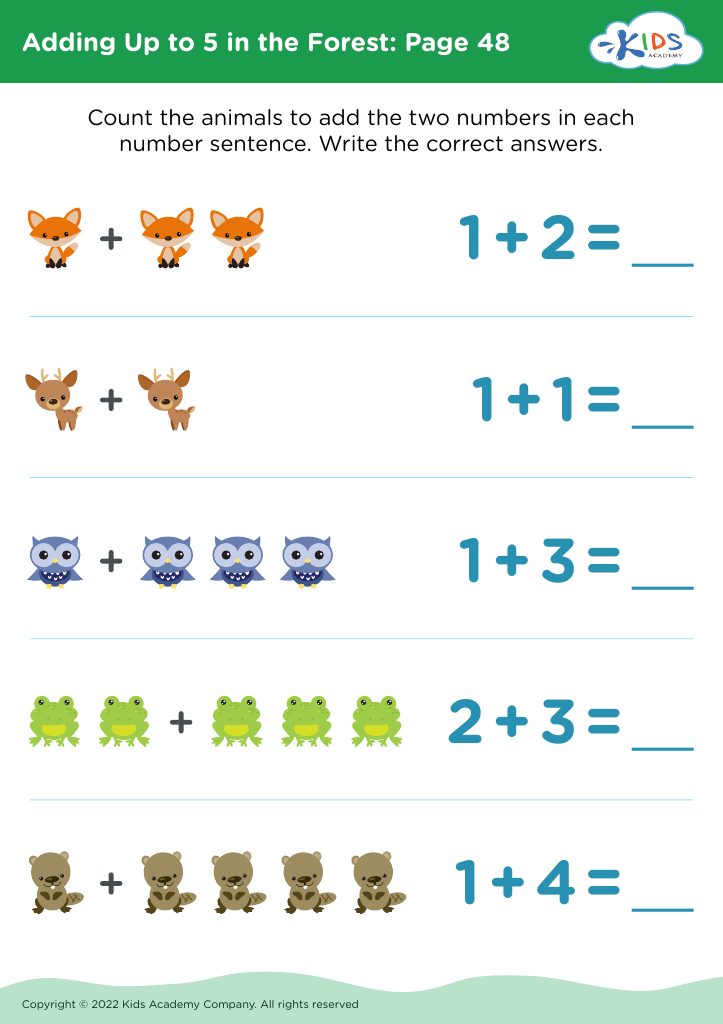
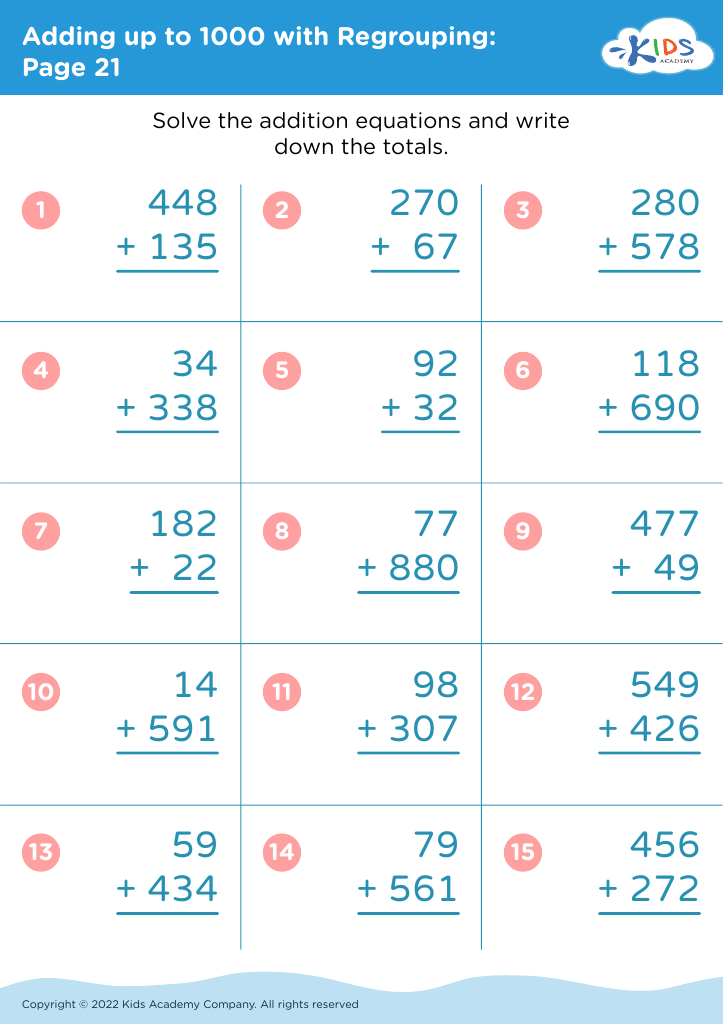
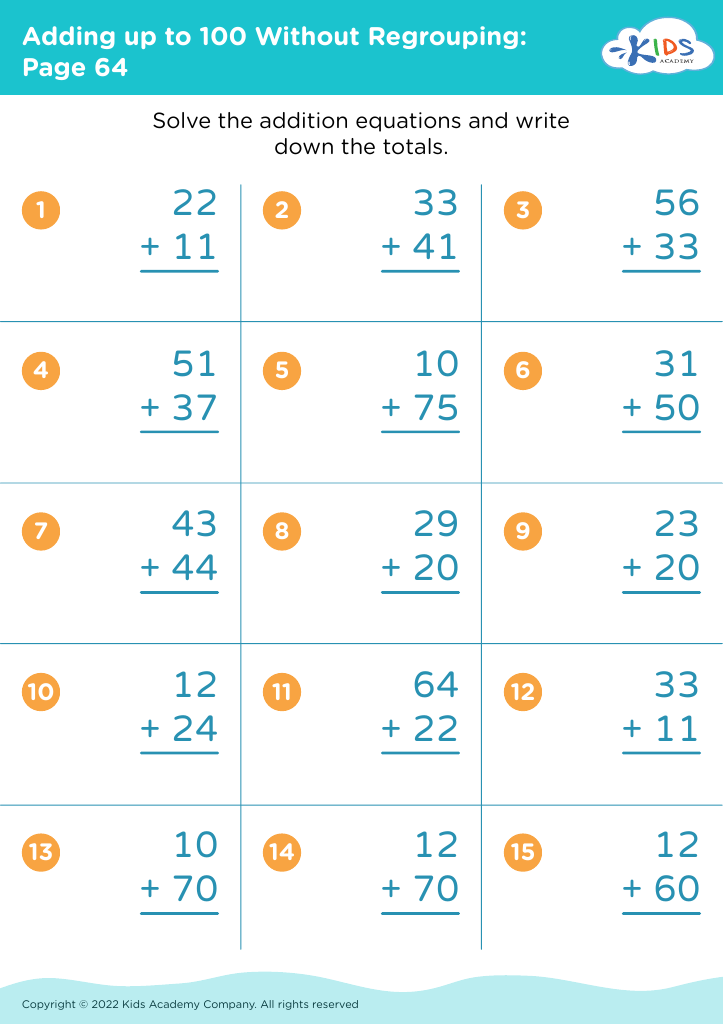
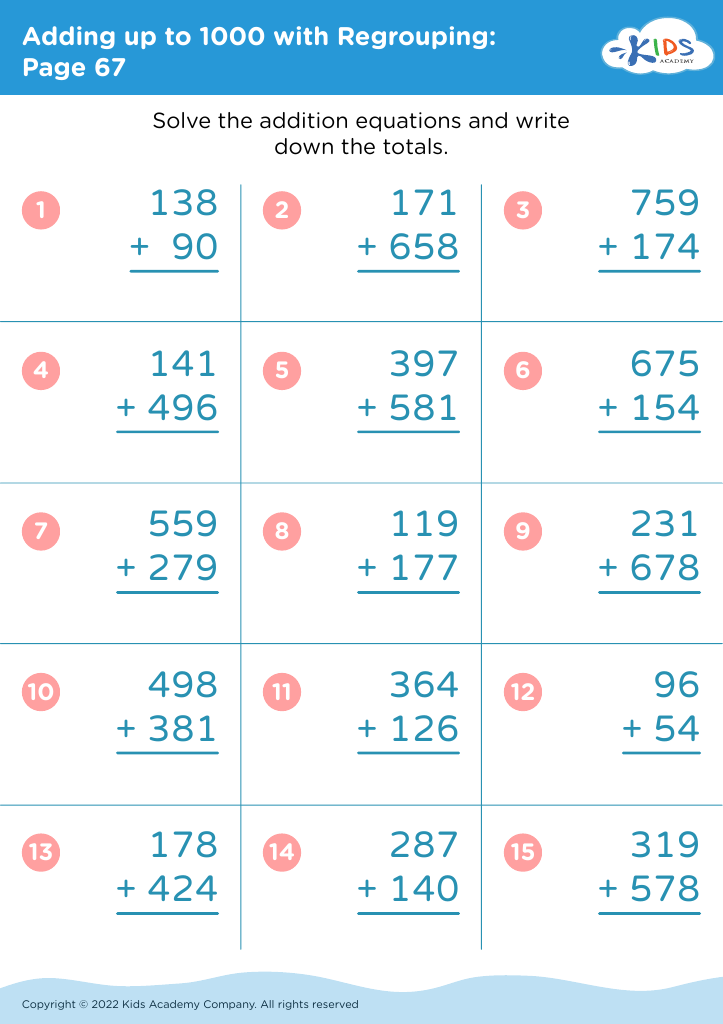
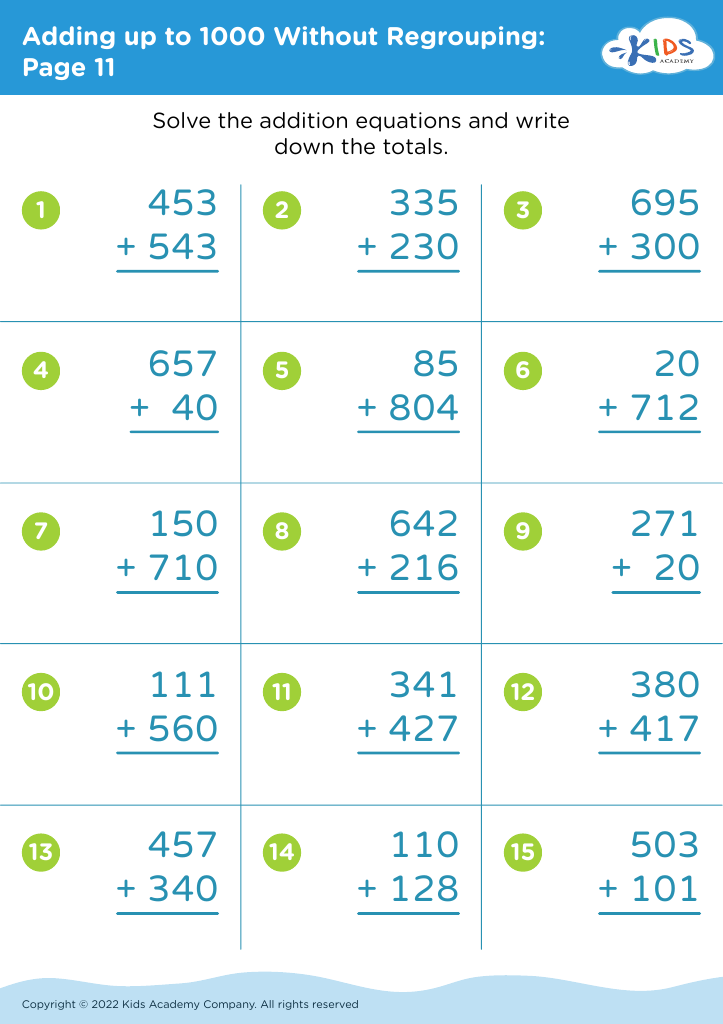
Enhance your child's math skills with our Number Identification Addition Worksheets, specially designed for ages 4-8. These engaging worksheets focus on teaching young learners how to identify numbers while practicing addition in a fun and interactive way. Each worksheet is carefully crafted to incorporate bright visuals and age-appropriate exercises that captivate children's attention and support their learning journey. By mastering number identification alongside basic addition, your child will build a solid foundation in math. Designed for homeschooling and classroom settings, these resources provide teachers and parents with effective tools to help children thrive in their mathematical abilities. Explore our worksheets today!
Favorites
With answer key
Interactive
Join Kids Academy for Free
Who is primarily going to use this learning content?



.jpg)




Number identification and addition skills are foundational elements in a child's early math education, particularly for ages 4-8. During this critical period, children's cognitive abilities are rapidly developing, making it the perfect time to cultivate a robust understanding of numbers and basic addition concepts.
When children learn to identify numbers, they are effectively recognizing patterns, developing their language skills, and enhancing their problem-solving abilities. This builds their confidence and lays the groundwork for future math learning. Mastery of number identification allows children to progress smoothly into more complex math concepts, ensuring they don't fall behind.
Additionally, addition teaches essential life skills such as logical thinking and reasoning. It encourages a sense of accomplishment when children solve simple problems, contributing to their overall self-esteem. Teachers and parents play a crucial role by creating engaging activities that encourage these skills—through games, storytelling, and everyday scenarios.
Moreover, strong foundational skills in math lead to better academic performance and career opportunities in the future. Ultimately, prioritizing number identification and addition prepares children not just for future math tasks but also builds a solid framework for their overall cognitive development and analytical thinking, essential in today's world.








