Practice subtraction Addition Worksheets for Ages 4-8
5 filtered results
-
From - To
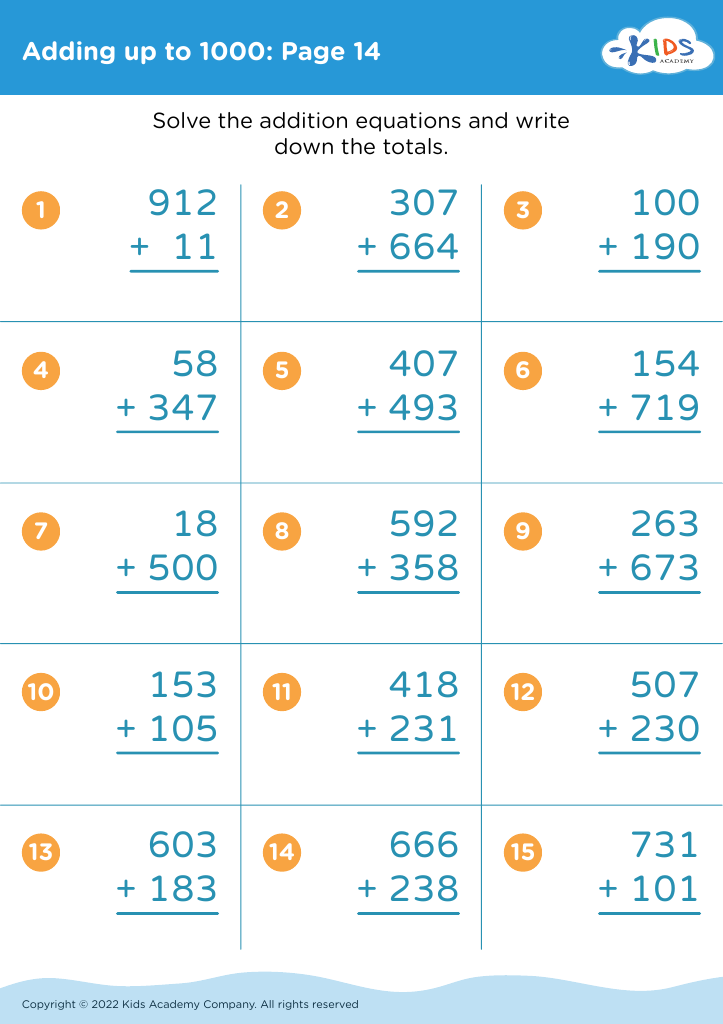
Discover our engaging Practice Subtraction Addition Worksheets designed specifically for children ages 4-8! These worksheets provide a fun and interactive way for young learners to develop foundational math skills. With a variety of exercises that reinforce both addition and subtraction concepts, kids will gain confidence while improving their problem-solving abilities. Each worksheet is filled with colorful illustrations and practical examples, making learning enjoyable. Perfect for classroom use or at-home practice, our resources cater to different learning styles and help build a strong math foundation. Start your child’s math journey today with our accessible and easy-to-use worksheets!
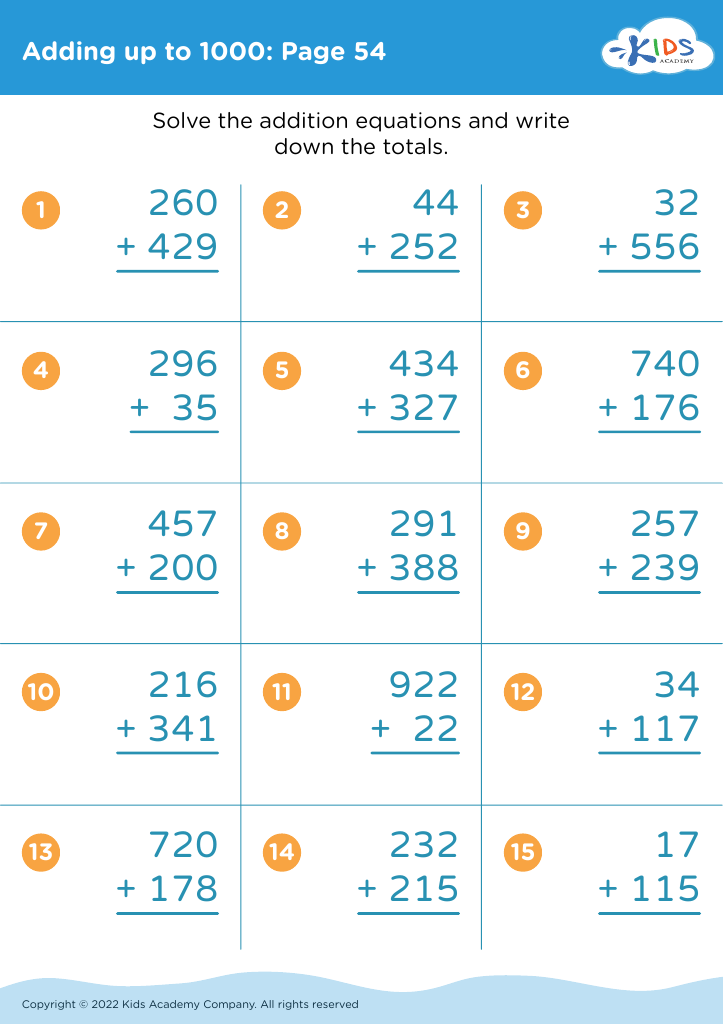
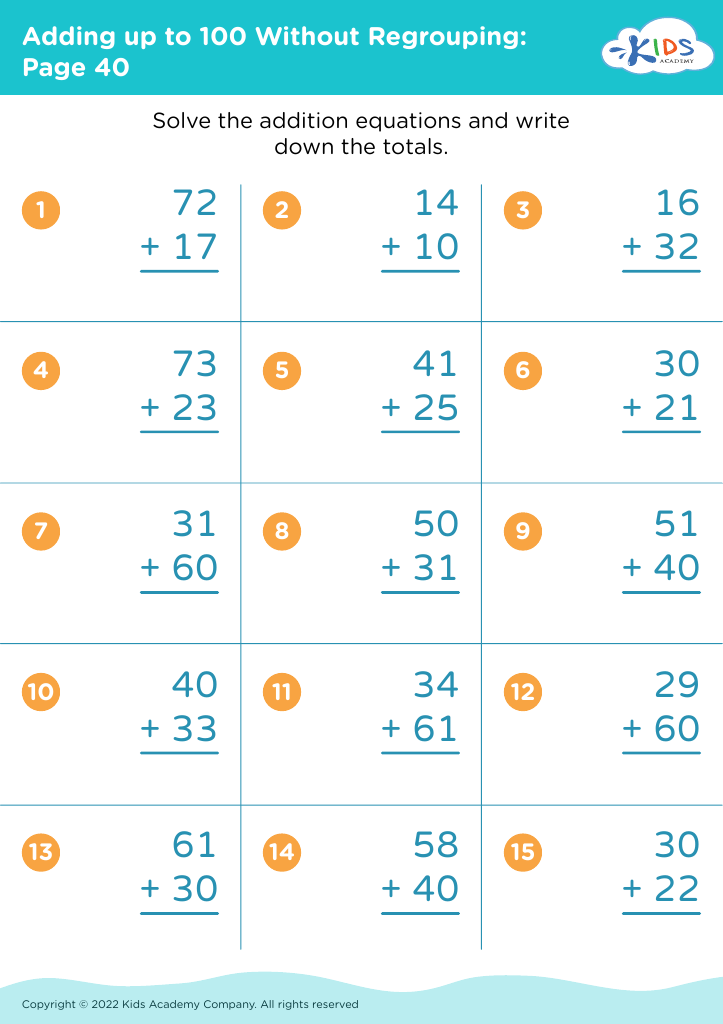
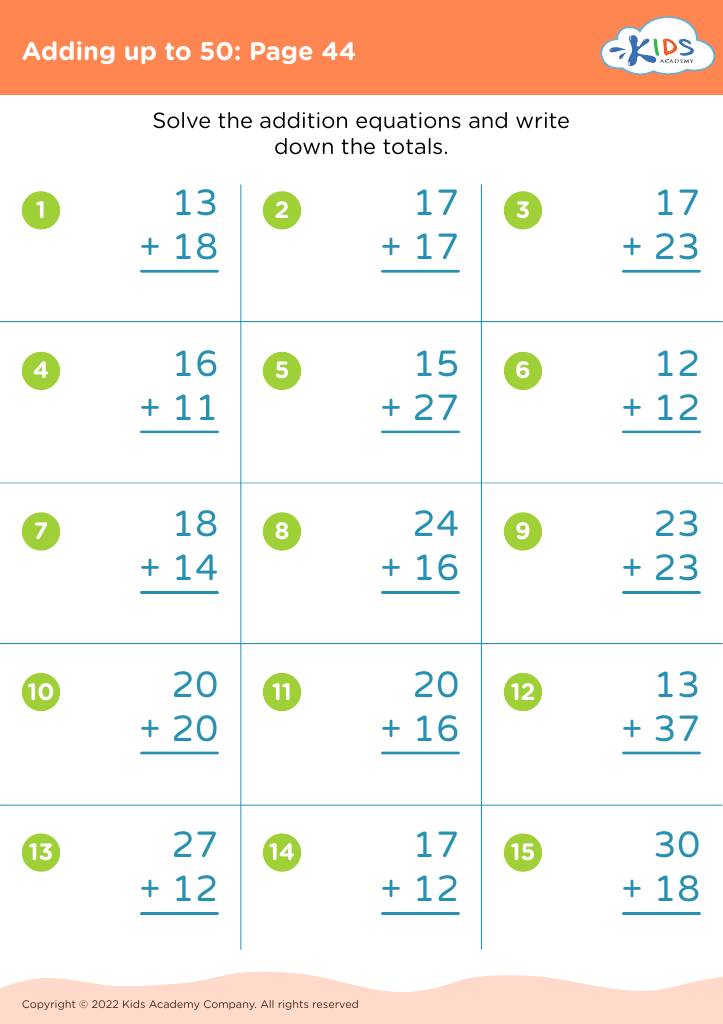
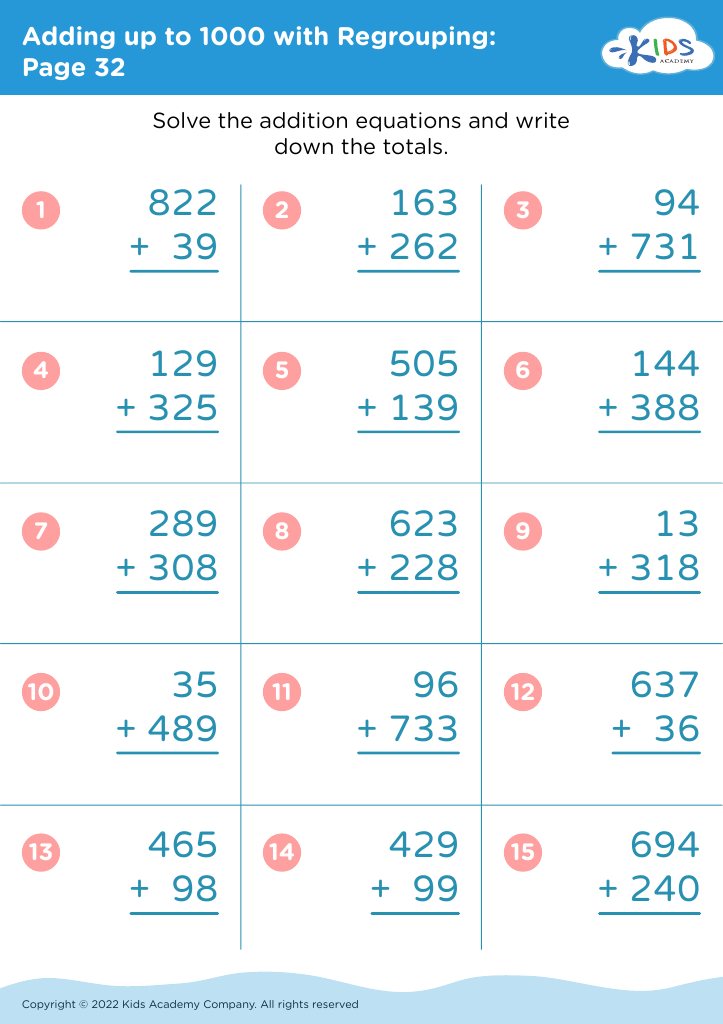


.jpg)

.jpg)


Parents and teachers should prioritize practicing addition and subtraction for children aged 4-8 as these skills form the foundation for a child's mathematical understanding and overall cognitive development. At this age, children are naturally curious and eager to learn, making it an ideal time to introduce basic math concepts. Mastery of addition and subtraction enhances their problem-solving abilities, critical thinking, and reasoning skills.
Moreover, these fundamental operations foster confidence as children progress in their mathematical journey. When they can successfully perform basic calculations, they gain a sense of accomplishment that encourages further exploration in math and related subjects. Additionally, proficiency in arithmetic is essential for everyday tasks, such as shopping, cooking, and budgeting, empowering children to navigate the world around them with greater independence.
Furthermore, engaging with addition and subtraction cultivates motor skills through activities like counting objects or drawing. It also promotes social skills during collaborative games and group learning. Therefore, when parents and teachers actively practice these skills, they contribute to a child's cognitive, emotional, and social development, laying a strong foundation for future mathematical learning and lifelong learning habits.








