Recognizing equivalent fractions Addition Worksheets for Ages 4-8
5 filtered results
-
From - To
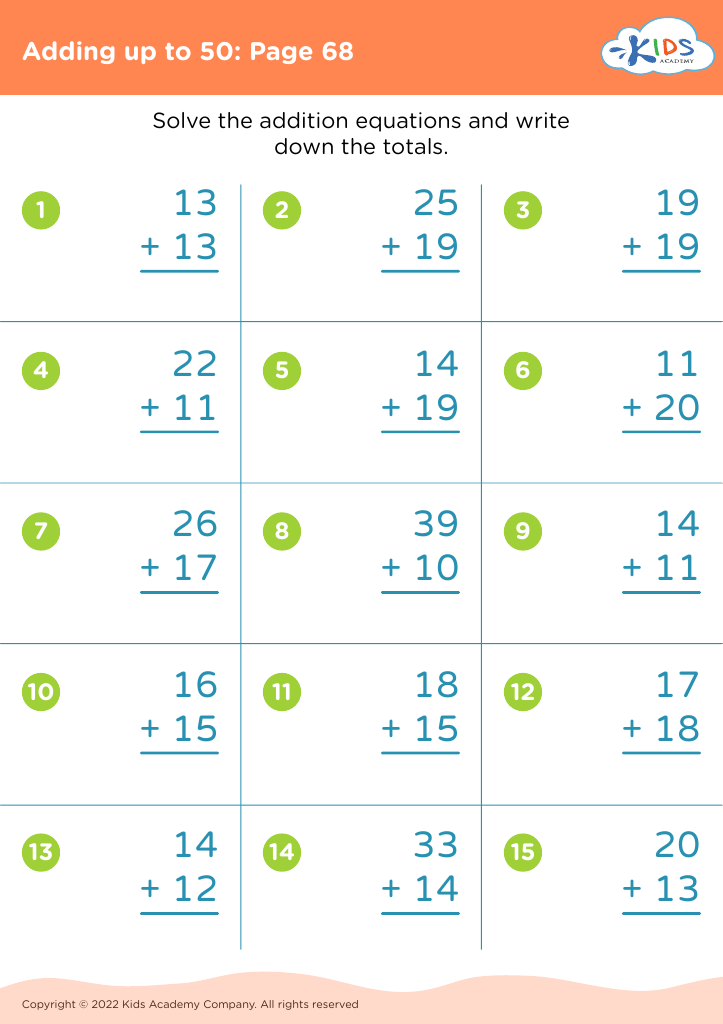
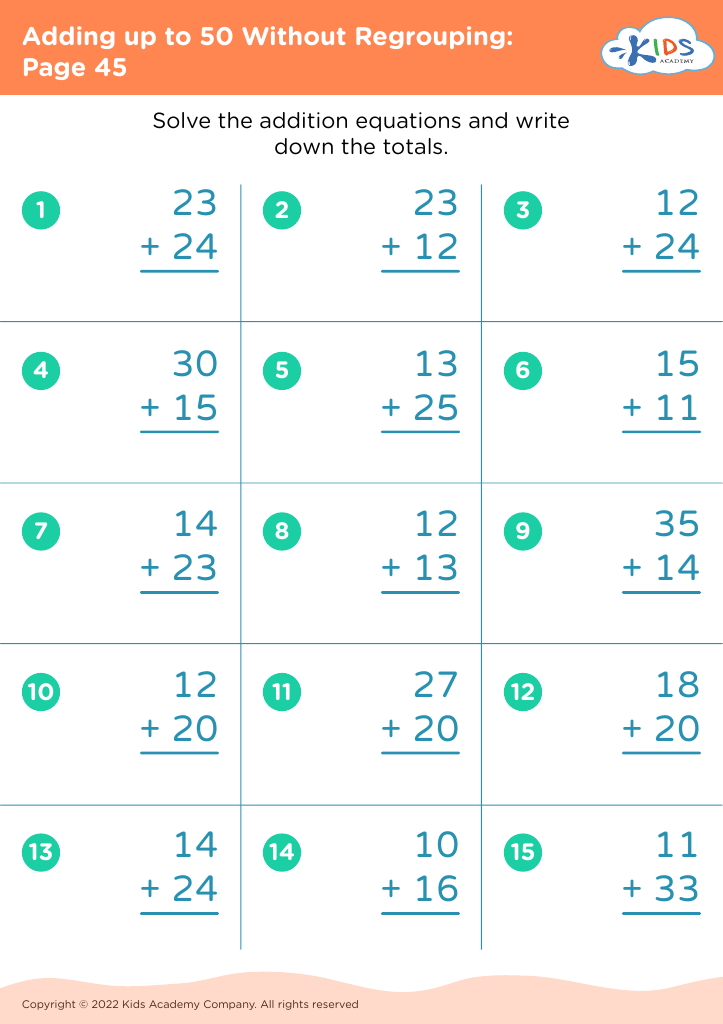
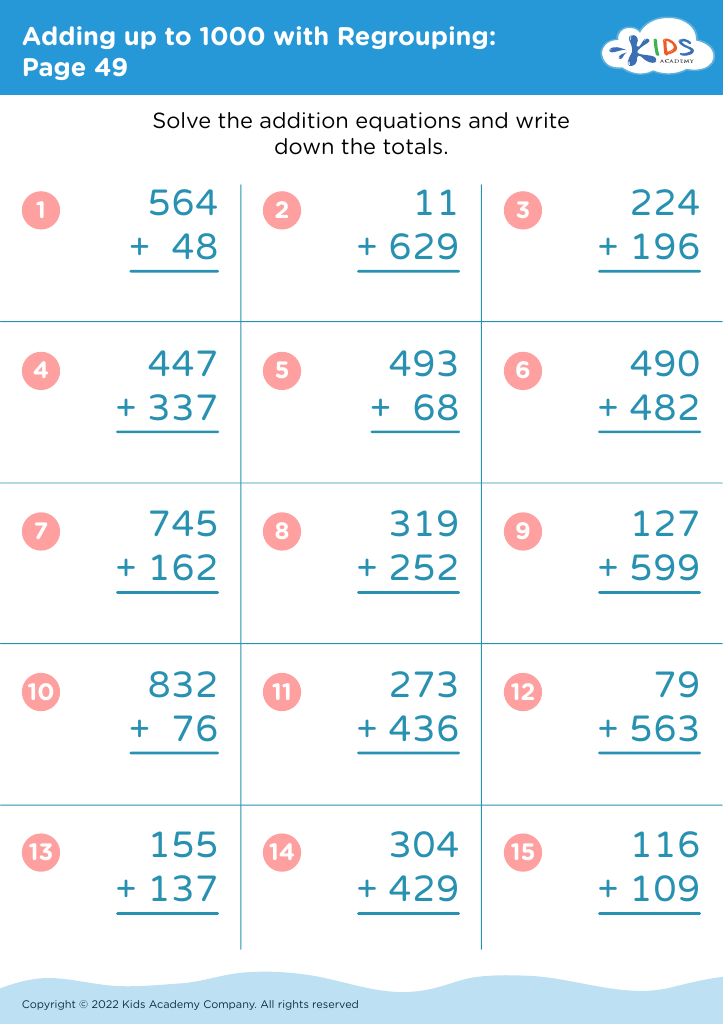
Our "Recognizing Equivalent Fractions Addition Worksheets for Ages 4-8" are designed to enhance young learners' understanding of fractions in a fun and engaging way. These printable worksheets help children identify and generate equivalent fractions while mastering addition. Perfectly tailored for early learners, each worksheet combines colorful graphics and simple exercises, making concept comprehension easy and enjoyable. Parents and educators can use these resources to support their teaching goals and reinforce classroom learning. By practicing with these worksheets, children build a strong foundation in math, essential for their future academic success. Download these free worksheets today at Kids Academy!
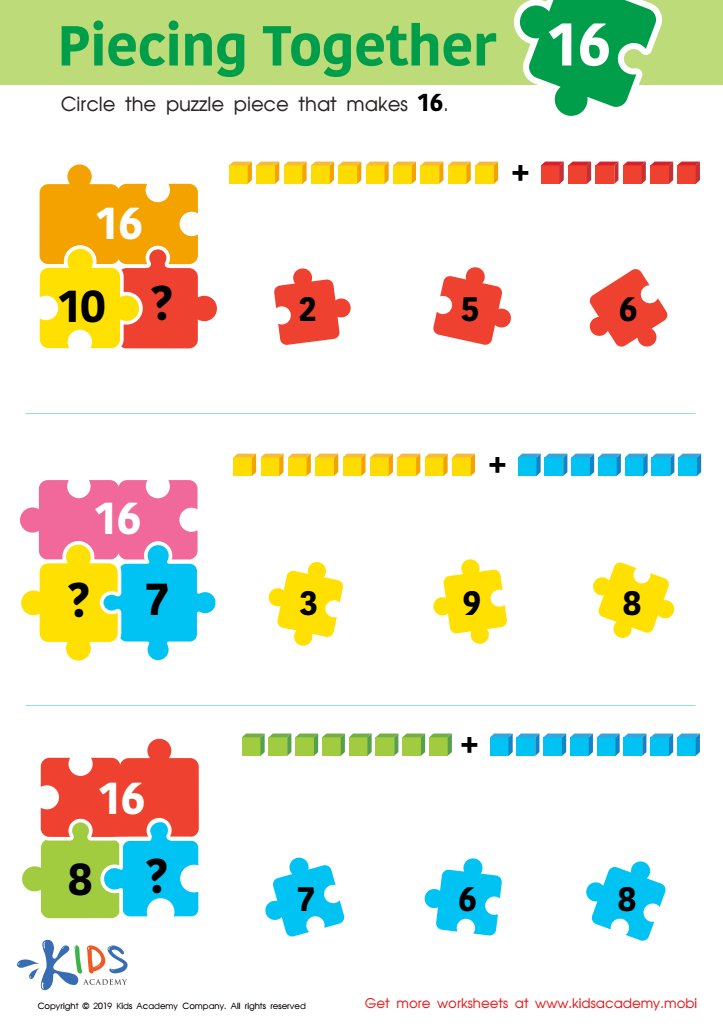
Piecing Together 16 Worksheet
 Assign to My Students
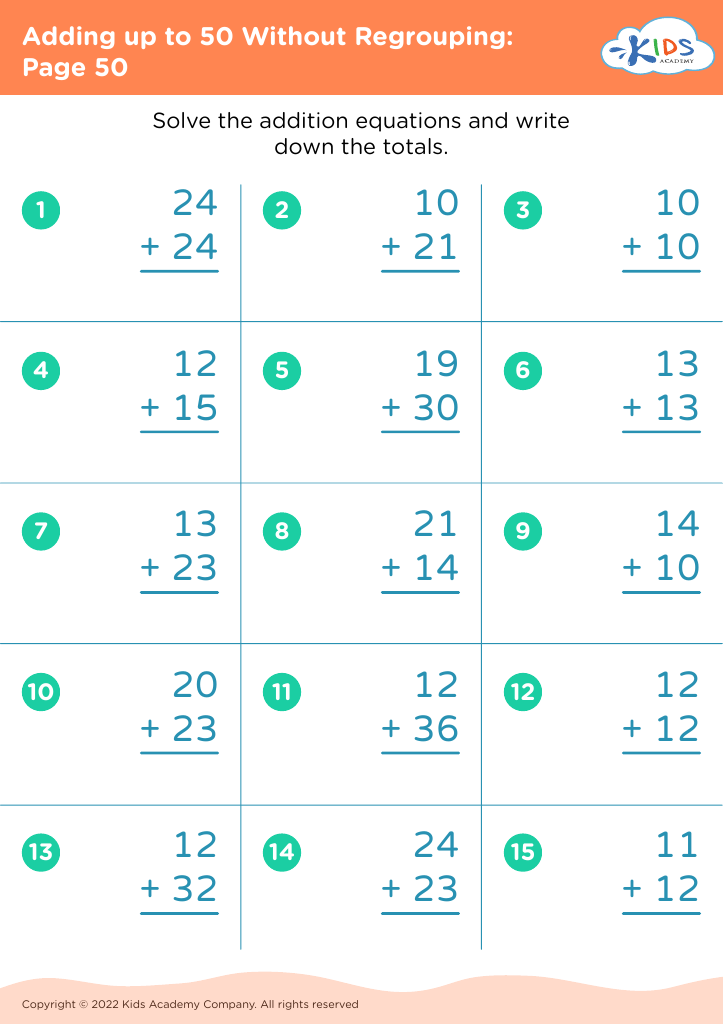








Recognizing equivalent fractions and understanding addition are foundational mathematical skills that significantly impact a child's overall math proficiency as they grow. For children aged 4-8, grasping these concepts helps develop critical thinking and problem-solving skills early on.
Fractions are central to many real-world applications, such as cooking, measuring, and dividing objects fairly. By recognizing equivalent fractions, young learners begin to understand that different-looking fractions can have the same value. This understanding fosters numerical flexibility and prepares children for more advanced math concepts they will encounter in higher grades, including algebra and ratio reasoning.
Addition is another cornerstone of math skills. Mastering it in early grades builds the foundation for more complex operations like multiplication and division. When children see the link between addition and equivalent fractions, they start connecting different mathematical ideas, leading to a deeper comprehension.
Engaging with these skills at a young age nurtures a positive attitude towards math, mitigating future anxieties or struggles. Recognizing equivalent fractions through playful activities and practical examples makes learning enjoyable and accessible.
Therefore, teachers and parents should prioritize these skills for a robust math foundation, ensuring kids are equipped to tackle more sophisticated math problems with confidence and ease as they grow.








