Understanding number sequence Addition Worksheets for Ages 4-8
3 filtered results
-
From - To
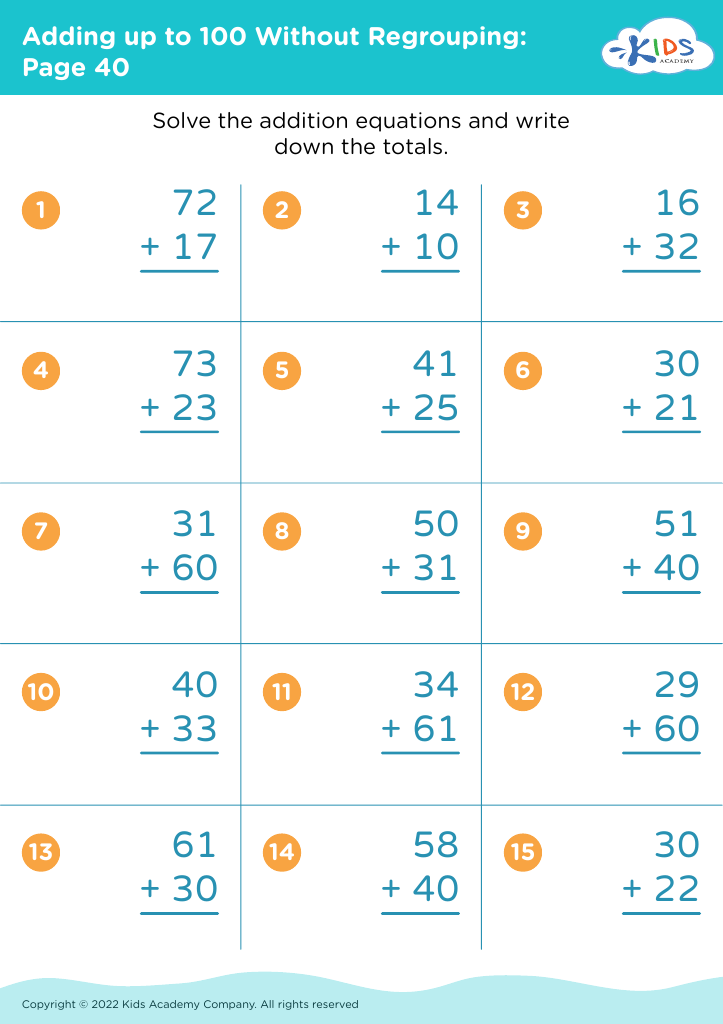
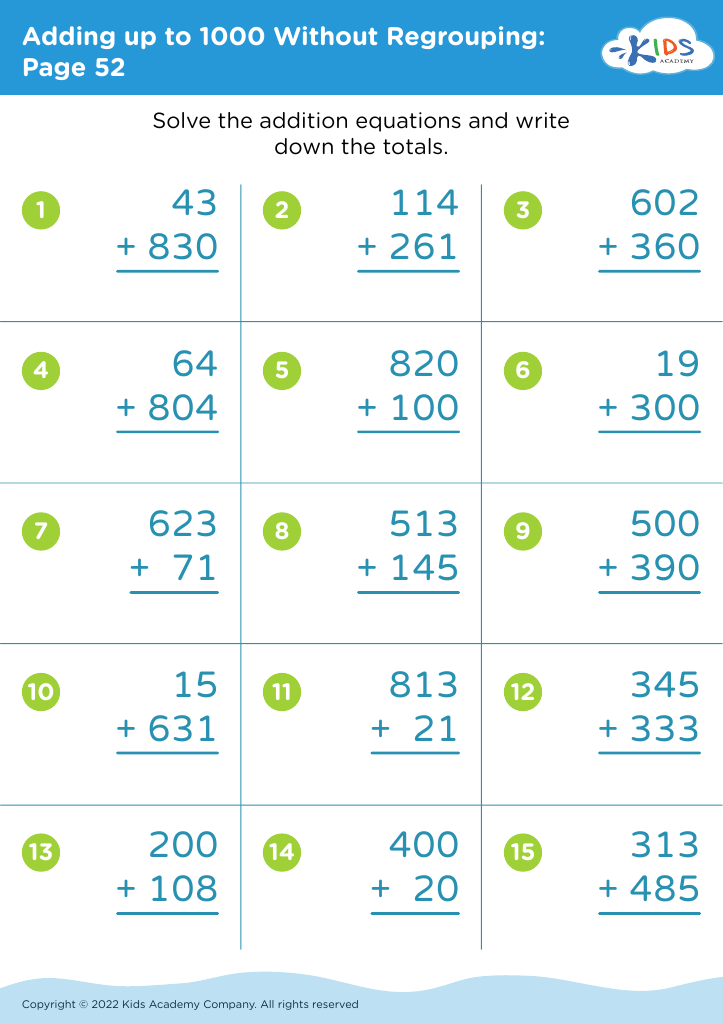
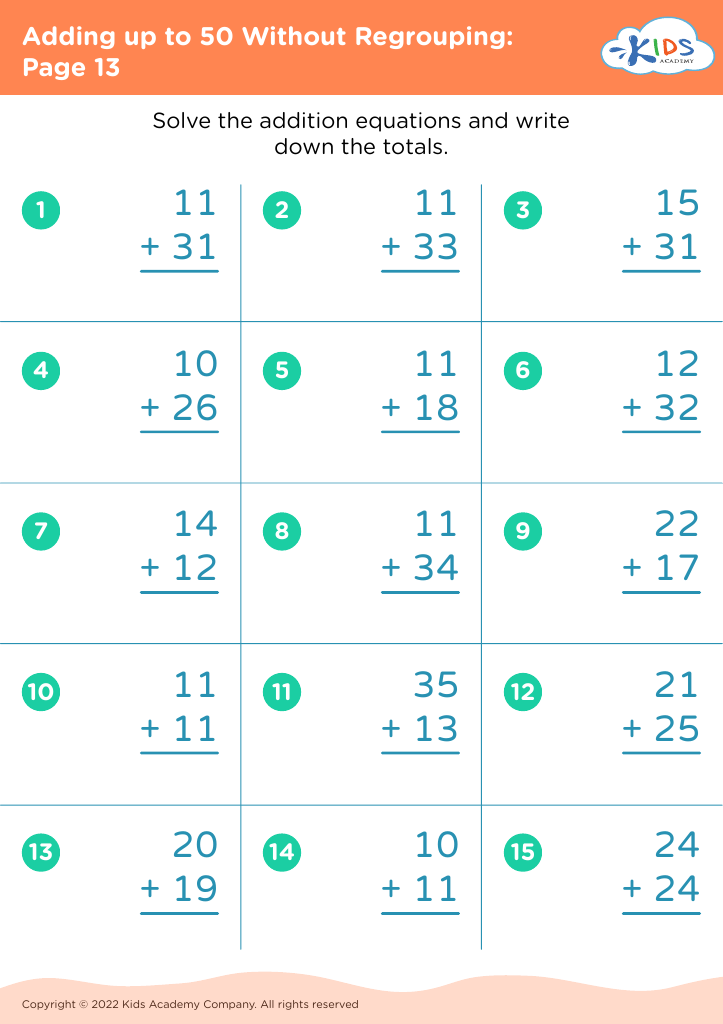
Explore our engaging "Understanding Number Sequence Addition Worksheets" designed specifically for children aged 4-8! These worksheets provide a fun and interactive way for young learners to grasp the concept of number sequences while mastering basic addition skills. Our comprehensive resources feature vibrant illustrations and age-appropriate challenges that promote cognitive development and foster a love for math. As kids practice identifying patterns and solving addition problems, they gain confidence and foundational skills essential for future learning. Perfect for homeschooling, classroom use, or enrichment activities, our worksheets are an excellent tool for nurturing early mathematical understanding. Start your child's math journey today!








Understanding number sequences and addition is foundational for children aged 4-8 as it lays the groundwork for more complex mathematical concepts they will encounter in later grades. Early math skills, including counting, recognizing patterns, and comprehending the relationships between numbers, are crucial for developing problem-solving abilities.
Parents and teachers should care because children who grasp these concepts early are more likely to succeed academically and build confidence in their mathematical skills. Developing a strong number sense can impact a child’s ability to understand concepts like subtraction, multiplication, and even fractions as they progress through school. Moreover, mastering number sequences enhances cognitive development, enabling children to make connections and think abstractly.
Encouraging an exploration of number sequences and addition also fosters a positive attitude toward mathematics, which can combat math anxiety that often develops later on. Engaging activities, such as games, songs, and hands-on manipulatives, can make learning enjoyable, leading to a lifelong appreciation of math. Ultimately, investing time and effort into these areas during early education pays off in their future learning and everyday problem-solving abilities, enabling them to navigate the world with greater confidence and competence.








