Understanding time Addition Worksheets for Ages 4-8
6 filtered results
-
From - To
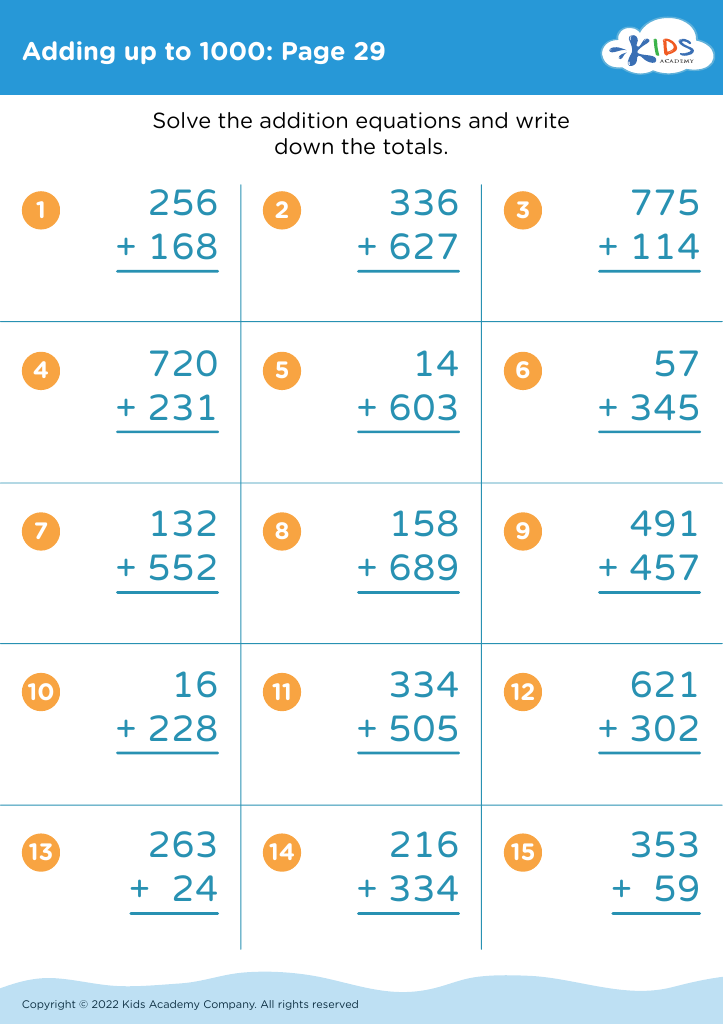
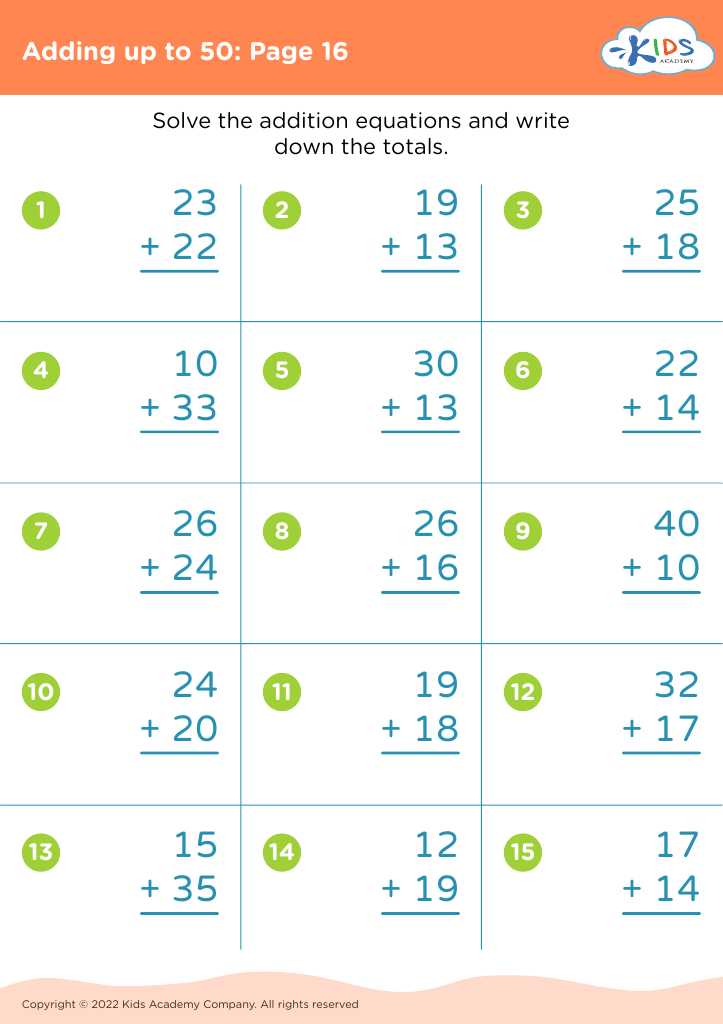
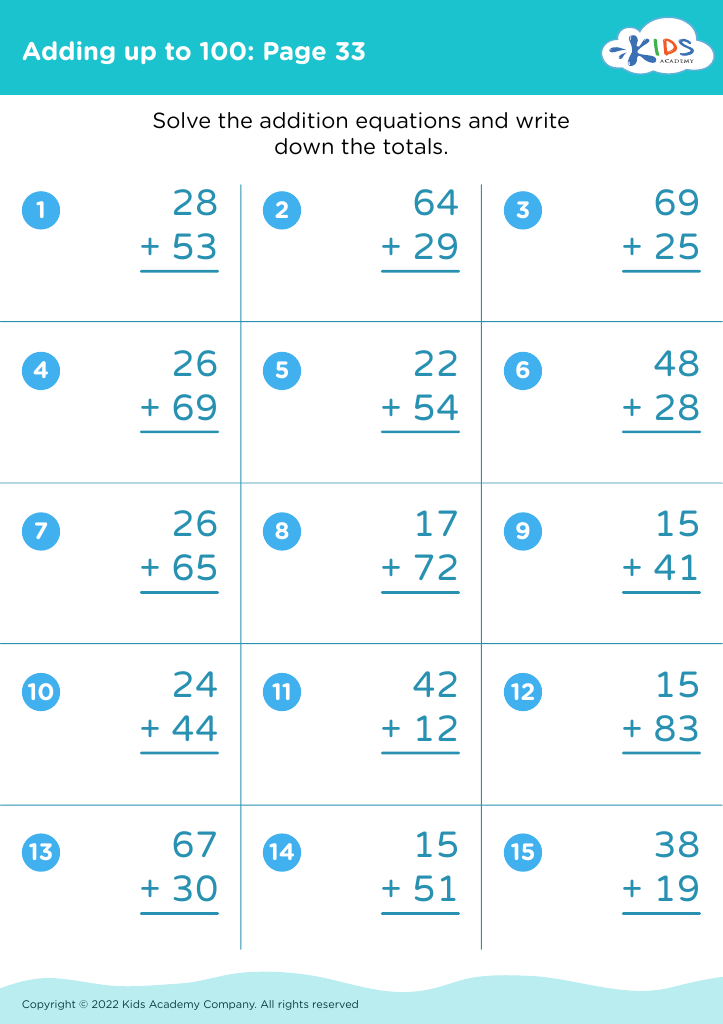
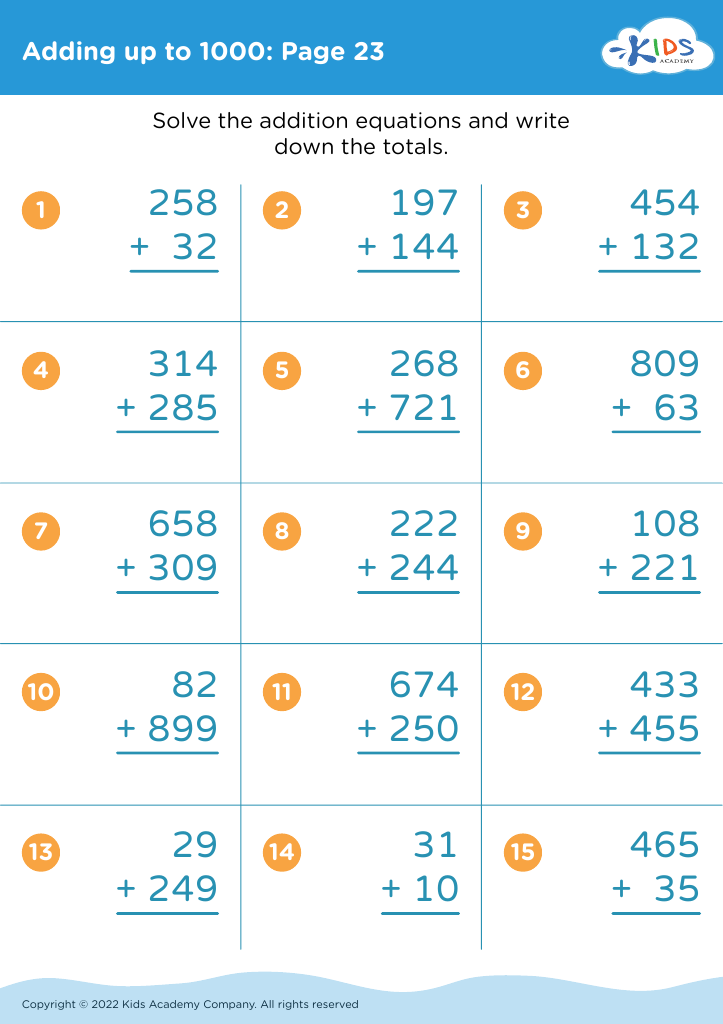
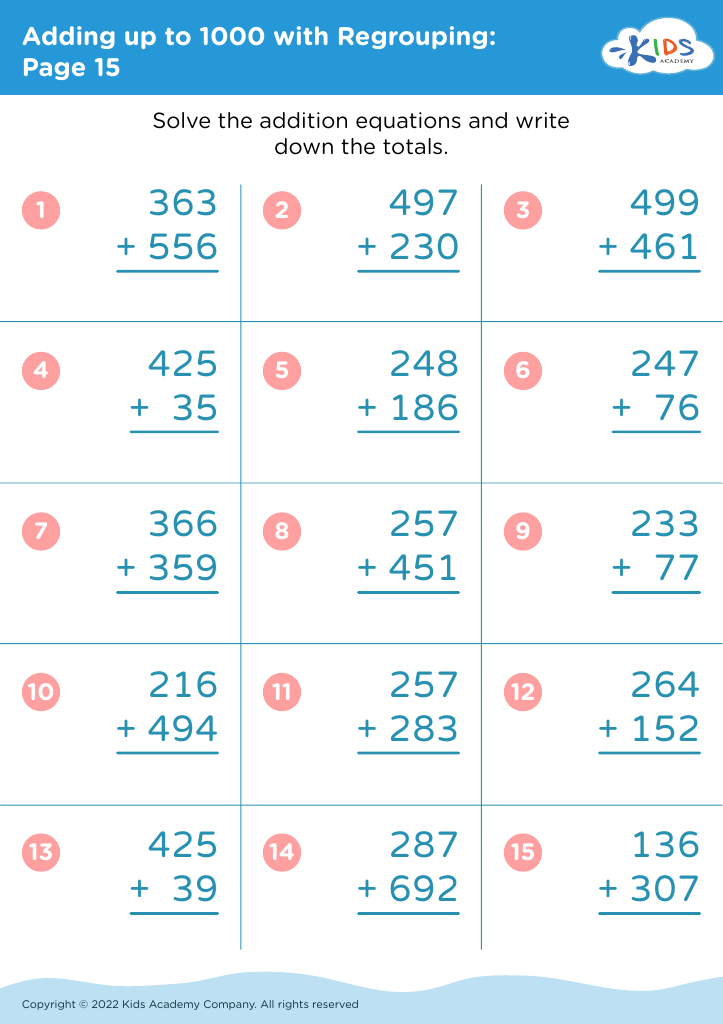
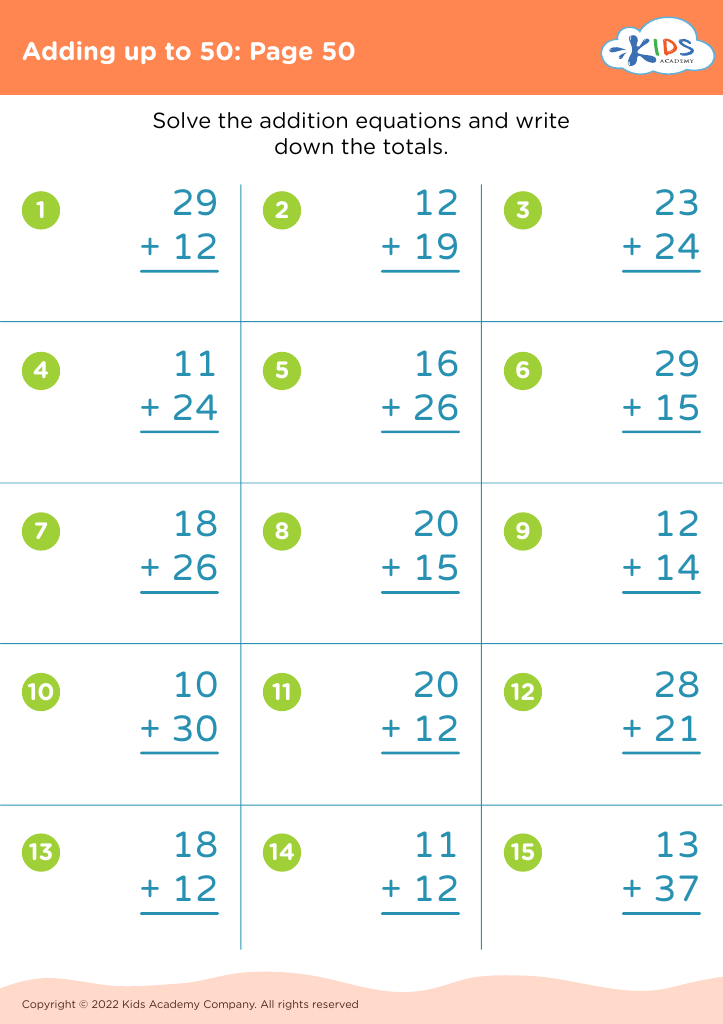
Introduce your child to the concept of time with our engaging Understanding Time Addition Worksheets, designed specifically for ages 4-8. These worksheets creatively blend the fundamental skills of addition and time recognition, making learning both fun and educational. Kids will enjoy solving problems that incorporate clocks, helping them to grasp both numeric addition and the important concept of time management. Our worksheets encourage hands-on practice, develop critical thinking skills, and boost confidence in young learners. Perfect for classroom or home use, these resources set a solid foundation for numeracy and time awareness in early childhood education. Start unlocking the world of time today!








Understanding time and addition is crucial for children aged 4-8, as it lays the foundation for essential life skills. During this developmental stage, children are increasingly curious about the world around them, and mastering these concepts supports their cognitive growth.
For parents and teachers, fostering a solid understanding of time helps children develop organizational skills, encouraging them to identify routines or sequence events. This lays the groundwork for effective time management in later years. From knowing when to prepare for school or playtime, children learn to associate time with daily activities, reinforcing responsibility and independence.
Similarly, addition is a fundamental component of mathematics, forming the basis for more advanced math concepts. Mastering addition enhances logical thinking and problem-solving abilities. Engaging children in playful addition activities turns learning into a fun and interactive experience, making it easier for them to grasp and retain information.
By prioritizing both time and addition learning, parents and teachers cultivate essential skills that promote academic success and practical life competencies. This knowledge ensures that children feel confident and capable as they progress in their educational journey and navigate various everyday situations. Emphasizing these skills at a young age positions children for a bright, successful future.








