Visual-motor skills Addition Worksheets for Ages 4-8
4 filtered results
-
From - To
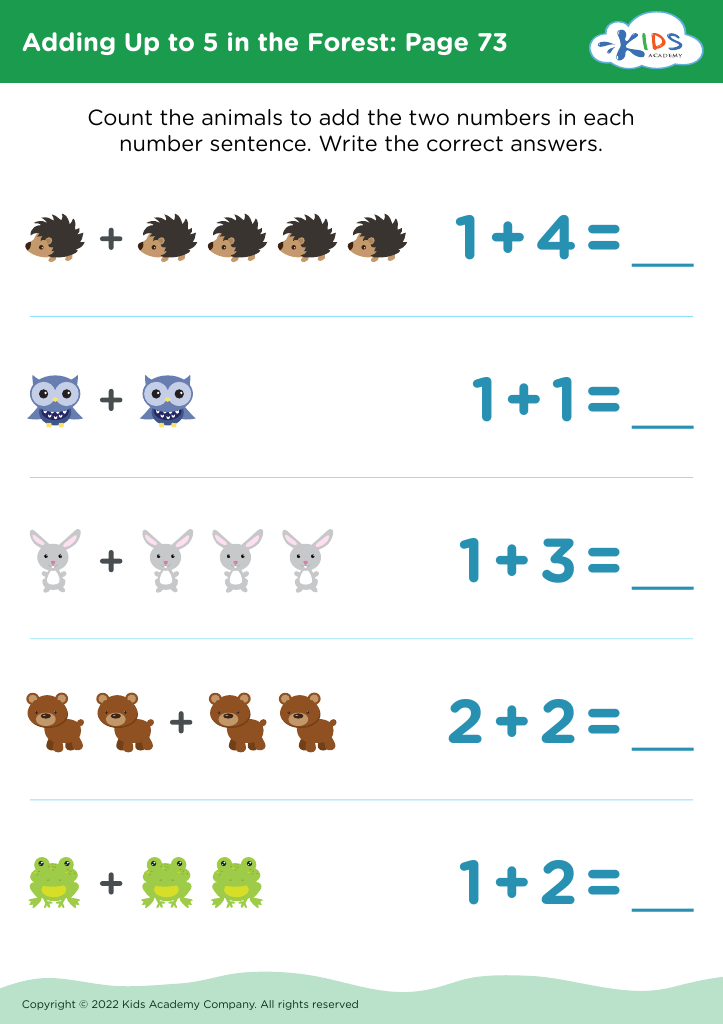
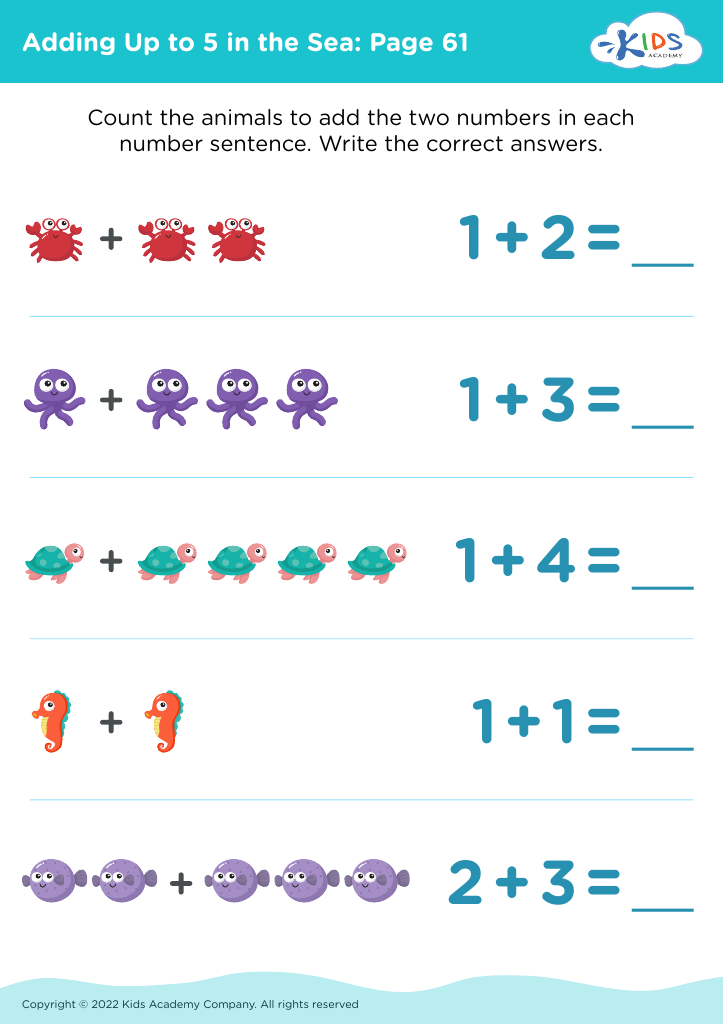
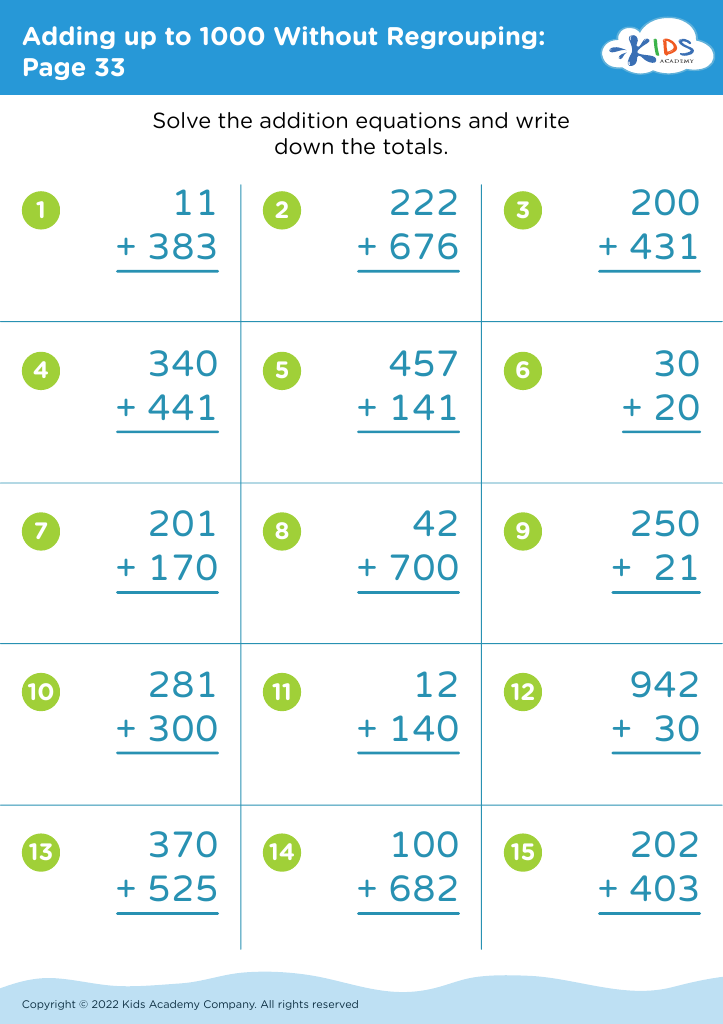
Boost your child's addition capabilities with our engaging Visual-Motor Skills Addition Worksheets, specially designed for ages 4-8. These interactive worksheets seamlessly blend math and motor skill development, making learning fun and effective. As children solve addition problems, they enhance hand-eye coordination and fine motor skills through tracing, writing, and engaging with colorful illustrations. Our carefully crafted exercises encourage kids to practice their math while improving their visual perception and motor control. Perfect for home or classroom use, these worksheets support young learners in building a strong foundation in mathematics. Equip your child with the tools for success today!








Visual-motor skills are crucial for children aged 4-8 as they significantly impact a child's academic and everyday life. These skills involve the coordination between what a child sees and how their body responds, influencing abilities such as writing, drawing, and participating in sports. For parents and teachers, fostering visual-motor skills is vital for several reasons.
Firstly, children with well-developed visual-motor skills can perform tasks more effectively, leading to increased confidence in their abilities. This can directly affect their willingness to participate in classroom activities and, over time, their overall academic performance. Moreover, strong visual-motor integration lays a foundation for future learning, particularly in subjects like mathematics and reading, where visual processing is essential.
Additionally, these skills are closely linked to fine motor skills and hand-eye coordination, which are needed for basic everyday tasks such as tying shoelaces or buttoning shirts. By nurturing these skills early, parents and teachers can help ensure that children are prepared for greater independence as they grow.
In a world increasingly reliant on technology, children with strong visual-motor skills will also likely adapt better to digital tools, enhancing their learning experience. Therefore, investing time in developing these skills benefits students academically and prepares them for future challenges.








