Visualization skills Addition Worksheets for Ages 4-8
3 filtered results
-
From - To
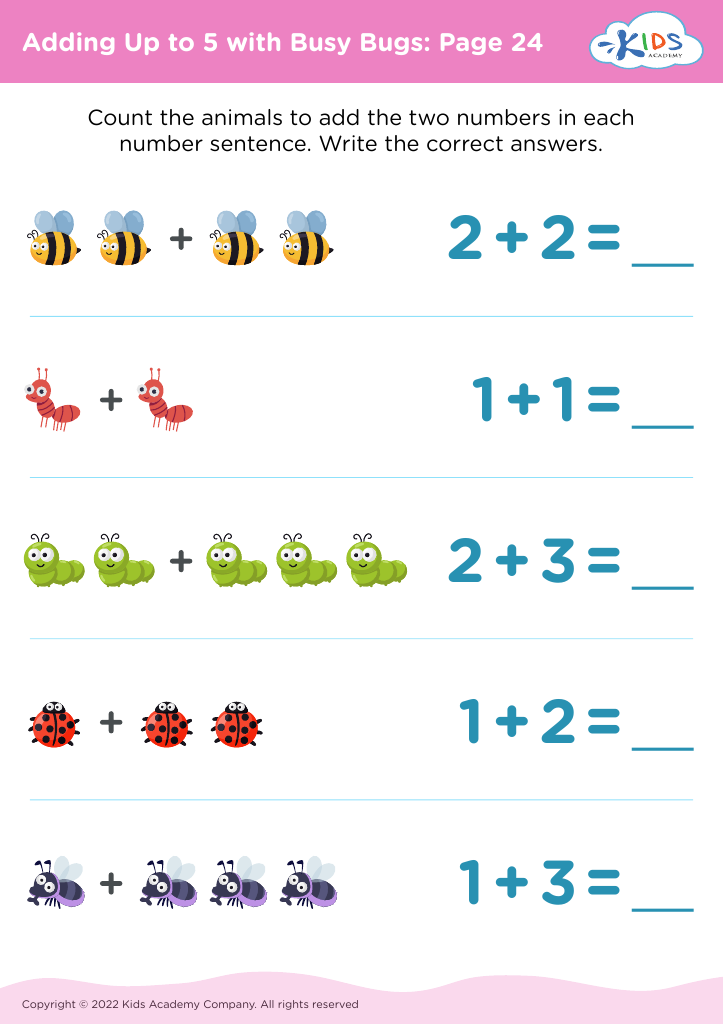
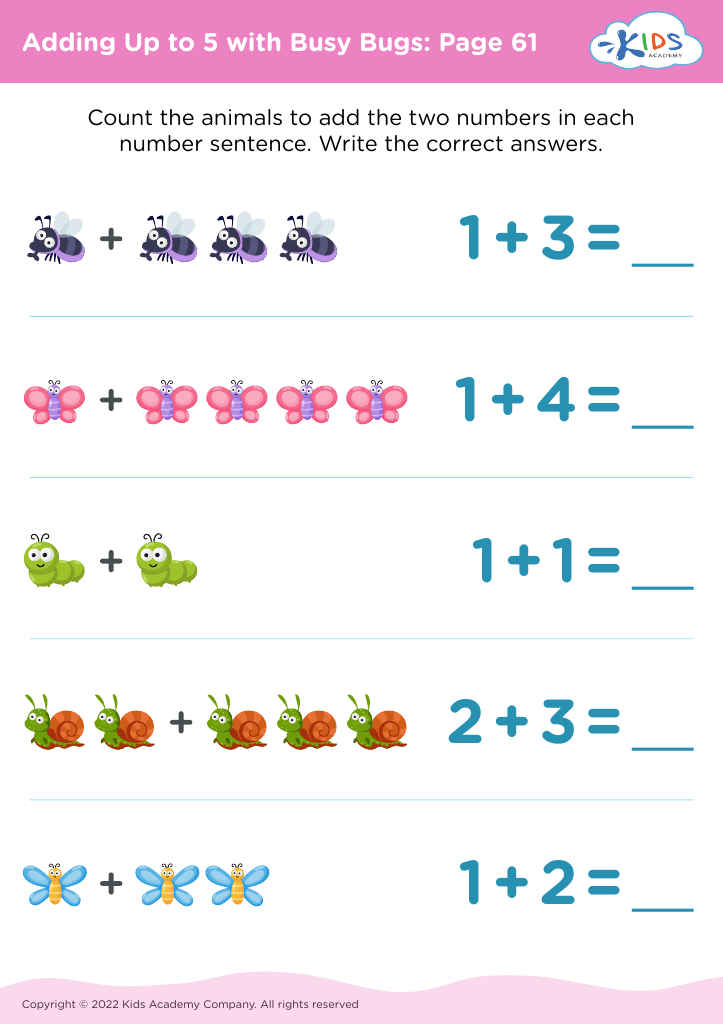
Enhance your child's learning with our Visualization Skills Addition Worksheets for ages 4-8! These captivating worksheets are designed to build and strengthen young learners' addition abilities through engaging, visual methods. Each worksheet focuses on helping kids understand addition concepts by using imagery and objects, making math fun and relatable. From adding colorful shapes to tallying friendly animals, these exercises ensure children develop crucial visualization skills while mastering basic math facts. Ideal for preschool to third grade, our printables are perfect for reinforcing classroom learning at home. Unlock your child's potential and make math a delightful adventure!
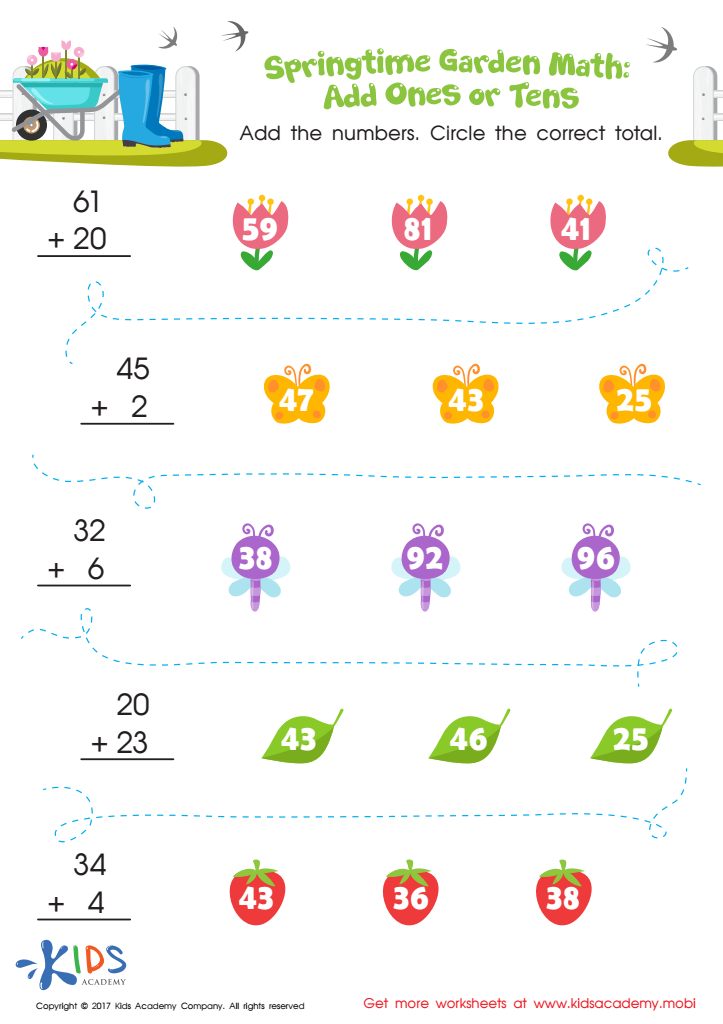
Springtime Garden Math Worksheet
 Assign to My Students








Developing visualization skills in young children, particularly when it comes to addition, is crucial for building a solid mathematical foundation. Visualization helps children understand concepts at a deeper level, going beyond rote memorization to truly grasp why and how numbers work. When children visualize addition, they are able to see the relationship between numbers, making abstract concepts more concrete.
For example, if a child can picture combining groups of objects — like imagining adding 3 red apples to 4 green apples — they start to comprehend that addition is about grouping and counting the total. This engaging mental imagery makes learning more exciting and less daunting for young minds, fostering a positive attitude towards math.
Moreover, visualization aids in strengthening problem-solving skills and boosting memory retention. When students can mentally visualize math problems, they are better equipped to tackle more complex mathematical concepts later on. For ages 4-8, this skill can also deepen comprehension in other areas such as art, reading, and even science by enhancing spatial awareness and interpretative capabilities.
Parents and teachers who focus on developing these skills can provide children with tools that facilitate academic success and encourage critical thinking. Encouraging the use of objects, drawings, and interactive activities to solve addition problems can be both fun and educational, setting a foundation for lifelong learning.








