Vocabulary development Addition Worksheets for Ages 4-8
5 filtered results
-
From - To
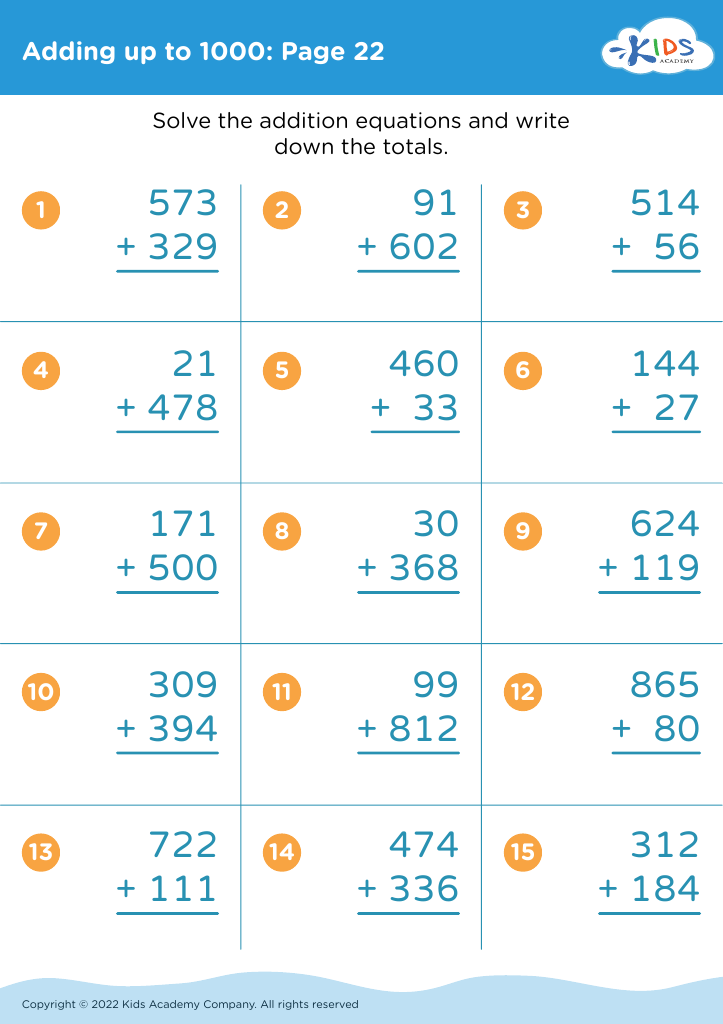
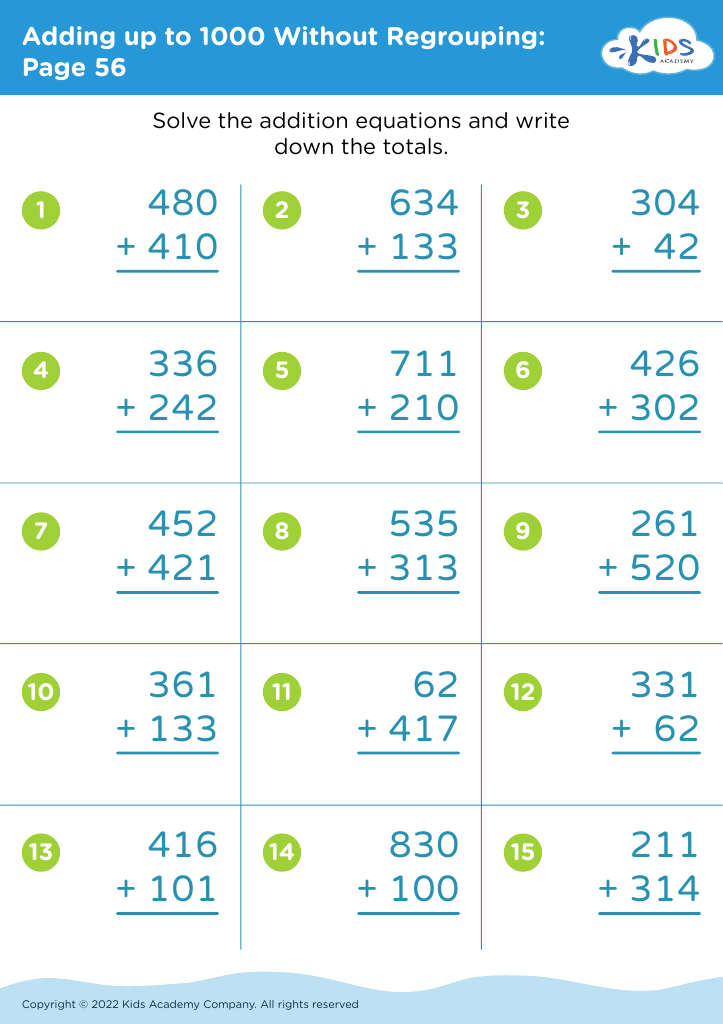
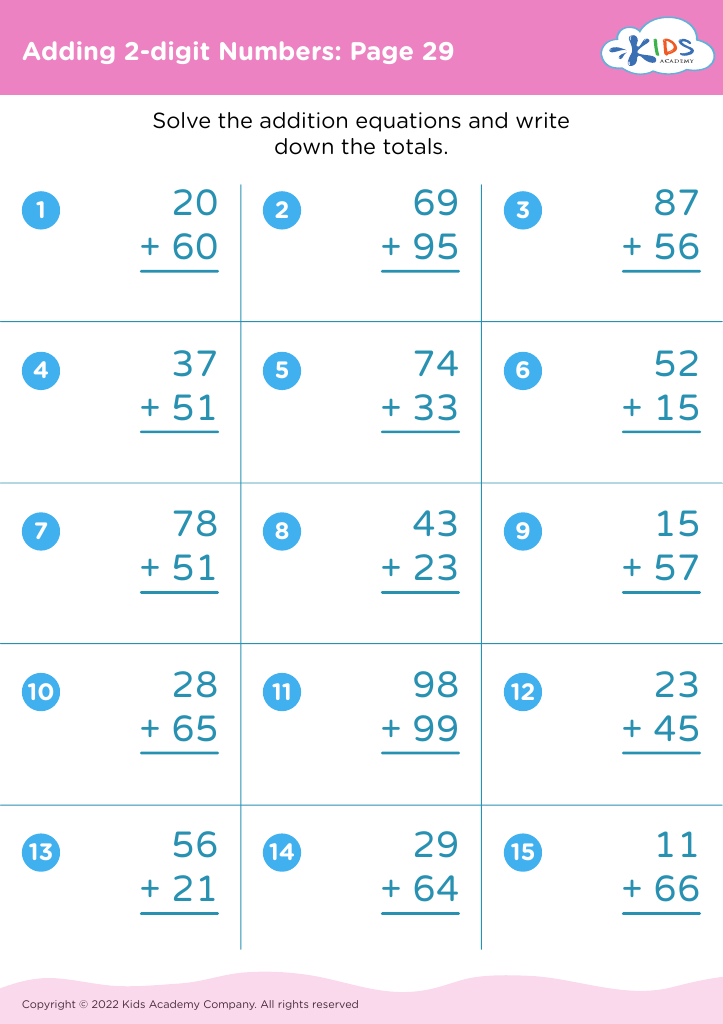
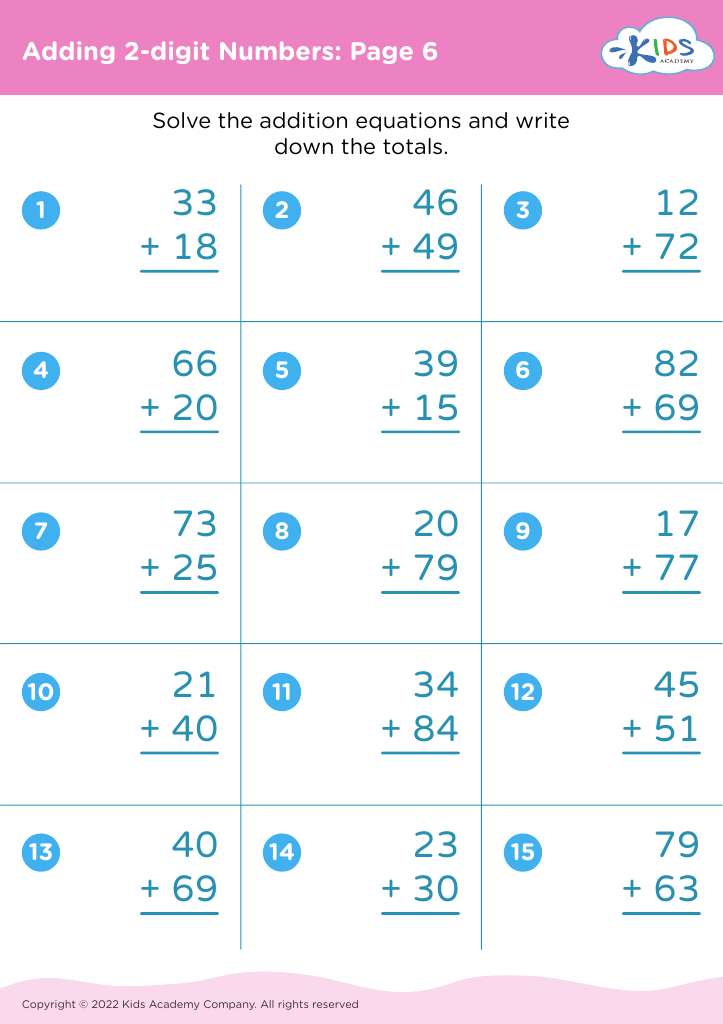
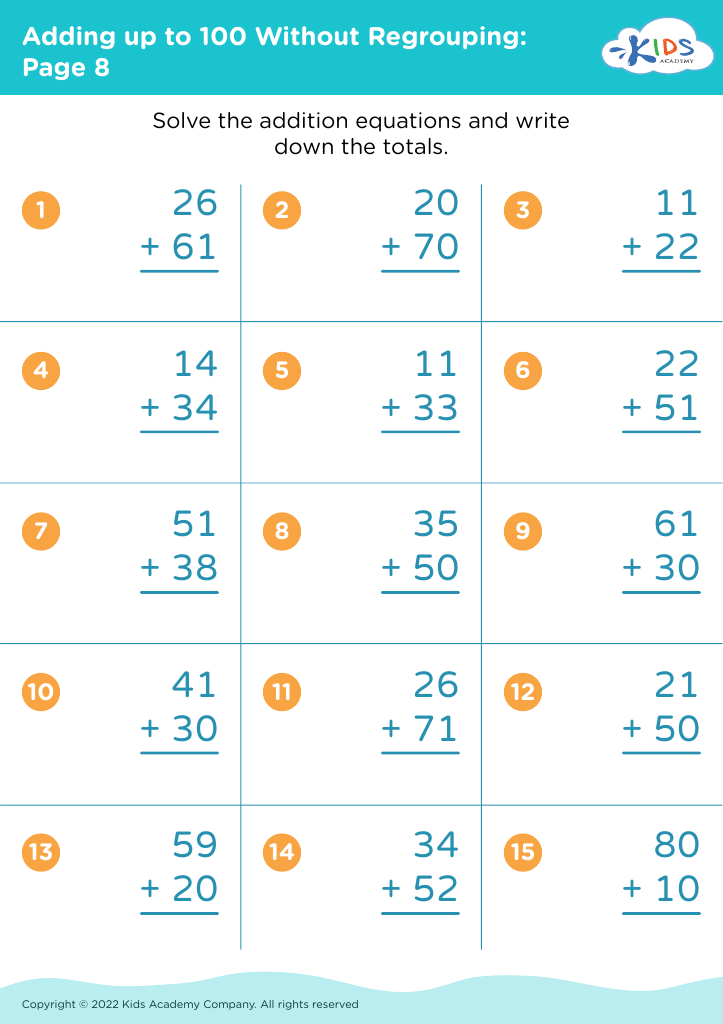
Enhance your child's language and math skills with our Vocabulary Development Addition Worksheets for Ages 4-8! Designed to boost early learners' vocabulary while they practice addition, these engaging worksheets feature vibrant illustrations and interactive activities. Your child will explore essential math vocabulary through context-rich exercises, helping them connect words with concepts. Our worksheets not only support addition practice but also encourage comprehension and expression of mathematical terms. Ideal for homeschooling or supplementary learning, these resources make math fun and meaningful. Dive into our collection today to foster your child's growth in both language and mathematics!








Vocabulary development is crucial for children aged 4-8, and both parents and teachers play an essential role in fostering this growth. During these formative years, a child's vocabulary is a key predictor of their reading comprehension and overall academic success. A rich vocabulary enhances communication skills, enabling children to express themselves clearly and confidently. Additionally, it supports critical thinking by allowing children to better understand and engage with their environment.
Moreover, a solid vocabulary base increases a child's enjoyment of reading. When children can recognize and understand words they encounter, they are more likely to develop a love for books and literacy activities. This love can lead to lifelong learning and a deeper understanding of the world around them.
By prioritizing vocabulary development, parents and teachers can engage children in enriching conversations, read diverse literature, and incorporate vocabulary-rich activities, such as games and storytelling. Such interactions evolve children's language skills organically, making learning enjoyable. Ultimately, vocabulary is not just about memorizing words; it encompasses the ability to comprehend ideas and communicate effectively. Supporting vocabulary development in children is foundational for their emotional, social, and academic growth, making it a vital focus for both parents and educators.








