Basic geometry concepts Math Worksheets for Ages 4-8
3 filtered results
-
From - To
Discover an engaging collection of basic geometry concepts math worksheets designed for children aged 4-8! Our worksheets introduce essential geometric shapes, measurement, and spatial awareness in a fun and interactive way. Each activity is carefully crafted to enhance early math skills, encouraging creativity and critical thinking. Kids will enjoy learning through colorful illustrations and hands-on practice that solidifies their understanding of shapes like triangles, circles, and squares. Perfect for classroom use or home learning, these worksheets make mastering geometry enjoyable. Foster a love for math in your young learners with our high-quality educational resources and watch them thrive!
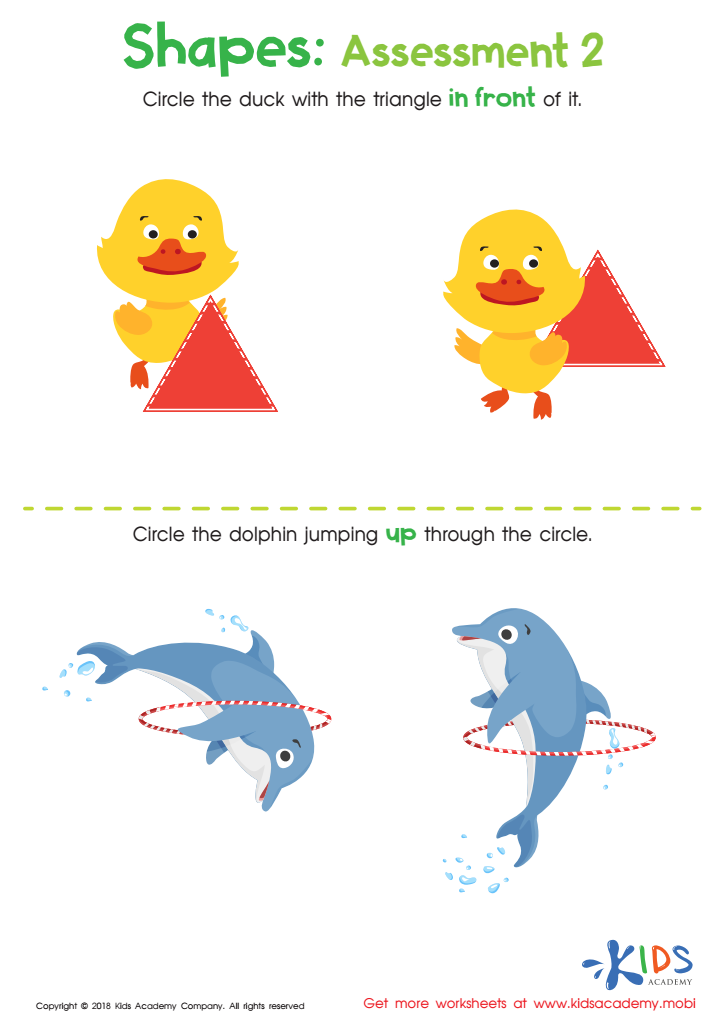
Geometry – Assessment 2 Worksheet
 Assign to My Students
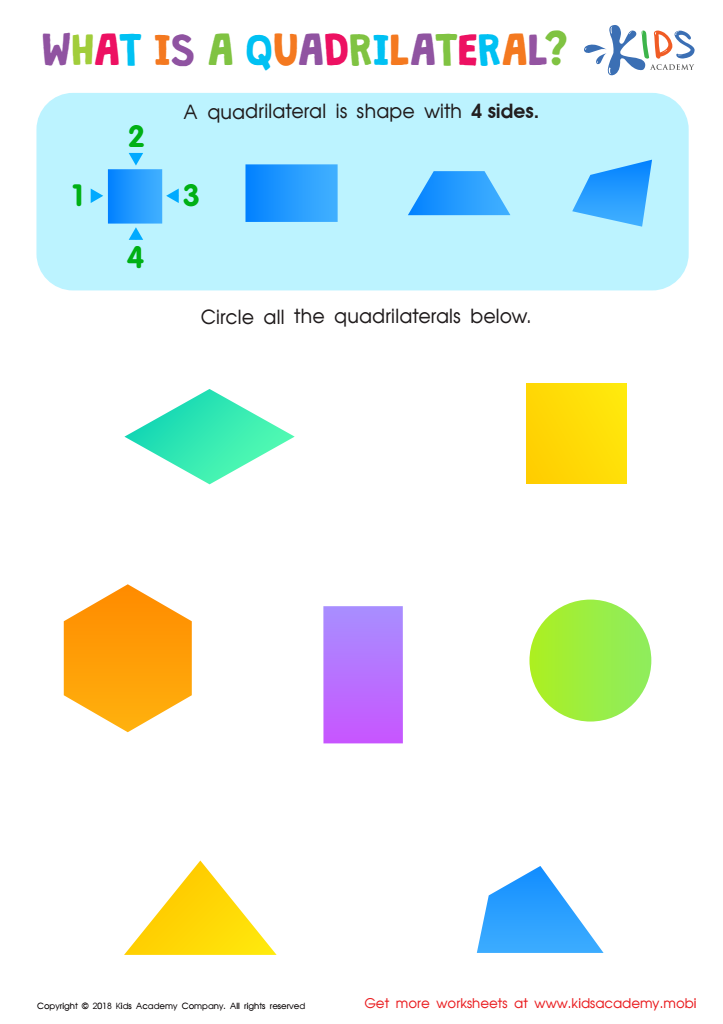
What Is a Quadrilateral? Worksheet



.jpg)




Basic geometry concepts are crucial for children aged 4-8 as they lay the foundation for a child's spatial awareness, problem-solving skills, and logical reasoning. Understanding shapes, sizes, patterns, and spatial relationships not only enriches their mathematical comprehension but also encourages critical thinking and creativity.
At this age, children are naturally curious about the world around them; engaging them in geometry provides a hands-on way to explore their environment. Recognizing and naming shapes—like circles, squares, and triangles—helps enhance their vocabulary and cognitive development. Additionally, activities that involve sorting and classifying shapes foster classification skills, essential for later academic achievement.
Moreover, geometry is often interconnected with other areas of learning, such as science and art. By introducing basic geometric concepts early on, parents and teachers can help children recognize patterns and contribute to their early understanding of more complex math concepts in the future.
Encouraging conversations about geometry can also instill a positive attitude towards math, fostering a lifelong appreciation for the subject. Therefore, by prioritizing basic geometry in early education, parents and teachers support holistic development and equip children with valuable skills they will use throughout their lives.








