
Improve problem-solving Math Worksheets for Ages 4-8
4 filtered results
Difficulty Level
Grade
Age
-
From - To
Subject
Activity
Standards
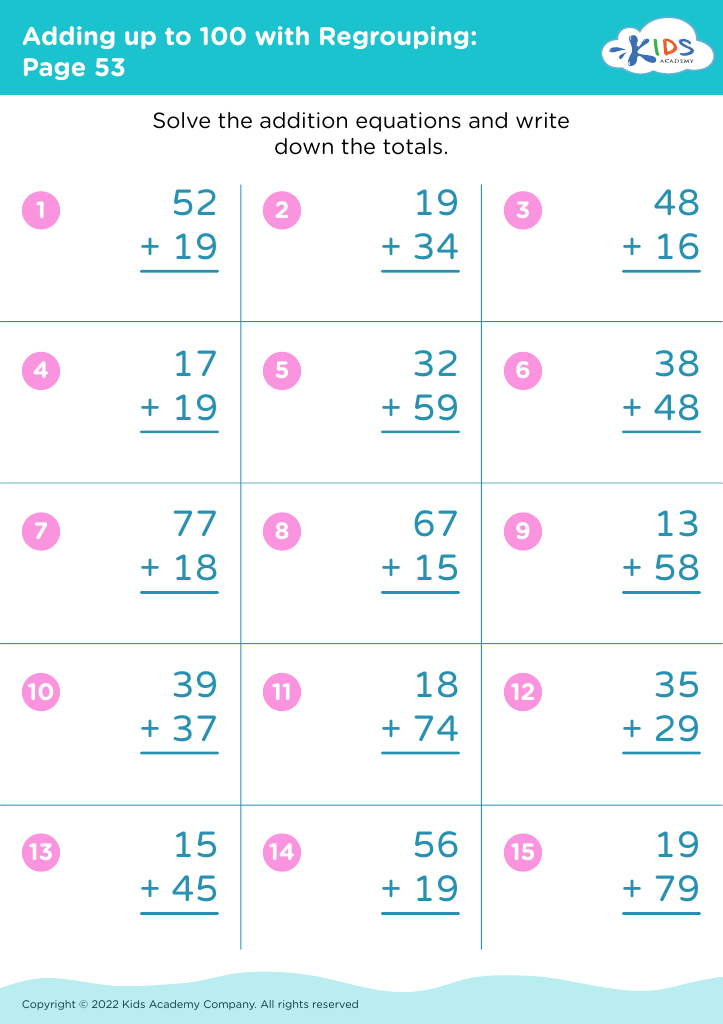
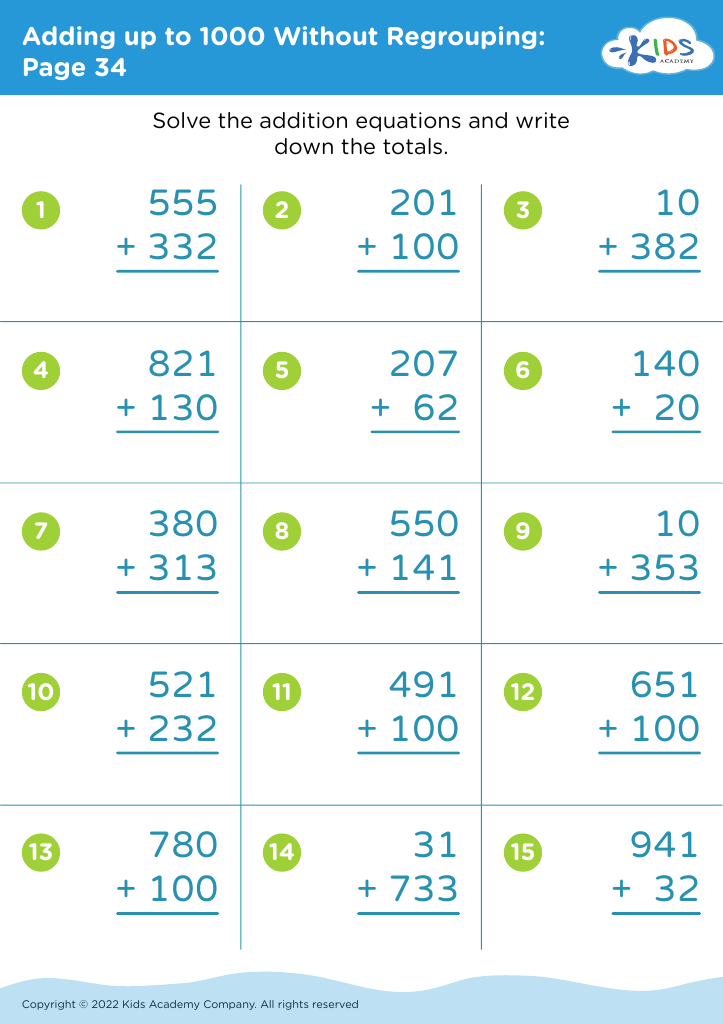
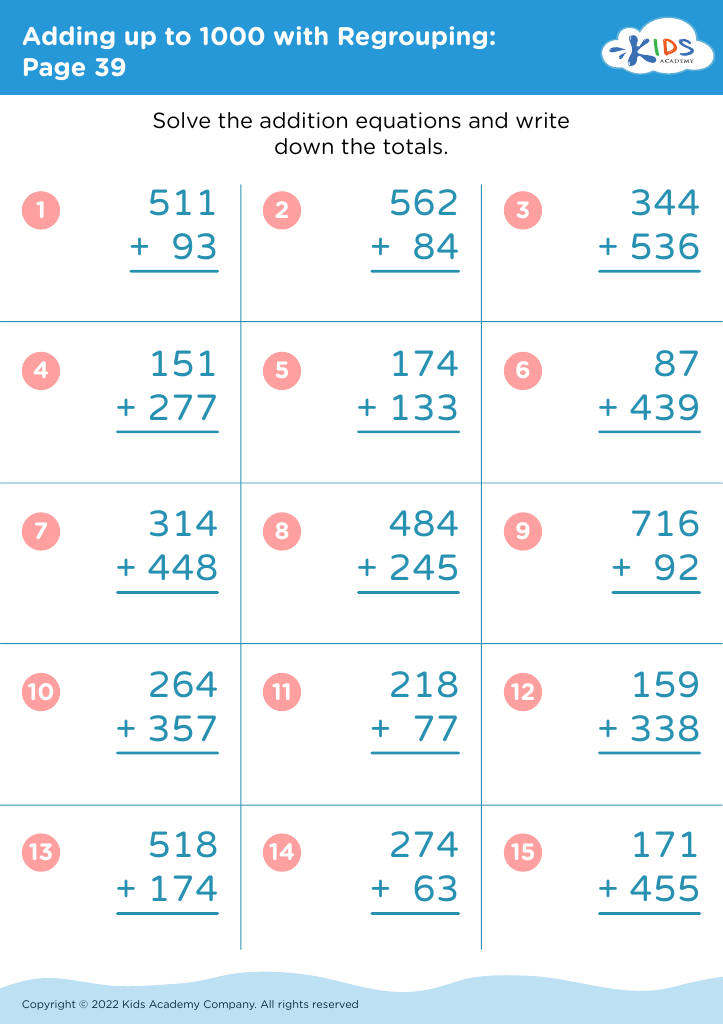
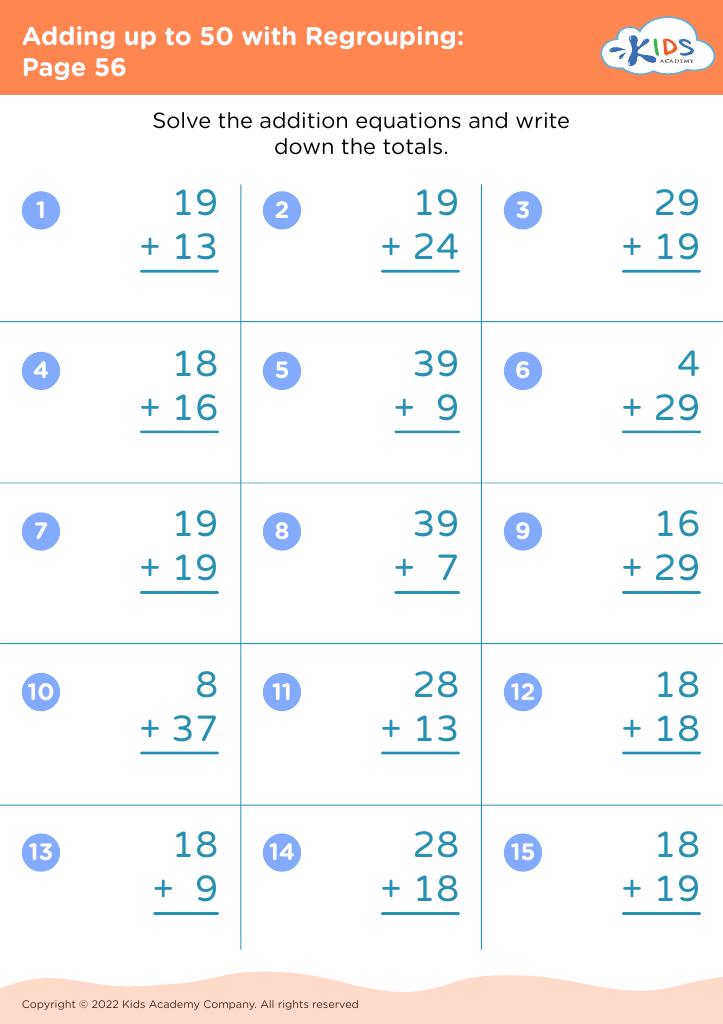
Unlock your child's potential in mathematics with our "Improve Problem-Solving Math Worksheets" designed specifically for ages 4-8. These engaging worksheets focus on enhancing critical thinking and problem-solving skills through fun exercises that make math enjoyable. Tailored to the developmental needs of young learners, our materials include a variety of colorful problems that stimulate curiosity and foster independence. As children navigate challenges, they build confidence and a solid foundation in math. Perfect for classrooms or home learning, these worksheets help parents and educators support young minds in becoming proficient problem-solvers. Explore our resources today and watch your child thrive!
Favorites
With answer key
Interactive
Join Kids Academy for Free
Who is primarily going to use this learning content?








Parents and teachers should prioritize improving problem-solving skills in mathematics for children aged 4-8 because this foundational stage shapes cognitive development and influences future academic success. At this age, children are naturally curious and willing to explore, making it the perfect time to introduce problem-solving techniques that encourage critical thinking and perseverance.
Enhancing problem-solving abilities in early learners equips them with essential skills such as reasoning, pattern recognition, and logical thinking. These skills extend beyond mathematics and are applicable in various areas of life, from everyday decision-making to handling complex challenges in later education.
Moreover, early exposure to problem-solving fosters a positive attitude toward math, helping to combat math anxiety that can develop in later years. Engaging children in playful, real-world problem situations makes math fun and relatable, promoting a love for learning.
By investing in their problem-solving skills now, parents and teachers are setting the stage for lifelong learners who are equipped to tackle complex situations with confidence. Nurturing problem-solving in young children not only enhances their math proficiency but also contributes holistically to their cognitive, social, and emotional development, preparing them for a successful academic journey ahead.








