
Math fluency development Math Worksheets for Ages 4-8
3 filtered results
Difficulty Level
Grade
Age
-
From - To
Subject
Activity
Standards
Enhance your child's math skills with our engaging Math Fluency Development Worksheets designed for ages 4-8! These worksheets focus on essential math concepts such as addition, subtraction, and number recognition, promoting confidence and mastery in young learners. Each worksheet is crafted to develop fluency in a fun and interactive way, ensuring that kids not only grasp fundamental math skills but also enjoy the learning process. With a variety of activities tailored to different skill levels, our resources cater to all learners’ needs. Begin your child's exciting math journey today and lay the foundation for their future success in mathematics!
Favorites
With answer key
Interactive
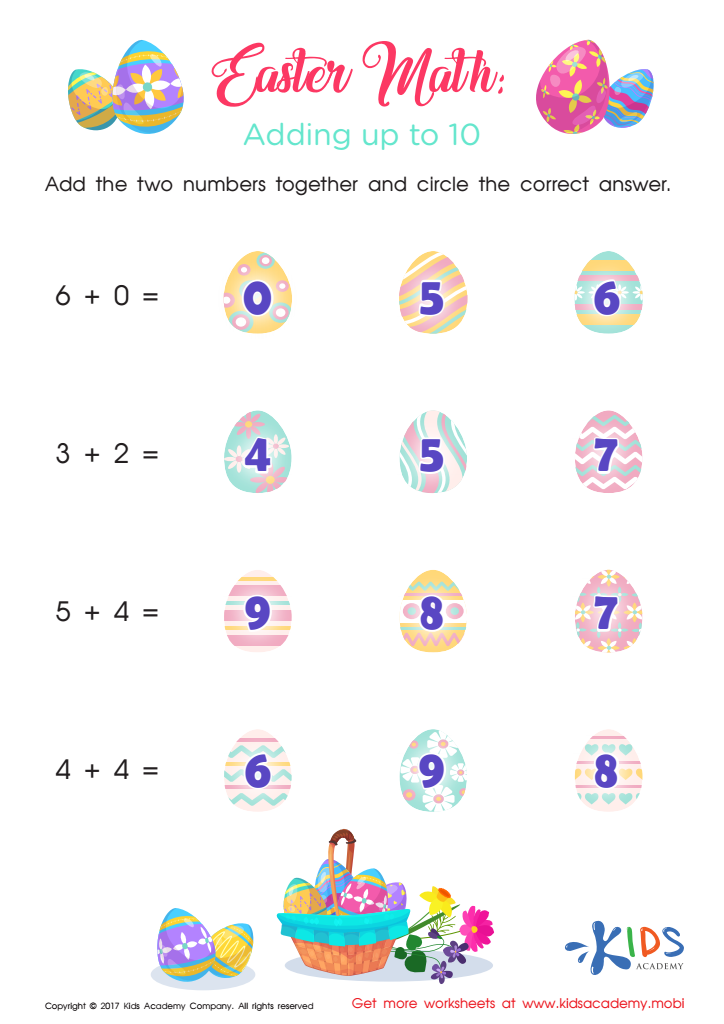
Addition Up To 10 Worksheet
This spring-themed worksheet helps your child master addition up to 10. Its bright colors and fun activities make it an enjoyable way to improve math skills.
 Assign to My Students
Addition Up To 10 Worksheet
Worksheet
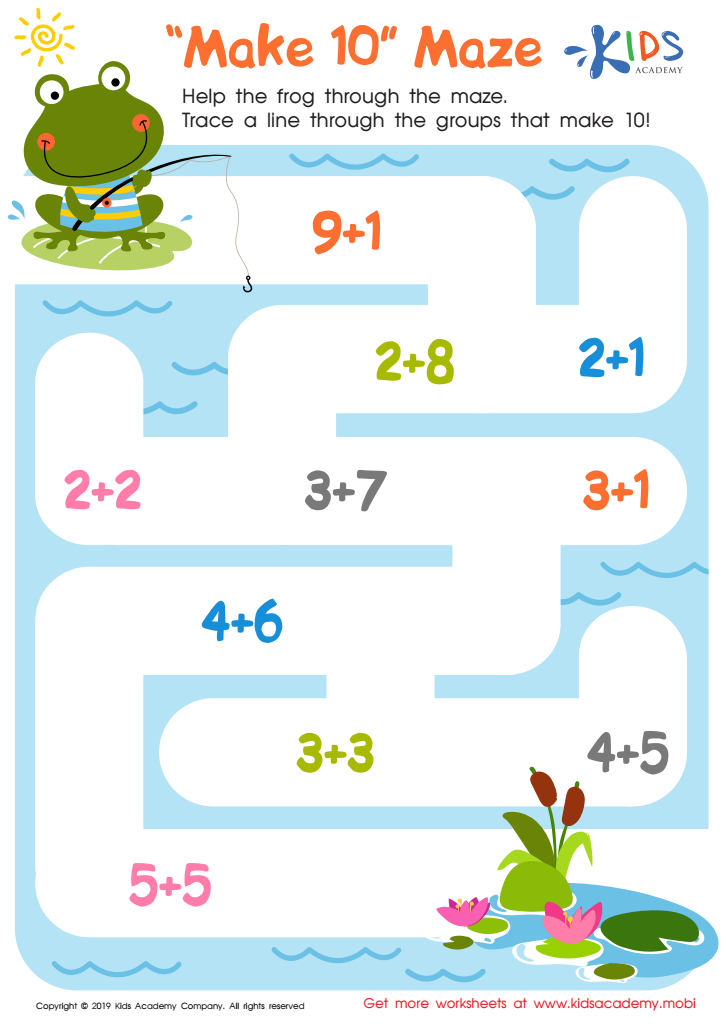
Make 10 Maze Worksheet
Help your child's frog friend make its way out of the maze! Mazes are an enjoyable way to get your kids to learn and can be a challenge. Have your kids take a look at this tracing sheet and help the frog make its way through the maze by tracing a line through the groups of equations that make 10. It’ll be a fun time for everyone!
Make 10 Maze Worksheet
Worksheet
Join Kids Academy for Free
Who is primarily going to use this learning content?







Math fluency development in children aged 4-8 is crucial for several reasons that benefit their future academic journey and everyday life. Firstly, early math skills lay the foundation for more complex mathematical concepts they will encounter later in school. When young learners achieve fluency in basic arithmetic operations, such as addition and subtraction, they gain confidence and ease in tackling challenging problems. This fluency encourages a positive attitude towards math, reducing anxiety and building resilience.
Secondly, math skills are not confined to academic settings; they play a vital role in daily activities such as shopping, cooking, and budgeting. Instilling a sense of number sense and operational competency enables children to navigate these everyday tasks successfully. Additionally, fluency supports critical thinking skills as children learn to recognize patterns, make connections, and solve problems.
Lastly, research indicates that early math skills can significantly impact literacy development and overall cognitive growth. By prioritizing math fluency, parents and teachers foster a comprehensive educational environment that nurtures well-rounded learners. Ultimately, investment in early math development can lead to lifelong advantages, from academic success to practical life skills. This underscores the importance of parents and teachers working together to support math fluency for young learners.








