Number comparison skills Math Worksheets for Ages 4-8
3 filtered results
-
From - To
Enhance your child's mathematical abilities with our engaging Number Comparison Skills Math Worksheets, specially designed for ages 4-8! These worksheets help young learners grasp the concept of comparing numbers through fun activities and vibrant visuals. Children will practice identifying larger and smaller numbers, developing essential skills for their mathematical journey. Our resources provide a variety of exercises, including matching, sorting, and filling in the blanks, ensuring an interactive learning experience. Perfect for at-home learning or classroom use, these worksheets foster number recognition, critical thinking, and confidence in math. Begin your child's learning adventure today with our downloadable and printable worksheets!
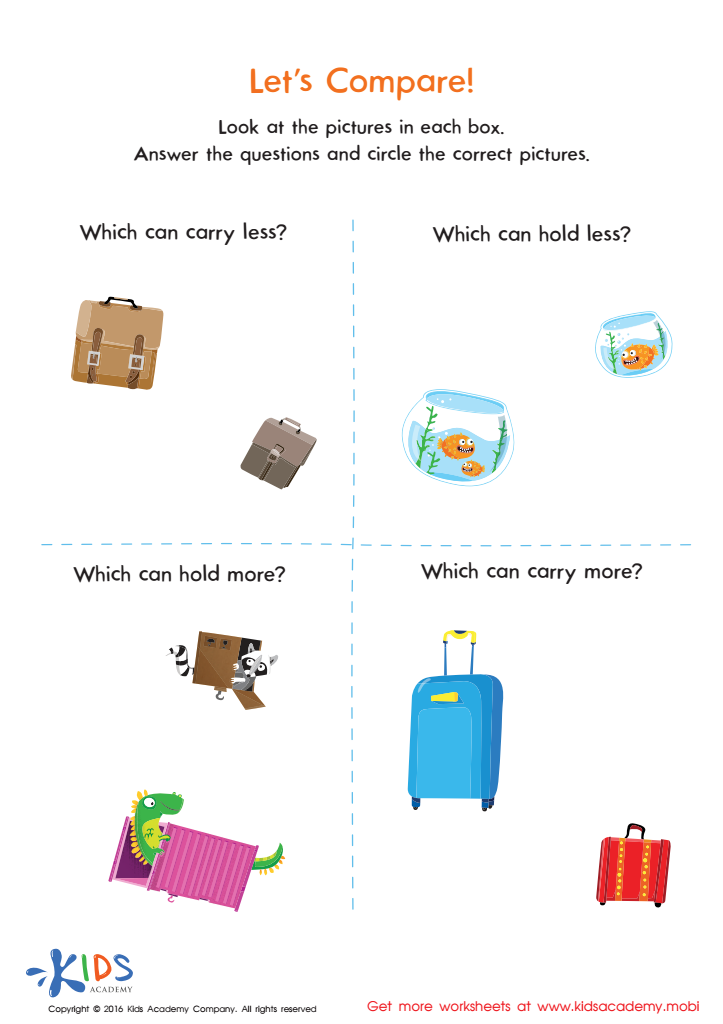
Let's Compare Worksheet: Big or Small
 Assign to My Students
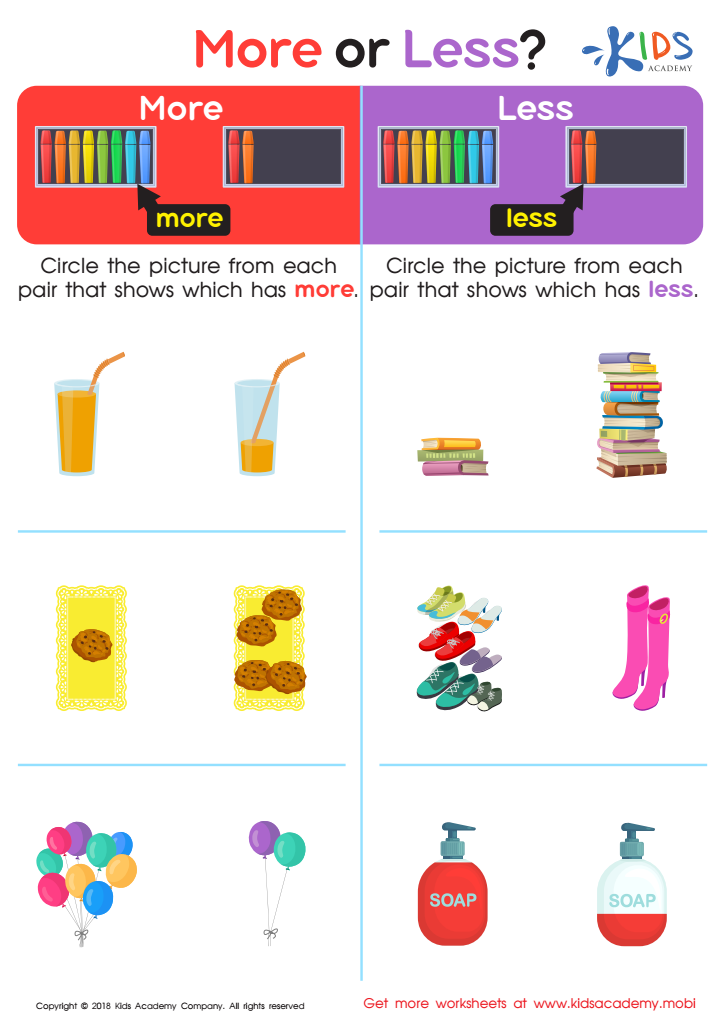
More or Less? Worksheet
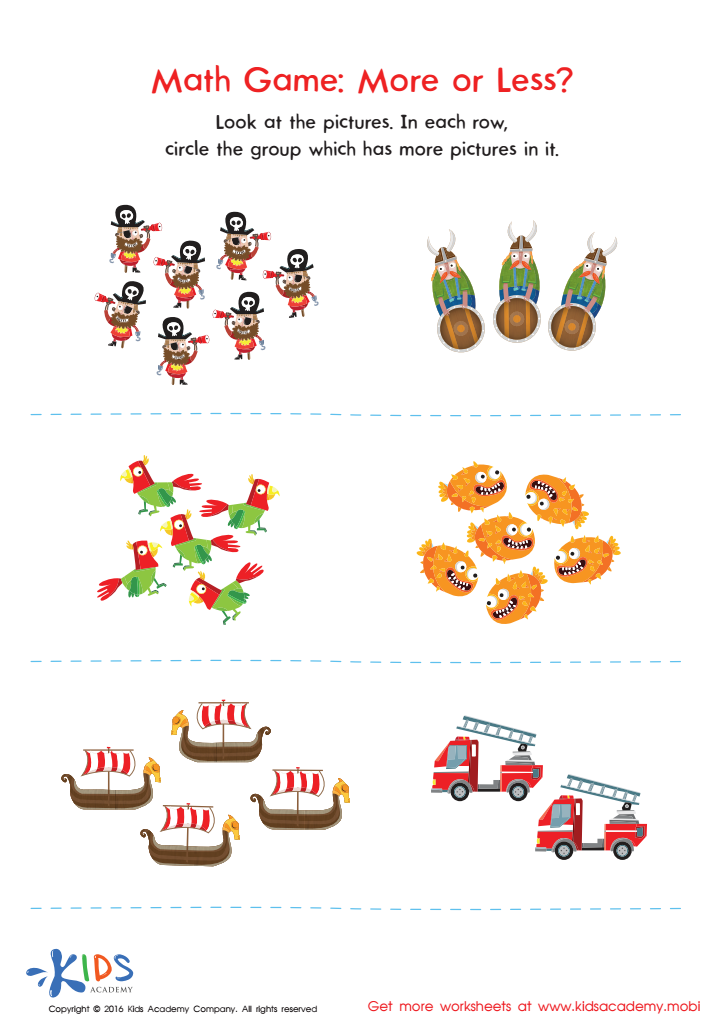
More or Less Worksheet







Number comparison skills are fundamental for young learners aged 4-8, laying the groundwork for broader mathematical understanding. At this age, children are naturally curious and eager to grasp foundational concepts. Understanding how to compare numbers—recognizing which is larger or smaller—cultivates essential cognitive skills, nurturing their ability to analyze and make sense of numerical information.
These skills foster critical thinking, as children begin to organize and classify objects based on quantity. This capability is vital not only in mathematics but also in daily life situations, such as measuring ingredients in cooking or determining how many more toys one child has compared to another. Additionally, strong number comparison skills correlate with future success in mathematics, laying the groundwork for addition, subtraction, and even advanced concepts in later grades.
For teachers, integrating number comparison in lessons promotes engagement and helps identify areas where children may need additional support. For parents, encouraging number comparison through everyday activities enhances learning and builds confidence in their child’s mathematical abilities. By prioritizing number comparison skills, adults can ensure children develop a solid mathematical foundation that will serve them well throughout their academic journey and beyond.








