Understanding adjectives Math Worksheets for Ages 4-8
6 filtered results
-
From - To
Introduce your child to the world of adjectives with our engaging Math Worksheets designed for ages 4-8! These fun activities combine language and mathematics, helping young learners grasp the concept of adjectives while honing their math skills. Each worksheet is thoughtfully crafted to promote critical thinking and enhance vocabulary through colorful illustrations and interactive exercises. Kids will learn to identify and use adjectives in various math-related contexts, fostering a deeper understanding of both subjects. Ideal for classroom use or at-home learning, our worksheets make mastering adjectives an enjoyable experience! Build your child's confidence in language and math today!
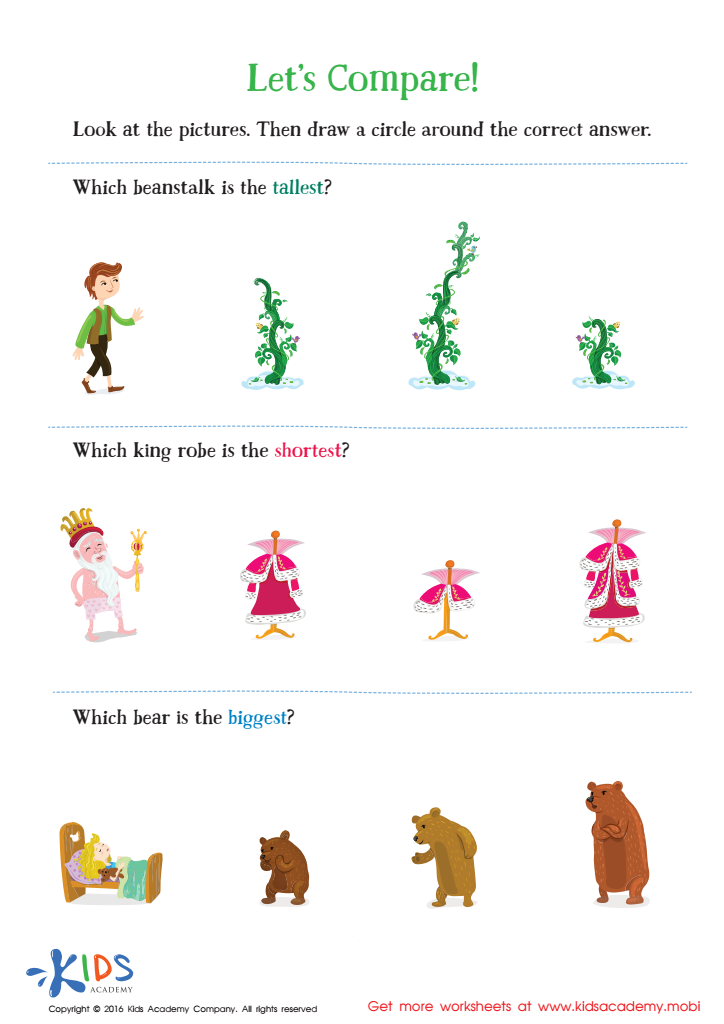
Fairy Tale Worksheet: Let's Compare
 Assign to My Students








Understanding adjectives in math is essential for young learners aged 4-8, as it lays a foundational understanding crucial for future academic success. At this age, children begin to develop their language skills and engage with mathematical concepts through everyday experiences. Adjectives help describe and classify numbers and shapes, providing context to their understanding.
For instance, when teachers say "big" or "small," they assist children in visualizing and comparing quantities or dimensions. This descriptive language enhances their ability to categorize objects, grasp relationships, and articulate mathematical thoughts clearly. Parents can further reinforce this learning at home by incorporating adjectives into playtime activities—such as sorting toys by color, size, or shape—creating engaging learning experiences that make math tangible.
Moreover, strong adjective skills promote critical thinking and comprehension. As students progress, they must describe math problems and results verbally or in writing. By focusing on understanding adjectives, parents and teachers support cognitive development, leading to better problem-solving skills and increased confidence in both math and language intended to guide children toward a lifelong love of learning. Overall, understanding adjectives in math cultivates essential skills that empower children in their education.








