Understanding currency Math Worksheets for Ages 4-8
4 filtered results
-
From - To
Explore our engaging "Understanding Currency Math Worksheets" designed for children aged 4-8! These interactive resources help young learners grasp essential money concepts through fun activities that involve identifying, counting, and using various coins and bills. Our worksheets promote hands-on learning, fostering financial literacy while enhancing key math skills. Whether at home or in the classroom, these printable activities make mastering currency enjoyable and effective. Watch as your child develops confidence in handling money and builds a strong mathematical foundation. Discover the joy of learning with our colorful and captivating worksheets, tailored specifically to meet the needs of early learners. Start teaching today!
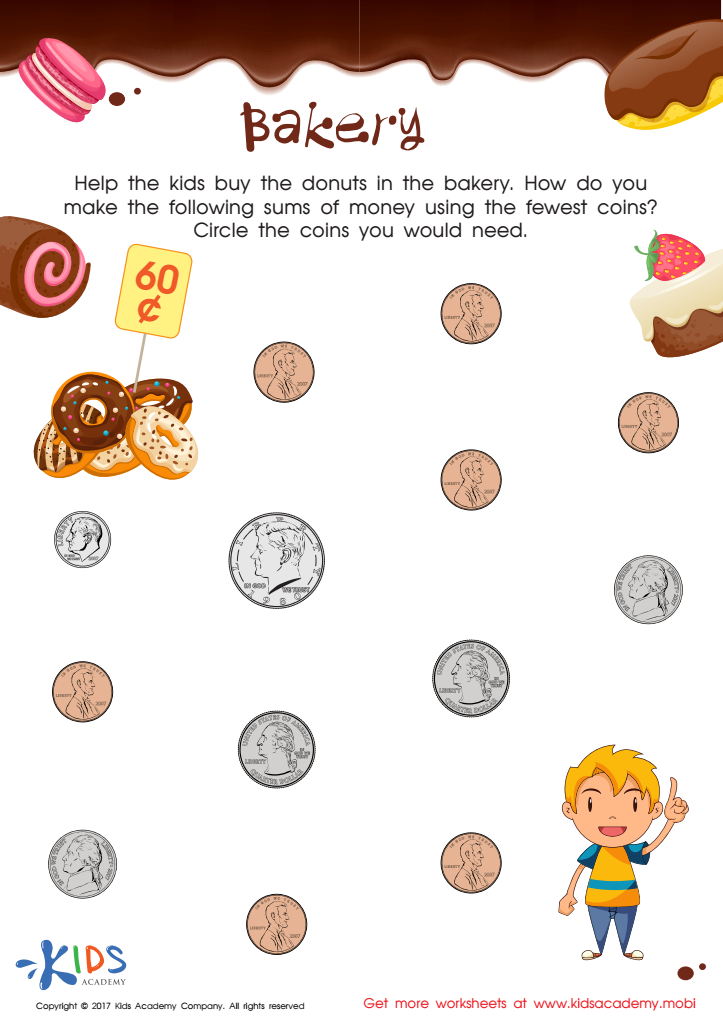
Counting Coins Worksheet
 Assign to My Students
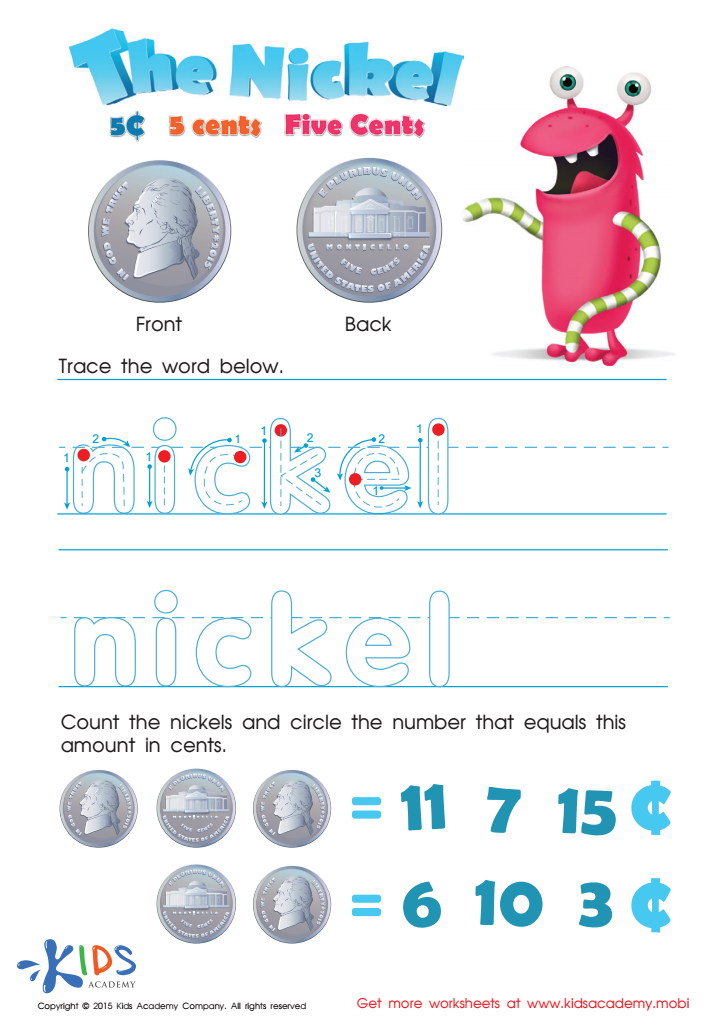
Five Cents or the Nickel Money Worksheet
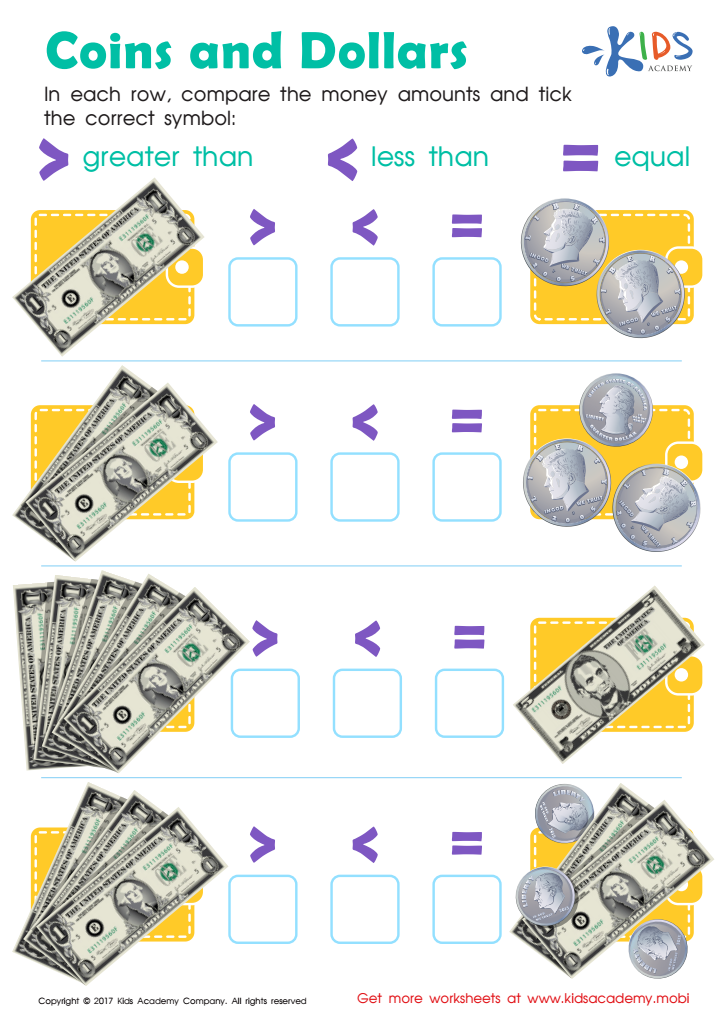
Money: Coins Dollars Printable
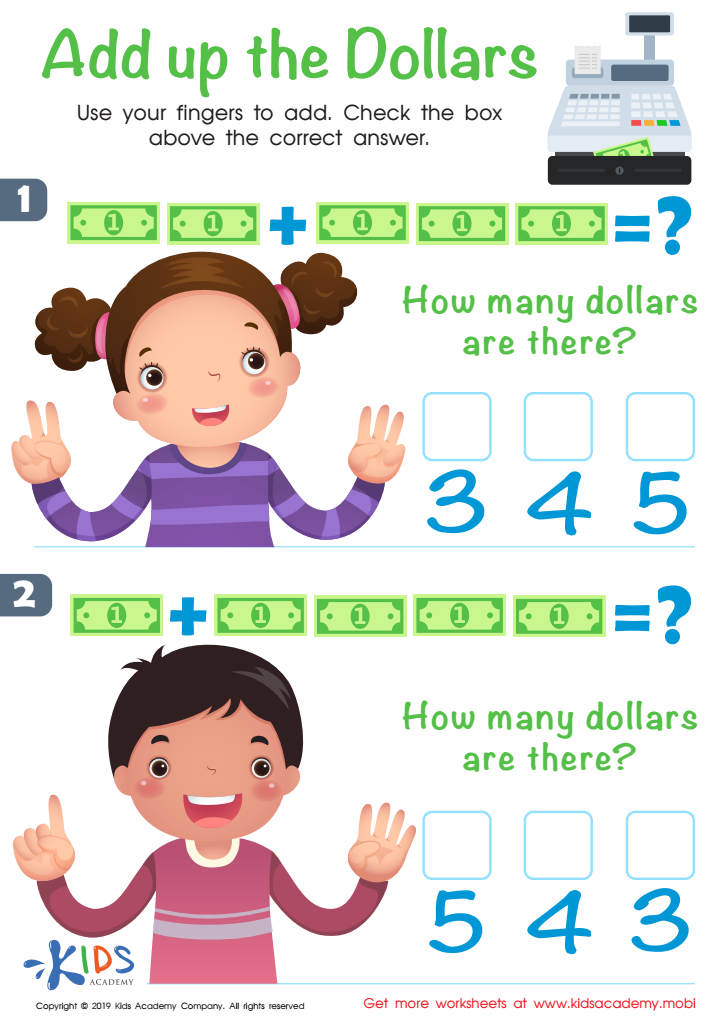
Add up the Dollars Worksheet







Understanding currency math is crucial for children aged 4-8, as it lays the foundation for essential life skills and financial literacy. During these formative years, children are highly receptive to learning concepts related to money, including counting, recognizing denominations, and basic arithmetic operations such as addition and subtraction. By engaging in currency math, children develop critical thinking and problem-solving skills, enhancing their cognitive development.
Parents and teachers should prioritize currency math because it equips children with practical knowledge they will use throughout their lives, fostering independence and confidence in handling finances. It encourages responsible money management from a young age, helping them understand the value of saving, spending, and making choices.
Further, currency math can make math learning enjoyable and applicable to real-world situations, leading to increased motivation and engagement in their studies. Incorporating games, tools, and hands-on activities can turn currency lessons into fun experiences.
Finally, early education on currency helps bridge the gap between theoretical math skills and real-life application, ensuring that children are not only able to perform calculations but also understand their significance. Empowering children with this knowledge fosters a financially literate generation equipped to navigate future economic challenges.








