Understanding length Math Worksheets for Ages 4-8
3 filtered results
-
From - To
Explore our engaging "Understanding Length" math worksheets designed for ages 4-8! These interactive and visually appealing resources help young learners grasp the concept of length through fun exercises. From comparing objects to measuring using non-standard units, our worksheets make learning about length exciting and accessible. Tailored for early grade students, these activities promote critical thinking and problem-solving skills while ensuring a solid mathematical foundation. Perfect for both classroom and home use, our worksheets cater to different learning styles and abilities. Discover the joy of measuring and comparing with our comprehensive length worksheets — a fun way to enhance your child's math skills!
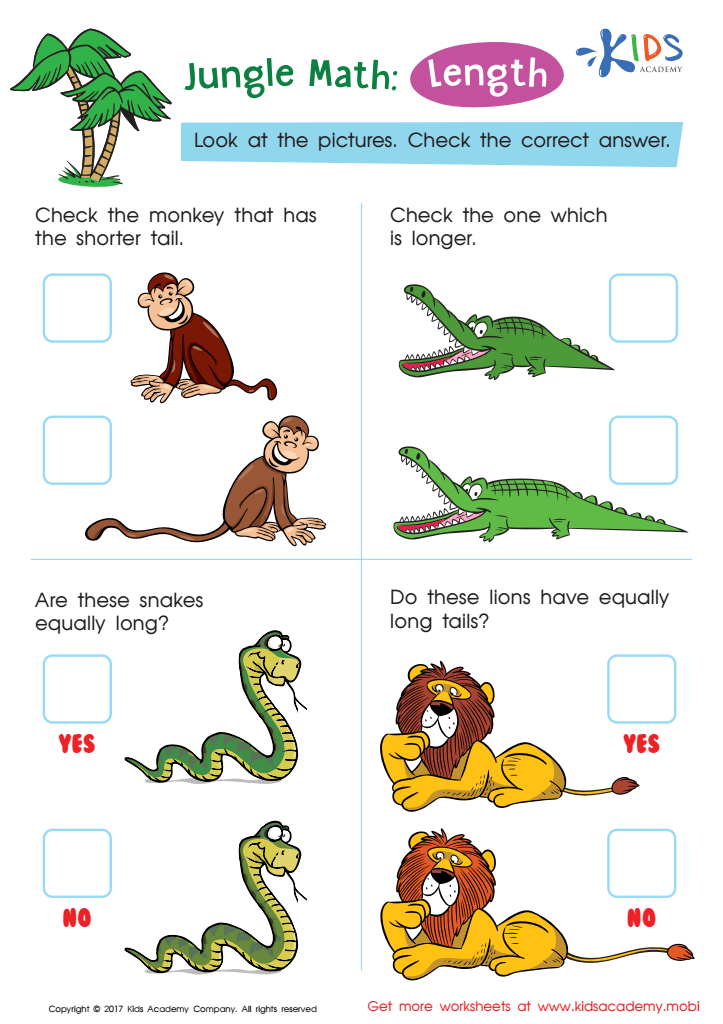
Which One Is Longer - Length Worksheet
 Assign to My Students
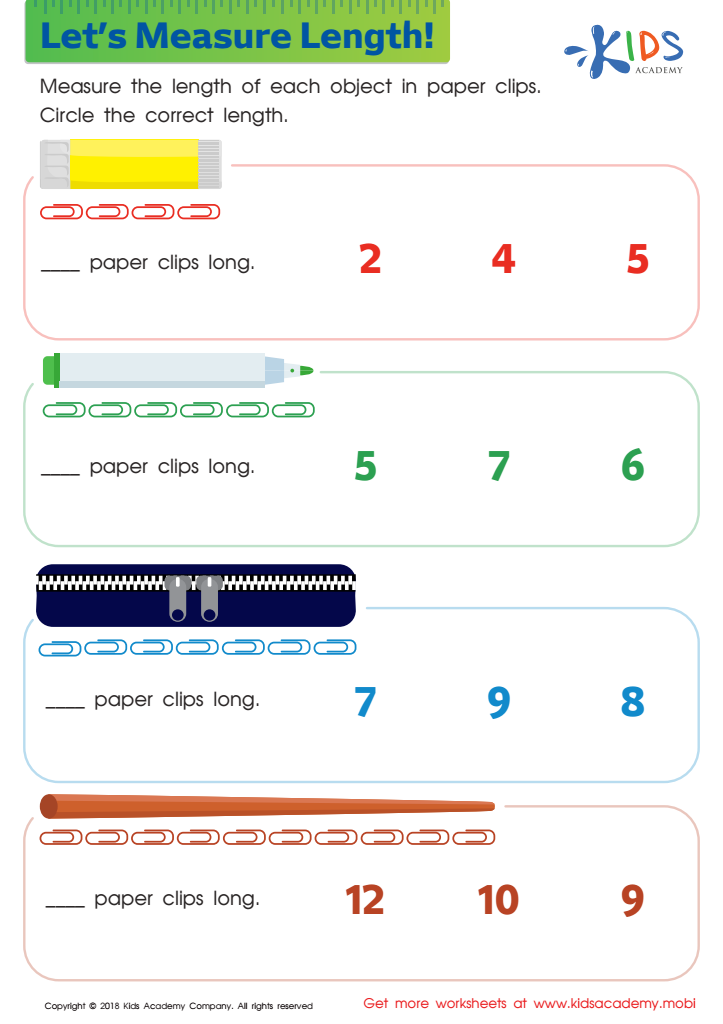
Lets Measure Length Worksheet
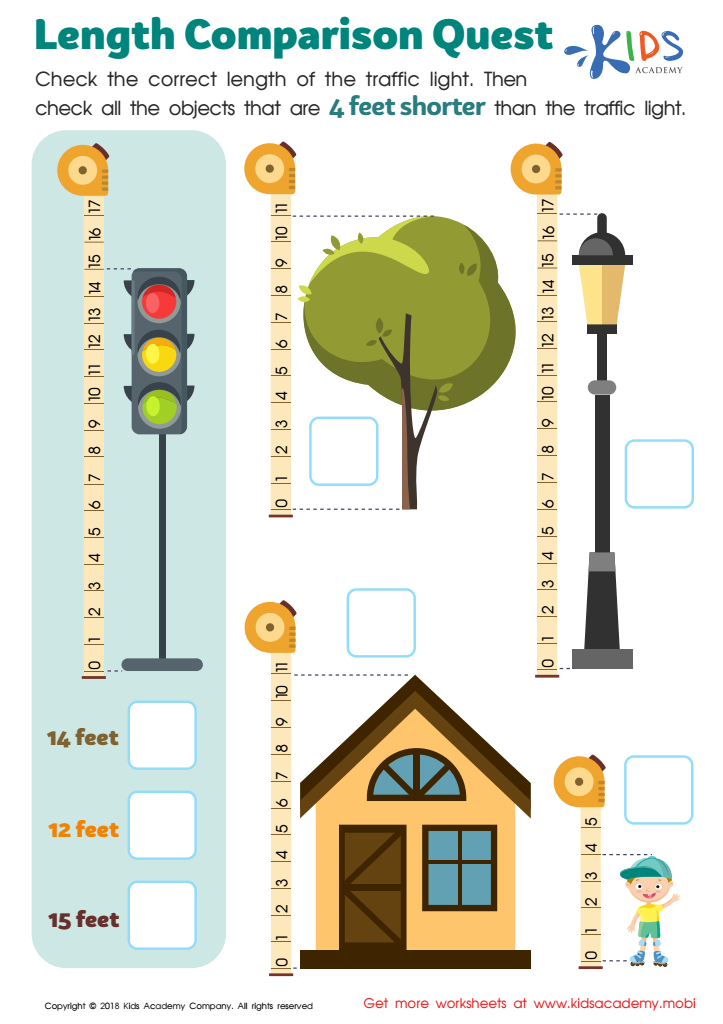
Length Comparison Quest Worksheet







Understanding length and measurement in math is crucial for children aged 4-8 as it lays a foundational skill set for their overall cognitive development. During these formative years, children are naturally curious and eager to explore their surroundings. Incorporating length measurement into their learning helps them engage with real-world concepts.
By learning about length, children develop spatial awareness, compare sizes, and comprehend units of measure, which are all essential for later mathematical problems. This understanding enhances their problem-solving skills and critical thinking. Furthermore, early exposure to measurement fosters a sense of confidence and competence in math, counteracting anxiety around the subject as they progress in school.
Parents and teachers play a vital role in promoting this learning interest. They can introduce hands-on activities, such as measuring objects with rulers or strings, or comparing lengths using non-standard units like blocks and footsteps. Such interactive experiences not only make learning enjoyable but also create meaningful mathematical connections. Ultimately, understanding length enriches their educational journey, setting them on a path for success in math and related disciplines in the future. Engaging children with measurement at an early age nurtures a lifelong appreciation for mathematics and its application in everyday life.








