Understanding mass Math Worksheets for Ages 4-8
3 filtered results
-
From - To
Discover a range of engaging mass math worksheets tailored for children ages 4-8 at Kids Academy! These fun and educational printables help young learners grasp fundamental concepts of mass and weight through hands-on activities. Bright illustrations and interactive exercises make learning enjoyable, allowing kids to compare, measure, and understand different objects' mass. Ideal for use both at home and in the classroom, these worksheets foster critical thinking and foundational math skills, equipping children with the knowledge to excel. Give your child the gift of learning with our curated selection that puts the joy in understanding mass!
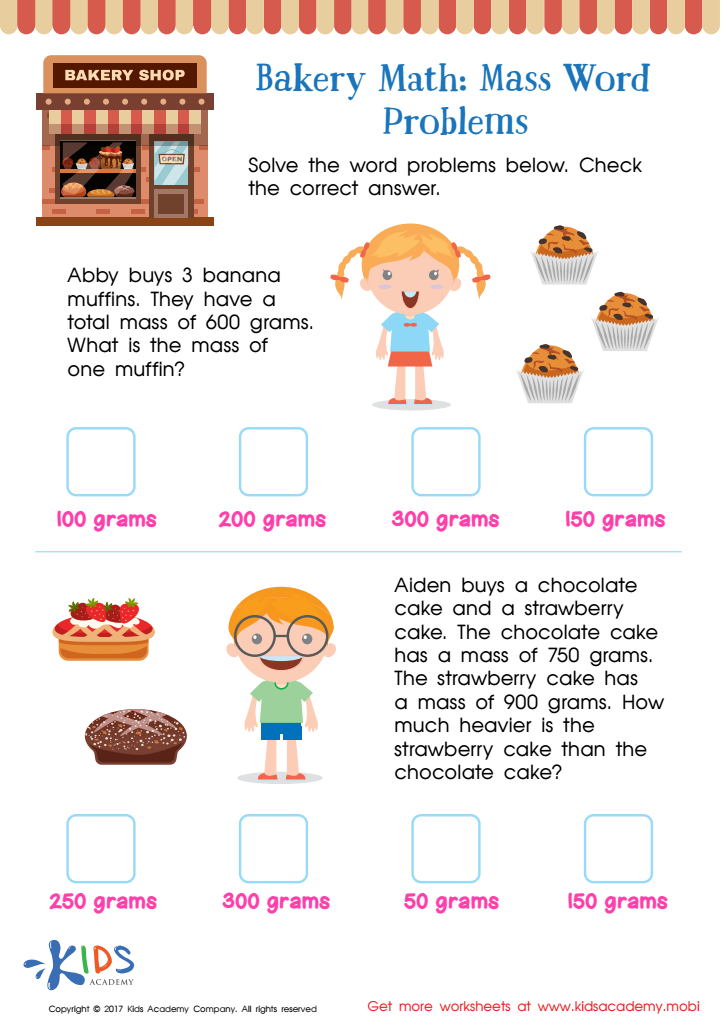
Mass Word Problems Worksheet
 Assign to My Students
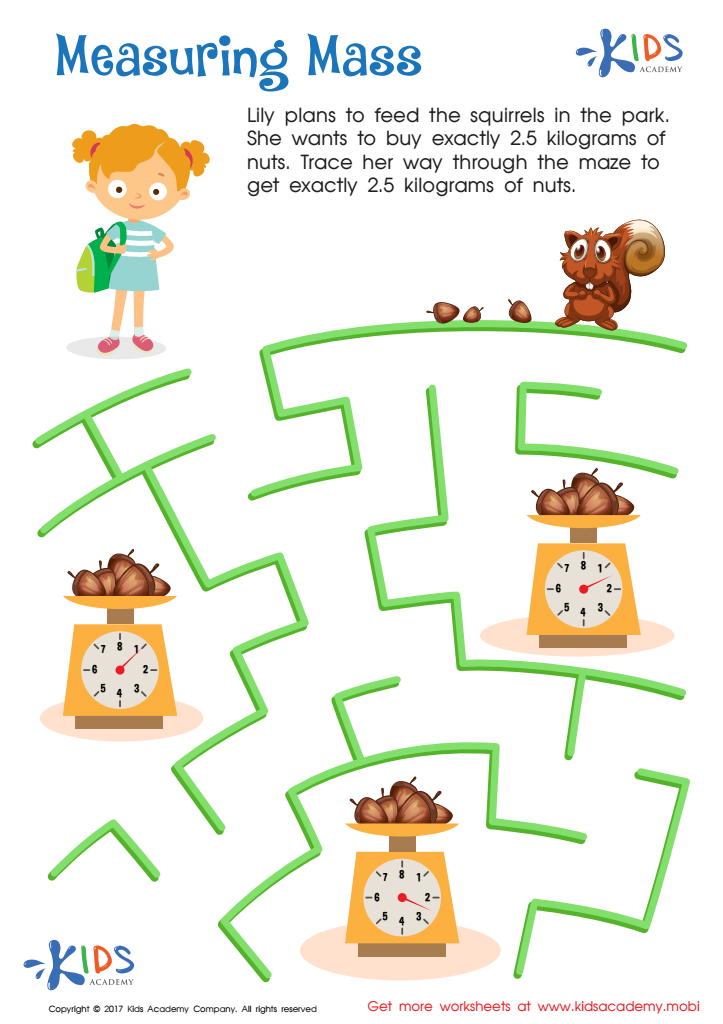
Measuring Mass Worksheet
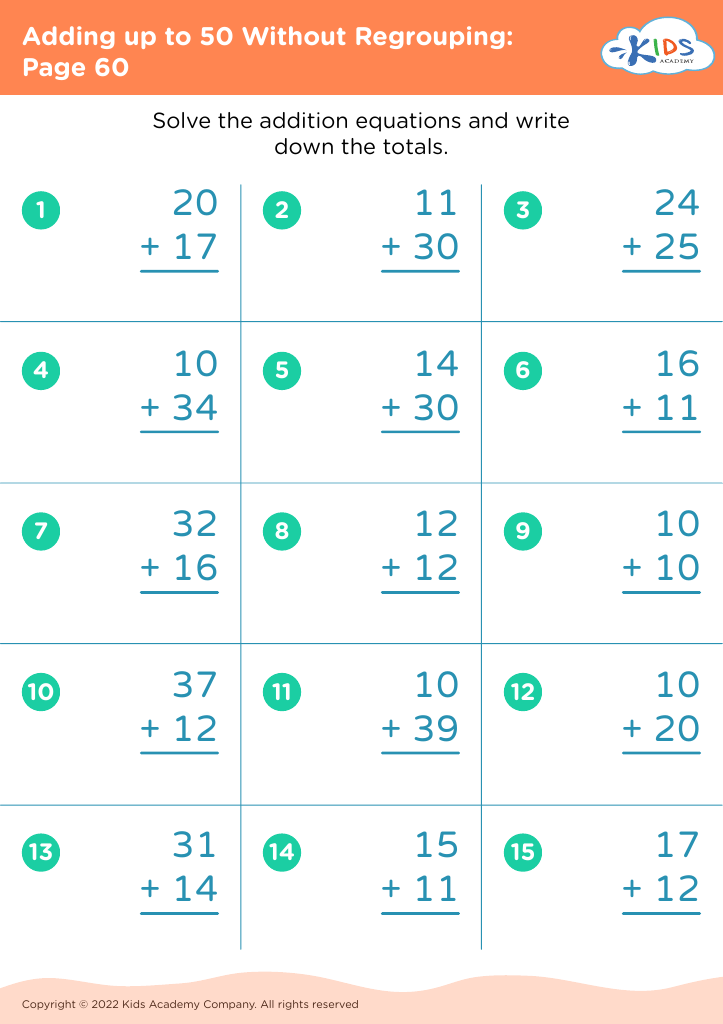







Understanding basic math concepts, especially concerning mass, is crucial for early childhood development and lays a foundation for future learning. For children ages 4-8, grasping the concept of mass offers several pivotal benefits that parents and teachers should be keen to support.
Firstly, learning about mass enhances cognitive development. It encourages kids to observe, compare, and analyze objects, thereby developing critical thinking and problem-solving skills. Such activities stimulate brain function in areas responsible for logical reasoning and arithmetic.
Secondly, understanding mass integrates with real-world applications—helping children connect their learning to everyday life. For example, comparing the weight of fruits and vegetables or toys reinforces their practical knowledge and interest in math-related tasks, making learning more relatable and enjoyable.
Thirdly, early proficiency in math, including mass, bolsters self-confidence and academic readiness. As children engage successfully with these concepts, they build a positive attitude towards learning and are better prepared for more complex subjects in future grades.
Finally, promoting an early understanding of math fosters a growth mindset. Encouraging curiosity and perseverance in tackling math challenges nurtures resilience and adaptability. Consequently, whether in academic, personal, or future professional environments, these skills become invaluable for a child's overall development and success.








