Visual fraction representation Math Worksheets for Ages 4-8
3 filtered results
-
From - To
Explore our engaging Visual Fraction Representation Math Worksheets designed specifically for children aged 4-8! These worksheets aim to reinforce foundational math skills through vibrant visuals, making learning about fractions fun and accessible. By introducing concepts such as whole parts, halves, and quarters with vivid imagery, kids will enjoy mastering fractions while developing problem-solving abilities. Our worksheets provide a perfect balance of structure and creativity, allowing young learners to engage with mathematics at their own pace. Suitable for home, classroom, or remote learning environments, these resources empower children to build confidence and a solid understanding of fractions. Get started today and watch your child's mathematical skills blossom!
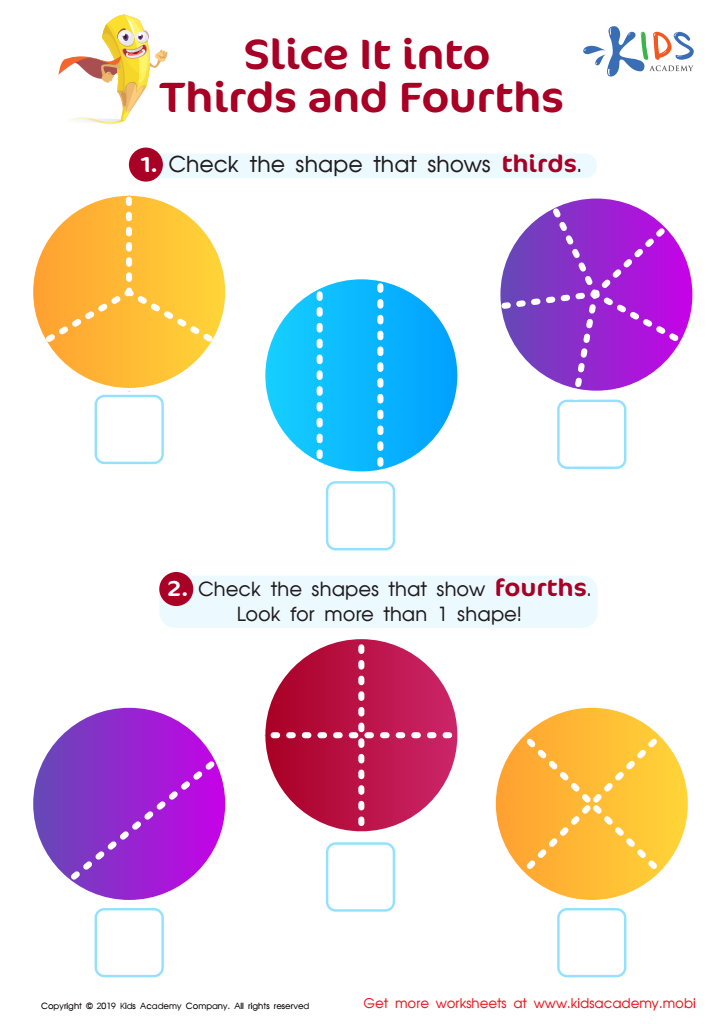
Slice in Thirds Fourths Worksheet
 Assign to My Students
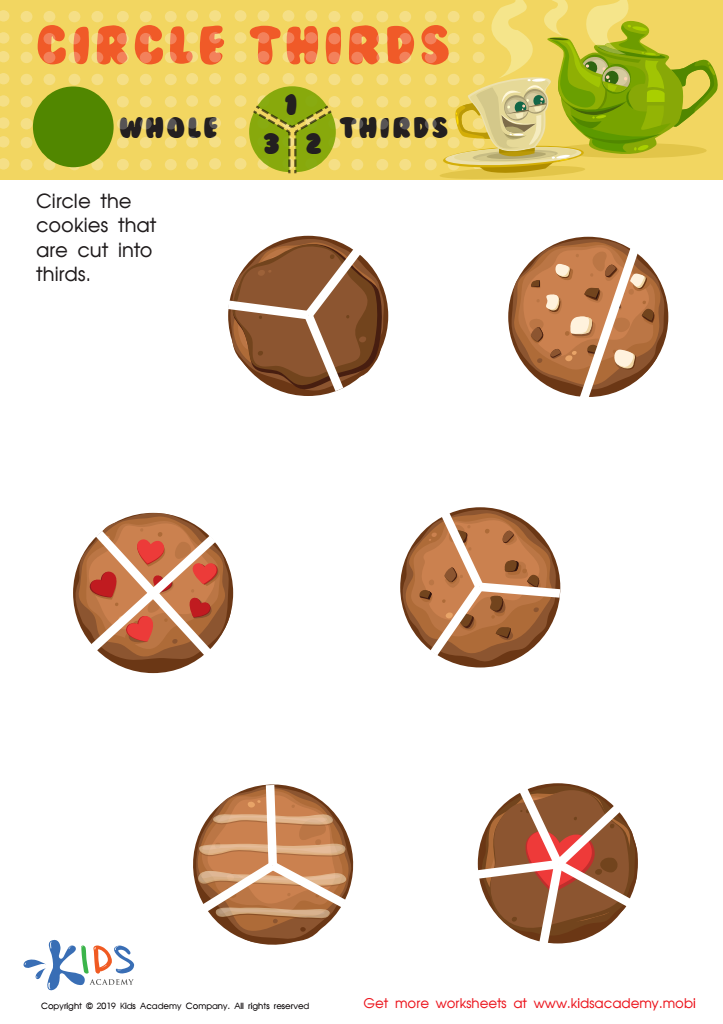
Circle Thirds Worksheet


%20(1).jpg)


.jpg)


Visual fraction representation is crucial for young learners aged 4-8, as it provides a foundational understanding of math that will benefit them throughout their education. At this developmental stage, children are often more receptive to learning through visual aids, which can make abstract concepts like fractions more tangible and comprehensible.
When children engage with visual representations—such as pie charts, fraction bars, or models—they can better grasp the idea of parts of a whole. This understanding transcends rote memorization, fostering a deeper love for mathematics. Visual aids help develop critical thinking skills, enabling children to make connections between fractions and real-life scenarios, such as sharing food or dividing objects.
Moreover, teaching fractions with visual tools encourages collaboration and verbal expression. Students learn to articulate their understanding with peers and teachers, enhancing their communication skills. It also fosters an environment of inquiry, where they feel comfortable exploring and asking questions.
Ultimately, investing in visual fraction education lays the groundwork for more complex mathematical concepts later in life. By prioritizing this learning approach, parents and teachers can help children build confidence and a positive attitude toward math, ultimately setting them up for future success.








