Enhancing calculation skills Multiplication Worksheets for Ages 4-8
5 filtered results
-
From - To
Boost your child’s multiplication skills with our engaging and fun multiplication worksheets, designed specifically for ages 4-8. These printable activities promote lasting math understanding while making learning enjoyable. From colorful illustrations to interactive exercises, our worksheets cater to various learning styles. Children will enhance their calculation skills, build confidence, and develop a strong foundation in mathematics. With progressive difficulty levels, these worksheets are ideal for both classroom and homeschooling environments. Watch your young learners excel as they tackle multiplication problems in a playful and supportive setting. Start their math journey today and make multiplication a breeze!
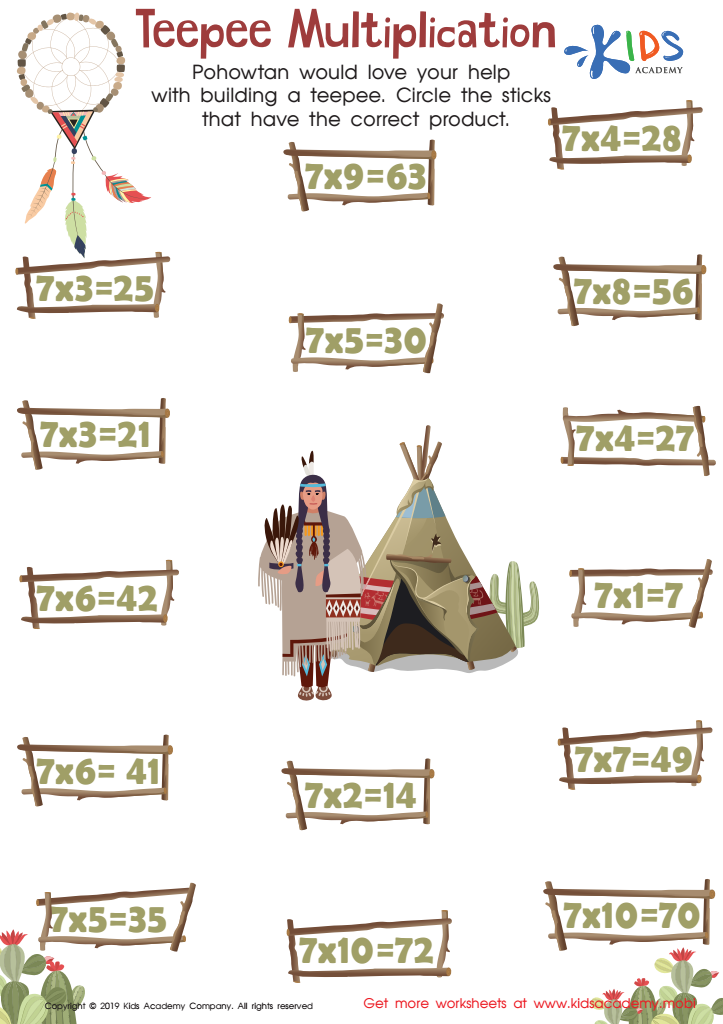
Teepee Multiplication Worksheet
 Assign to My Students
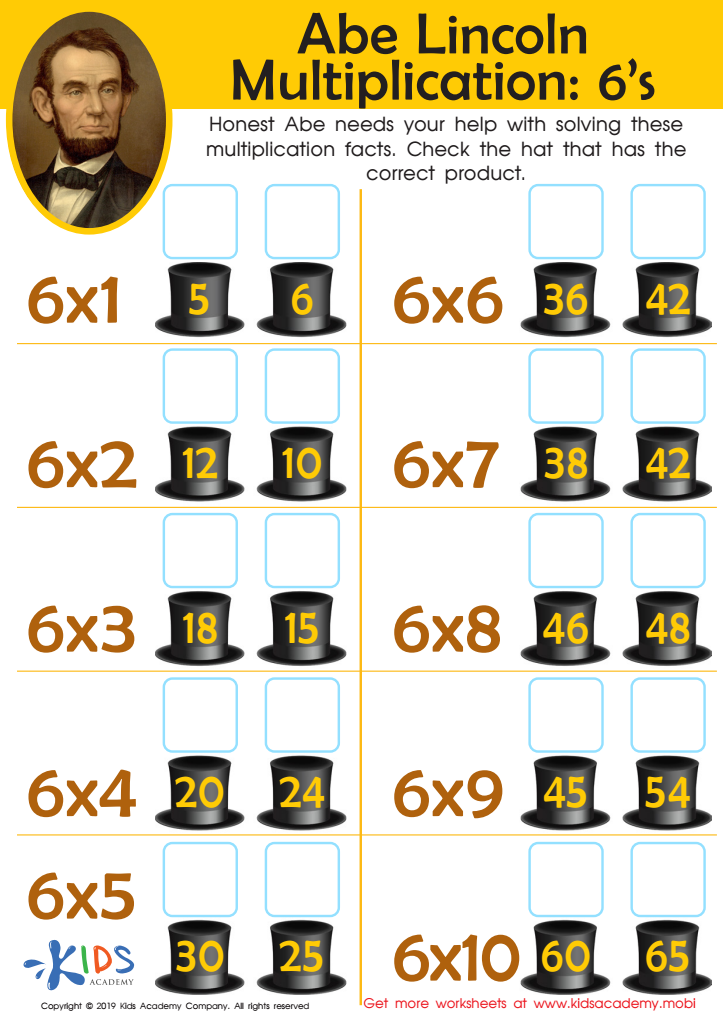
Abe Lincoln Multiplication: 6’s Worksheet
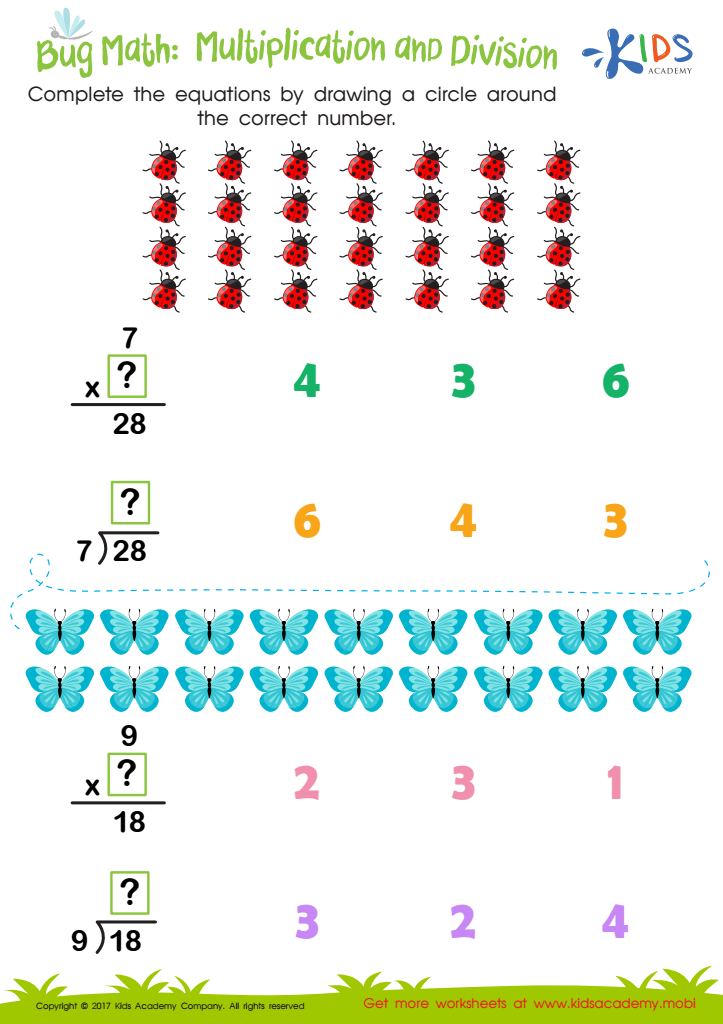
Multiplication and Division Worksheet
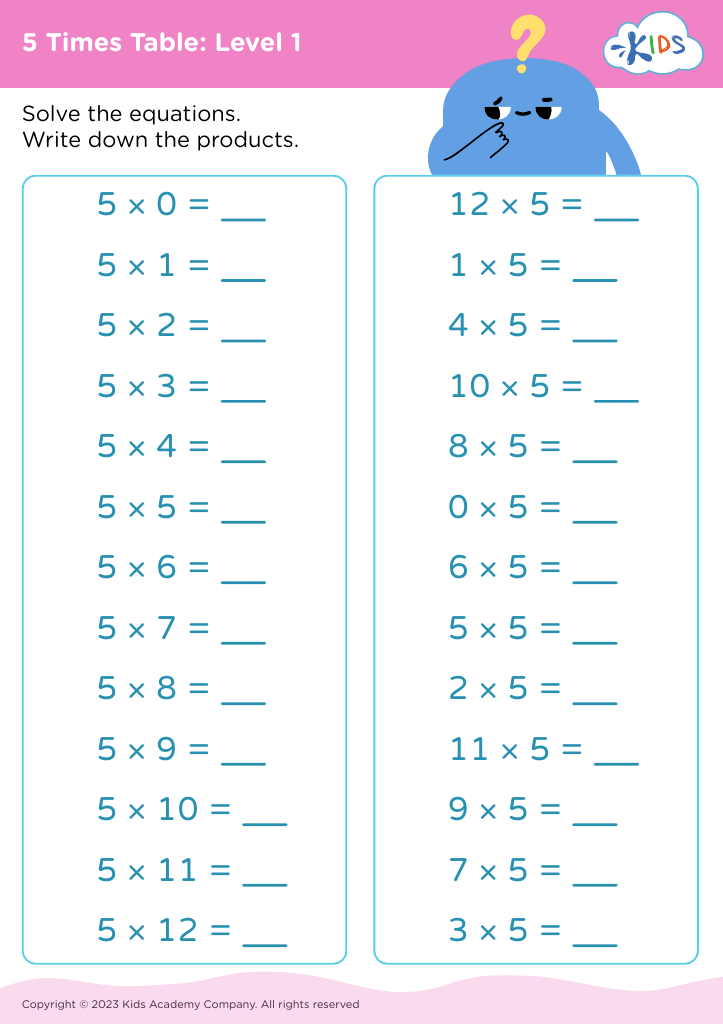
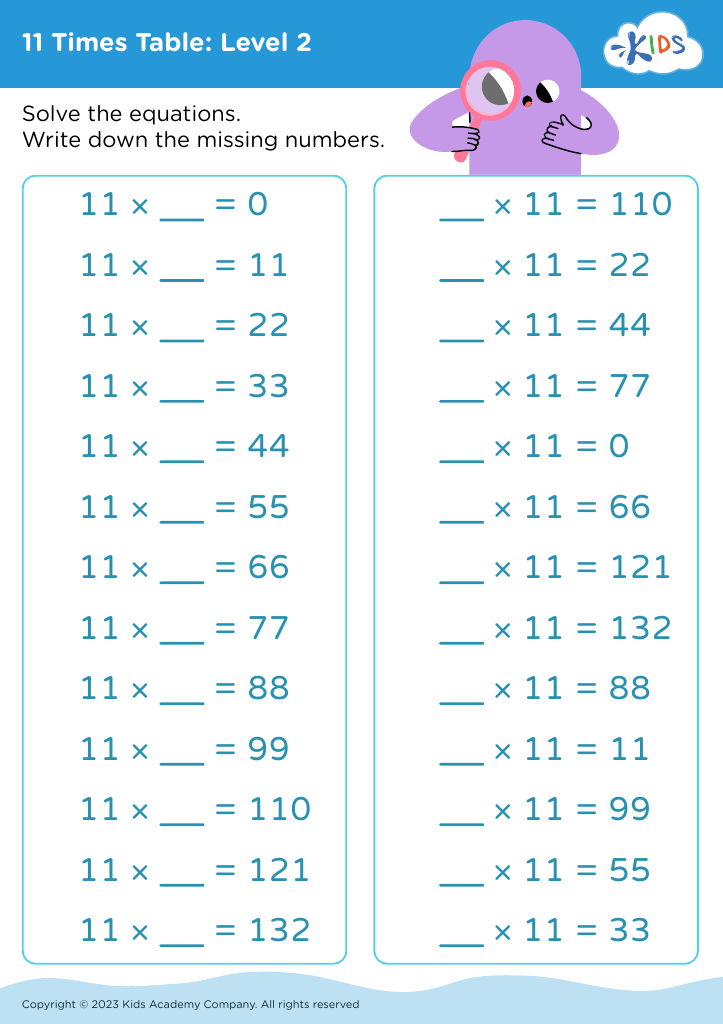








Enhancing calculation skills, particularly multiplication, for children aged 4 to 8 is crucial for several reasons. First, early mastery of multiplication forms the foundation for more advanced mathematical concepts later on, such as division, fractions, and algebra. By introducing multiplication early, parents and teachers can foster a strong mathematical mindset that encourages problem-solving and critical thinking.
Moreover, multiplication skills are essential for everyday life. Children encounter situations where they need to multiply, such as when determining quantities for recipes, calculating time, or understanding money. By developing these skills early, we equip children with the tools essential for navigating real-world situations confidently.
Additionally, building multiplication skills promotes cognitive development. It enhances memory, encourages logical reasoning, and strengthens concentration—all skills beneficial across various subjects and areas of life. Engaging children in fun and creative multiplication exercises can also make learning enjoyable, fostering a positive attitude toward math.
Ultimately, investing time in enhancing multiplication skills for young learners cultivates a solid mathematical foundation that will support their academic journey and empower them to become confident, competent individuals. Parents and teachers play a critical role in facilitating this development and nurturing a love for mathematics from a young age.








