
Counting skills Numbers 11–20 Worksheets for Ages 4-8
5 filtered results
Difficulty Level
Grade
Age
-
From - To
Subject
Activity
Standards
Boost your child's counting skills with our engaging "Counting Skills Numbers 11–20 Worksheets" designed for ages 4-8! This collection features fun, interactive activities that focus on helping young learners understand and master counting from 11 to 20. Each worksheet is tailored to enhance number recognition, promote effective counting techniques, and develop numerical fluency through colorful visuals and hands-on exercises. Suitable for both in-class and at-home learning, these worksheets provide an excellent resource for parents and educators aiming to strengthen foundational math skills. Help your child gain confidence in counting and set them on the path to math success today!
Favorites
With answer key
Interactive
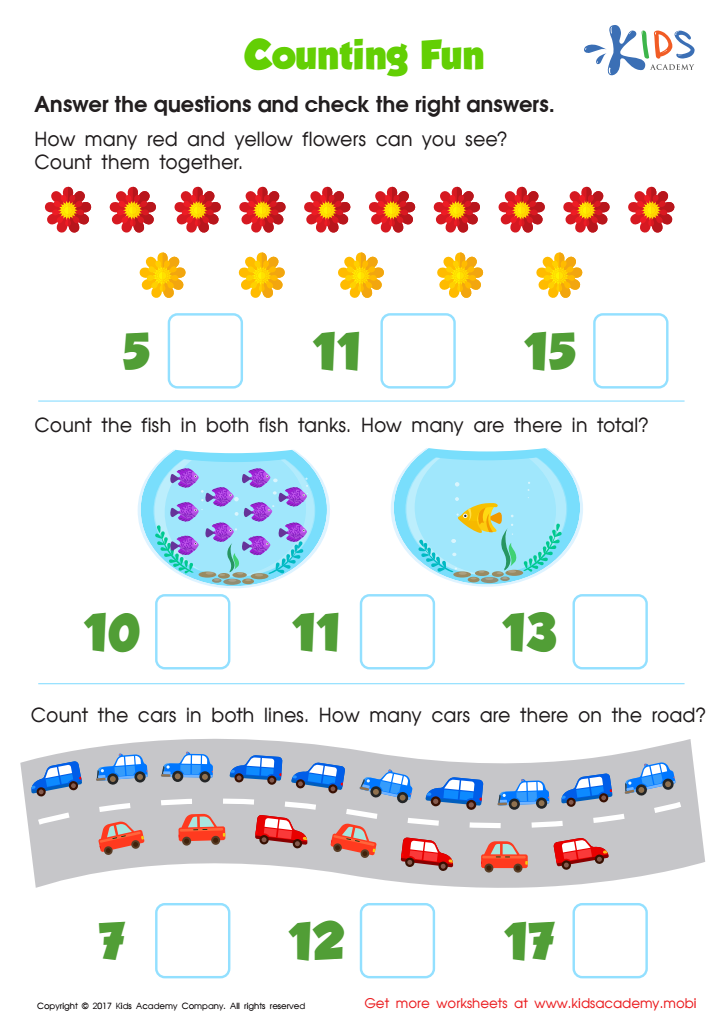
Counting Fun Worksheet
Math and fun can go hand-in-hand with this free PDF worksheet! Bright, colourful illustrations will activate your child's brain, as they count the red and yellow flowers. How many can you see? Count together and write down the total. Make learning and counting fun for your little ones!
 Assign to My Students
Counting Fun Worksheet
Worksheet
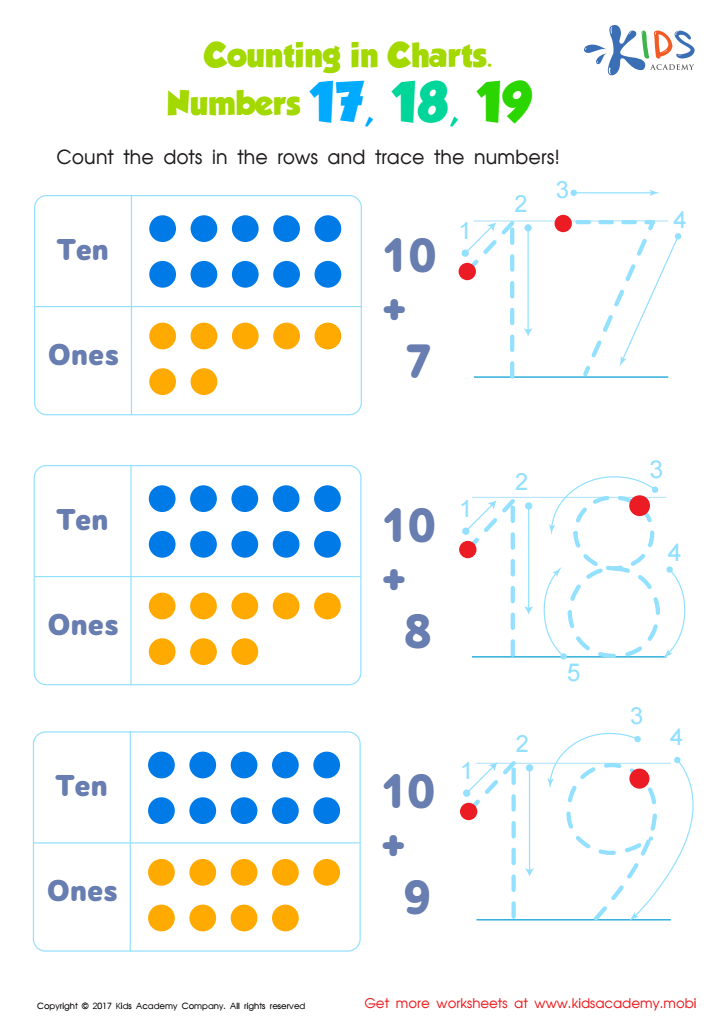
Kindergarten Number Tracing: Counting in Charts Worksheet
Little learners can find big numbers tricky! Help them practice counting and build early math skills, like place value and addition, with this kindergarten number tracing PDF worksheet. Count the dots to solve the problem and trace each answer!
Kindergarten Number Tracing: Counting in Charts Worksheet
Worksheet
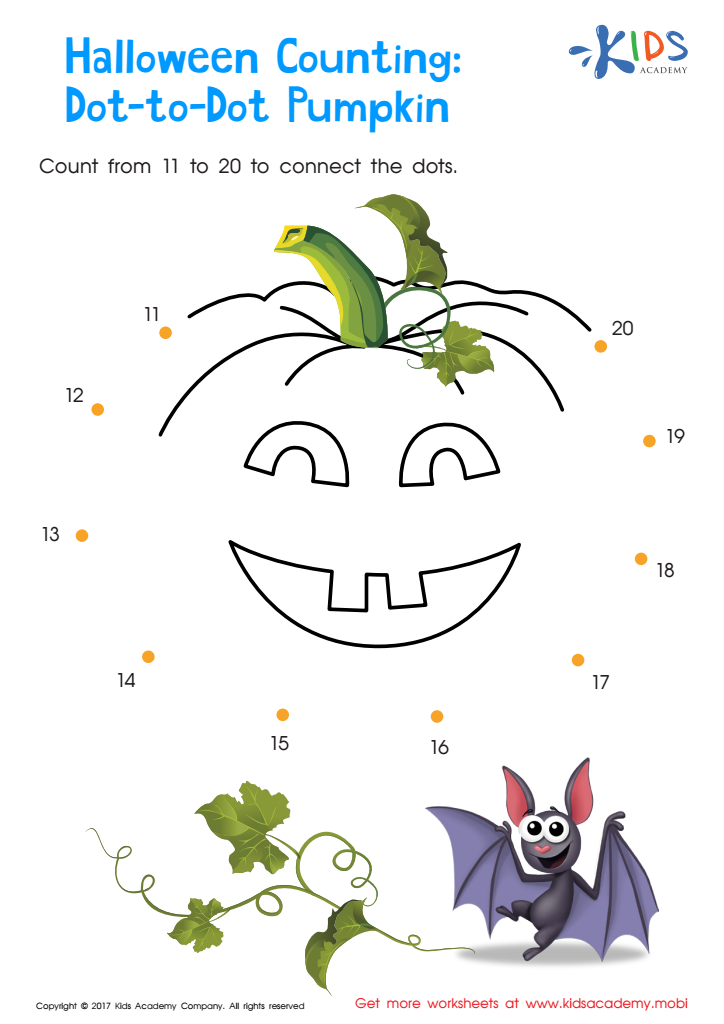
Ordering 11–20: Halloween Counting Worksheet
No matter the time of year, help your child get ready for Halloween with this worksheet. They'll practice counting from 11 to 20, recognizing numbers, and using a pencil to draw. By connecting the dots, they'll create a pumpkin picture, while unknowingly strengthening their early math skills. Print it today for an educational and fun experience!
Ordering 11–20: Halloween Counting Worksheet
Worksheet
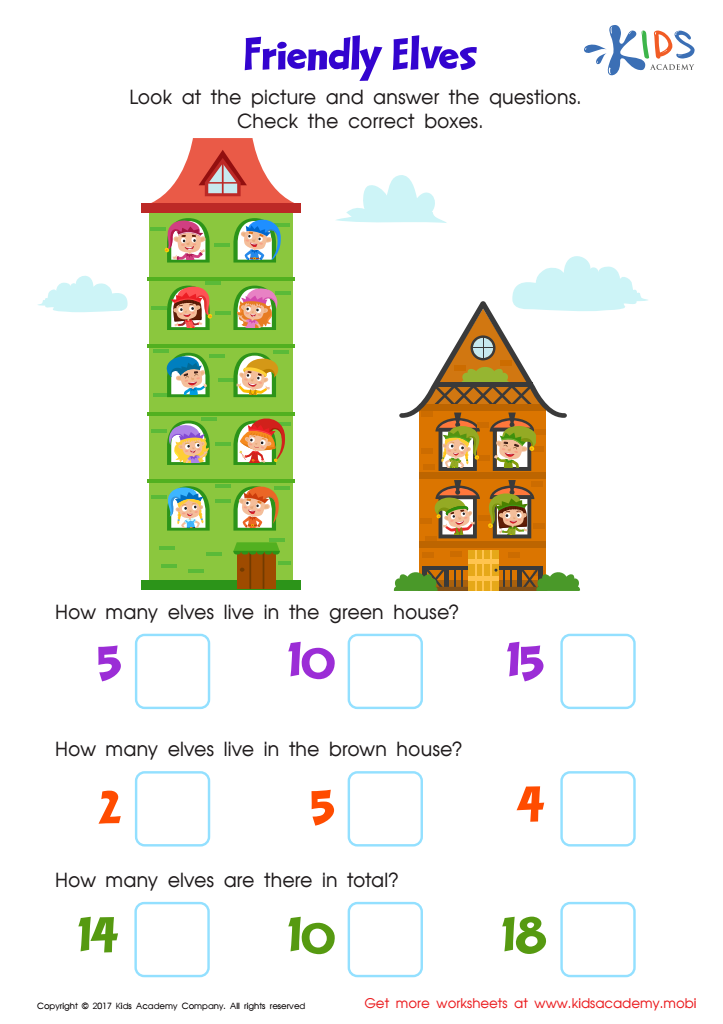
Place Value: Friendly Elves Worksheet
This fun worksheet teaches kids to count elves, answer questions about houses, and practice math! Look at the picture and count the elves in each house. How many are in the green and brown house? Tick the correct answer boxes. Perfect for young learners!
Place Value: Friendly Elves Worksheet
Worksheet
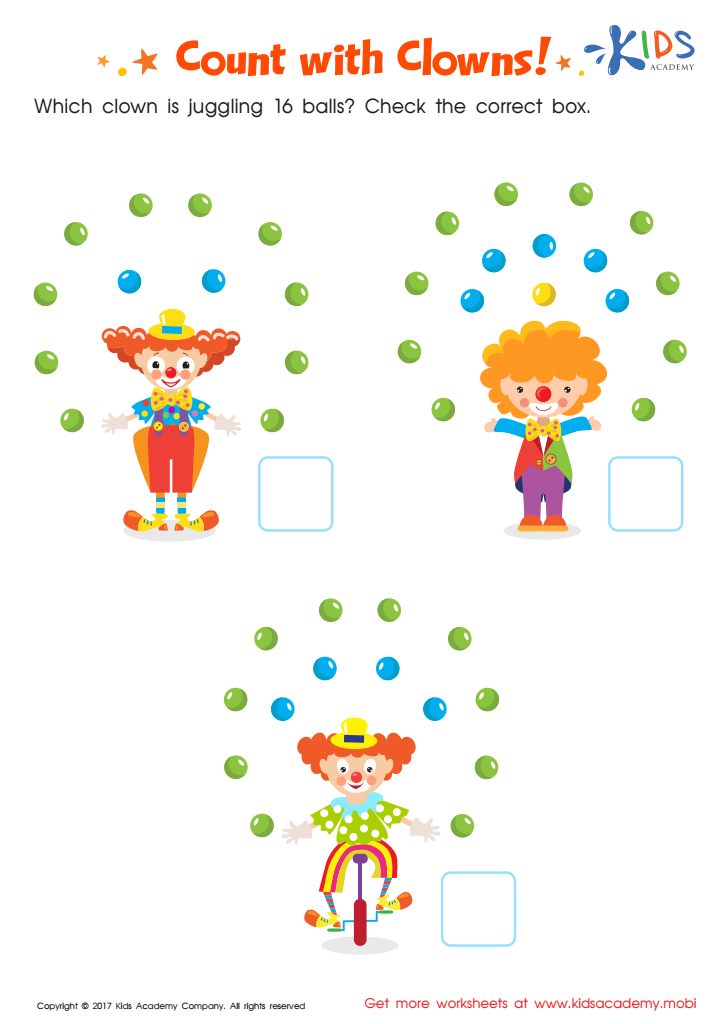
Count with Clowns Worksheet
Math may not be a laughing matter, but this worksheet sure is! Download the PDF and get ready to count balls with the clowns! Your child will have a blast and learn how to count at the same time. It's an easy, fun way to practice math!
Count with Clowns Worksheet
Worksheet
Join Kids Academy for Free
Who is primarily going to use this learning content?



Counting skills, particularly for numbers 11-20, are foundational for young learners aged 4-8 and play a crucial role in their cognitive development. Mastering this range enhances a child's understanding of quantity and numeracy, fostering their ability to recognize patterns and relationships between numbers. Parents and teachers should prioritize these skills as they are critical for progressing to more complex mathematical concepts, including addition and subtraction.
Furthermore, developing counting skills also boosts a child's confidence and independence in problem-solving. By grasping the concepts behind these numbers, children can engage more effectively in everyday situations, such as managing money or measuring ingredients while cooking. Early mastery in counting encourages a proactive attitude toward learning and allows them to participate actively in classroom activities.
Additionally, counting with higher numbers illustrates the importance of fun and engagement in learning. This can be done through games, songs, and hands-on activities that make learning enjoyable. Ultimately, when parents and teachers emphasize counting skills, they pave the way for a solid mathematical foundation, enabling well-rounded and confident learners equipped for future academic challenges.








