Understanding times tables Times Tables Worksheets for Ages 4-8
6 filtered results
-
From - To
Welcome to our comprehensive resource for understanding times tables, designed specifically for children aged 4-8! Our engaging times tables worksheets make learning multiplication fun and interactive. With a variety of exercises tailored to different skill levels, young learners can develop a strong foundational understanding of multiplication concepts through visual aids, games, and practice problems. This resource encourages kids to explore patterns in multiplication while boosting their confidence in math. Ideal for classroom use or at home, our worksheets are perfect for helping your child master times tables in an enjoyable and supportive environment. Start your child’s math journey today!
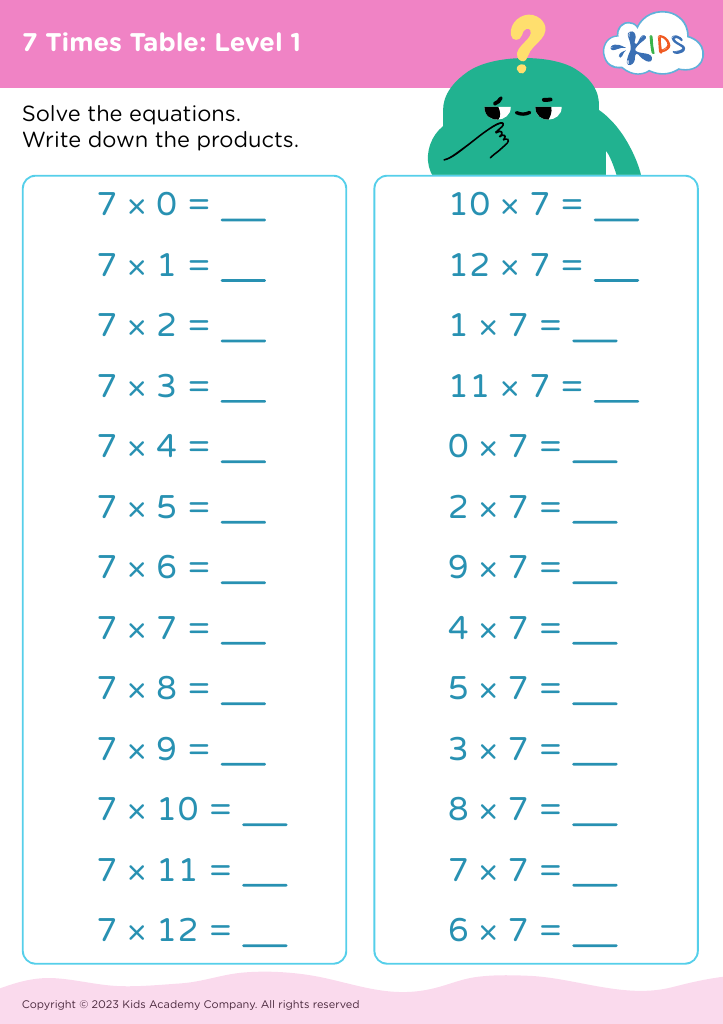
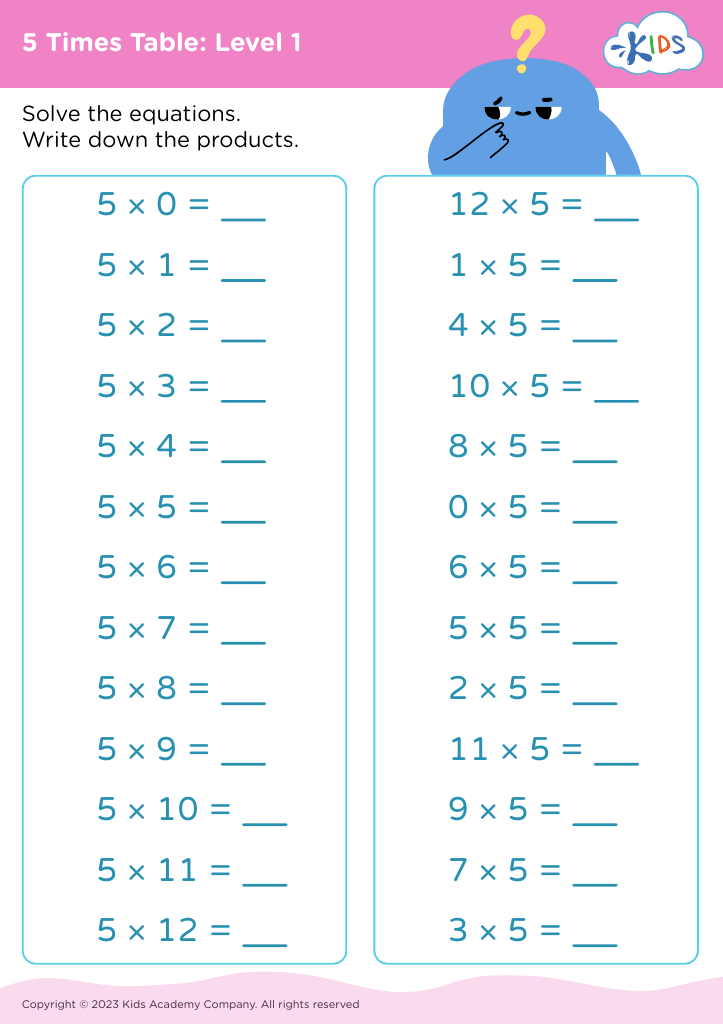
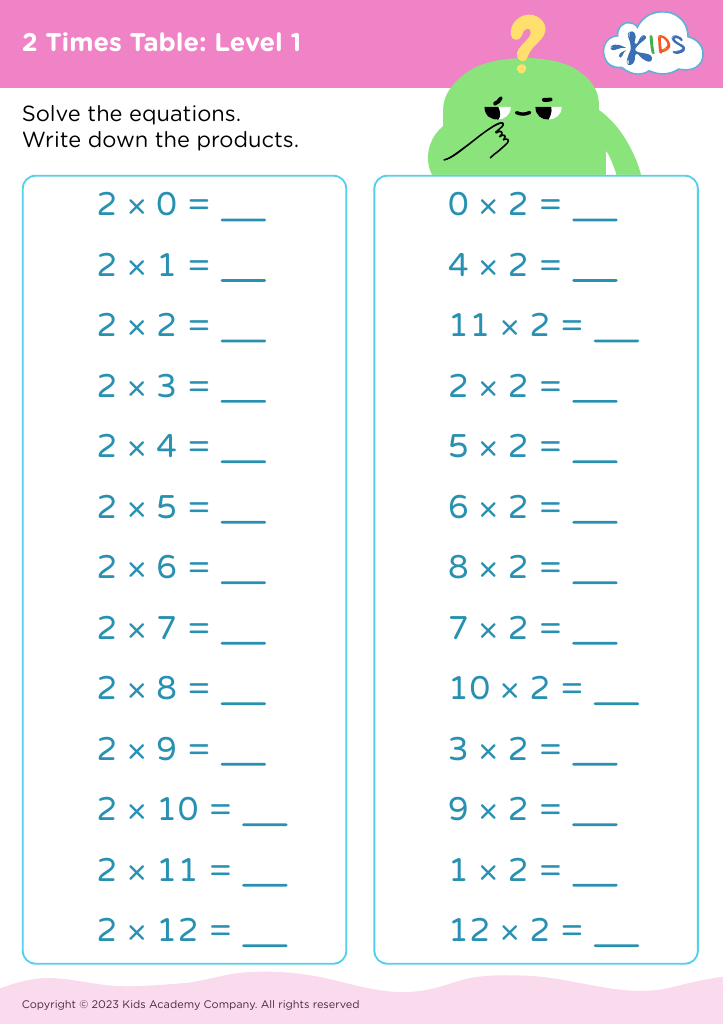
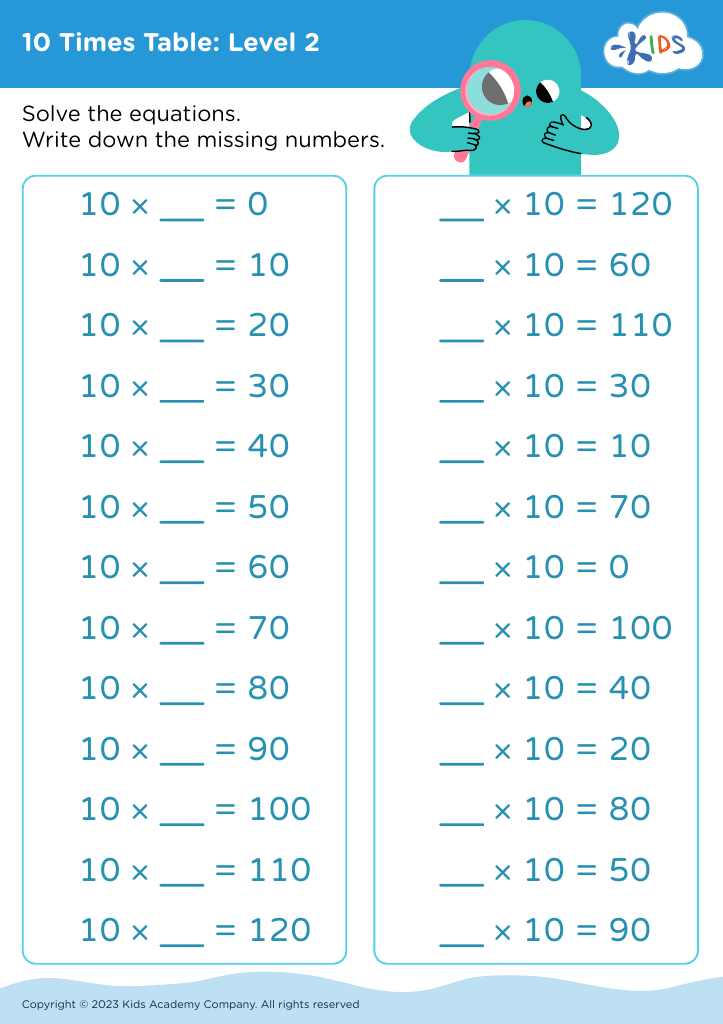
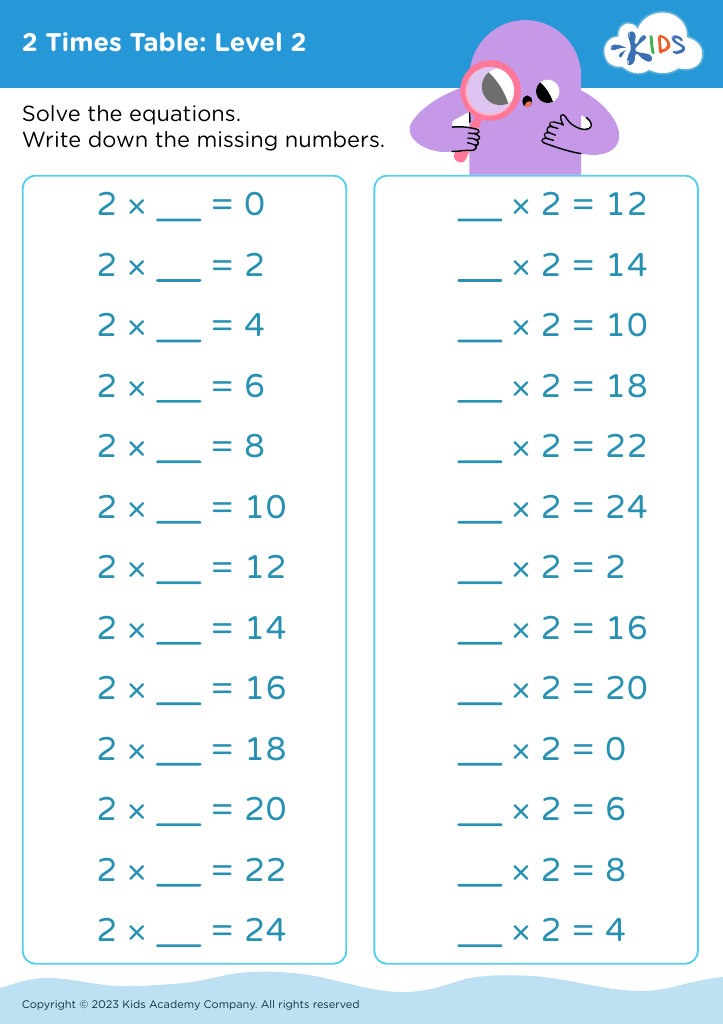
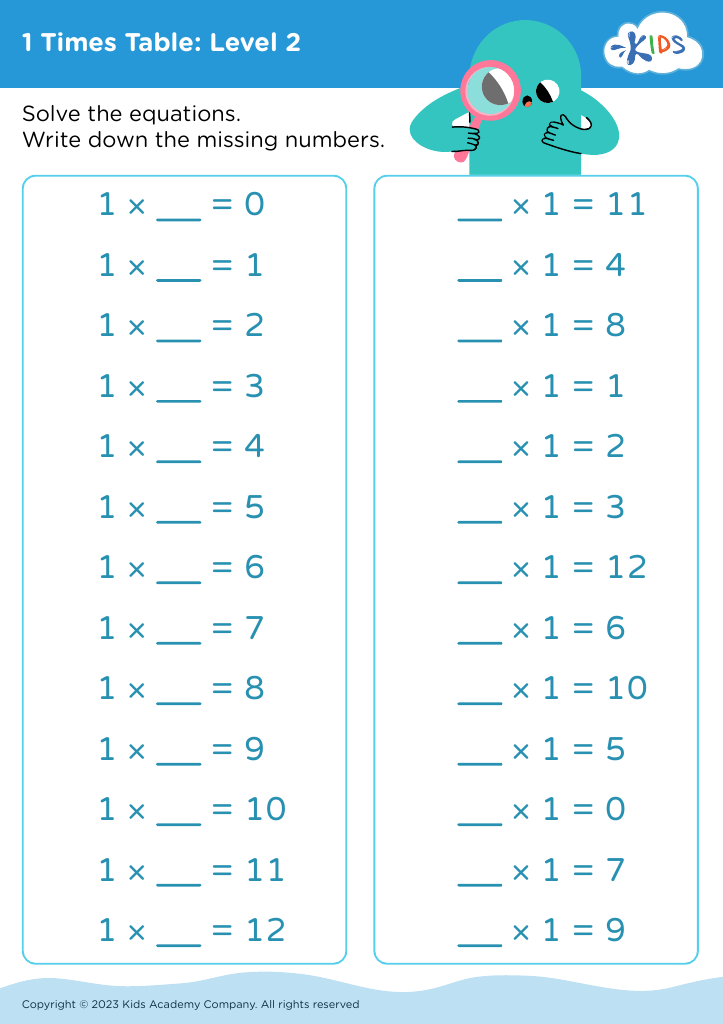





Understanding times tables is essential for children ages 4-8 as it forms the foundational building blocks for their mathematical skills. At this age, students are entering a critical phase where they start to grasp multiplication concepts, which are integral in their academic journey. Learning times tables helps children recognize patterns, enhance their problem-solving abilities, and boost their confidence in math-related tasks.
Moreover, familiarity with multiplication lays the groundwork for more complex mathematical topics, such as division, fractions, and algebra, that they will encounter in later grades. Mastery of times tables can lead to greater ease in completing homework and exams, thus reducing anxiety around math subjects.
Parents and teachers should also care because early proficiency in math can influence overall academic performance and lifelong learning. When children feel competent in their math skills, they are more likely to embrace challenges and develop a positive attitude towards further learning.
Engaging children in fun and innovative ways to learn their times tables, such as through games and songs, can make the process enjoyable and memorable. Investing time in understanding multiplication sets the stage for a lifetime of mathematical understanding and success.








