Counting practice Word Problems Worksheets for Ages 4-8
5 filtered results
-
From - To
Introducing our Counting Practice Word Problems Worksheets for ages 4-8, designed to boost essential early math skills! These engaging worksheets combine fun scenarios with practical counting exercises, fostering numerical comprehension in young learners. Perfect for preschoolers and early elementary students, each sheet challenges kids to solve real-world problems, enhancing their counting, addition, and subtraction abilities. With colorful visuals and age-appropriate difficulty, our worksheets make math enjoyable and accessible. Ideal for parents, teachers, and tutors, our printable resources support both classroom learning and at-home enrichment. Equip your child with the foundational skills they need for future math success!
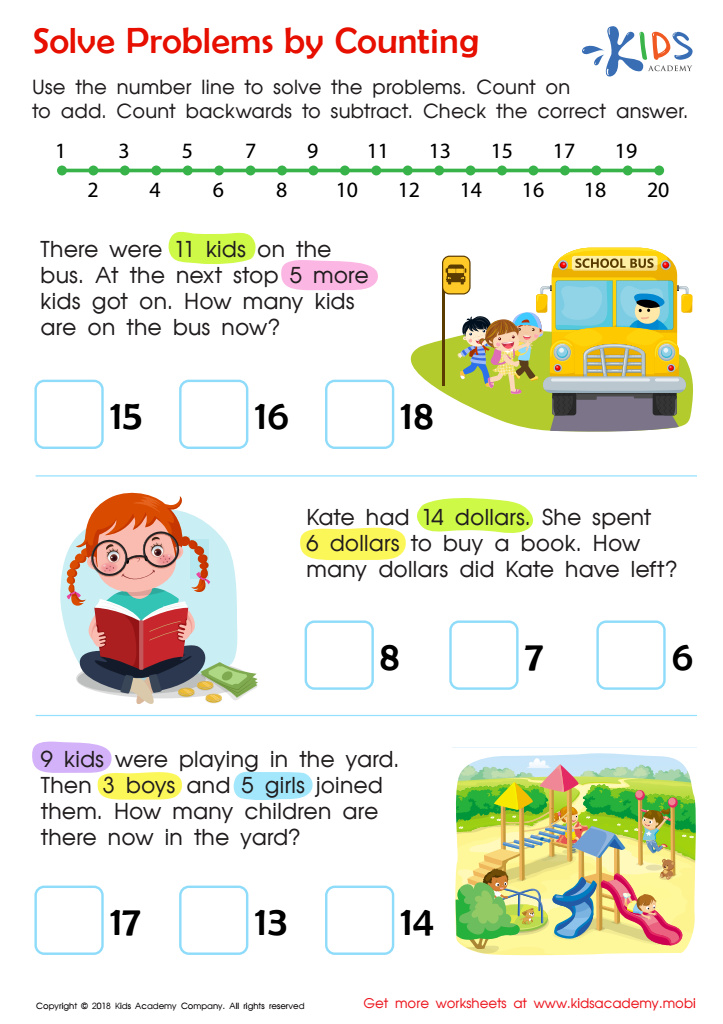
Solve Problems by Counting Worksheet
 Assign to My Students
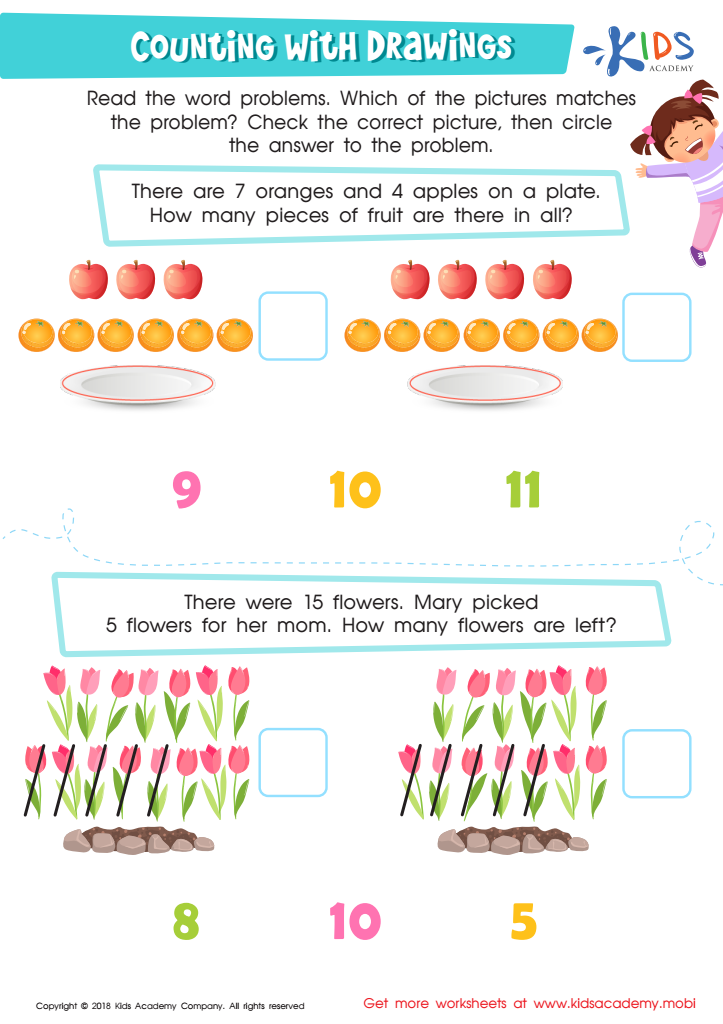
Counting with Drawings: Fruits & Chocolates Worksheet
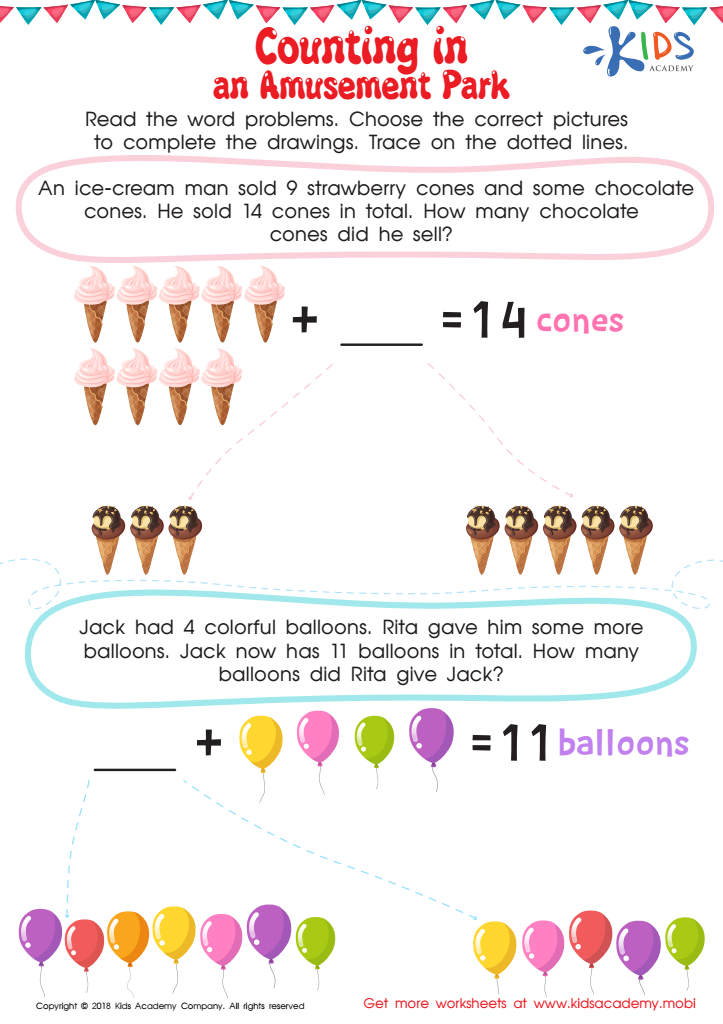
Counting in an Amusement Park Worksheet
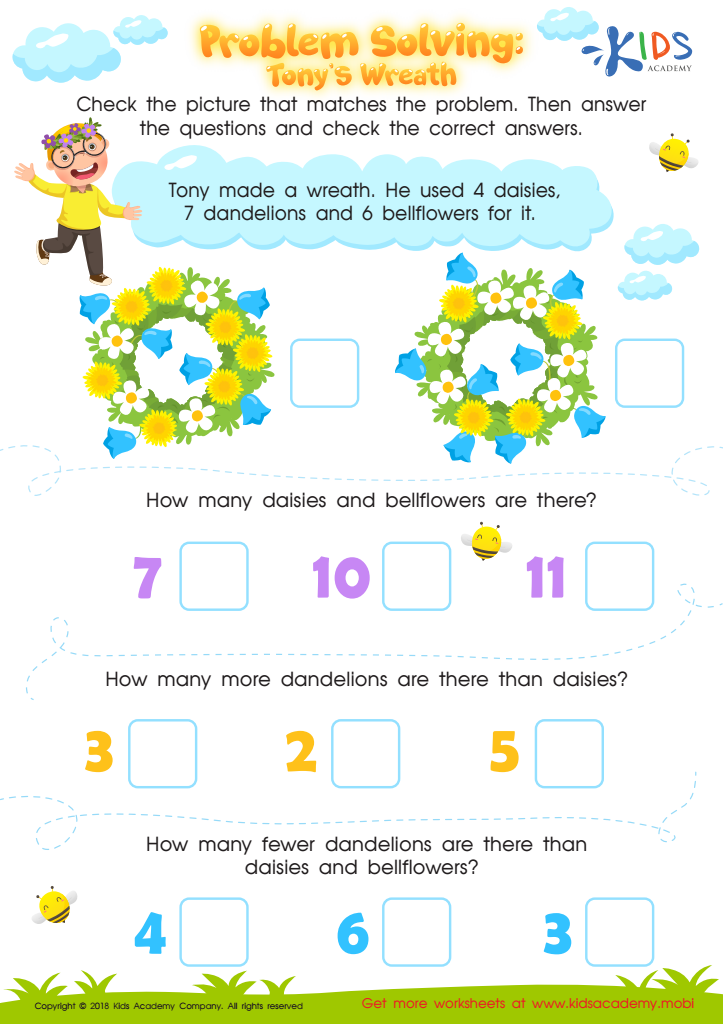
Problem Solving: Tony's Wreath Worksheet
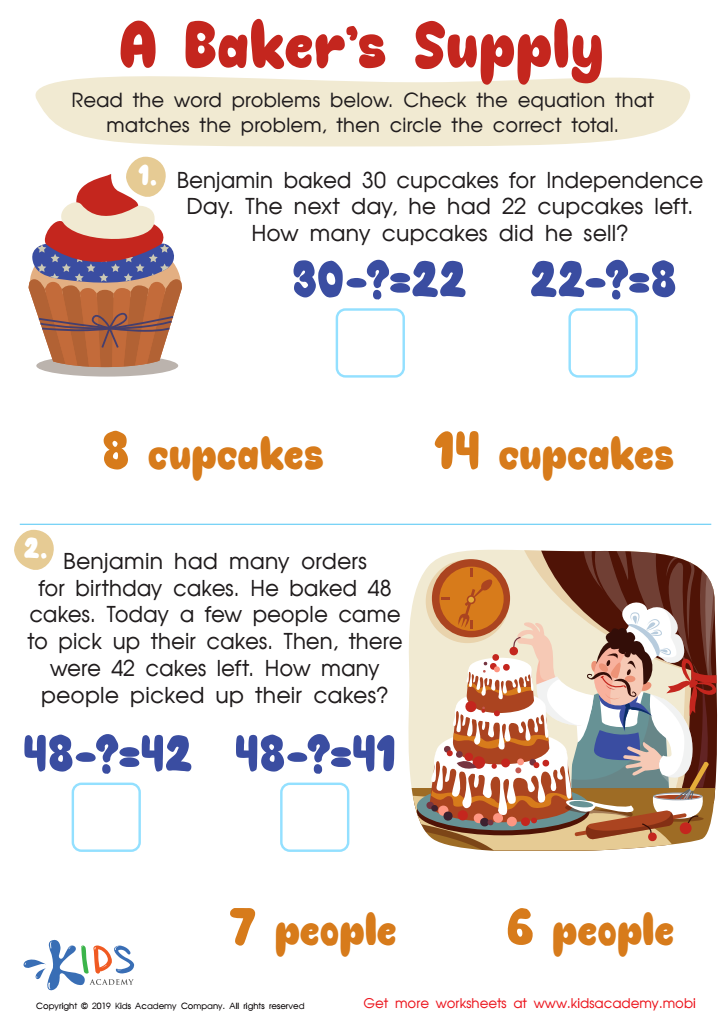
A Baker's Supply Worksheet








Counting practice word problems are essential tools for young learners as they bridge the gap between rote counting and practical application of math concepts. For children aged 4-8, these problems enhance their mathematical thinking, problem-solving abilities, and logical reasoning, fundamental skills that form the foundation for future math success.
Engaging in counting practice word problems helps children understand numbers' meaningful use in everyday contexts. It moves them beyond simply reciting numbers, challenging them to interpret and solve problems using addition, subtraction, and comparison. This real-world application of counting fosters critical thinking and helps children recognize math's relevance in daily life.
Additionally, these exercises support literacy development since they require reading and comprehending problem stories. This dual benefit can enhance reading skills and improve overall academic performance. Word problems also promote active participation and engagement, making math a fun and interactive experience rather than a theoretical concept.
For parents and teachers, counting practice word problems provide valuable insights into a child's cognitive development and understanding of mathematical concepts. The problems can be tailored to individual needs, encouraging personalized learning. By prioritizing these activities, parents and teachers ensure children develop strong numeracy skills, equipping them with tools for academic and life success.








