
Analytical thinking Reading Non-Fiction Worksheets for Ages 4-8
3 filtered results
Difficulty Level
Grade
Age
-
From - To
Subject
Activity
Standards
Enhance your child's analytical thinking skills with our engaging reading non-fiction worksheets designed for ages 4-8. These thoughtfully crafted activities foster critical reasoning as young learners explore intriguing topics. Our worksheets encourage kids to ask questions, summarize information, and make connections, promoting deeper understanding and retention. Whether investigating animals, cultures, or science, children will develop essential analytical skills necessary for academic success. Perfect for home or classroom use, these worksheets create a fun and interactive learning environment. Dive into the world of non-fiction and watch your child grow into a confident, curious reader equipped for lifelong learning!
Favorites
With answer key
Interactive
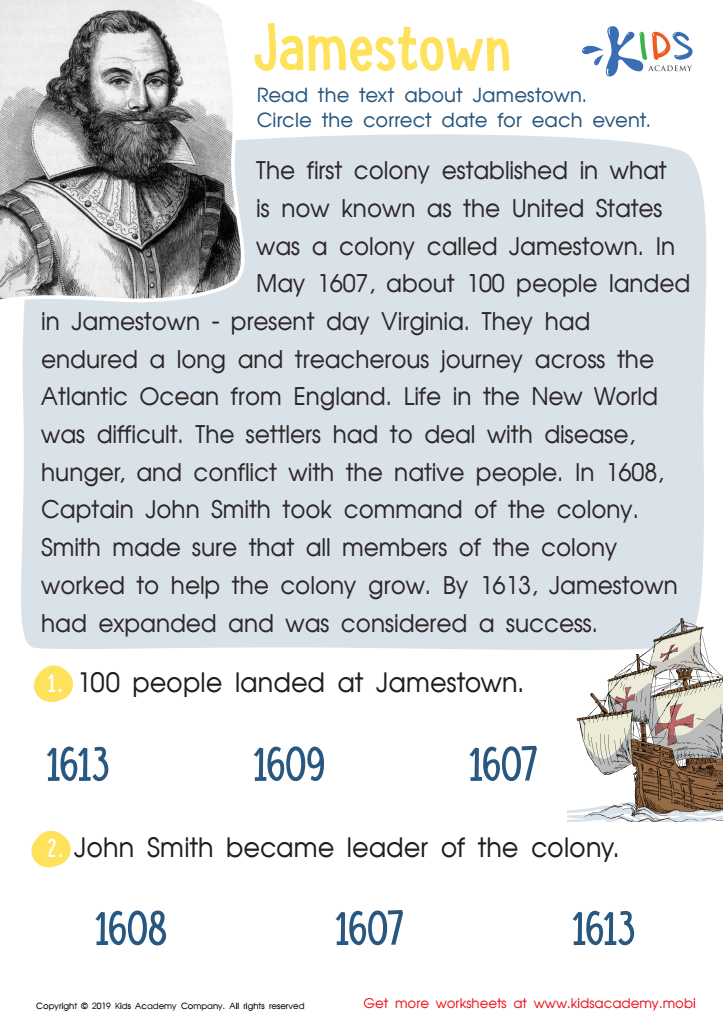
Jamestown Worksheet
Help your kids build vocabulary by reading simple texts and stories to them. This exercise helps them practice reading and grammar, and increases their knowledge of a topic. In this worksheet, kids learn about Jamestown: read text aloud and help them circle the correct date for each event.
 Assign to My Students
Jamestown Worksheet
Worksheet
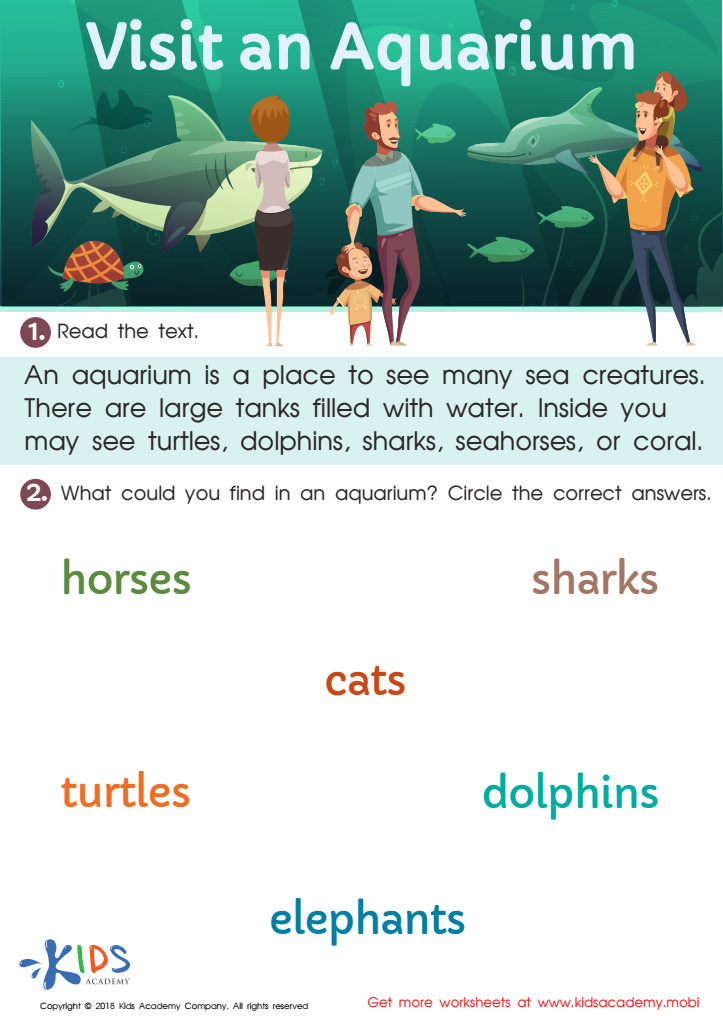
Visit an Aquarium Worksheet
Have your kids ever been to an aquarium? It's a great place to see a variety of sea creatures, like turtles, dolphins, sharks and fish. If they're fascinated by sea life, this worksheet is perfect! Help them circle the aquarium animals among the words in the picture.
Visit an Aquarium Worksheet
Worksheet
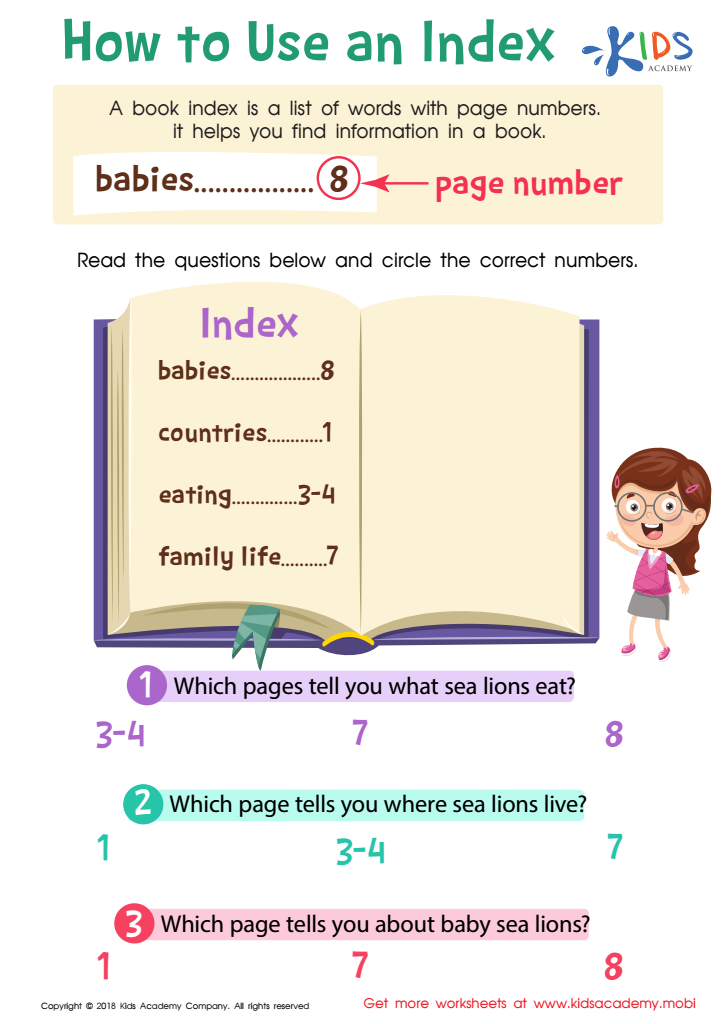
How Use Index Worksheet
Hand your kids a book, point out the index and explain that it's a list of words with page numbers. Ask them to look at the index in the worksheet and circle the correct number to the questions. Every book must have an index to help readers find chapters or information they need.
How Use Index Worksheet
Worksheet
Join Kids Academy for Free
Who is primarily going to use this learning content?








Parents and teachers should prioritize analytical thinking and reading non-fiction for children aged 4-8 for several compelling reasons. At this crucial developmental stage, children are naturally curious and eager to understand the world around them. Engaging with non-fiction texts helps cultivate this curiosity by providing factual information that expands their knowledge base and promotes critical thinking.
Analytical thinking involves the ability to evaluate information, recognize patterns, and make connections. When children read non-fiction, they encounter various structures, such as cause and effect, comparisons, and sequencing. This exposure encourages them to analyze content, ask questions, and draw conclusions, essential skills for lifelong learning.
Moreover, non-fiction reading aligns with real-world applications. It helps children comprehend scientific concepts, historical events, and cultural practices, making learning relevant and exciting. Analyzing these contexts can also improve their vocabulary and language skills, enriching their overall literacy development.
In essence, fostering analytical thinking and reading non-fiction empowers children to become informed, critical thinkers who can navigate complex information as they grow. This foundation not only enhances academic success but also prepares them to tackle challenges in their future endeavors. Parents and teachers play a vital role in guiding this dynamic exploration and growth.








