Logical Reasoning Reading Non-Fiction Worksheets for Ages 4-8
4 filtered results
-
From - To
Equip young learners aged 4-8 with robust logical reasoning skills through our engaging non-fiction reading worksheets! At Kids Academy, we design fun, educational materials that develop critical thinking while fostering a love for non-fiction. Each worksheet motivates kids to analyze information, make connections, and derive conclusions, turning reading into an exciting, mind-boosting adventure. From animal facts to historical events, our content covers various intriguing topics tailored for early learners. Introduce these essential skills early on to pave the way for future academic success. Download now to enrich your child's reading journey with purposeful learning!
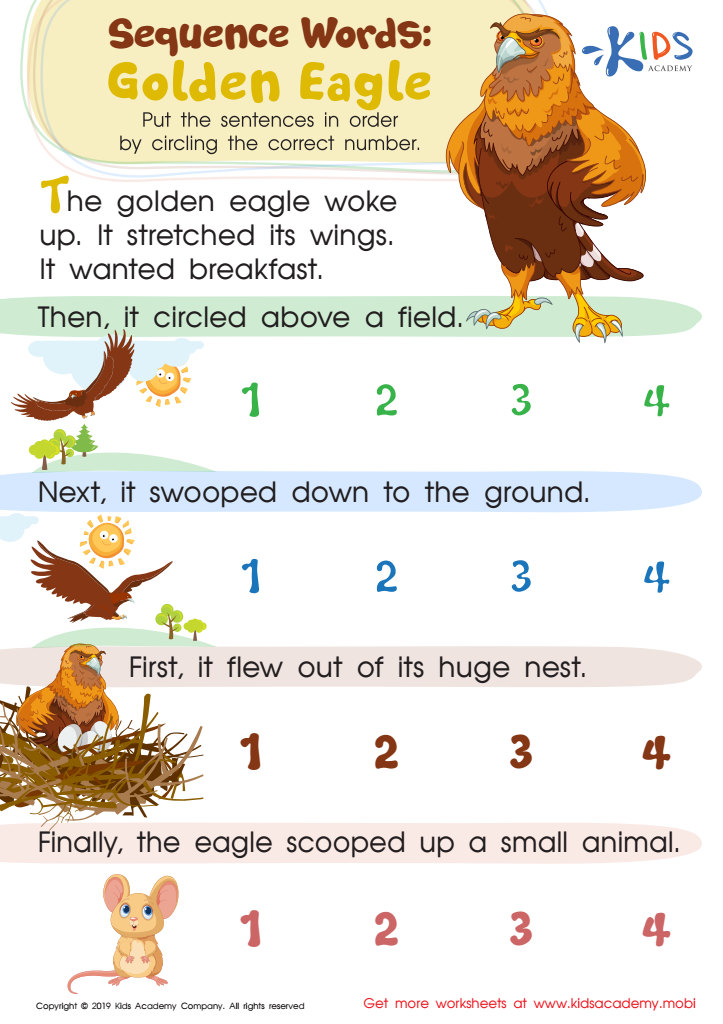
Sequence Word Eagle Worksheet
 Assign to My Students
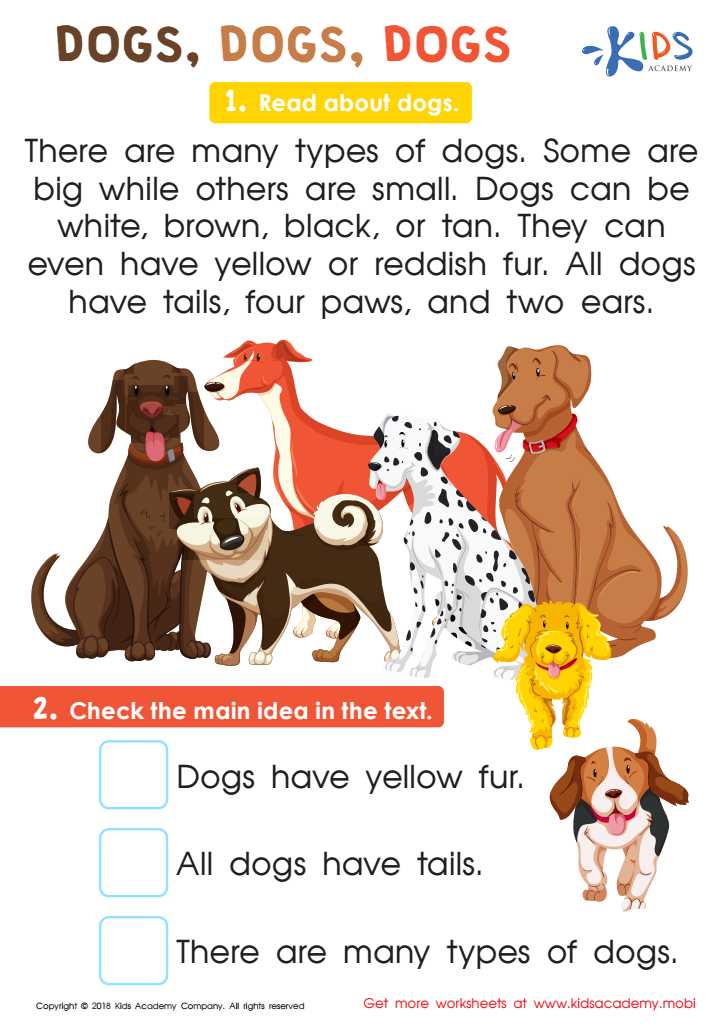
Dogs, Dogs Worksheet
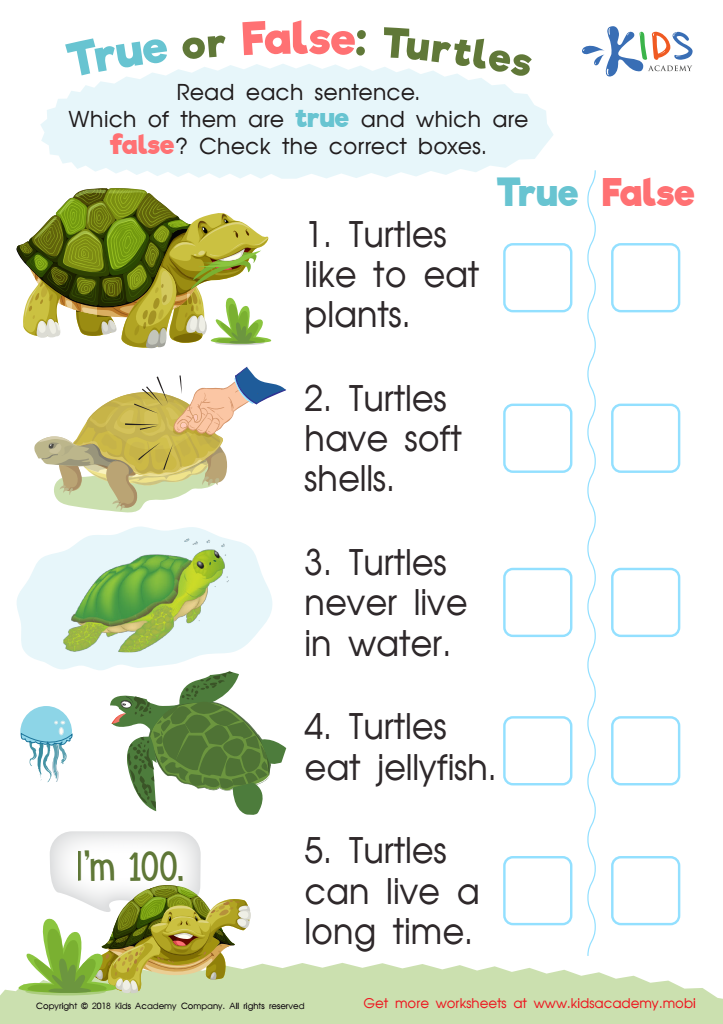
True or False: Turtles Worksheet
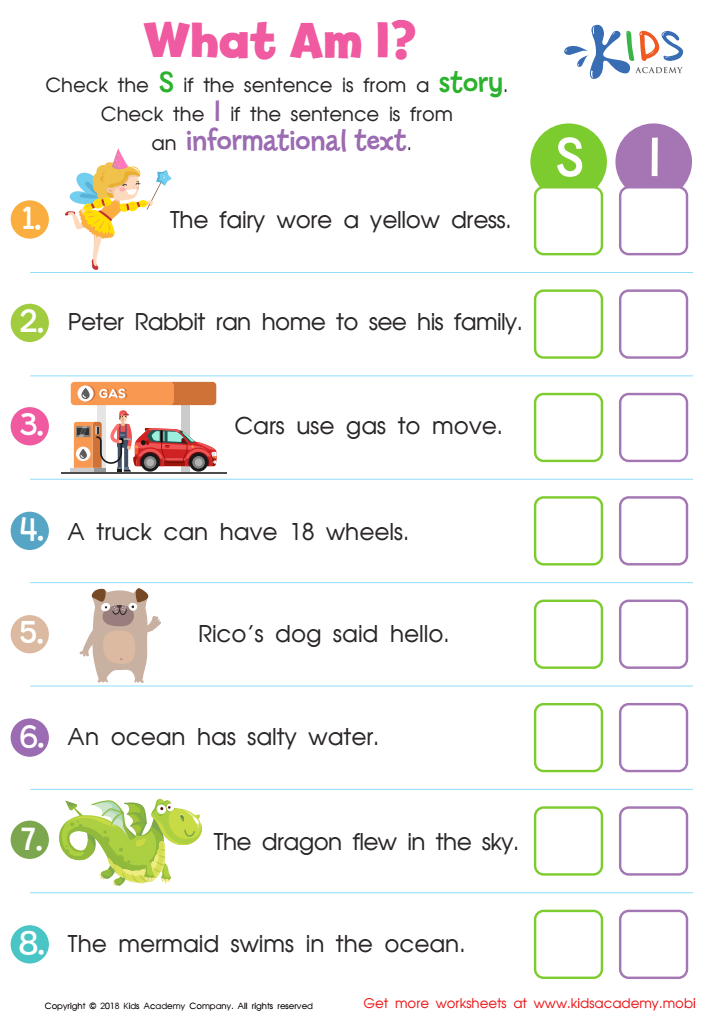
What Am I? Worksheet








Logical reasoning is a vital cognitive skill that allows children to analyze information and solve problems systematically. Fostering this skill through reading non-fiction can offer substantial benefits for young learners aged 4-8. non-fiction texts expose children to facts and real-world scenarios, cultivating curiosity and a deeper understanding of the world around them. This sets a foundation for more complex thinking.
When engaging with non-fiction, children gradually learn to identify cause-and-effect relationships, compare and contrast information, and draw inferences. These activities promote critical thinking and decision-making skills, which are essential for academic success and everyday life. Developing logical reasoning from an early age also helps in subjects like math and science, where structured thinking is fundamental.
For parents and teachers, prioritizing logical reasoning through non-fiction reading helps to nurture a child’s intellectual growth. It builds the child's ability to process information objectively and boosts their comprehension skills. By regularly practicing logical reasoning, children become more self-reliant learners, capable of asking insightful questions and seeking evidence-based answers.
In societal terms, individuals who possess strong logical reasoning skills contribute to more thoughtful, reasoned discussions and are better prepared to face complex global challenges. Therefore, integrating non-fiction reading into early education not only benefits the individual child but also enriches the broader community.








