Understanding life cycles Reading Non-Fiction Worksheets for Ages 4-8
3 filtered results
-
From - To
Unlock nature's wonders with our "Understanding Life Cycles" Reading Non-Fiction Worksheets, designed for ages 4-8. These engaging worksheets from Kids Academy introduce young learners to the fascinating world of life cycles, fostering curiosity and critical thinking. Children will explore the stages of development in various plants and animals through vivid illustrations and age-appropriate text. These activities help build foundational reading skills, comprehension, and science knowledge. Perfect for the classroom or at home, our worksheets make learning about growth and change an exciting adventure. Encourage your child's love of reading and science with our expertly crafted resources!
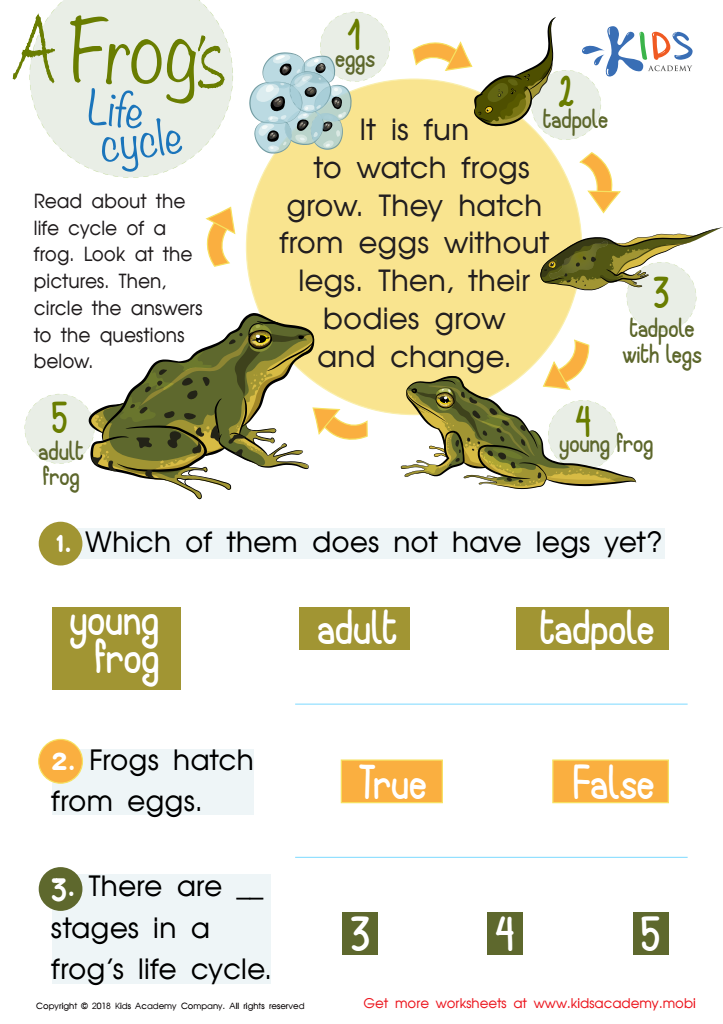
A Frog’s Life Cycle Worksheet
 Assign to My Students
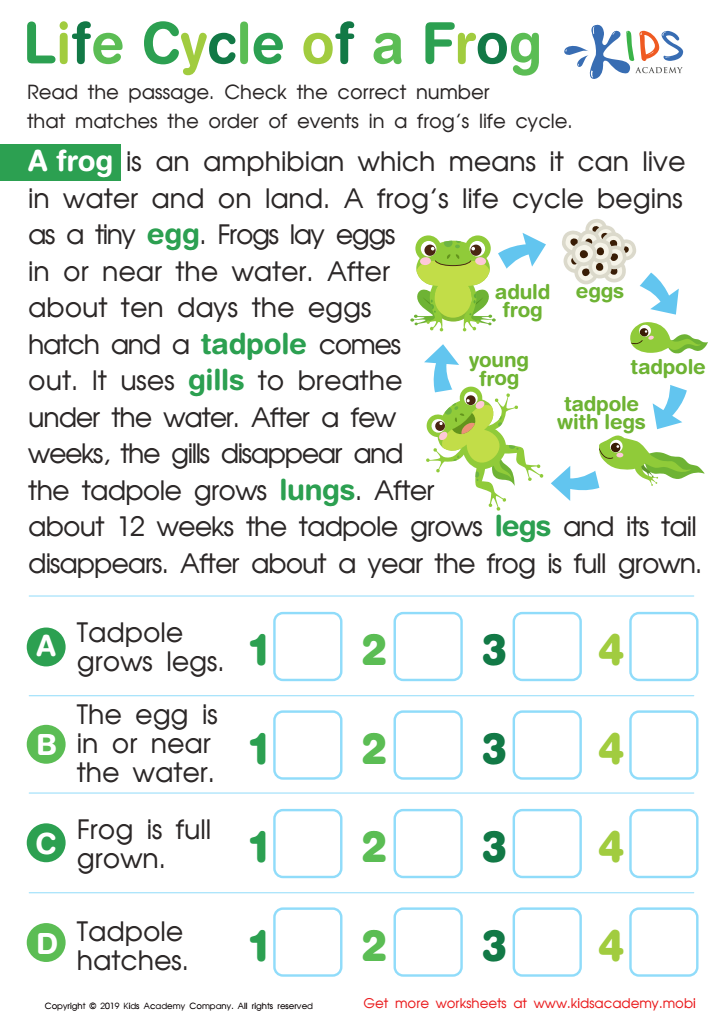
Life Cycle of a Frog Worksheet
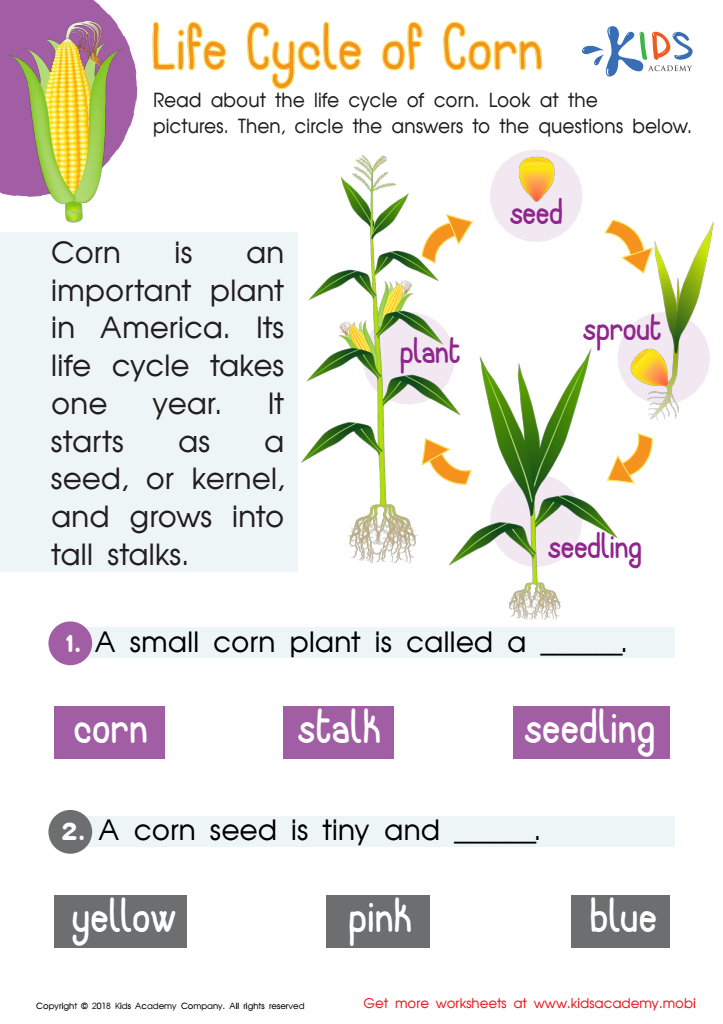
Life Cycle of Corn Worksheet








Understanding life cycles is essential for young children aged 4-8 as it lays a foundation for comprehending the natural world. By reading non-fiction books on this topic, kids are introduced to the processes of growth, development, and change in various living organisms, such as plants, insects, animals, and even human beings. This early exposure can spark curiosity, encouraging lifelong learning and an appreciation for nature.
Parents and teachers should prioritize this type of reading because it helps develop critical thinking and observational skills. Understanding life cycles can teach children about cause and effect, as well as the interconnectedness of ecosystems. For instance, witnessing a caterpillar's metamorphosis into a butterfly can illustrate broader concepts of transformation and growth.
Additionally, non-fiction reading enhances vocabulary, improves comprehension skills, and fosters a sense of empathy and responsibility towards living creatures. Engaging with well-crafted non-fiction texts also helps develop a child's ability to differentiate between fictional narratives and factual information, an important skill in today's information-rich age.
In summary, understanding life cycles through non-fiction reading not only enriches a child's knowledge base but also cultivates essential cognitive and emotional skills, making it a critical educational endeavor for parents and teachers of young children.








