Understanding bar graphs Sight Words Worksheets for Ages 4-8
3 filtered results
-
From - To
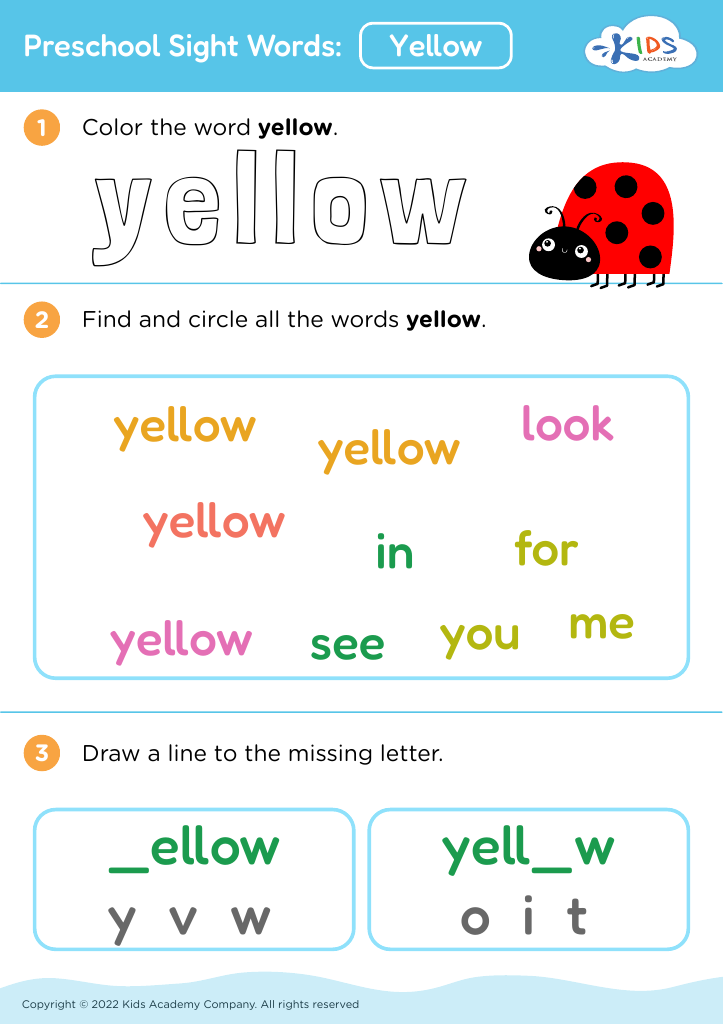
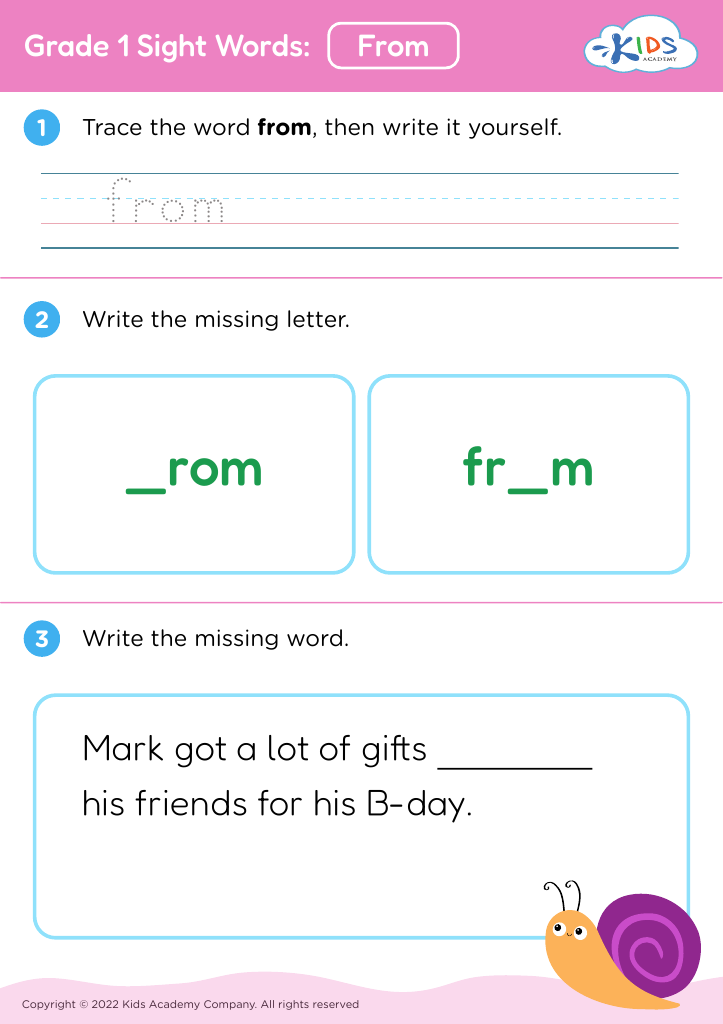
Enhance your child's literacy and mathematical skills with our "Understanding Bar Graphs Sight Words Worksheets" designed for ages 4-8. These engaging worksheets combine reading and math, helping young learners grasp the fundamentals of bar graphs while learning essential sight words. Through fun activities, kids will practice interpreting data, sorting information, and enhancing their vocabulary. Each worksheet is crafted to stimulate curiosity and reinforce understanding in an interactive way. Perfect for parents and educators alike, these resources make learning enjoyable and effective. Help your child build a strong foundation in both reading and math with our thoughtfully designed worksheets today!
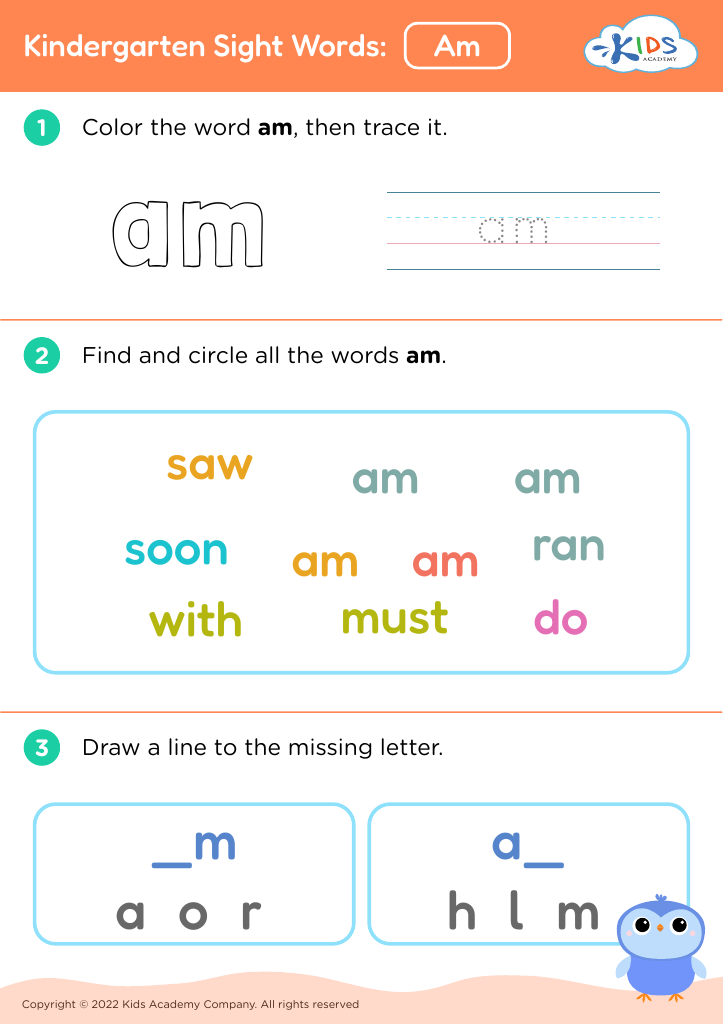










Understanding bar graphs is a vital skill for children aged 4 to 8, and parents and teachers should prioritize it for several important reasons. First, bar graphs provide a visual representation of data, making complex information easier for young learners to grasp. As children develop their quantitative reasoning, familiarity with bar graphs lays the groundwork for more advanced math skills and critical thinking.
Moreover, learning to read and interpret bar graphs enhances children's ability to process information in various real-life situations, such as comparing quantities or understanding statistics in stories. When combined with sight words—a key component in early literacy—these skills support broader academic achievement. Recognizing familiar sight words allows children to better explain their observations on bar graphs, creating a stronger connection between reading comprehension and mathematical understanding.
Additionally, these skills foster inquiry-based learning; as students engage with data, they can pose their questions and explain their reasoning, promoting engagement. Overall, caregivers and educators who encourage the understanding of bar graphs equip children with functional skills necessary for everyday life, fostering a well-rounded educational foundation that empowers them in their academic journey. Building competence in these areas also nurtures confidence—a crucial component in lifelong learning.