Understanding patterns Sight Words Worksheets for Ages 4-8
8 filtered results
-
From - To
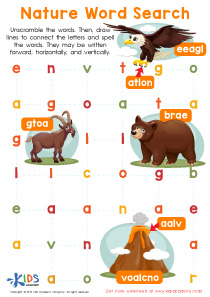
Discover the joy of learning with our "Understanding Patterns Sight Words Worksheets," designed specifically for kids ages 4-8! These engaging worksheets combine the foundational skill of recognizing sight words with the essential concept of understanding patterns in language. Through fun exercises and colorful visuals, children will improve their vocabulary and reading fluency while developing critical thinking skills. Perfect for classroom use or at-home learning, these resources aim to make reading a delightful experience. Foster a love for learning as your child gains confidence and builds a strong literary foundation with our easy-to-follow activities. Start exploring today!
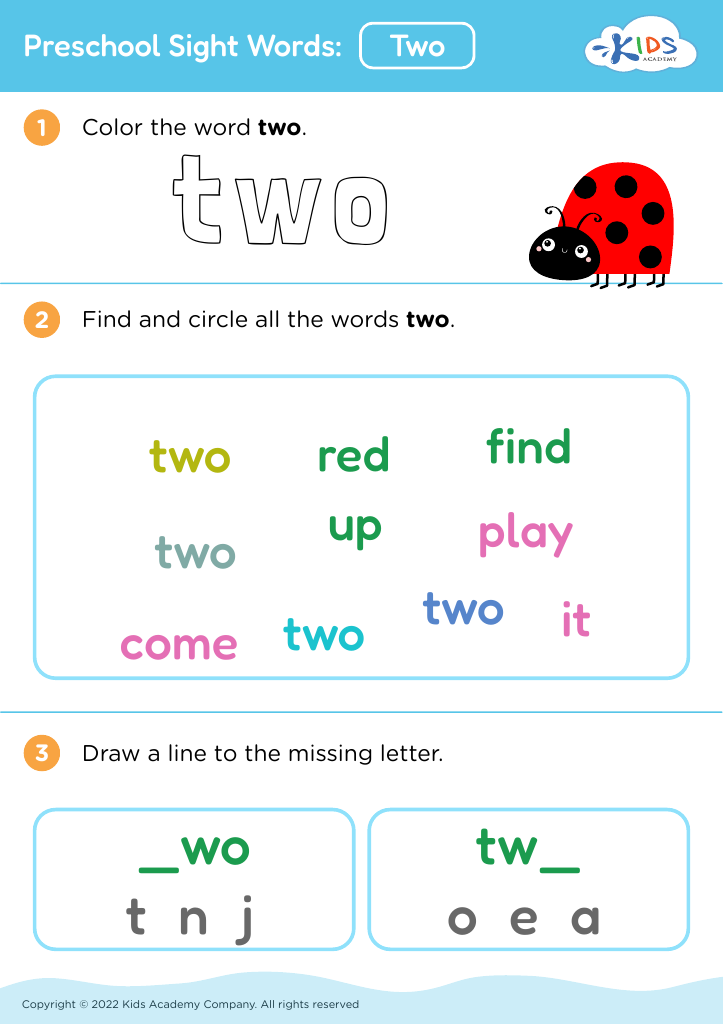







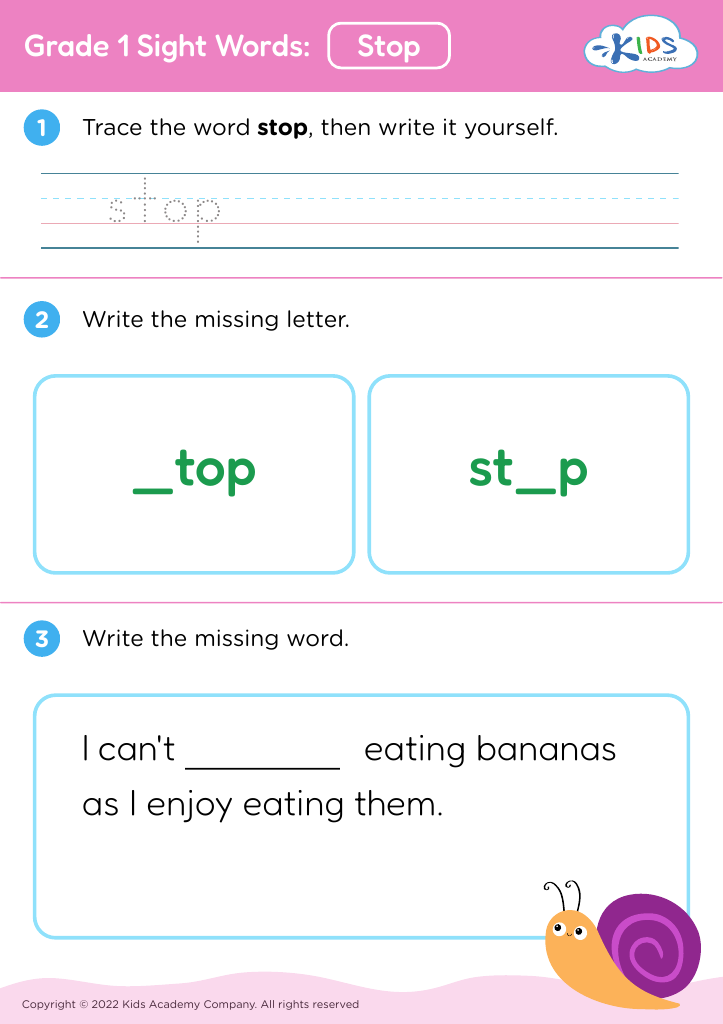
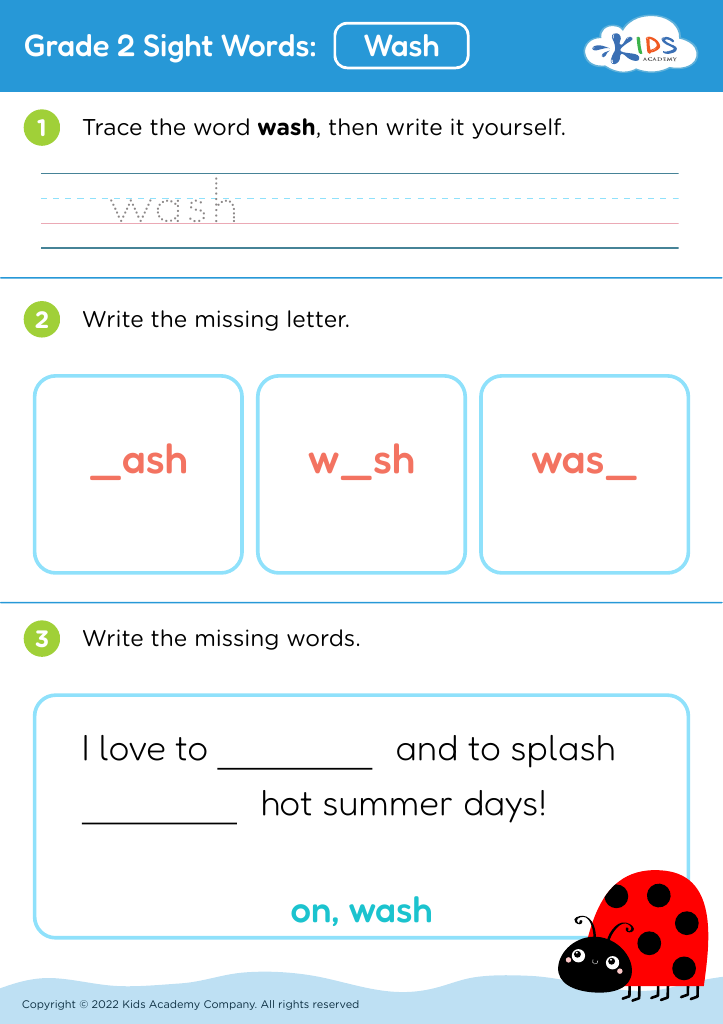
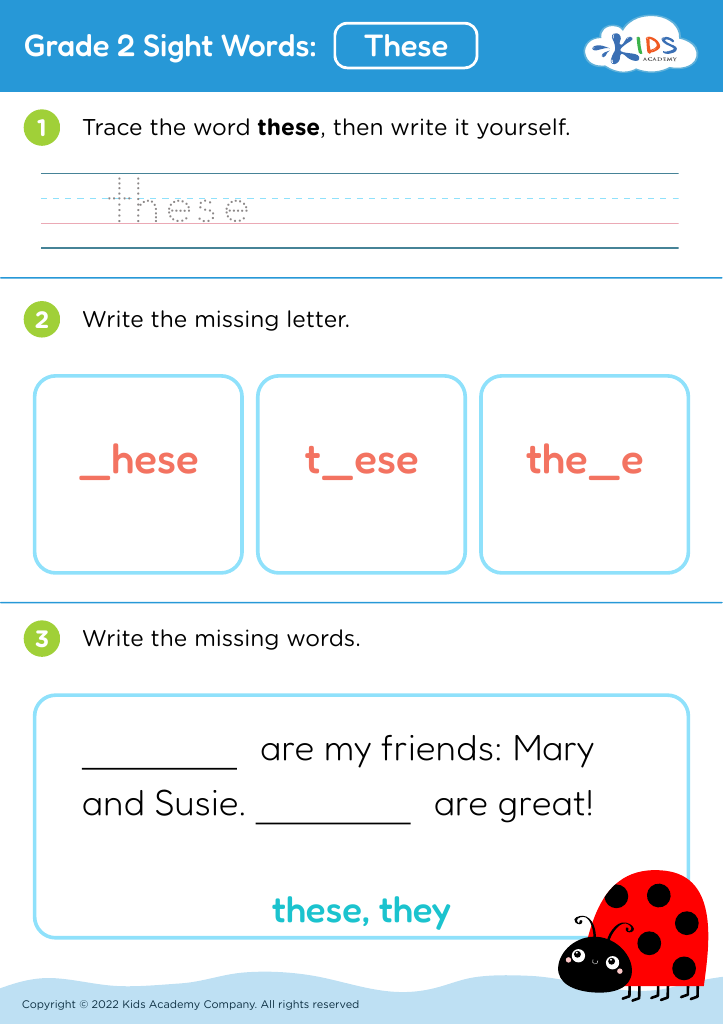
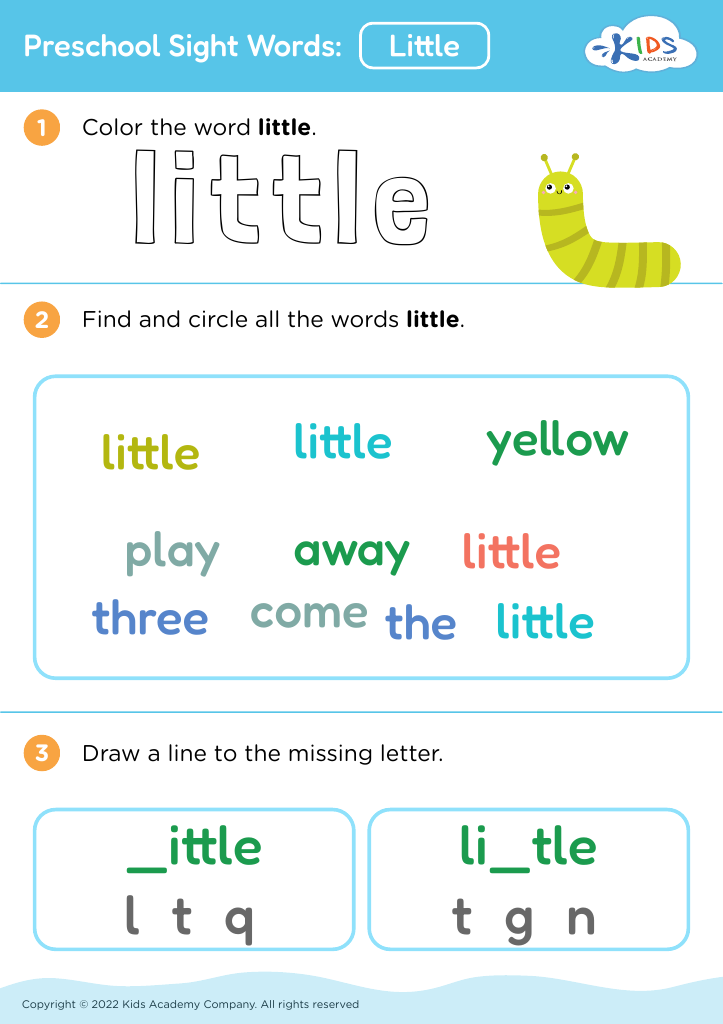
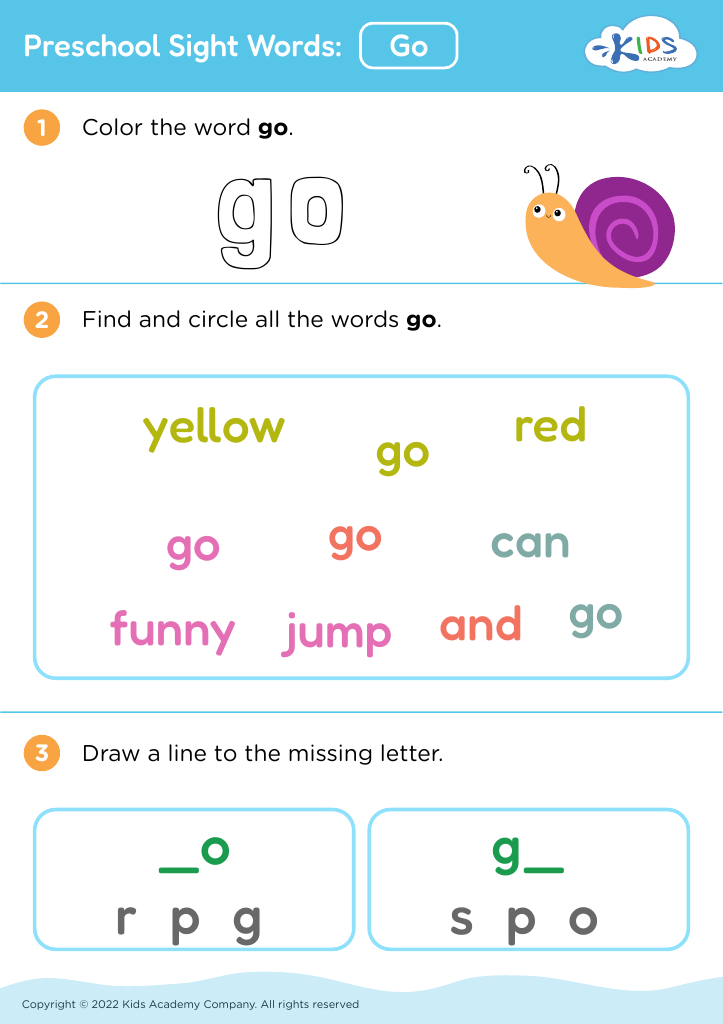
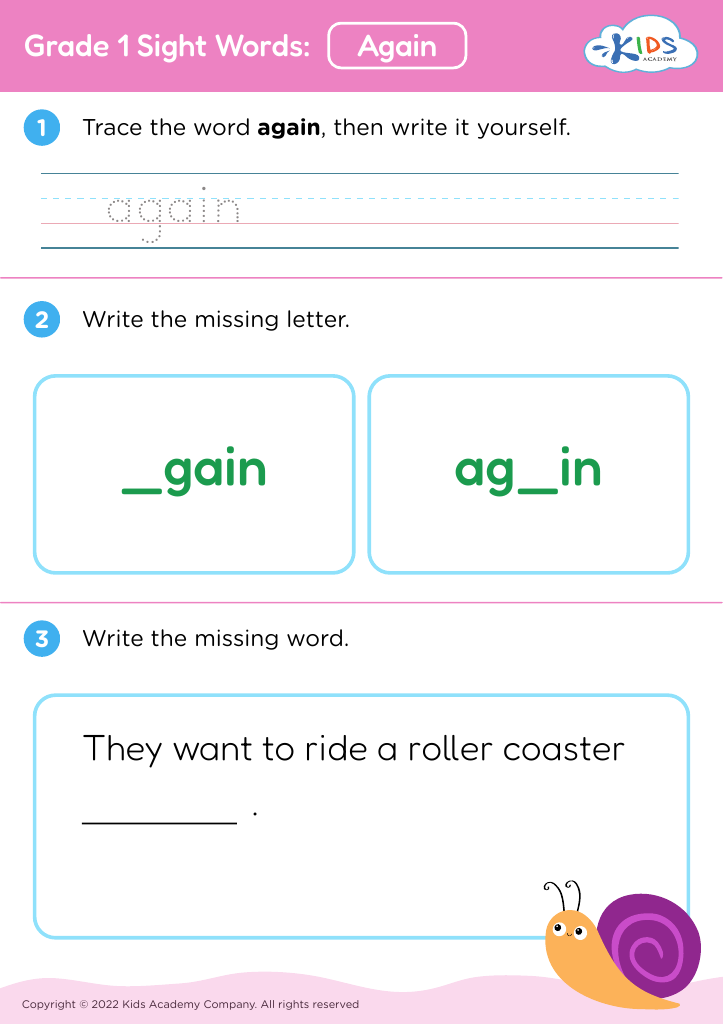
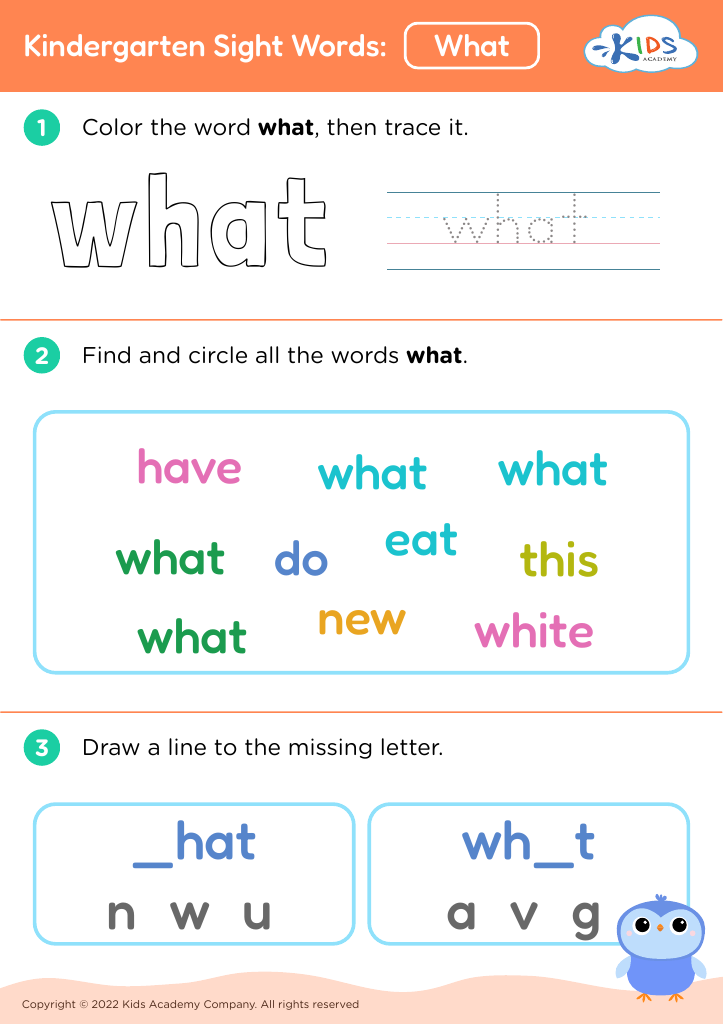








Understanding patterns and sight words is crucial for children ages 4-8, as these concepts form the foundation for literacy development. Sight words are commonly used words that children are encouraged to recognize instantly without decoding. Learning these words assists students in becoming more fluent readers, allowing them to focus on meaning rather than getting stuck on individual words. This fluency is essential for building confidence and fostering a love for reading.
Patterns, whether in language or in broader concepts, help children make connections between words and their meanings. Recognizing patterns encourages critical thinking and problem-solving skills, essential components for literacy and overall cognitive development. For instance, identifying rhyming words or similar sounds in a story strengthens awareness of phonemes, aiding both reading and writing skills.
Parents and teachers play a pivotal role in guiding children through these learning experiences. By incorporating sight words and pattern recognition into daily activities—tasks like reading together, word games, or creating rhyming stories—they create an engaging educational environment where children can thrive. Overall, an emphasis on sight words and patterns equips children with the essential skills needed for success in their future reading endeavors. Caring about these aspects promotes lifelong learning and academic achievement.