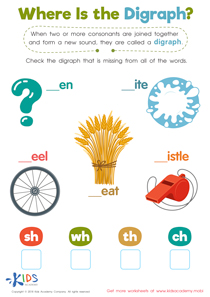
Sound recognition Beginning Consonants Worksheets for Ages 4-9
3 filtered results
-
From - To
Discover engaging Sound Recognition Beginning Consonants Worksheets designed for children aged 4-9 at Kids Academy! These interactive resources help young learners master the sounds of letters through entertaining activities. Each worksheet fosters phonemic awareness by allowing kids to identify and practice beginning consonant sounds, igniting their early literacy skills. Our carefully crafted worksheets ensure a fun learning experience, making it easy for teachers and parents to guide children as they explore the world of letters. Perfect for classroom use or at-home practice, these worksheets support differentiating instruction, engaging visual aids, and ongoing assessment. Start building a strong foundation in reading today!
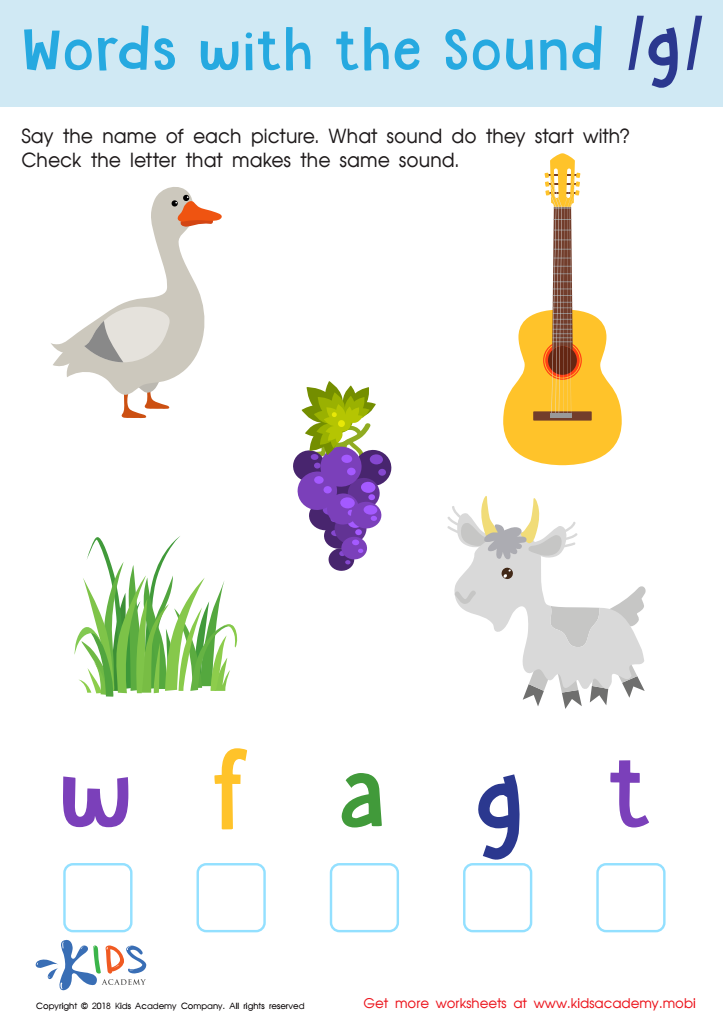
Words with sound g Reading Worksheet
 Assign to My Students
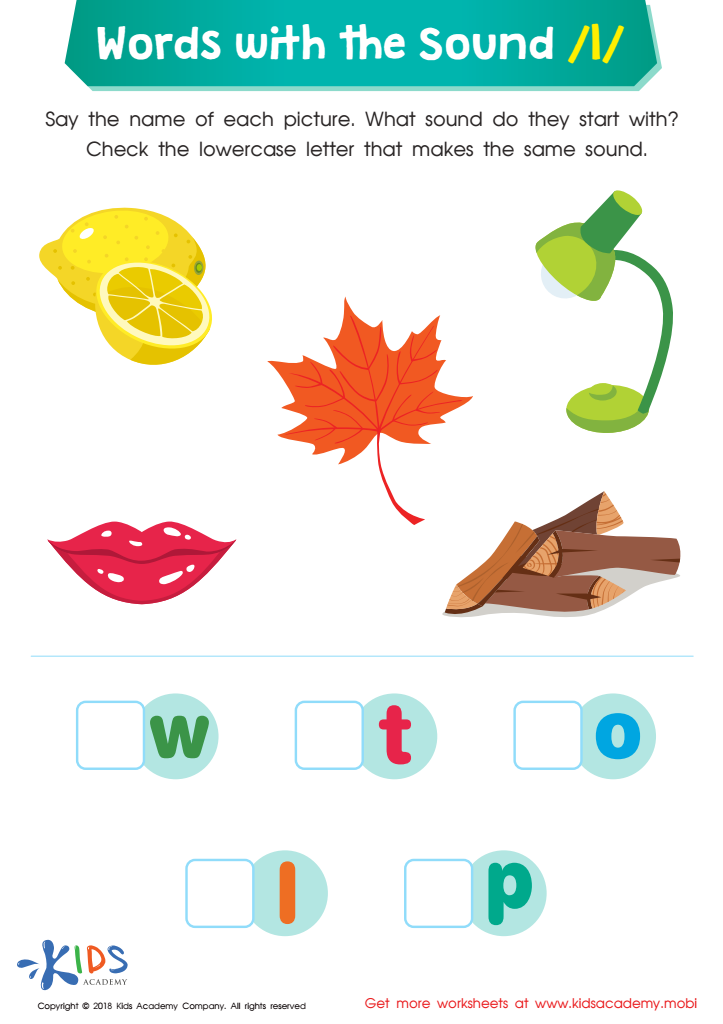
Words with Sound L Reading Worksheet
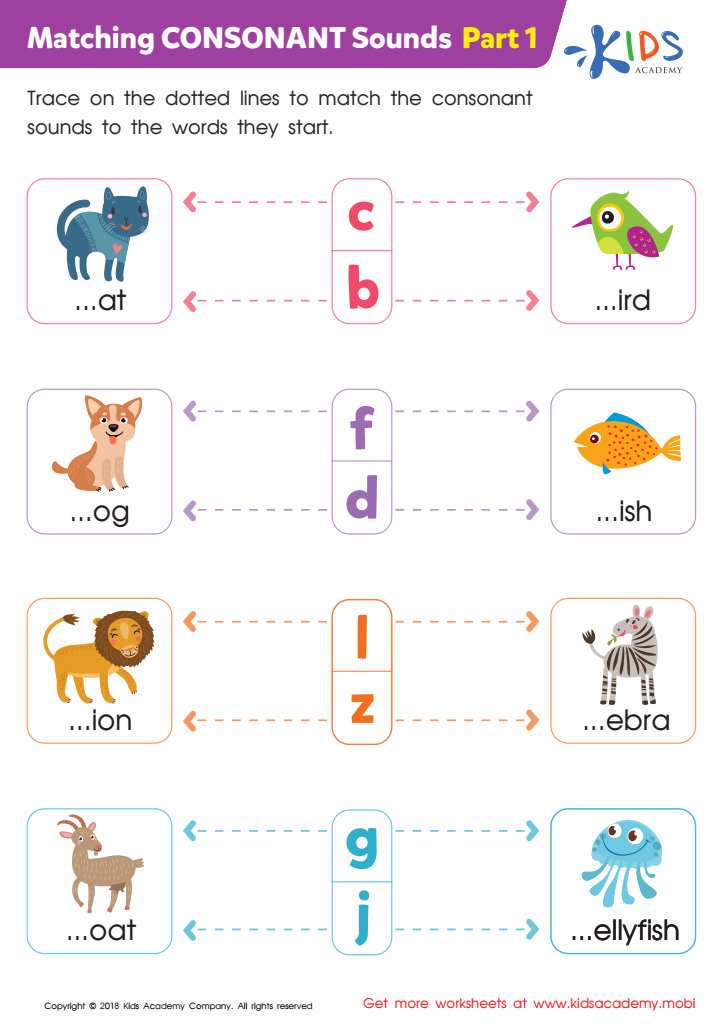
Matching Consonant Sounds: Part 1 Worksheet


Sound recognition, particularly beginning consonants, plays a crucial role in early literacy development for children aged 4-9. Understanding these sounds is foundational for reading and writing, forming the building blocks of language. When children can identify beginning consonants, they start to recognize patterns in words, which aids in decoding unfamiliar texts. This skill not only fosters phonemic awareness but also encourages vocabulary expansion, boosting children's confidence as they become more adept at tackling new words.
Parents and teachers should care about teaching beginning consonants because it enhances overall communication skills. Proficiency in sound recognition empowers children to express their thoughts and ideas more effectively. Moreover, this foundation is essential for later academic success; children who struggle with phonics may face challenges in fluency and comprehension as they progress through school.
Engaging activities that highlight beginning consonants, such as interactive games, songs, and storytelling, can make learning enjoyable and impactful. Supportive environments that prioritize sound recognition cultivate a love for reading, motivating children to explore literature independently. In sum, prioritizing this aspect of learning equips children with the necessary tools to thrive academically and socially, making it a key focus for both parents and educators.